


More news on this day
Kazakhstan is rapidly moving onto Australian travellers’ radar as a long‑haul alternative to Europe, with tour operators reporting growing demand for Silk Road itineraries that pair the country’s steppe landscapes and Soviet‑modern skylines with neighbouring Central Asian states.
Get the latest news straight to your inbox!
Central Asian Pivot as Australians Look Beyond Europe
Australian travellers are increasingly looking east rather than west for extended journeys, with Central Asia emerging as a substitute for traditional multi‑country trips through Europe. Industry brochures and itineraries from Australian agencies now routinely feature Kazakhstan alongside Kyrgyzstan, Uzbekistan, Tajikistan and Turkmenistan, marketed collectively as “the Five Stans” and framed around classic Silk Road routes.
Specialist agencies in Adelaide, Perth and other Australian cities have expanded their Central Asia portfolios, promoting small‑group journeys that begin or end in Almaty or Astana and then loop through historic cities such as Samarkand and Bukhara. Tour descriptions highlight Kazakhstan’s role as both a gateway and a destination, emphasising contrasts between its steppe, canyon and alpine scenery and the tiled mosques and caravanserais further south.
Several operators are scheduling departures for 2025 through 2027 that include Kazakhstan as a key anchor, signalling expectations of sustained demand rather than a short‑term spike. Packages often bundle international flights from Australia to Central Asia, positioning these itineraries as a comprehensive alternative to multi‑week European coach tours.
Visa‑Free Access and Simplified Border Rules Support Growth
Entry policy has become one of Kazakhstan’s strongest selling points for Australians weighing long‑haul options. Public information from Kazakhstan’s foreign ministry and Australian government advisories indicates that Australian passport holders can enter Kazakhstan visa‑free for short stays of up to 30 days, aligning the country with popular European destinations that offer similar access.
Regional initiatives have also eased movement across Central Asia, making it easier to package Kazakhstan within broader Silk Road journeys. Visa‑free regimes and relaxed entry rules for many nationalities across Kazakhstan, Kyrgyzstan and Uzbekistan allow group tours to cross borders with fewer formalities than in the past, reducing administrative barriers that once deterred independent travellers.
Tour marketing materials aimed at Australians increasingly foreground these regulatory changes, noting that Kazakhstan and its neighbours are now visa‑free or relatively straightforward for short‑term tourism. This messaging positions Central Asia as a practical choice for travellers who have grown accustomed to Europe’s Schengen‑area flexibility but want a different cultural and geographic experience.
Rise of Silk Road Tours Tailored to Australian Markets
Australian‑based and regional tour operators are rolling out more itineraries explicitly tailored to travellers from Australia and New Zealand, many of which spotlight Kazakhstan’s Silk Road heritage. Recent brochures advertise hosted journeys that combine Almaty’s Soviet and modern architecture with excursions to Charyn Canyon, the Kolsai and Kaindy lakes, and former Silk Road hubs in southern Kazakhstan, before continuing into neighbouring republics.
Central Asia specialists based in the region are also promoting multi‑country Silk Road circuits built around English‑speaking markets that include Australia. One 23‑day programme for 2026 and 2027, for example, links Turkmenistan’s desert craters, Uzbekistan’s historic cities, Tajik and Kyrgyz mountain passes and time in both Almaty and Astana, marketed specifically to travellers from Australia, New Zealand and other English‑speaking countries.
Pricing for these extended journeys typically positions them against premium European coach tours, but operators emphasise value in terms of inclusion and novelty. Long overland stretches through canyons, high mountain passes and steppe are promoted as a way to experience landscapes that are still relatively unfamiliar to Australian tourists compared with the Alps or Mediterranean coasts.
Air Connectivity via Emerging Hubs
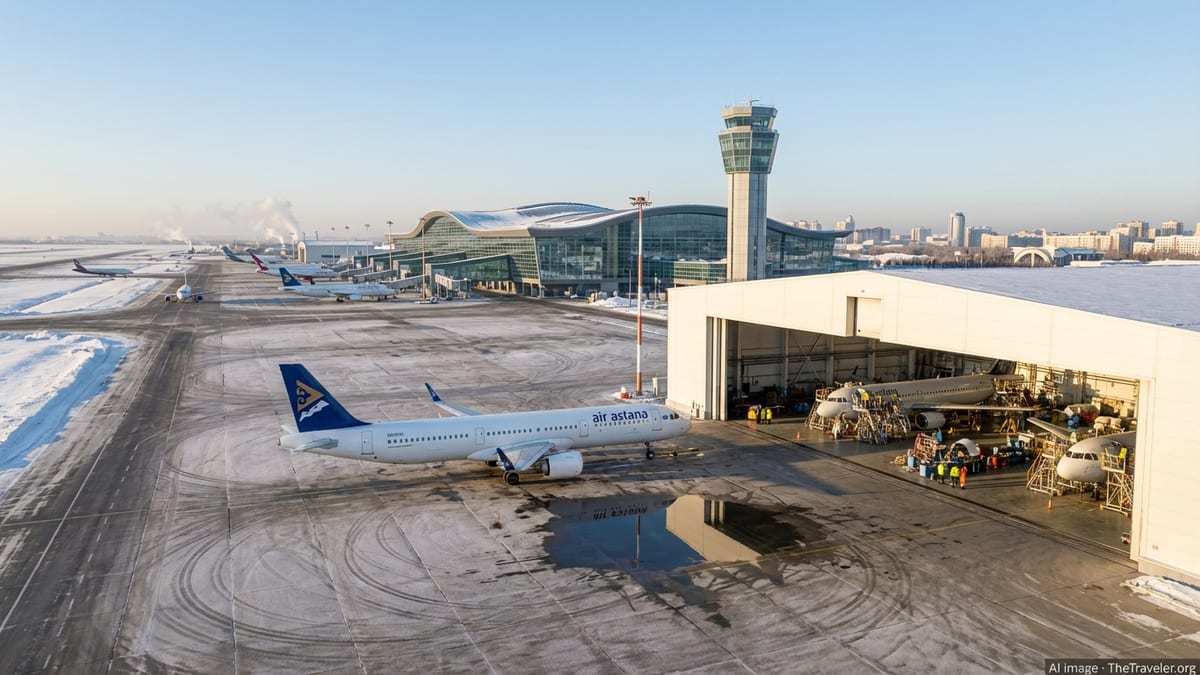
Direct flights between Australia and Kazakhstan are not yet available, but improvements in broader network connectivity are reducing transit times and complexity. Kazakhstan’s flag carrier has expanded services from Almaty and Astana to European and Asian hubs, while Australian travellers now benefit from a wider range of ultra‑long‑haul and one‑stop routes to Europe, the Middle East and East Asia that can connect onwards to Central Asia.
Travel agency itineraries from Australia commonly route Kazakhstan‑bound passengers through Dubai, Abu Dhabi, Doha or major Asian hubs before linking to Almaty or Astana. As Gulf and Asian carriers add frequencies and new destinations, agencies are able to construct itineraries that keep total travel time competitive with indirect journeys to secondary European cities.
Tour documentation suggests that some group departures now include all long‑haul and regional flights in the package price, with coordinated schedules designed to minimise layovers. This packaging approach has made Silk Road trips more accessible to older travellers and first‑time visitors to Central Asia who might otherwise view independent ticketing across multiple carriers as a barrier.
Adventure, Climate and Cost Shape Kazakhstan’s Appeal
Beyond logistics and entry rules, Kazakhstan’s varied landscapes and relatively moderate costs are helping to attract Australians who are seeking adventure without the crowds that now characterise parts of Europe. Travel companies stress the appeal of hiking and horseback riding in alpine valleys, staying in rural guesthouses and visiting lesser‑known canyon and desert regions, often within a day’s drive of Almaty.
Seasonal guidance from major adventure operators suggests that the best window for Silk Road itineraries through Kazakhstan and neighbouring states runs from April to October, covering Australia’s cooler months and aligning neatly with traditional long‑service leave and gap‑year travel patterns. Temperate weather during Central Asia’s spring and autumn shoulder seasons is highlighted as an advantage over crowded European summers and darker northern winters.
Kazakhstan and its neighbours are also marketed as relatively good value for money compared with Western Europe, particularly outside capital cities. While high‑end, small‑group Silk Road tours command premium prices, on‑the‑ground costs for meals, local transport and independent extensions are presented as accessible for mid‑range Australian travellers, reinforcing the perception that a multi‑week Central Asian journey can rival or undercut a comparable European itinerary.