


More news on this day
Kenya’s aviation workers have called off a disruptive two-day strike that brought major airports to a standstill, but thousands of passengers remain stranded after cancellations and delays of up to 12 hours across the country’s busiest routes.
Get the latest news straight to your inbox!
Strike called off after overnight talks and return-to-work deal
Publicly available information shows that the Kenya Aviation Workers Union (KAWU) ended its industrial action on Tuesday, September 1, after signing a return-to-work agreement with the Ministry of Transport and key aviation agencies. The deal followed overnight talks in Nairobi aimed at restoring operations at Jomo Kenyatta International Airport (JKIA) and other affected gateways.
Reports indicate that the agreement commits workers to resume duties immediately while management at the Kenya Airports Authority (KAA) and the Kenya Civil Aviation Authority (KCAA) advances stalled negotiations on a new collective bargaining agreement. Coverage from Kenyan outlets notes that the pact also shields workers who took part in the strike from disciplinary action and sets out mechanisms for resolving remaining disputes through negotiation rather than further stoppages.
According to published coverage, the industrial action began on Sunday and quickly expanded beyond Nairobi’s main hub. Aviation staff stayed away from posts in protest over unresolved pay and benefits claims, agency fees and union recognition issues, particularly involving low-cost carrier Jambojet. The strike’s formal end brings an immediate halt to the work stoppage but leaves substantive labour talks to be settled in the weeks ahead.
Major airports hit as cancellations and long delays ripple through network
Kenya’s busiest airports experienced severe disruption over the two-day strike, with domestic and international travelers facing cancellations and extended waits. Local media report that flights were grounded or heavily delayed at JKIA in Nairobi, Moi International Airport in Mombasa, Eldoret International Airport and Kisumu International Airport, creating bottlenecks across the network.
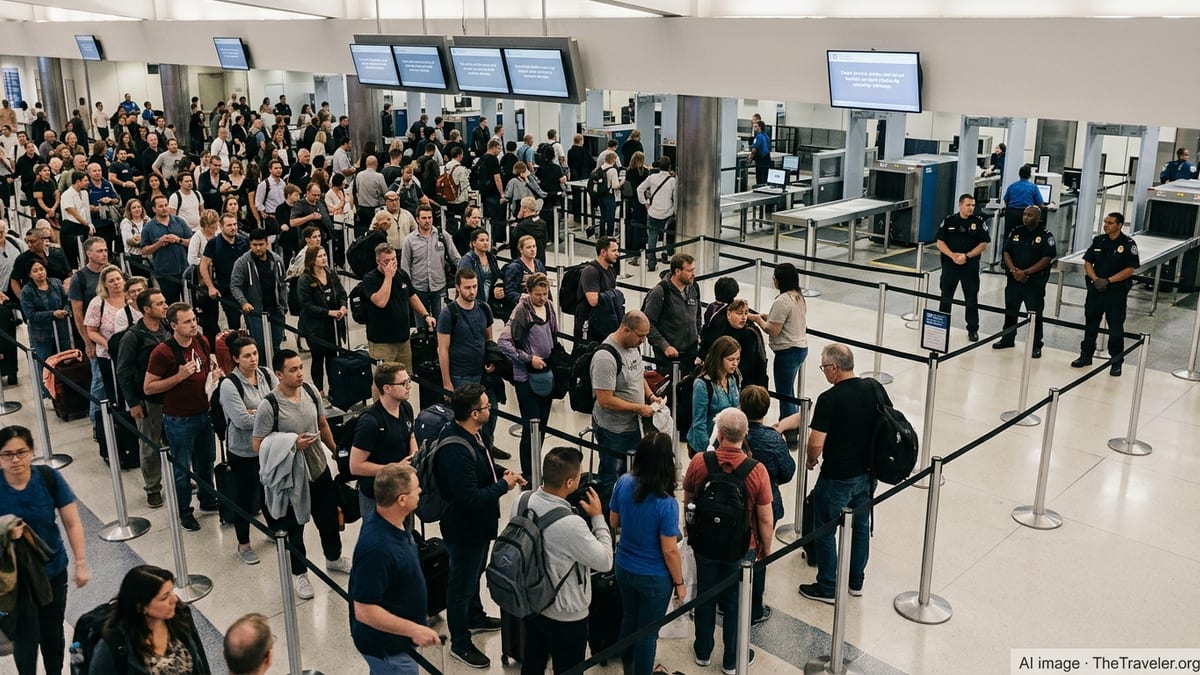
Travelers described missed connections and overnight waits as rolling delays stretched to 12 hours for some itineraries, particularly at Nairobi’s primary hub where queues built up at check-in, security and ticketing counters. Social media posts and traveler accounts cited in local reporting highlight crowded terminals, limited seating and scarce updates as airlines and airport staff struggled to manage the backlog.
Kenya Airways, the national carrier, publicly warned passengers of significant schedule changes, indicating that many services would operate up to six hours behind plan even after the strike was lifted. Other regional and international airlines adjusted timetables, rerouted aircraft or temporarily paused services into Nairobi as they assessed staffing levels and airport capacity.
Passengers face stranded nights, missed connections and shifting itineraries
For passengers moving through Nairobi and other Kenyan airports, the abrupt slowdown created a cascade of individual travel problems. Publicly shared accounts on travel forums and social platforms describe families sleeping on terminal floors, tourists racing to alternative flights and business travelers unable to reach meetings across Africa, Europe and North America.
Some long-haul itineraries were broken mid-journey when connecting flights through Nairobi were canceled or heavily delayed. Reports from affected travelers indicate that an initial cancellation often led to onward segments departing many hours late, pushing total disruptions close to half a day in several cases. This resulted in missed hotel reservations, lost touring days and additional costs for meals and last-minute rebooking.
According to online advisories referenced by local media, Kenya Airways offered rebooking at no extra cost for passengers directly affected by the aviation strike, prioritizing those with missed international connections. Even so, the number of travelers vying for limited seats on resumed services means that some will likely be re-accommodated over several days as operations normalize.
Gradual recovery expected as backlog clears and labour talks move forward
While the return-to-work deal allows flights to resume, industry observers caution that Kenya’s aviation system will need time to fully recover. Reports from Kenyan newsrooms emphasize that clearing the backlog of stranded passengers, repositioning aircraft and restoring regular crew rotations is likely to take at least several days, particularly on high-demand regional and long-haul routes.
Airport operators are expected to focus first on stabilizing early morning and evening bank departures at JKIA, which handle much of the hub’s international traffic. Travel advisories recommend that passengers with upcoming flights to or through Nairobi monitor airline channels closely, arrive at the airport earlier than usual and be prepared for residual delays while schedules are recalibrated.
Beyond the immediate travel disruption, the strike has pushed longstanding labour issues in Kenya’s aviation sector back into the spotlight. According to published coverage, the return-to-work framework addresses agency fee remittances, sets a path for renewed collective bargaining with KCAA and leaves a recognition dispute involving Jambojet to be resolved in court. How quickly these questions are settled may determine whether the recent chaos remains a short-term shock or signals deeper instability in airport operations.
What international travelers should know now
For international visitors planning safaris, beach holidays at the coast or business trips through Nairobi, the end of the strike means that Kenya’s main airports are open and operating, but not yet fully back to normal. Airlines are gradually reinstating regular schedules, yet public advisories suggest that flight times may continue to shift as carriers work through the backlog.
Travelers connecting through JKIA in the coming days are being urged, via airline and airport notices, to check their flight status repeatedly before departure and allow extra time for check-in and security. Those with tight same-day connections to regional destinations such as Zanzibar, Entebbe or Kilimanjaro may wish to consider longer layovers or flexible tickets until operations stabilize.
Tourism operators and hotel groups are closely watching the situation because the disruption coincides with key booking periods for international arrivals. While there is no indication at this stage of a prolonged shutdown, the episode underscores the importance for visitors of maintaining up-to-date travel insurance and monitoring local news when passing through major East African hubs.
The Standard: Aviation workers back at work after KAWU, government sign deal
Citizen Digital: Kenya aviation workers call off strike
Radio Generation: Inside deal that ended aviation workers' strike at Kenya’s airports
Anadolu Agency: Kenya aviation workers end 2-day strike after deal with government