


More news on this day
United Airlines is leading U.S. flight cancellations at the start of the busy Labor Day travel period, as fresh weather warnings and air traffic constraints converge on four of the carrier’s largest hubs: Newark, Chicago, Denver and Houston.
Get the latest news straight to your inbox!
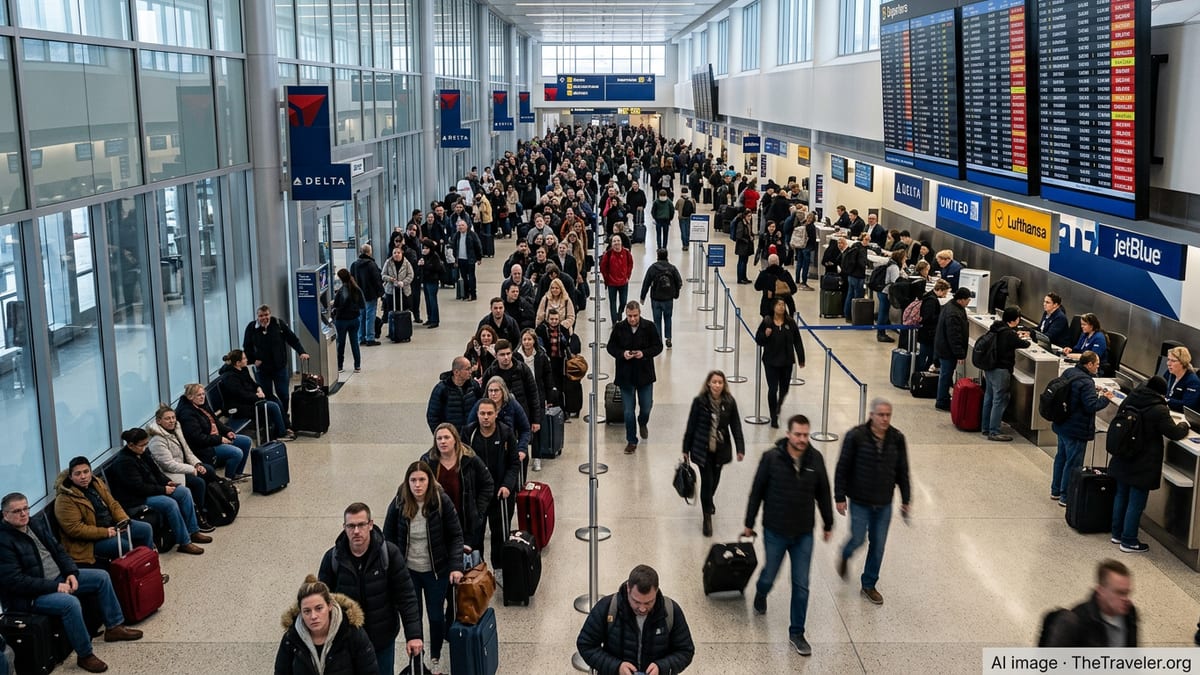
Storm Systems Collide With Heavy Holiday Traffic
Published tracking data and airline advisories show a new round of thunderstorms and low clouds affecting key air corridors serving United’s hubs on September 1, 2026, with ripple effects already visible in nationwide statistics. The New York area, anchored by United’s Newark Liberty hub, entered the day under a convective forecast that called for repeated storm cells through the afternoon and evening, prompting a regional travel waiver and a growing number of preemptive cancellations.
Chicago O’Hare, another major United base, has faced similar patterns throughout August, with repeated thunderstorm complexes triggering ground stops and large banks of delayed departures. Online records of past irregular operations this month describe nights when lines of storms to the west and south limited arrival rates and left crews and aircraft out of position for the following day’s schedule, contributing to a higher-than-normal rate of scrubbed flights.
Farther west, Denver International Airport remains vulnerable to rapidly forming thunderstorms that can shut down ramp operations and force holding patterns over the Rockies. United’s extensive connecting network through Denver means even short-lived weather interruptions can cascade into missed connections and late-evening cancellations across the system. In Houston, the combination of Gulf moisture, high temperatures and scattered storms has similarly constrained operations on several recent afternoons, narrowing United’s options for rerouting aircraft from other troubled hubs.
Operational data aggregators and government testimonies from prior disruption episodes underscore that when multiple hubs are affected at once, United’s concentration of flying at Newark, Chicago, Denver and Houston magnifies the impact on its national totals for delays and cancellations.
United Once Again Leads National Cancellation Tallies
Real-time statistics from flight-tracking services on Tuesday show United near the top of the U.S. leaderboard for canceled flights, with a disproportionate share tied to its hub operations at Newark, Chicago O’Hare, Denver International and Houston Bush Intercontinental. While several carriers are trimming schedules in response to the same weather systems, United’s hub-and-spoke model means that any disruption at these airports affects a larger number of downstream flights than at point-to-point competitors.
Historic data from past severe-weather periods provides context for the current pattern. Congressional records of a major disruption in 2023, for example, highlight a period when United accounted for the majority of nationwide cancellations across several consecutive days, with Newark, Chicago and Denver among the most affected airports. Those findings align with more recent operational reports indicating that United can quickly rise to the top of cancellation rankings when storms align over its core hubs.
Publicly available information about United’s network shows the airline has long acknowledged this exposure in regulatory filings, noting that a “significant interruption or disruption in service” at one or more hubs can lead to the cancellation or delay of a substantial portion of its schedule. That dynamic is again in evidence as multiple hubs navigate tightening air-traffic limits, convective weather and high passenger demand at the same time.
Independent flight-status sites illustrate how quickly individual cancellations accumulate when a bank of hub departures is thinned or reshuffled, with scattered scrubbed flights from Houston into Newark, from Newark to West Coast gateways, and from mid-continent hubs to secondary markets.
Travel Waivers and Rebooking Options for Affected Passengers
In response to the evolving weather picture, United has issued a series of short-term travel waivers throughout August and into September covering the New York and Chicago regions, as well as select mid-continent and East Coast cities. Public posts tracking these waivers indicate that the latest advisory for the New York area, including Newark Liberty, allows customers booked between August 31 and September 4 to change to alternate United or United Express flights within a limited date range without additional change fees, subject to fare differences.
Similar waivers earlier in August applied to thunderstorms around Chicago O’Hare and to broader East Coast storm systems, signaling that the airline is using advance forecasts to give travelers flexibility before the worst of the weather hits. These policies are designed to encourage customers with flexible plans to move to earlier or later flights, easing pressure on the busiest windows and reducing the number of stranded passengers when conditions deteriorate.
Consumer advocates advise that passengers whose flights are canceled or significantly delayed should monitor both the airline’s mobile app and airport departure boards, as same-day reaccommodation options can change quickly when crews and aircraft are repositioned. Third-party services that track disruption-related compensation under European or other international rules note that flights touching certain jurisdictions may entitle passengers to refunds or statutory compensation, depending on the cause of the cancellation and the route involved.
Given the multi-hub nature of the current disruption, travelers connecting through Newark, Chicago, Denver or Houston are being urged by online travel forums and airline-savvy communities to consider longer connection times, earlier departures, or routings that avoid the tightest evening peaks in storm-prone regions.
Why Four Hubs Are Especially Vulnerable Right Now
United’s operational footprint concentrates a large share of its domestic and international flying at eight hubs, with Chicago O’Hare, Denver, Houston Bush Intercontinental and Newark Liberty among the largest. Public company filings describe how this structure improves connectivity and aircraft utilization under normal conditions but also increases susceptibility when weather or air-traffic restrictions reduce capacity at any one of these airports.
At Newark, summer thunderstorms frequently interact with busy Northeast airspace, where existing air traffic control staffing and equipment constraints can reduce arrival and departure rates more sharply than elsewhere. Previous analyses of United’s performance at Newark show that the airline has at times cut its schedules there to improve reliability, yet even a reduced timetable remains tightly coupled to connecting flows through the hub.
Chicago’s position at the crossroads of Midwest and transcontinental traffic, Denver’s high-altitude mountain environment, and Houston’s coastal weather patterns each introduce distinctive challenges. In each case, when thunderstorms, low ceilings or high winds reduce runway acceptance rates, the hub structure forces United to compress or delay connection banks, which can produce waves of cancellations late in the day as crews run up against duty-time limits.
A combination of historic disruption reports, regulator briefings and airline statements underscores that these vulnerabilities are not new. What is different at the start of September 2026 is that the four hubs are experiencing overlapping weather constraints at the same time that holiday-period travel demand remains strong, leaving United and its customers with less room to absorb irregular operations.
What Passengers Should Watch in the Coming Days
Forecasts for the next several days suggest that storm risks will persist across portions of the Northeast and Midwest, while late-summer convection remains a factor in Denver and Houston. For travelers booked on United into or through these hubs, analysts recommend paying close attention to real-time radar trends and official forecasts on the morning of departure, as well as to any new or expanded travel waivers posted on the airline’s channels.
Operational history from earlier disruption events indicates that early-morning flights are often less affected than late-afternoon and evening departures, which are more exposed to evolving thunderstorms and cumulative delays. Passengers with flexible plans may benefit from moving to earlier flights where possible, particularly on itineraries requiring tight connections through Newark, Chicago, Denver or Houston.
Industry observers also point out that United has been investing in technology, schedule adjustments and hub infrastructure to improve resilience following prior high-profile disruption periods. However, even with those changes, the combination of severe summer weather and constrained airspace can still push the airline to the top of national cancellation rankings when several hubs come under pressure at once.
As the Labor Day travel period unfolds, the extent of additional disruption will depend on how quickly storm systems move through key hub regions, how aggressively United continues to trim schedules in advance, and how effectively air traffic control resources can keep critical arrival and departure corridors open during the busiest hours.
U.S. Congressional Record: July 19, 2023 flight disruption report
United Airlines company and hub overview