


More news on this day
Flight delays at Boston Logan International Airport eased on Tuesday after an air traffic control equipment failure in the Philadelphia area triggered widespread ground stops and disruptions across major Northeast airports a day earlier.
Get the latest news straight to your inbox!
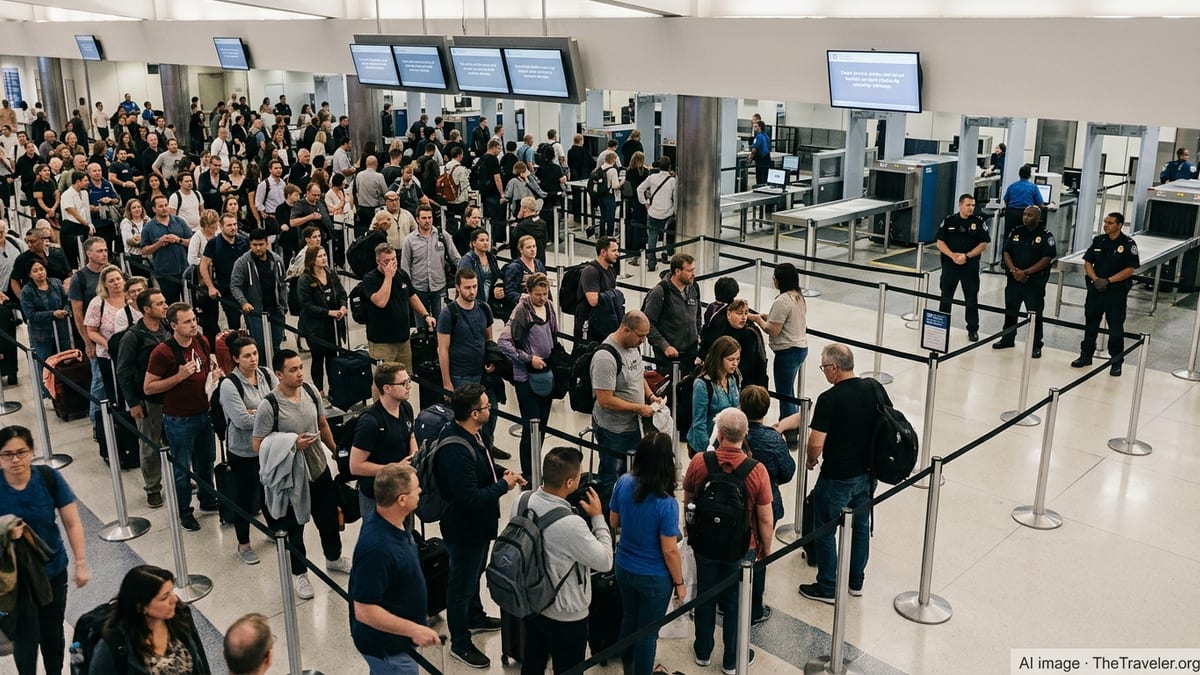
Logan Recovers After Day of Widespread Disruption
By Tuesday morning, publicly available data showed a significant reduction in delays at Logan compared with the previous day, when an outage at a Federal Aviation Administration facility sharply reduced the flow of traffic into the region. Tracking services indicated that Logan had moved from hundreds of delayed flights on Monday to only a few dozen affected departures and arrivals early Tuesday.
Coverage from Boston-based outlets indicates that on Monday Logan operated under a formal ground delay program as air traffic managers attempted to meter arrivals into constrained airspace. Flight-tracking service FlightAware recorded nearly 500 delayed flights and scores of cancellations at Logan by Monday night, placing the airport among the hardest-hit outside the New York and Philadelphia hubs.
The recovery remained uneven through Tuesday morning. Local reports described continued schedule shuffling as airlines repositioned aircraft and crews that had been stranded when the outage began. However, the rolling delays were generally measured in minutes rather than hours, and Logan’s departure boards showed more on-time flights as the day progressed.
Airport operator Massport, through publicly accessible notices, continued to advise travelers to arrive early and check airline apps or websites before heading to Logan, noting that residual disruptions were likely to persist into the day as carriers worked through backlogs.
Equipment Failure in Philadelphia Rippled Across Northeast
According to national and regional coverage, the disruption began on Monday, September 21, when a telecommunications issue affected air traffic control equipment serving the Philadelphia area. Transportation officials described the problem as stemming from fiber lines damaged during construction in New Jersey, which interfered with communications and data needed to manage dense airspace over the Northeast corridor.
The Federal Aviation Administration implemented ground stops and flow restrictions at several major airports, including Newark Liberty, Philadelphia International, John F. Kennedy, LaGuardia and Boston Logan. For several hours, arrivals into some facilities were halted or sharply limited, leading to diversions and cascading delays across airline networks.
Published accounts from aviation outlets and national news organizations indicate that flights began to resume Monday evening after repair crews restored the affected telecommunications lines. Even after equipment was brought back online, air traffic managers continued to operate at reduced rates to safely rebuild normal spacing between aircraft and to clear congested departure queues.
The outage hit during a busy late-summer travel period, amplifying its impact. Airlines with large operations in the New York and Philadelphia regions reported hundreds of cancellations systemwide, while passengers connecting through the Northeast experienced missed onward flights and extended overnight delays.
Logan’s Construction and Weather Added to Delay Pressure
At Logan, the air traffic control equipment failure combined with local factors to intensify the disruption. Recent Boston coverage points to ongoing runway and taxiway construction that has temporarily reduced the airport’s operational flexibility, particularly during peak afternoon and evening periods when traffic is heaviest.
Reports drawing on FAA status information also noted that a low cloud ceiling over the Boston area on Monday contributed to the longer-than-usual delays. With both airspace restrictions and weather-related spacing in effect, Logan’s ability to absorb diverted flights from New York–area airports and Philadelphia was limited, producing extended waits on the ground for departing aircraft.
Passengers at Logan on Monday encountered average delays of around one hour and forty-five minutes at the height of the disruption, according to public flight-status summaries. For some, the waits were substantially longer as rolling departure times eventually gave way to cancellations late in the day when crews or aircraft exceeded allowable duty limits.
Social media posts and local interviews compiled in regional coverage described long lines at customer service desks as travelers sought rebooking options. While some airlines offered waivers that allowed changes without additional fees for trips scheduled on September 21 and 22, available seats on later flights were constrained on popular routes along the East Coast.
Regional Operations Resume, but Travelers Still Advised to Plan Ahead
By late Monday and into Tuesday, transportation officials and airline statements referenced in national reporting indicated that the damaged fiber lines had been repaired and that traffic was resuming across the Northeast. At Logan, arrivals and departures were once again flowing, though with pockets of delay as aircraft and flight crews returned to their normal rotations.
Travel industry reporting noted that even after the initial outage ended, passengers could continue to see disruptions as airlines worked to reposition planes and restart complex hub-and-spoke schedules. Some flights that had been canceled on Monday were rebooked into Tuesday and Wednesday, contributing to fuller flights and less flexibility for same-day changes.
Publicly available guidance from consumer travel outlets advised passengers flying through Boston and other affected airports to monitor their flight status frequently, use airline mobile apps for real-time updates, and allow extra time at the airport in case of last-minute gate or schedule changes. Travelers with tight connections were encouraged to consider earlier departures where possible.
For those whose trips were disrupted, airline customer service policies remained a key factor in rebooking options. Industry analyses indicated that, because the outage stemmed from an external equipment failure, compensation for hotels and meals varied by carrier, with some offering broader flexibility than others even when not strictly required by federal rules.
What the Disruption Reveals About Northeast Air Travel Fragility
The incident highlighted the sensitivity of Northeast air travel to infrastructure failures in a region where airspace is complex and heavily trafficked. A single telecommunications problem affecting a key facility in the Philadelphia area quickly propagated to major hubs and secondary airports, including Boston Logan, underscoring the interdependence of the system.
Aviation analysts quoted in national and specialty travel coverage characterized the episode as another example of how construction-related damage to critical cables can have outsized effects on transportation networks. Similar incidents in recent years have affected rail operations and other modes, reinforcing the need for robust mapping and protection of essential lines in active work zones.
For Logan in particular, the events of Monday and Tuesday intersected with an extended period of runway and taxiway construction that has already been contributing to longer afternoon delays. Publicly available planning documents from Massport emphasize that the work is intended to improve capacity and resilience over the long term, but in the near term it can reduce the airport’s ability to recover quickly from regional disruptions.
While operations at Logan were largely back on track by Tuesday afternoon, travel experts writing for consumer outlets noted that the episode serves as a reminder for passengers flying through the Northeast to build in extra buffer time, especially when making connections, and to remain prepared for sudden schedule changes when technical problems arise far beyond their departure airport.