


More news on this day
London’s busy airport rail links are coming under renewed scrutiny after a series of platform and door-related incidents across the capital’s network highlighted persistent risks for passengers moving between trains and platforms.
Get the latest news straight to your inbox!
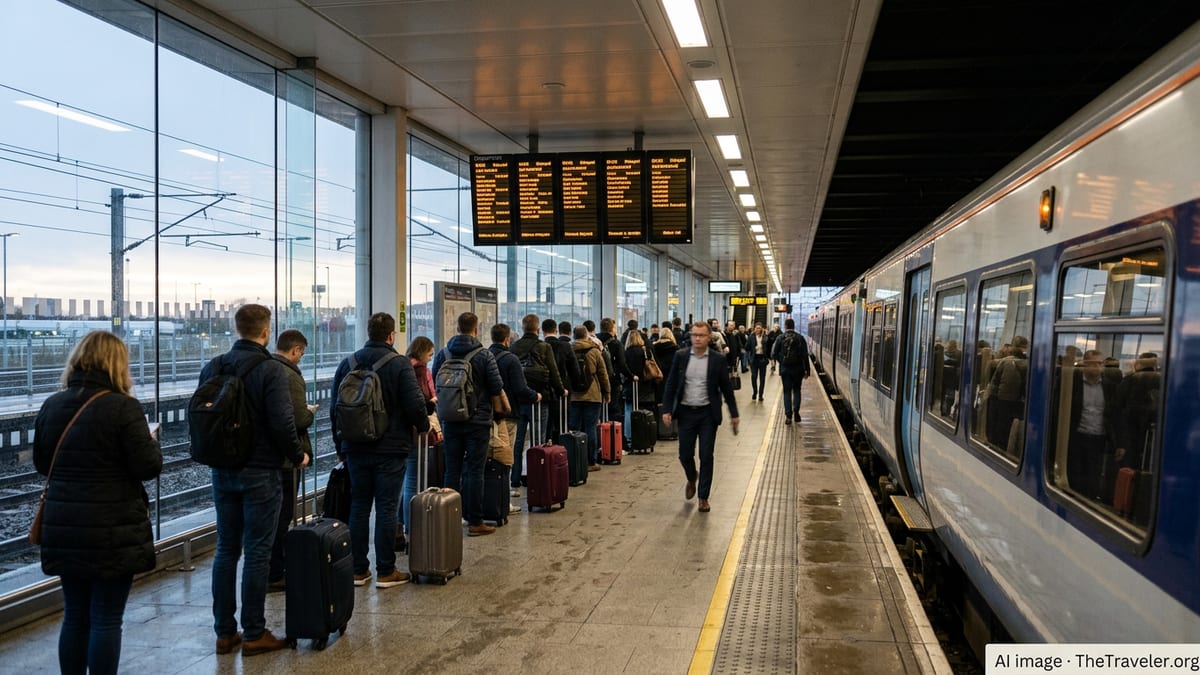
Airport Rail Links in a Complex Safety Landscape
London’s main airport rail connections, including Heathrow Express, the Elizabeth line and services to Gatwick, operate within one of Europe’s most intensively used rail environments. Publicly available data from the Office of Rail and Road indicates that non-workforce passenger fatalities and serious injuries on the national rail and London Underground networks remain relatively rare compared with overall passenger volumes, yet a significant proportion of harm occurs at the point where train and platform meet.
The Heathrow Spur, which connects Heathrow Airport with London Paddington, is regulated as part of the national rail system, with Heathrow Airport Limited responsible for infrastructure standards and access. Network statements and regulatory documentation emphasise the importance of platform design, door systems and operational procedures in managing risks, particularly as multiple operators now share the route between central London and the airport.
At the same time, London’s broader suburban and urban rail network has seen several recent investigations into passengers being trapped in doors or falling from platforms. While not confined solely to airport-bound trains, these incidents are shaping the safety context in which visitors and business travellers access London’s major airports by rail.
Recent Incidents Put Platform-Train Interface in Focus
In early 2026, the Rail Accident Investigation Branch published findings on an incident at Ealing Broadway involving a passenger who became trapped and dragged when boarding an Elizabeth line train. The investigation highlighted the challenges of safely managing the platform-train interface at busy interchange stations where different train types, stopping patterns and passenger flows converge.
Earlier safety digests have examined similar events on London’s railways, including passengers whose hands were caught in doors and trains that moved with individuals still in contact with the vehicle. Summaries of learning from these cases point to recurring themes, such as passengers boarding at the last moment, complex platform geometries, crowded conditions and limitations in the visibility available to drivers when relying on closed-circuit television images to dispatch trains.
Separate investigations on the London Underground have addressed incidents in which passengers fell into gaps between train and platform or remained on the track for several minutes before being detected. These cases have contributed to calls for better understanding of how passengers interact with doors and edges, especially in curved or crowded stations that are also used by airport-bound travellers.
Heathrow Express and Elizabeth Line: Design and Operational Responses
Heathrow Express, the dedicated non-stop service linking Heathrow with Paddington, has historically been at the centre of efforts to reduce risks from the step and gap between trains and platforms. Earlier trials of rubber gap fillers on Heathrow platforms sought to minimise the space in which a foot or luggage wheel might become trapped, with the operator presenting the devices as part of a wider mitigation strategy.
More recent corporate reporting from Heathrow Express notes platform-train interface incidents as a defined risk category, alongside steps to manage them through infrastructure measures, staff training and monitoring. Regulatory documents for the Heathrow Spur reference derogations from standard platform edge clearances intended to reduce the gap while still allowing safe operation of different rolling stock.
The Elizabeth line, which offers alternative services to Heathrow alongside Heathrow Express, was designed with level or near-level boarding at many stations, including airport stops. Transport accessibility information highlights that all Elizabeth line stations provide step-free access to the platform, and that a subset, including Heathrow, offer level access between train and platform. Nonetheless, the Ealing Broadway case has prompted recommendations to review how changes to platform infrastructure are assessed and how driver-only operation systems present images of the platform edge to drivers.
Gatwick and Other Airport Routes Highlight Wider Network Challenges
Airport rail safety concerns around London are not limited to Heathrow. Gatwick Express and associated Southern and Thameslink services carry large numbers of air passengers between Gatwick Airport and central London terminals. Data published by the operator on passenger assistance bookings shows heavy use of support services by travellers requiring help with boarding, luggage or mobility, underscoring the importance of clear procedures at the platform edge.
Network disruption on south London routes, including lines used by Gatwick Express, periodically leads to “do not travel” advisories and crowding at key stations. While such events are primarily operational or signalling-related, they can heighten the risk of slips, rushed boarding and confusion among passengers trying to make airport connections, particularly those unfamiliar with the rail system.
As London’s airports compete for long-haul and short-haul traffic, reliable and safe rail links are integral to their appeal. Industry reports examining the experience of passengers on stranded or heavily delayed trains near Heathrow, for example, have drawn attention to the need for better communication, contingency planning and protection for those on board when services are disrupted.
Safety Awareness for International Travelers
For many visitors arriving in London, airport rail links are the first interaction with the UK rail system. Travel forums and passenger accounts frequently describe surprise at the variability of gaps between trains and platforms, particularly on older Underground lines that connect with airport services. While recorded serious incidents remain low relative to total journeys, the combination of heavy luggage, jet lag and unfamiliar layouts can increase individual vulnerability.
Regulators and investigation bodies repeatedly stress in their public material that engineering controls and operational rules cannot entirely remove risk at the platform-train interface. Recent reports encourage rail operators to adopt clearer signage, audible warnings, and more intuitive platform markings, while also asking passengers to avoid boarding at the last moment, to keep luggage clear of the edge and to remain alert to staff instructions.
Industry observers note that London is gradually moving toward designs that provide level boarding and better separation between passengers and moving trains, such as platform humps, gap fillers and platform-edge doors at selected stations. However, progress is uneven across the network, and airport-bound travellers often move between newer stations with step-free, level access and older locations with pronounced curves or steps.
For travellers choosing rail to and from London’s airports, the current safety debate serves as a reminder that even on highly regulated and statistically safe systems, awareness at the platform edge remains critical. As investigations continue and operators implement recommendations, the balance between infrastructure improvements and passenger behaviour will remain central to safeguarding the growing number of people who rely on fast rail links to reach the capital’s airports.