


More news on this day
London Luton Airport has introduced a smart journey planner that brings rail, coach, bus, active travel and driving options into a single digital tool, aiming to make low‑carbon access to the airport easier and to shift more passengers away from private car use.
Get the latest news straight to your inbox!
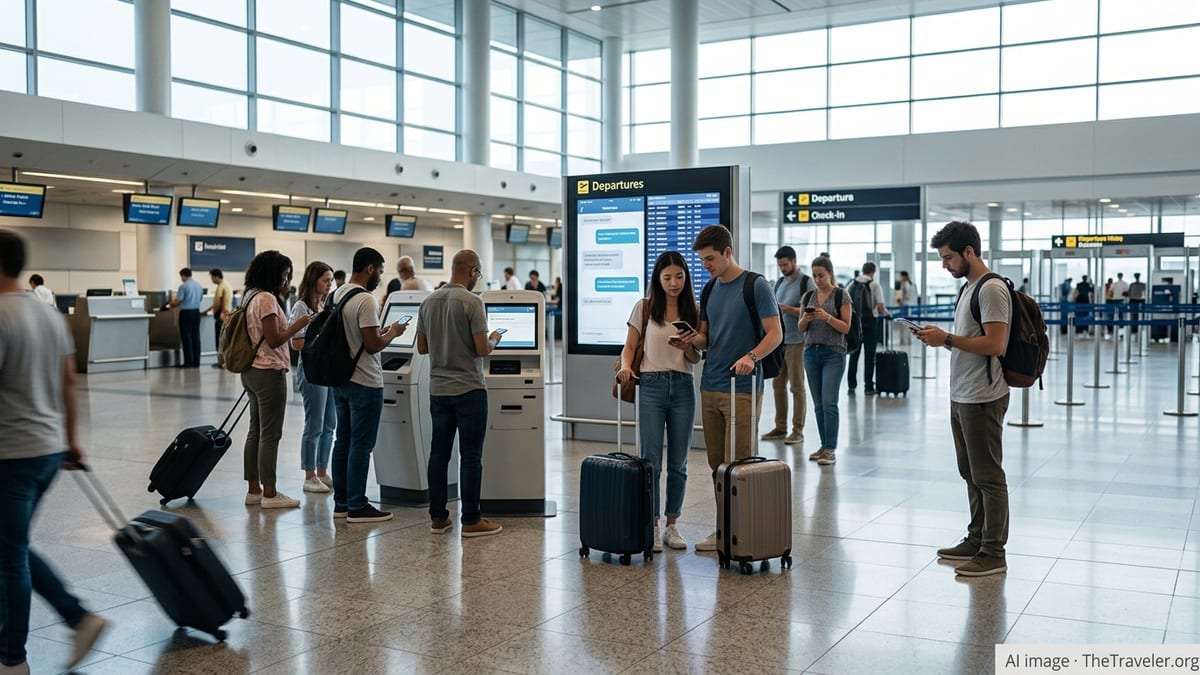
Digital Planner Puts All Surface Transport Options in One Place
The new journey planner is embedded in London Luton Airport’s official "Getting to and from LLA" pages and allows users to enter a departure point anywhere in the UK, then compare rail, coach, local bus, taxi and driving options side by side. Publicly available information shows the interface is designed around a simple origin search box and mode filters, alongside links to detailed sections on each transport type, from long‑distance coaches to local buses and car parking services.
Reports indicate that the planner is intended to streamline what has traditionally been a fragmented search process, where passengers juggle separate rail, coach and local transport websites before choosing how to travel. By bringing key links and guidance together, it lowers the barrier for travellers who might otherwise default to driving, reinforcing the airport’s wider sustainability strategy for surface access.
The planner sits alongside information about secure bicycle storage near Luton DART’s Kimpton Road entrance and guidance on drop‑off, pick‑up and taxi options. This integrated view of the last‑mile journey reflects the airport’s stated aim of treating the trip from home to terminal as part of a single end‑to‑end experience rather than an afterthought.
For visitors unfamiliar with the region, the tool highlights that rail and coach services run day and night, connecting central London, the Midlands, the North and East Anglia directly to the airport precinct. This makes it easier to line up early‑morning and late‑evening flights with reliable public transport connections.
Supporting a Shift to Public Transport and Active Travel
The journey planner launch aligns with London Luton Airport’s Airport Surface Access Strategy for 2024–2028, which sets out a roadmap to make non‑car travel more attractive and efficient for both passengers and staff. Published documents show that the airport has committed to increasing the share of passengers using sustainable modes to 47 percent and staff to 35 percent over the current five‑year period, positioning surface access as a central pillar of its net‑zero ambitions.
Recent sustainability reports describe how the airport has already delivered a significant modal shift since its first surface access strategy in 2000, with growth in rail and coach usage supported by partnerships with local authorities, transport operators and regional bodies. The journey planner is presented as a next step in that evolution, using digital tools to make those alternatives more visible and easier to understand at the trip‑planning stage.
In parallel, the airport has expanded infrastructure that underpins greener travel choices. The fully electric Luton DART (Direct Air‑Rail Transit) now connects Luton Airport Parkway station with the terminal in under four minutes, replacing the previous diesel bus shuttle and creating a seamless rail‑to‑terminal link. Publicly available information notes that the airport promotes this link as part of its sustainable travel plan, framing rail plus DART as a high‑frequency alternative to driving from central London and beyond.
Active travel is also part of the mix. Guidance on the airport’s website highlights free, secure cycle parking near the DART station and encourages passengers and staff living nearby to consider walking or cycling, particularly for shift patterns and journeys where public transport may be less frequent.
Harnessing Rail, Coach and Contactless Fares for Low‑Carbon Access
The new planner sits on top of a growing ecosystem of rail and coach services that provide lower‑carbon alternatives to private cars. London Luton Airport is already served by Thameslink and East Midlands Railway routes between London St Pancras and Luton Airport Parkway, with journey times from central London typically under 40 minutes. National rail guidance confirms that contactless payments are now valid between London and Luton Airport Parkway, simplifying ticketing for many domestic and international passengers.
From Luton Airport Parkway, the electric DART shuttle provides a frequent, fixed‑link connection into the terminal, with concessionary schemes for local residents, blue badge holders and some airport workers. According to published sustainability reports, this combination of mainline rail and DART is central to the airport’s target of cutting single‑occupancy car trips and improving air quality in surrounding communities.
Coach services also feature prominently within the journey planner. Operators such as National Express promote advance‑purchase fares from central London to London Luton Airport starting from low fixed prices, with promotional materials encouraging travellers to use online journey planners to secure tickets at least two weeks ahead of departure. These long‑distance coach links extend the airport’s sustainable catchment northwards and offer a lower‑emission option for passengers travelling from cities without direct rail connections.
Local buses, taxis and park‑and‑ride style car parks round out the portfolio presented within the planner, providing options for travellers who may need to combine modes. By framing these choices in one place, the tool is positioned to help passengers weigh time, cost and environmental impact at the same moment, rather than defaulting to the most familiar option.
Accessibility, Inclusivity and Assisted Travel Features
Accessibility appears as a core consideration in the way London Luton Airport’s journey planner and supporting pages are structured. Public transport guidance for passengers with reduced mobility points to fully accessible rail stations at London St Pancras International and Luton Airport Parkway, both with step‑free access to all platforms. The Luton DART system itself is designed with lifts, level boarding and wide gates, enabling wheelchair users and travellers with heavy luggage to transfer between train and terminal with minimal barriers.
Rail operators on the Luton Airport Express corridor promote the Passenger Assist service, which allows travellers to pre‑book support for boarding, alighting and connections up to two hours before travel across the national network. This is complemented by the airport’s own special assistance services, which integrate with public transport arrivals and emphasise coordinated support from station to check‑in.
For bus users, publicly available information shows that older person concessionary passes and some disability passes can unlock free travel on local routes and on the DART, once registered. This financial support, combined with the visibility provided by the journey planner, is expected to make sustainable travel more accessible for residents of Luton and neighbouring communities who use the airport for work or leisure.
The emphasis on inclusive access is consistent with the airport’s broader sustainability reporting, which defines surface access not only in terms of carbon reduction but also social value. By encouraging a diverse range of passengers and staff to switch from car to shared or active modes, the airport aims to reduce congestion, improve local air quality and enhance the overall travel experience.
A Model for Smarter Airport Access Across the UK
Industry observers note that London Luton Airport’s integration of a smart journey planner into its surface access strategy reflects a wider trend among UK airports seeking to reduce road traffic and align with national decarbonisation goals. Government guidance on airport surface access has increasingly highlighted digital tools as a way to nudge behaviour change, particularly where strong rail and coach networks already exist.
Luton’s position as one of the country’s busiest passenger airports, with a large share of low‑cost short‑haul flights, makes surface access emissions a significant part of its overall environmental footprint. Sustainability documents emphasise that a passenger’s journey begins the moment they leave home, and that encouraging greener choices for that first and last leg can deliver measurable reductions in total trip emissions.
The new planner effectively turns the airport’s website into a hub for multi‑modal information, supporting everything from premium express rail services to budget coach offers and local transport concessions. If widely used, this approach could provide a template for other regional and metropolitan airports that are connected to strong public transport networks but still see high levels of car dependency.
With Luton DART now in full operation, contactless rail fares reaching Luton Airport Parkway and coach operators promoting discounted advance tickets, the timing of the journey planner is notable. It arrives at a moment when infrastructure and pricing incentives already favour lower‑carbon travel; the digital interface is designed to make those advantages more visible and easier to act on for travellers planning their next departure from London Luton Airport.
London Luton Airport – Getting to and from LLA
London Luton Airport – Airport Surface Access Strategy 2024–2028