


More news on this day
Luxury expedition cruises that trace the Amazon between Brazil and Peru are multiplying, as new itineraries, ships and booking data point to a sharp upswing in high-end river travel across South America.
Get the latest news straight to your inbox!
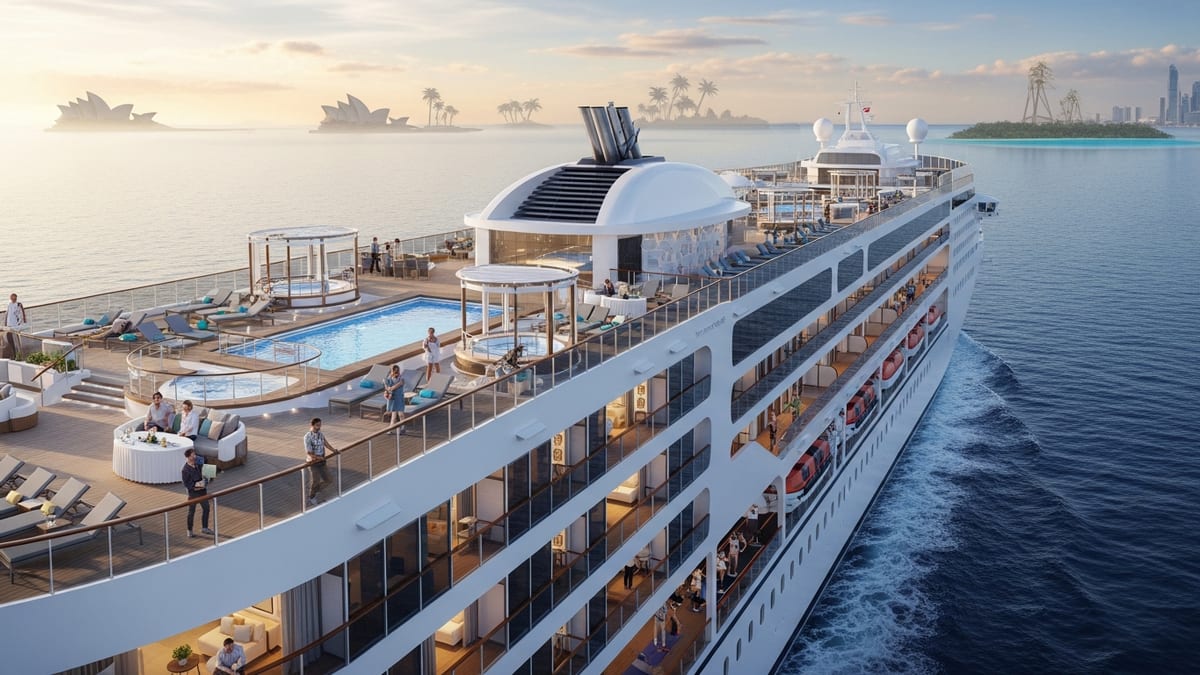
New Brazil–Peru Routes Turn the Amazon Into a Luxury Corridor
Recent itinerary launches on the Amazon indicate that Brazil-to-Peru expedition routes are shifting from niche to headline product. Hapag-Lloyd Cruises has scheduled a 21-day Amazon sailing from Belém at the river’s Atlantic mouth up to Iquitos in Peru for April 9 to May 1, 2027, with expedition activities, Zodiac landings, and stops in Manaus and along the Rio Negro, marketed in a premium fare tier that includes charter air and bundled travel services. According to published details, this type of long-haul river voyage is positioned as an in-depth rainforest journey rather than a brief scenic segment.
At the same time, operators already embedded in the upper Amazon continue to expand visibility of Peru-based routes around Iquitos and the Pacaya Samiria National Reserve. Industry-facing briefings from adventure travel organizations describe growing interest in luxury expedition vessels sailing from Iquitos into protected stretches of the Peruvian Amazon, underlining a shift from basic jungle lodge stays toward all-inclusive small-ship experiences that combine wildlife access with upscale comfort. These sailings are increasingly promoted as extensions to Peru’s classic highlights such as Cusco and Machu Picchu.
Ocean and river cruise brands are also stitching together multi-country journeys that cross borders along the river system. Product descriptions from global lines show segments that link Amazon calls in Brazil with overland or flight connections to Peru, or that treat the Amazon as a core component of longer South American expedition loops. This cross-border pattern is turning the Brazil–Peru stretch into a de facto luxury corridor for travelers seeking both rainforest immersion and cultural contrast.
Market Data Signals a Broader South American Cruise Upswing
Industry reports suggest that the rise of Brazil–Peru expedition cruising is part of a wider regional rebound. A 2025 source market overview from Cruise Lines International Association shows that 1.12 million South Americans sailed on ocean-going cruises in 2025, a 4.2 percent increase on the previous year, with Brazil accounting for roughly 70 percent of the region’s cruise passengers and maintaining year-on-year growth. Analysts highlight Brazil as the dominant engine of cruise demand in Latin America.
Separate market research on river cruising points to South America as a small but fast-growing segment within the global river cruise industry between 2025 and 2030, with projections of steady year-over-year expansion in both capacity and revenue. While the region remains modest compared with Europe, data tables outlining South American river cruise performance show consistent upward curves, supported by new vessel deployments and expanding source markets.
Trade coverage focused on river cruising trends notes that South America, and the Amazon in particular, is emerging as an alternative to increasingly crowded European rivers. Reports from travel trade media describe the Amazon as an underdeveloped yet high-potential river cruising frontier, where vessels can still sail without encountering the dense traffic common on major European waterways. For luxury operators, that relative exclusivity is described as a key selling point.
Why Travelers Are Trading Traditional Cruises for Expedition Experiences
Across the cruise sector, expedition-style travel has been one of the strongest post-pandemic performers. Specialist analysis of expedition cruising points to a shift in traveler priorities toward immersive, small-ship experiences, adventure activities, and access to remote environments, all delivered with elevated comfort. Reports indicate that the demographic has broadened beyond retirees, with younger travelers and multi-generational groups increasingly booking expedition itineraries in destinations from Antarctica to tropical rivers.
In the Amazon, this broader trend translates into a preference for purpose-built expedition vessels over large ocean ships. Advisory content for travel advisors emphasizes that small ships on the Peruvian Amazon typically carry a few dozen guests, enabling daily Zodiac excursions, guided wildlife viewing, and visits to riverside communities, while still offering suites, fine dining, and spa-style amenities. The combination of soft adventure and high service levels is being positioned as a distinct category between classic river cruising and hard expeditions.
Consumer-facing narratives and trip reports further amplify the appeal of this format. Travelers frequently highlight the contrast between exploring flooded forests by skiff and returning to air-conditioned suites with gourmet menus, as well as the appeal of pairing the cruise with bucket-list land experiences such as the Sacred Valley and Machu Picchu. This blurred line between expedition and luxury resort stay is increasingly central to how Amazon sailings between Brazil and Peru are marketed.
Peru’s Upper Amazon Becomes a Luxury Focal Point
Peru’s section of the Amazon around Iquitos has become a strategic focal point for high-end river cruising. Publicly available information from luxury river cruise brands notes that vessels like Uniworld’s Aria Amazon operate boutique-style itineraries in Peru with a small number of suites and an emphasis on personalized service. Travel trade materials from adventure travel organizations describe surging advisor interest in Iquitos departures that navigate deep into the Pacaya Samiria National Reserve, an area often promoted as the “mirrored forest” for its flooded waterways.
Recent advisory articles aimed at the travel trade outline practical considerations for booking luxury expeditions in the Peruvian Amazon, including seasonal water-level changes, wildlife viewing windows, and the importance of specialist naturalist guiding. These briefings underscore that demand is now strong enough to warrant detailed product education for advisors, a marked evolution from when such cruises were considered specialist outliers.
Peru’s aviation links and tourism infrastructure further reinforce its role in the Brazil–Peru cruise equation. Iquitos functions as a key embarkation point accessible via domestic flights from Lima, allowing itineraries that combine urban stays, highland archaeology and rainforest cruising in a single trip. From the Brazilian side, published itineraries show Manaus and border towns feeding guests into upper Amazon sailings that either conclude or begin in Peru, heightening cross-border connectivity.
Outlook: Capacity Growth and a Coming Booking Surge
Forward-looking signals from cruise lines and market analysts point to further capacity growth on the Amazon over the next several years. The announcement of additional long-duration routes such as Hapag-Lloyd’s Belém-to-Iquitos expedition for 2027, alongside the continued promotion of small-ship luxury vessels in Peru, suggests that operators are betting on sustained interest in Brazil–Peru combinations. Market intelligence providers tracking river cruising in South America forecast incremental fleet additions and revenue gains through at least 2030.
Travel trade surveys and outlook reports compiled around the river cruise sector for 2025 indicate that advisors expect South American river itineraries to post net growth in bookings, even if volumes remain below Europe and Asia. As more lines debut or expand Amazon programs, awareness among North American and European travelers is anticipated to rise, especially as brands position the region as a way to avoid the crowding now associated with some European waterway hubs.
Specialist coverage of global cruising trends also points to Brazil’s strengthening role as a regional hub, with analyses of the Latin American cruise market projecting that Brazil will lead the region in cruise revenue in the coming decade. Coupled with Peru’s established reputation as an adventure and culture destination, the two countries are well placed to anchor an emerging axis of luxury expedition cruising on the Amazon. If current deployment and booking trajectories hold, the Brazil-to-Peru segment of the river appears poised to transform from a frontier itinerary into one of South America’s signature high-end cruise experiences.
Cruise Lines International Association South America Market Report 2025
Travel Weekly coverage on the Amazon as a river cruise frontier
Hapag-Lloyd Cruises Amazon season and Belém–Iquitos expedition
Adventure Travel Trade Association: luxury Amazon expeditions in Peru