


More news on this day
Unusually low water levels on some of Europe’s busiest rivers are disrupting the peak summer river cruise season, with operators adjusting itineraries, swapping ships and, in some cases, cancelling departures as drought conditions tighten their grip on inland waterways.
Get the latest news straight to your inbox!
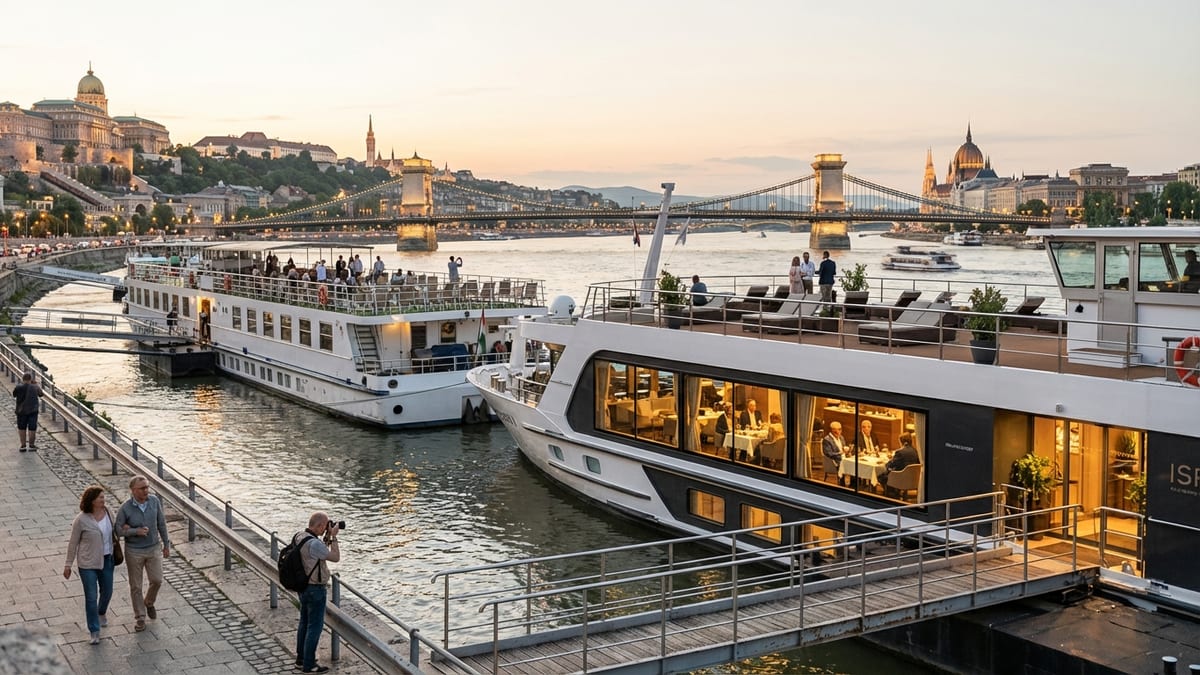
Danube and Rhine Face Renewed Low-Water Strain
After several years of increasingly erratic river conditions, the 2026 season is again highlighting how vulnerable Europe’s inland cruise corridors are to prolonged dry spells. Hydrological reports for the Danube in particular point to a pattern of below-average flows and extended low-water periods in Central and Eastern Europe through 2025 and into early 2026, following repeated drought years across the basin.
Navigation data for 20 July 2026 indicate that stretches of the Lower Danube are currently running at very low levels, with navigation described as disrupted in places as ships adjust loading and speed to remain within safe operating margins. Cruise-focused monitoring services note that while many sailings are still operating, day-to-day decisions now hinge on local gauge readings and forecasts rather than fixed timetables.
On the Rhine, conditions have been volatile since spring. Specialist river level trackers reported caution-level readings as early as late April, followed by a period of critical low-water stress around the Kaub bottleneck at the start of June. Although levels have since rebounded to what is described as normal for cruising on many sections, travellers and operators continue to navigate a stop-start pattern that can change within days.
The renewed strain comes against the backdrop of a wider climate signal. Recent European inland navigation and climate assessments describe a clear trend toward more frequent and concurrent drought conditions across major catchments, reinforcing the likelihood that low-water summers will become a recurring challenge for river-based tourism.
Cruise Lines Pivot with Cancellations, Ship Swaps and Buses
For river cruise companies, 2026 has turned into a season of operational improvisation. Travel updates published by major brands show a mix of responses on the Danube and Rhine, ranging from minor schedule tweaks to full cancellations on particular departures where vessels can no longer safely reach embarkation ports.
One large operator reported in mid July that segments of both the Danube and Rhine are experiencing lower than average water levels, forcing the cancellation of select Danube itineraries because ships are unable to navigate into designated start or end ports. Other departures have been maintained but with altered routes, revised timing through shallow stretches and additional motorcoach transfers to bridge unnavigable sections.
Another premium river line has issued a standing low-water advisory for the Danube, Rhine and Main, explaining that extended dry weather and above-average temperatures across wide parts of Europe are prompting a suite of contingency measures. These include moving guests between sister ships positioned on opposite sides of problematic stretches, changing embarkation and disembarkation locations at short notice, and adapting touring schedules around revised docking times.
On the ground, travellers have reported last-minute ship swaps, longer than expected bus journeys and missed scenic segments in recent weeks, particularly on the Rhine’s castle-studded middle reach and the Danube between key ports in Germany and Austria. Industry guidance stresses that such changes are typically communicated close to departure, or even mid-cruise, because water levels can shift rapidly with localized rainfall or heatwaves.
Tourism Demand Collides with Climate Volatility
The disruption is arriving at a time when interest in European river cruising is growing. European travel industry data for 2025 show river and ocean cruises ranking among the most dynamic segments in key markets such as Germany, with spending on cruise holidays rising faster than many other forms of leisure travel. Popular itineraries along the Rhine, Danube, Seine and Douro are heavily booked for summer and early autumn 2026.
This surging demand is now colliding with climate volatility on the continent’s rivers. Scientific and navigation analyses published in early 2026 highlight how more frequent extreme low flows in rivers such as the Danube and Rhine are no longer isolated events but part of a longer-term shift. Earlier droughts, including a widely reported 2022 event described as the worst in several centuries in parts of Europe, severely restricted freight and passenger traffic, providing a preview of the pressures now becoming common.
For the cruise sector, low water creates a very different operational problem than the high water seen during occasional flood years. When river levels drop, vessel drafts become critical, and ships may be forced to sail underloaded, skip ports or avoid certain channels altogether. For guests, the impact is felt in shortened sailing days, more time on roads, and sometimes the loss of marquee river segments that are central to the appeal of a given itinerary.
Travel forums and specialist blogs focused on river cruising suggest that concerns about water levels have become a standard part of trip planning discussions, particularly for summer departures. Prospective passengers increasingly seek recent gauge data, past disruption patterns and line-specific contingency policies before committing to a sailing.
Economic Ripples Along Europe’s River Corridors
While the most visible disruptions are on board cruise ships, shallow rivers ripple across a wider tourism economy. Industry briefings from European river commissions and navigation bodies underline that low-water episodes affect not only cruise schedules but also the broader network of hotels, restaurants, guides and attractions that rely on predictable ship calls.
Market insight reports on inland navigation in Europe note that prolonged low water has already cut into freight volumes and increased logistics costs, particularly along the Rhine, one of the continent’s key commercial arteries. Although those analyses focus on cargo, the same draft constraints and channel bottlenecks complicate cruise operations and can limit the number or size of vessels able to transit certain sections during critical holiday periods.
Local tourism boards along the Danube and Rhine have in past low-water years reported fewer day visitors from river ships when ports are skipped or replaced. In regions where river cruise calls form a significant share of peak-season business, even short disruptions can affect employment and revenue for small enterprises built around dockside trade and guided touring.
The recurring nature of recent low-water seasons is prompting some authorities and industry groups to explore longer-term adaptation, from targeted dredging and fairway maintenance to revised timetables and updated vessel designs with shallower drafts. However, such measures take years to plan and execute, leaving cruise lines and host communities reliant for now on short-term workarounds.
What Travellers Can Expect for Upcoming Sailings
For travellers with 2026 bookings, publicly available advisories from cruise lines and independent water-level trackers suggest a season defined less by widespread cancellations and more by localized, often last-minute adjustments. Many Rhine itineraries are currently described as operating normally, while the Danube presents a more mixed picture, with some lower reaches flagged as problematic as of late July.
Travel alerts from major operators emphasize that sailings generally proceed wherever safe navigation is possible, even if the exact docking points or timing change. The most common mitigation tactics include using buses for certain segments, overnighting in alternative ports, or transferring guests between identical sister ships stationed on either side of shallow stretches, so that the overall sequence of cities remains largely intact.
Advisers who track river conditions closely recommend that guests monitor dedicated river level resources and their cruise line’s update pages in the weeks before departure, rather than relying on historical patterns alone. Given the variability of localized thunderstorms and heatwaves, conditions can improve or deteriorate quickly, and broad seasonal assumptions may not hold for specific stretches.
For now, the combination of strong demand and climate-driven uncertainty is turning Europe’s river cruises into both an attractive and a more conditional form of travel. As low water again exposes the limits of engineered waterways, the sector is being pushed to rethink how to deliver the promise of slow travel along Europe’s great rivers in an era of shifting hydrology.