


More news on this day
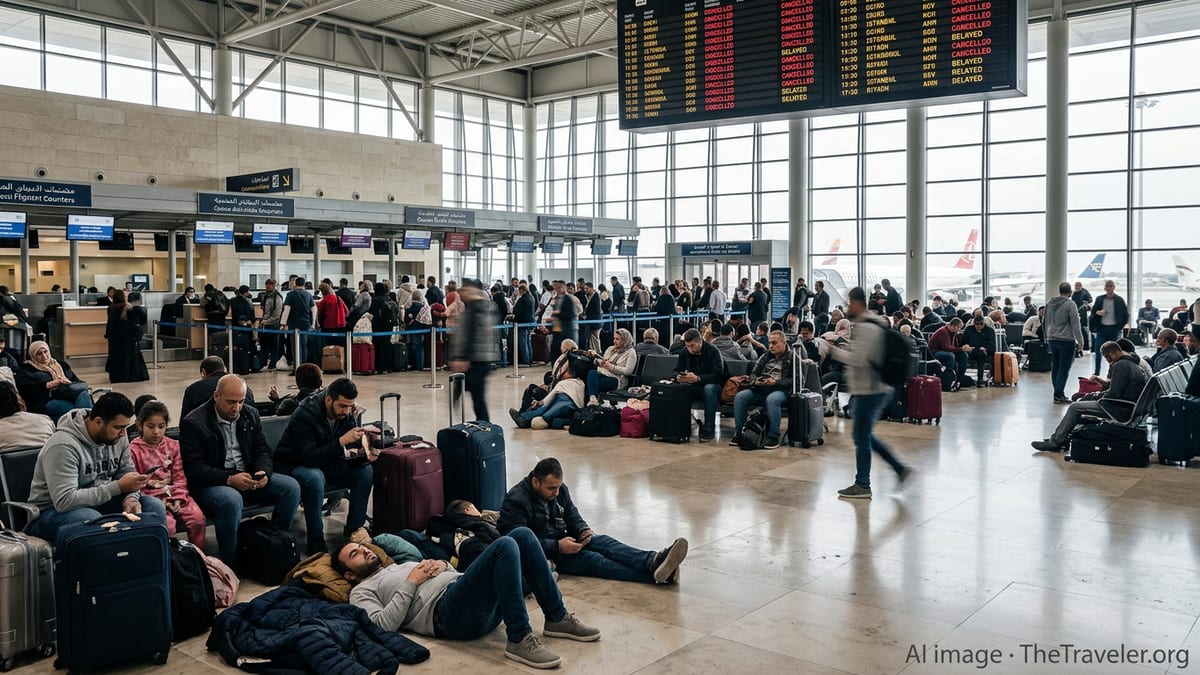
Passengers traveling through Amman’s Queen Alia International Airport on July 20 are facing heavy disruption, with around 50 delays and several cancellations affecting regional and long-haul routes across the Middle East, Europe, Asia and North America.
Get the latest news straight to your inbox!
Knock-on Disruptions Across Key Regional Hubs
Flight-status boards for Amman on July 20 show a busy schedule complicated by a growing mix of late departures and cancellations, particularly on services linking Jordan with Gulf and regional hubs. Publicly available tracking data indicates delays accumulating on flights serving major markets in the United Arab Emirates and Saudi Arabia, including services to Dubai, Abu Dhabi and Riyadh, as airlines navigate constrained airspace and shifting routings.
Schedules connecting Amman with Doha in Qatar and Istanbul in Turkey are also affected. While many flights are still operating, a significant share are departing behind schedule, creating missed connections for travelers heading onward to destinations in India, Romania and North America. Passengers on through-tickets are reporting extended layovers and rebookings as downstream flights fill up.
Regional aviation bulletins and operational updates highlight that Jordan’s airspace remains technically open, but airlines have been adjusting flight paths and timings in response to wider Gulf congestion and security-related constraints. These upstream pressures are contributing to aircraft and crew arriving late into Amman, triggering a cascade of delayed departures across the day.
Long-haul Routes to India, Europe and the United States Affected
The disruption is not limited to short- and medium-haul routes. Published schedules and live flight data show knock-on impacts on long-haul services from Amman to India, Europe and the United States. Flights linking Queen Alia International Airport with major Indian cities are experiencing schedule changes and rolling delays as carriers work around bottlenecks in Gulf and Saudi airspace, where many India-bound services would normally transit or connect.
Connections between Amman and European points such as Bucharest in Romania have also seen a combination of late departures and altered timings. These irregular operations are particularly challenging for passengers continuing onward to North America, where missed European connections can mean rebooking a full day later, given reduced long-haul capacity compared with pre-crisis patterns.
Services to the United States, often operated via regional or European hubs, are vulnerable when even one sector in the chain runs late. Travel forums and social media posts describe travelers bound for US cities facing repeated reissuance of boarding passes as late-inbound aircraft from Amman force partner airlines to reshuffle seats and prioritize those with imminent connections.
Operational Strain Amid Broader Middle East Aviation Turmoil
The disruption at Queen Alia International Airport is unfolding against a wider backdrop of turbulence in Middle East aviation. Over recent months, advisories from logistics firms, airline notices and regional media have documented widespread schedule reductions, reroutings and cancellations across the Gulf following heightened tensions involving Iran and neighboring states. Major carriers serving the region have trimmed frequencies or temporarily suspended certain routes, pushing more traffic and pressure onto the remaining operating flights and corridors.
Industry analyses highlight how partial airspace closures and tight capacity at large hubs such as Dubai, Abu Dhabi and Doha have forced airlines to fly longer routes, carry extra fuel, or rely on narrower corridors, which in turn absorb valuable aircraft and crew time. For secondary hubs like Amman, this can translate into aircraft arriving late, limited spare capacity to recover the schedule, and fewer alternative flights for stranded passengers to reroute onto.
Logistics and consultancy reports also point to regional air traffic control saturation and capacity constraints as compounding factors. When a single delay ripples through tightly scheduled fleets, smaller airports with fewer based aircraft, such as Queen Alia International Airport, have less flexibility to swap equipment or add extra sections, amplifying the visible impact on departure boards.
Passenger Experience: Crowded Gates and Uncertain Timelines
Travelers at Queen Alia International Airport on July 20 describe crowded gate areas, long lines at airline service desks and uncertainty about departure times. Publicly available photos and user accounts circulating on forums portray departure halls where passengers wait for rolling updates while announcements revise boarding and take-off estimates. Many report being advised to remain close to the gate as departure windows shift forward and backward.
The pattern of disruption appears uneven. Some early-morning and late-night departures have operated near on schedule, while mid-day and evening waves show clusters of delays of an hour or more. For families and transit passengers, particularly those connecting from neighboring countries through Amman to reach India, Europe or the United States, this means juggling visa time limits, hotel arrangements and missed events at their final destinations.
With a limited number of daily flights on some of the affected city pairs, same-day alternatives can be scarce. Once a flight to a key hub such as Dubai, Istanbul or Doha goes from delayed to cancelled, rebooking options quickly narrow, leaving some travelers facing overnight stays in Amman and unexpected expenses for accommodation, meals and ground transport.
Airlines Urge Early Check-ins as Situation Remains Fluid
Published airline advisories and airport guidance in recent weeks have increasingly urged passengers traveling through the region to monitor flight status closely and arrive early for departures. While official notices regarding Amman emphasize that Jordanian airspace and Queen Alia International Airport remain operational, carriers acknowledge that regional conditions can change quickly, leading to last-minute schedule updates and, in some cases, cancellations.
Travel agents and industry briefings recommend that passengers build additional buffer time into itineraries involving connections through Gulf or Saudi hubs, and consider flexible tickets where possible. For those flying from Jordan to destinations such as the UAE, Qatar, Saudi Arabia, Turkey, Romania, India and the United States, experts also suggest keeping essential items such as medications and travel documents in carry-on bags in case checked luggage is delayed or misrouted during irregular operations.
As the broader Middle East aviation network continues to adjust to evolving security and capacity constraints, further schedule volatility at Queen Alia International Airport cannot be ruled out. Travelers planning routes that rely on multiple regional connections may face ongoing uncertainty, and industry observers indicate that a return to more stable operations will depend on both geopolitical developments and the ability of airlines to restore capacity and rebuild reliable schedules over the coming weeks.