


More news on this day
Australian holidaymakers heading overseas are being urged to factor mounting flood risks into their plans, as a string of deadly deluges and disrupted flight corridors reshape travel across key destinations in Asia and Europe.
Get the latest news straight to your inbox!
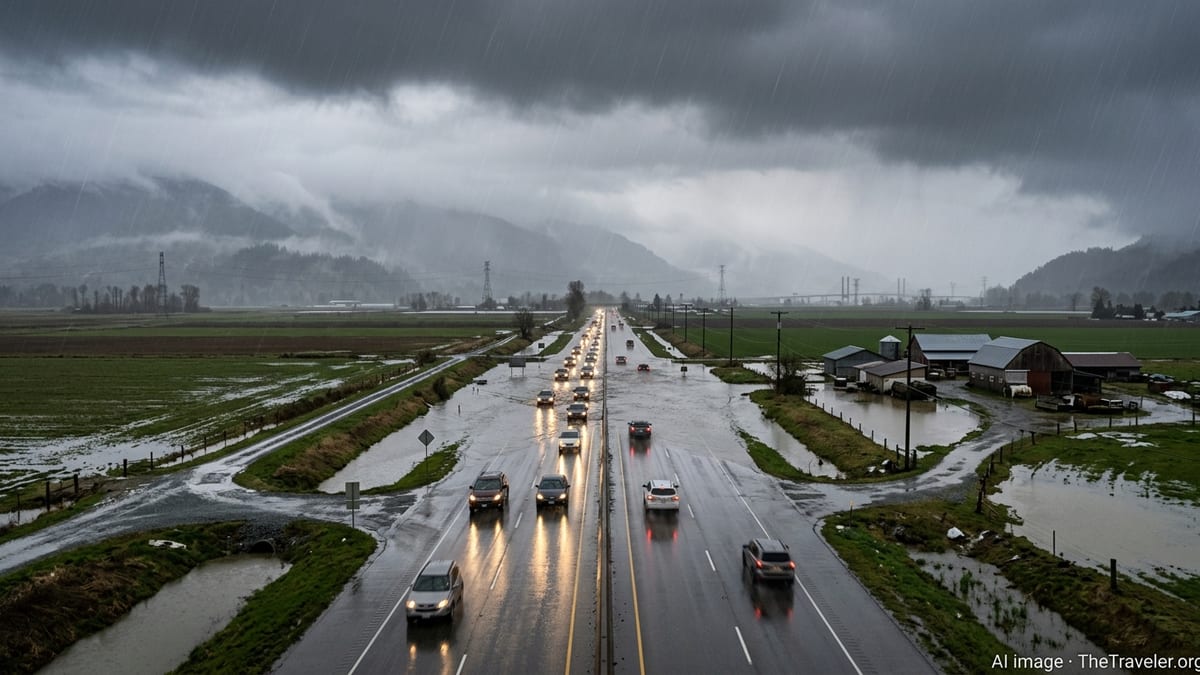
Deadly deluges disrupt airports and holiday hotspots
Recent flooding in major transit and tourism hubs has highlighted how quickly water can bring international travel to a standstill. In mid August 2026, record rainfall around Tokyo left thousands of passengers stranded at Narita Airport after access roads were inundated and power was cut to tens of thousands of nearby homes, according to coverage from Australian broadcasters. Publicly available reports describe highways linking the airport to central Tokyo being closed, forcing travellers onto heavily congested local routes and delaying both arrivals and departures.
In South and Southeast Asia, insurance and disaster analytics briefings show that consecutive monsoon seasons have produced extensive flooding across multiple countries, with river systems overtopping banks, critical roads washed out and regional airports temporarily closed. These impacts have occurred across destinations that attract large numbers of Australians for both independent travel and guided tours, including popular trekking regions and coastal resort belts.
Further west, Europe has also seen damaging floods on top of heatwaves and storms. In recent seasons, intense rainfall events have led to rapid river rises and flash flooding in parts of southern and eastern Europe, affecting smaller regional airports and rail links that many Australians use once they arrive on the continent. While primary gateways usually resume operations quickly, localised damage can leave secondary routes cut for days, forcing itinerary changes or last minute rebooking.
Analysts note that the pattern is not limited to one region or season. Tropical cyclones in the Pacific and Indian Oceans, monsoon surges across Asia and powerful winter storms in Europe all have the capacity to generate major flooding that overlaps with peak Australian travel periods, particularly the mid year northern summer and the end of year holiday window.
Government travel advisories sharpen focus on flood risk
The Australian Government’s Smartraveller service has stepped up references to flooding in several country specific advisories, reflecting the growing impact of extreme rainfall on safety, infrastructure and transport. The official portal, maintained by the Department of Foreign Affairs and Trade, now highlights natural hazard threats, including floods, on individual destination pages and explains how sudden weather events can trigger changes to risk levels and recommendations.
In late August 2026, specialist travel industry coverage reported that Smartraveller updated its advice for parts of Nepal and China after catastrophic flash flooding and mudslides along the border region. The changes advised against non essential travel within a defined distance of the Trishuli River in several Nepali districts and in adjoining areas of Tibet, following a surge of water and debris that destroyed infrastructure and swept through settlements. Reports indicated that dozens of people were unaccounted for, including Australian nationals, and that local authorities were still assessing damage to roads and trails.
Broader guidance from Australian agencies stresses that travel advisories are dynamic documents that can be revised when a natural disaster unfolds. Public information on past updates shows that large scale flooding, prolonged heavy rain or repeated storm systems are among the triggers for fresh warnings, temporary advice to reconsider travel, or location specific cautions that do not cover an entire country but focus on affected provinces or regions.
Travellers are encouraged by government portals and consumer information services to subscribe to email updates for every country they plan to visit or transit, so they receive notification if flood conditions escalate in the lead up to departure or while they are already overseas. These alerts are designed to complement, not replace, local weather warnings issued by national meteorological agencies in each destination.
Flight corridors, transit hubs and cascading delays
The combination of severe weather and geopolitical constraints has increased pressure on a limited number of long haul flight corridors between Australia and the northern hemisphere. Travel industry bulletins over recent months describe a squeeze on air routes between Asia and Europe after conflict related restrictions reduced use of some Middle Eastern and Eurasian airspace. That has left airlines more reliant on a narrower set of tracks through safer regions, making operations more vulnerable when storms or flooding affect a major hub.
The August flooding around Tokyo demonstrated how localised events can ripple through the system. With access roads underwater and parts of the surrounding region under power cuts, thousands of passengers experienced delays or were unable to reach the airport in time for flights. Airlines were forced to adjust schedules, and ground transport operators struggled to move travellers between the airport and accommodation in the capital due to closed highways and rail disruption.
Similar dynamics have played out at regional airports in Europe and Asia that serve as connection points for Australians heading to smaller cities, islands or ski areas. When nearby rivers break their banks, runways and access roads can be closed as a precaution even if terminal buildings remain dry. That can result in missed connections, unscheduled overnight stays and the need to re route passengers through alternative hubs that may already be busy.
Publicly available advice from both government services and airline notifications emphasises that flood related disruption can occur with little warning during wet seasons and that travellers should build flexibility into itineraries. This can include longer layovers in flood prone cities, choosing routing options that offer more than one daily service, and allowing additional time between domestic and international legs where overland transfers are required.
Insurance gaps exposed by climate driven disasters
Insurance and risk consultancies have highlighted a widening gap between the economic damage caused by flooding and the proportion of losses that are covered by insurance, particularly in South and Southeast Asia. Recent reports on the 2025 monsoon season describe multi billion dollar flood losses across several countries, much of it uninsured, with significant impacts on transport, tourism infrastructure and small businesses that cater to foreign visitors.
For Australian travellers, this protection gap can translate into unexpected costs when itineraries are disrupted. Many standard travel insurance policies sold in Australia do cover trip cancellation or additional expenses caused by severe weather, but they usually require that flooding be unforeseen at the time of booking and that travellers heed any official warnings that arise later. If a region is already under an alert for major flooding when a holiday is purchased, insurers may treat subsequent disruption as a known event and limit cover.
Consumer advocates advise travellers to read product disclosure statements closely to understand whether their policy distinguishes between general severe weather and declared natural disasters, and whether it imposes different claim limits for each. Some policies may provide generous cover for delayed flights but only modest allowances for extra accommodation if a road or rail line is washed out, while others may require written confirmation from transport providers that services were cancelled due to flooding.
Risk specialists also note that longer supply chains and tighter flight schedules mean that floods occurring far from a resort or city can still affect visiting Australians. For example, inundation at a regional fuel depot or railway junction can lead to shortages or service cuts hundreds of kilometres away. Insurance cover that includes additional transport costs and alternative routing can help manage these cascading effects, although travellers need to check specific conditions before relying on such features.
Practical steps for Aussies planning trips through flood seasons
Government travel portals and independent planning guides offer a range of concrete steps Australians can take to reduce the impact of flood related disruption. A central recommendation is to check seasonal rainfall patterns, monsoon calendars and cyclone windows for each destination, then align travel dates and routes with lower risk periods where possible. For example, Australians heading to parts of South Asia or mainland Southeast Asia are encouraged to understand when local rivers are usually highest and when hillside regions are most prone to landslides.
Another key action is to map critical legs of the journey, including transfers between airports, train stations and ferry ports, and to identify which of those rely on roads or bridges that may be vulnerable to rising water. In some cases, travellers can choose alternative entry points, such as flying into a city with better elevated rail access to the centre rather than relying on a single motorway that passes through low lying areas.
Australian agencies also promote registration with Smartraveller before departure and urge travellers to keep copies of identity documents and insurance policies in cloud storage or secure apps so they can be accessed if bags are lost during an evacuation. Staying informed via local news outlets, official meteorological websites and airport or airline alert systems is highlighted as essential, particularly during peak wet seasons when conditions can change within hours.
Finally, travel planners recommend building extra flexibility into both budgets and itineraries. Allowing room for an additional night or two in major hubs, choosing airfares that permit date changes for a manageable fee and keeping some contingency funds for rebooking or emergency accommodation can make it easier to adapt when floods alter plans. As extreme rainfall events become more frequent in key outbound markets, these strategies are increasingly seen as part of basic preparation for Australians heading overseas.