


For most arrivals at Malaga Costa del Sol Airport, the C1 Cercanías train is the fastest and cheapest way to reach Malaga city and the beach resorts of the Costa del Sol. This guide walks you through how the line works in real life, where it stops, what tickets cost, how often trains run, and the small mistakes that catch many first-time visitors.
Get the latest updates straight to your inbox!
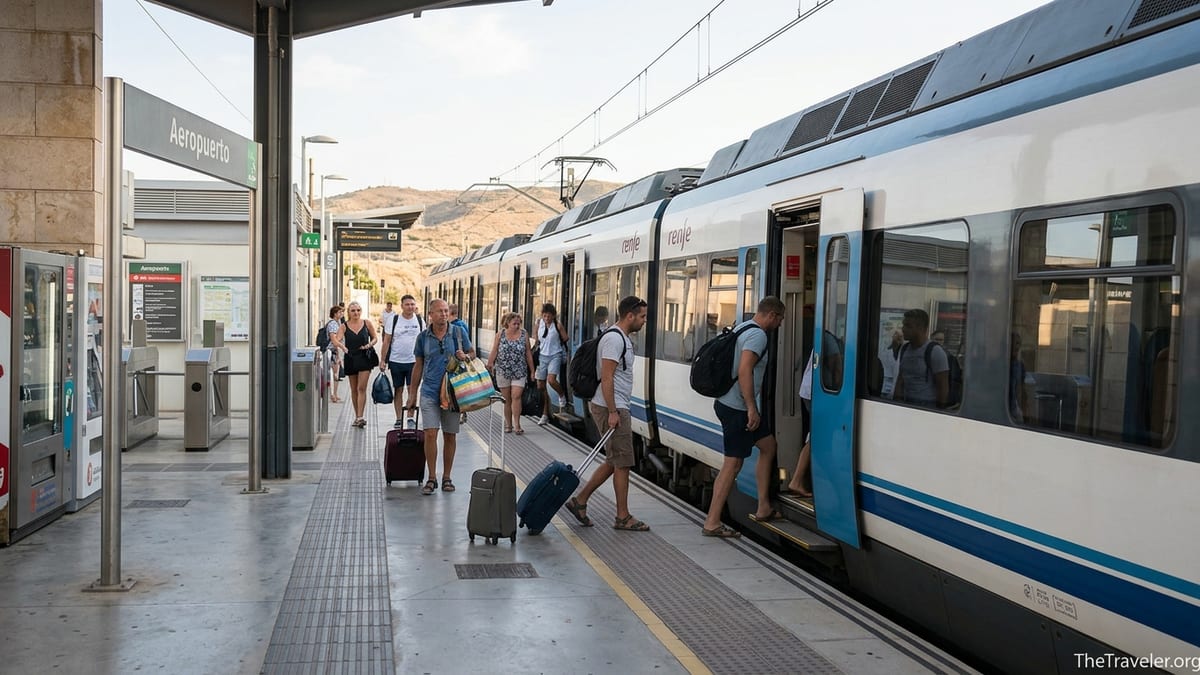
Understanding the C1 Line from Malaga Airport
The C1 is a suburban Cercanías train line that links Malaga Centro Alameda in the city center with Fuengirola on the western Costa del Sol, passing directly under Malaga Costa del Sol Airport. From the airport station you can travel east into central Malaga or west to holiday towns including Torremolinos, Benalmádena and Fuengirola on the same line without changing trains.
From the airport to Malaga María Zambrano, the city’s main rail hub, the ride usually takes around 8 minutes, and about 12 minutes to the final city stop, Málaga Centro Alameda. In the other direction, expect roughly 10 minutes from the airport to Torremolinos, around 18–20 minutes to Benalmádena Arroyo de la Miel, and about 30–35 minutes to Fuengirola, depending on the specific service.
Trains typically run every 20 minutes during the day, with slightly longer gaps late at night or early in the morning. In practical terms, this means that if you walk straight from arrivals to the station, you will rarely wait more than one train cycle before you are on your way, even if you have just missed one.
The C1 line uses modern, air conditioned EMU trains with space for luggage and standing passengers. While you will sometimes find a crowd in high season, especially on services heading towards the resorts on summer afternoons, trains remain manageable compared with peak time airport buses or taxi queues.
Route Overview: From Málaga Centro Alameda to Fuengirola
The C1 route starts at Málaga Centro Alameda, a central underground station close to the historic center, and then continues to Málaga María Zambrano, the city’s main intercity station and shopping complex. From there it calls at Victoria Kent, then crosses the Guadalhorce area before reaching the underground airport stop, signposted as Aeropuerto.
After the airport, trains head west and stop at Plaza Mayor, which serves a large retail and leisure complex, then at a series of coastal and residential stations through Torremolinos: Los Álamos, La Colina, Torremolinos, Montemar Alto and El Pinillo. These stops give access to a mix of beachfront hotels, residential areas and hillside apartments.
Further along, the line enters Benalmádena, serving Benalmádena Arroyo de la Miel, then continues via Torremuelle, Carvajal, Torreblanca and Los Boliches before terminating at Fuengirola. These stations line up with some of the most popular Costa del Sol holiday areas, from Benalmádena’s marina and cable car to Fuengirola’s long seafront promenade and shopping streets.
For most visitors, the key thing to remember is that it is a single continuous line. If you board at the airport, a train marked “Fuengirola” will take you directly to all Costa del Sol stops without a change, and a train marked “Málaga Centro Alameda” will take you directly into the city, again without a change.
Key City Stations: Málaga Centro Alameda and María Zambrano
Málaga Centro Alameda is the most convenient stop for the historic center, the cathedral area and the main sightseeing district. From the platform, you emerge near the river; from there it is roughly a 10 to 15 minute walk to landmarks such as Calle Larios, the cathedral and the Alcazaba. Many central hotels and apartments promote “walking distance from Centro Alameda” specifically because this station gives a quick connection back to the airport and the coastal resorts.
Málaga María Zambrano is the primary rail gateway for long distance travel. High speed AVE services and other intercity trains depart from here towards Madrid, Barcelona, Seville, Granada and beyond. If you are connecting directly from a flight to a long distance train, you simply ride the C1 three stops from the airport, get off at María Zambrano and walk up to the main concourse. The Cercanías platforms are within the same complex, so you do not leave the station building to change.
For travelers staying in the Soho neighborhood or near the main shopping mall attached to María Zambrano, it can be more convenient to get off here rather than going on to Centro Alameda. For example, if you have booked a hotel around Vialia or the main station area, you can be checked in within 5 to 10 minutes of stepping off the C1, which saves backtracking from the old town.
Many visitors also use María Zambrano as a base for day trips. A typical pattern is to take the C1 from the airport to María Zambrano on arrival, stay in a nearby hotel, and then use the same station for day trips by train to cities such as Córdoba or Granada, while using the C1 and local buses for local exploration.
Coastal Stops: Torremolinos, Benalmádena and Fuengirola
Torremolinos is the first major coastal resort west of the airport and has several C1 stops. The main Torremolinos station is in a cutting below street level in the town center, a short walk from Calle San Miguel and the steps or lifts leading down to the beaches. This station is particularly useful if you are staying near Bajondillo or the central promenade, allowing you to ride from the airport to your hotel area in roughly 10 minutes and walk the last section.
Benalmádena’s principal stop is Arroyo de la Miel. From here you can walk down towards Benalmádena Costa and the marina, or up towards residential streets and the cable car that climbs Mount Calamorro. For travelers staying in hotels behind the marina or around Parque de la Paloma, this stop is often the most practical, though be prepared for some hills or a short taxi ride if you have heavy luggage or children.
Fuengirola is the C1 terminus and a lively, compact town with a long seafront. The train station is just inland from the promenade, close to the main bus station and surrounded by shops, cafés and apartment blocks. Many package hotels along Fuengirola’s beachfront are within walking distance of either Fuengirola or Los Boliches station. For instance, a family staying beside the main promenade can usually pull their suitcases from the station to the hotel in 10 to 15 minutes, avoiding the cost of a 30 kilometre taxi ride from the airport.
A useful rule of thumb is to check on a map which C1 station is closest to your accommodation and plan to get off there rather than automatically staying to the end of the line. On the Costa del Sol, walking distances can be longer than they appear because of hills and winding streets, so choosing the right stop can save both time and energy.
Tickets, Prices and How to Pay
Ticket prices on the C1 line are relatively low compared with taxis or private transfers. A typical single ticket from Malaga Airport to Málaga Centro Alameda or María Zambrano is around a couple of euros per adult, and to Fuengirola from the airport remains under the price of a short taxi hop in many major European cities. Children and certain passes may receive discounts, and fares vary slightly by zone, so you will see different prices for, say, Aeropuerto to Torremolinos versus Aeropuerto to Fuengirola.
At the airport station, you can buy a paper ticket at the vending machines by selecting your destination station. Machines accept cards and usually cash, though cash acceptance is not guaranteed at all times. Make sure to keep the ticket, as you will often need it both to enter and to exit the gates at your destination station.
Many visitors now skip paper tickets and use a contactless bank card or phone wallet directly at the ticket barriers. You simply tap your card or device when entering and again when exiting. The correct fare is calculated automatically. This can be convenient if you arrive with luggage and do not want to queue at the machines, but it is important that each traveler has their own card or device. Sharing a single card for two people at the gates does not work properly and can generate unexpected charges or gate errors.
Locals and long stay visitors sometimes use rechargeable transport cards issued by the regional transport authority, which offer slightly lower per-journey prices when loaded with credit. If you are staying for several weeks and plan repeated trips along the C1, it can be worth asking at a staffed station in Malaga about these options, but for most short holiday stays, a straightforward single ticket or contactless payment is sufficient.
Frequency, Operating Hours and Realistic Timings
Under normal conditions, C1 trains run roughly every 20 minutes throughout most of the day. During peak commuting hours or late evenings the gaps can stretch closer to 30 minutes, and there may be slight seasonal adjustments, but the pattern is regular enough that you can treat it as a turn up and go service rather than needing to time your arrival to a particular departure.
First and last trains vary slightly by day. On many days you can catch an early morning service from Málaga Centro Alameda out to the airport in time for the first wave of departures, and there are late services from the airport towards both Malaga and Fuengirola that continue past 23:00. However, if your flight arrives around midnight or later, especially in winter, you should always check the latest timetable shortly before traveling and be prepared with a backup taxi option in case there are changes or delays.
In practice, the door to door time from landing to reaching Malaga city center by C1 can be surprisingly short if you travel carry on only. For example, a traveler landing on a mid afternoon flight might clear passport control and walk to the station in 15 to 20 minutes, wait 5 to 10 minutes for the next train, ride 12 minutes into Málaga Centro Alameda, and be checking in at a central hotel within 45 minutes of touchdown. By contrast, a similar journey by taxi in heavy summer traffic can take longer and cost many times the fare.
For coastal resorts, allow more padding. From touchdown to a hotel in central Fuengirola using the train, a realistic estimate is around 1 hour to 1 hour 15 minutes, assuming no unusual queues at border control and a reasonable connection to a train. This still compares favorably with road transfers at peak times, and you avoid potential issues such as shortages of large taxis for families with luggage.
How to Use the Airport Station: Step by Step
Malaga Airport’s train station is located just outside Terminal 3. After exiting customs into the arrivals hall, follow the signs for “Trains” or “Cercanías” and walk along the covered walkway down a short ramp. The walk typically takes around 5 minutes at a normal pace, and you do not need to cross any busy roads; everything is within the airport complex.
Once at the station, you will find ticket machines before the barriers. If you prefer a paper ticket, choose your destination from the on screen menu, pay by card or cash if available, and collect the ticket. If you intend to use contactless payment, you can go directly to the barriers. In either case, look at the electronic boards above the platforms; they show the next departures and whether the train is heading towards Málaga Centro Alameda or Fuengirola.
Board any train going in your required direction; there are no seat reservations. If you are carrying large suitcases, the open areas by the doors often have enough space to stand with them. Keep your ticket or remember which payment card you used, as you will need it to exit the system at your destination. When you arrive at a central station such as María Zambrano or Centro Alameda, follow the “Salida” (Exit) signs to reach street level.
If you are changing from the C1 to another train at María Zambrano, you stay within the same station complex but may have to pass through additional gates going from the Cercanías area to the mainline platforms. Allow at least 10 to 15 minutes between the scheduled arrival of your C1 train and the departure of a long distance service, more if you are traveling with young children or mobility issues.
Common Mistakes and How to Avoid Them
One of the most frequent mistakes new arrivals make is boarding a train in the wrong direction. At the airport station, both directions use adjacent platforms, and tired travelers sometimes step onto a train bound for Fuengirola when they meant to go into Malaga, or the reverse. To avoid this, always check the destination on the front or side screens of the train and confirm against the electronic departure board before you step on.
Another common issue involves ticketing. When using contactless payment for the first time, some passengers forget to tap out at their destination station, which can result in the system charging a default higher fare or causing confusion on their next trip. Make a habit of tapping in and out every time, even if the exit gates are open. Similarly, if you buy a paper ticket, do not throw it away once you have passed through the entry gates; you will usually need it again to get out.
Travelers with heavy luggage sometimes underestimate walking distances from the station to their accommodation, especially in hilly areas of Benalmádena or residential zones above Torremolinos. Before deciding to rely entirely on walking, check the route on a map and consider whether a short taxi ride from the nearest C1 station might make the last stretch much easier, particularly in hot weather or if you are arriving late in the evening.
Finally, some visitors assume the C1 runs all night in high summer and do not check the timetable when booking very late flights. While there are late services, there is not a 24 hour service. If your flight is scheduled to land close to or after midnight, especially outside peak season, always confirm that a suitable train is running on your specific date, and have a backup plan using official taxis from the airport rank if needed.
The Takeaway
The C1 train line is the backbone of public transport between Malaga Airport, the city center and the main resorts of the western Costa del Sol. It offers a rare combination of low cost, predictable journey times and simple, step free access from the terminal to the platform, which makes it especially attractive for independent travelers, families and budget conscious visitors.
If you understand the basic structure of the line, recognize the key stations like Málaga Centro Alameda, María Zambrano, Torremolinos, Benalmádena Arroyo de la Miel and Fuengirola, and pay a little attention to the direction of travel and ticketing, you can move between the airport, city and coast with minimal stress. For most trips, checking the latest schedule, keeping your ticket or payment card handy and planning your walk from station to hotel are all you need.
While taxis and private transfers still have their place, especially for very late arrivals or groups with special mobility needs, the C1 is often the option that locals quietly recommend and visitors return to on repeat trips. Once you have used it once or twice, the journey becomes another straightforward part of your Costa del Sol routine, no more complicated than taking a metro in any other European city.
FAQ
Q1. How much does the C1 train from Malaga Airport to the city center cost?
The fare is usually a few euros per adult for a single ticket from the airport to Málaga Centro Alameda or María Zambrano, with exact prices depending on zones and any discounts. It remains far cheaper than a taxi and is competitively priced compared with other European airport trains.
Q2. How often does the C1 train run from Malaga Airport?
Trains generally run about every 20 minutes throughout most of the day, with slightly longer intervals late at night or early in the morning. The frequency is high enough that most travelers can simply walk to the station and wait for the next service without strictly timing their arrival.
Q3. How long does the C1 train take from Malaga Airport to Málaga Centro Alameda?
The journey from the airport to Málaga María Zambrano is around 8 minutes, and to Málaga Centro Alameda about 12 minutes under normal conditions. Including time to walk to and from platforms, most travelers reach central hotels in roughly half an hour to 45 minutes after landing if queues are moderate.
Q4. Can I take the C1 train directly from Malaga Airport to Torremolinos, Benalmádena or Fuengirola?
Yes. The same C1 line from the airport continues west along the coast to Torremolinos, Benalmádena Arroyo de la Miel and finally Fuengirola. There is no need to change trains; you simply stay on board until your chosen station.
Q5. Do I need to buy a ticket in advance for the C1 train?
No advance purchase is required. Most passengers buy tickets from the vending machines at the station just before traveling or use contactless payment at the barriers. Seats are unreserved, and the line functions as a commuter style service.
Q6. Can I pay for the C1 train with a contactless bank card or phone?
Yes. At many stations, including the airport, you can tap a contactless bank card or phone wallet at the gates to enter and exit. Each passenger should use their own card or device, and it is important to tap both when starting and when finishing the journey so the correct fare is calculated.
Q7. Where is the train station at Malaga Airport?
The station is located just outside Terminal 3. After leaving the arrivals hall, follow signs for “Trains” or “Cercanías” along a covered walkway. The walk typically takes around five minutes and is step free, suitable for luggage and prams.
Q8. Is the C1 train suitable if I have large luggage or children?
Yes, the trains are used daily by passengers with suitcases, pushchairs and beach gear. There are wide doors and standing areas where you can keep luggage close by. However, at very busy times, particularly in summer, expect crowds and consider avoiding the heaviest rush if you can.
Q9. What if my flight arrives very late at night?
The C1 line has late evening services, but it does not run 24 hours. If your plane is scheduled to land close to or after midnight, it is essential to check the specific timetable for your arrival date and have a backup plan, such as using an official airport taxi, in case you miss the last train.
Q10. Is the C1 train safer than taking a taxi from the airport?
Both the official airport taxis and the C1 train are generally considered safe. The train offers predictable prices and avoids road traffic, while taxis can be more convenient for late arrivals, travelers with mobility issues or those staying far from any C1 station. Choosing between them usually comes down to budget, arrival time and the exact location of your accommodation.