


More news on this day
New Zealand’s Ministry of Foreign Affairs and Trade (MFAT) is urging travellers to prepare for sudden airspace closures and major route disruptions as it upgrades a series of travel advisories across the Middle East, citing a volatile security environment and the risk of further missile or drone incidents affecting civilian aviation.
Get the latest news straight to your inbox!
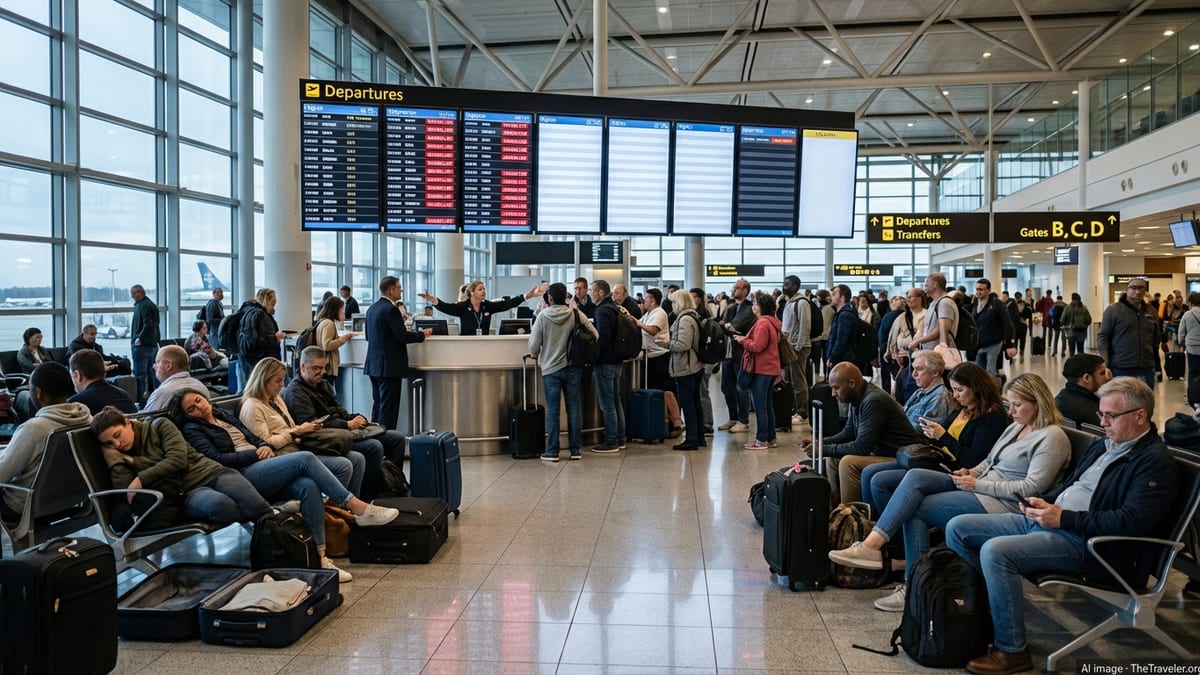
Travel advisories raised as regional risk picture worsens
Recent updates to MFAT’s SafeTravel platform show higher alert levels for multiple Middle Eastern destinations, with several now rated “avoid non-essential travel” or “do not travel.” Publicly available guidance highlights the danger of ongoing conflict, sporadic attacks and the potential for escalation that may affect both residents and those merely transiting through major hubs.
The revised advice emphasises that travellers may be affected even if their final destination lies outside the region. Long-haul itineraries connecting New Zealand and Europe, Africa or parts of Asia commonly route through Gulf hubs, and MFAT notes that any deterioration in the security situation could trigger rapid changes to airport operations and route availability.
In parallel, other governments have also updated their global guidance in response to heightened Middle East tensions, underscoring a broader international assessment that aviation and critical infrastructure in the region remain exposed to sudden disruption.
MFAT’s messaging stresses that situations can evolve quickly, and that advisories for individual countries may be adjusted at short notice as new information emerges or as local authorities impose additional restrictions on airspace and commercial flights.
Expect last‑minute airspace closures and diversions
International aviation data and published coverage on recent conflict episodes in the region point to a pattern of short‑notice airspace shutdowns, partial flight bans and rerouting of key corridors linking Europe and Asia. During previous spikes in tension, several Middle Eastern states temporarily closed their skies to civil aircraft, forcing airlines to divert or cancel thousands of services.
MFAT’s latest commentary builds on those experiences, warning New Zealanders to anticipate similar measures if fighting intensifies or new strikes occur. Travellers are advised that drones or missiles could target infrastructure with little or no warning, prompting air navigation authorities to halt or severely restrict overflights until risk assessments can be updated.
For passengers, airspace closures typically translate into cascading operational issues: extended flight times as aircraft detour around restricted zones, missed connections at hubs, crew and aircraft being out of position, and tight bottlenecks on remaining viable routes. Even travellers whose tickets do not explicitly reference Middle Eastern airports can be affected if their airline relies on those corridors for fleet rotations.
Industry briefings in recent months describe airlines running a range of contingency plans, from pre‑planned diversion routes to temporary suspension of services through specific hubs. However, MFAT cautions that capacity on alternative routings is limited, meaning disrupted travellers may face long waits for rebooking, higher prices on unaffected routes and potential out‑of‑pocket costs for accommodation and meals.
Insurance, transit hubs and the fine print
MFAT’s strengthened messaging is closely echoed in updated advisories from major travel insurers connected to the New Zealand market. Several recent insurance notices flag the Middle East security situation as a known event and explicitly refer to MFAT’s “do not travel” and “avoid non‑essential travel” classifications when outlining what is, and is not, covered.
Policy documents released in recent months indicate that travellers who ignore formal government advice and continue to visit or transit through destinations under the highest warning levels may find themselves without cover for disruption or evacuation costs linked to conflict. War and civil unrest are frequently listed as exclusions, and some providers stress that once an event is widely publicised, new policies may no longer cover related losses.
The focus on transit hubs is particularly significant for New Zealanders bound for Europe or the United Kingdom. Government and industry material points out that popular connection points such as Dubai, Abu Dhabi and Doha have already faced higher alert levels, with MFAT advising against non‑essential or all travel in periods of acute tension. Even a short scheduled stopover may fall under that advice if it involves disembarkation or an overnight stay.
Travellers are being encouraged to scrutinise their itineraries before departure, including code‑share segments operated by partner airlines, to understand exactly which airports and airspaces their journey will touch. Rebooking to routings through Asia or North America, where available, is emerging as a preferred strategy for those seeking to minimise exposure to potential Middle East shutdowns.
Knock‑on impacts for fuel, freight and global routes
The aviation challenges are part of a wider network of disruptions linked to the regional crisis. Analytical reports commissioned by New Zealand agencies describe how earlier closures of vital maritime corridors and regional ports have tightened global fuel supplies and complicated airline refuelling strategies, especially on long‑haul routes that already operate near the limits of aircraft range.
With some Middle Eastern refuelling points periodically curtailed, carriers have turned to alternative stops in Asia and elsewhere, increasing congestion at certain airports and adding operational complexity. For passengers, the outcome may be longer flight times, more technical stops and reduced flexibility when trying to change dates or routing close to departure.
Freight movements are also affected. Government trade updates note that rerouting cargo away from traditional Middle East hubs has raised transit times and costs for exporters and importers, contributing to broader price pressures. Airlines juggling both passenger and freight commitments may adjust schedules or aircraft types on specific routes, which can flow through to seat availability for leisure travellers.
MFAT’s public material links these dynamics directly to its travel warnings, arguing that the same instability affecting trade and logistics underscores the elevated risk profile for tourists and business travellers contemplating transit through the region.
What New Zealand travellers are urged to do now
In light of the raised advisories, MFAT’s guidance for New Zealanders planning international trips places heavy emphasis on preparation and flexibility. Travellers are urged to register their details on official consular platforms before departure so they can receive security updates and alerts if the situation deteriorates while they are overseas.
Current advice also highlights the importance of maintaining flexible bookings, including tickets that can be rerouted without excessive penalties and accommodation that allows for changes if flights are cancelled or diverted. Travellers are encouraged to keep sufficient funds, either in reserve cash or on payment cards, to cover unexpected expenses such as extra nights in transit or last‑minute alternative flights.
Prospective visitors are being asked to read both MFAT advisories and the terms of their travel insurance in full before committing to itineraries that involve Middle Eastern airspace. Where possible, booking on a single ticket through one airline group is recommended, as separate tickets increase the risk of being stranded mid‑journey if one leg is disrupted and the other carrier is not obliged to assist.
For those already overseas or currently booked to travel through the region, MFAT’s latest notices recommend staying in close contact with airlines, monitoring reputable news outlets for developments and being ready to adjust plans quickly if airspace closures or new route restrictions are announced.