


Landing at Miami International Airport for the first time can feel intense. The terminal seems to go on forever, boarding calls echo in English and Spanish, and the air outside is thick with Florida heat. With a little advance insight, though, MIA becomes much easier to navigate. This guide walks first-time Miami travelers through the airport’s layout, airlines, transport options, parking, hotels, lounges, and practical tips so you can move confidently from plane door to palm trees.
Get the latest updates straight to your inbox!
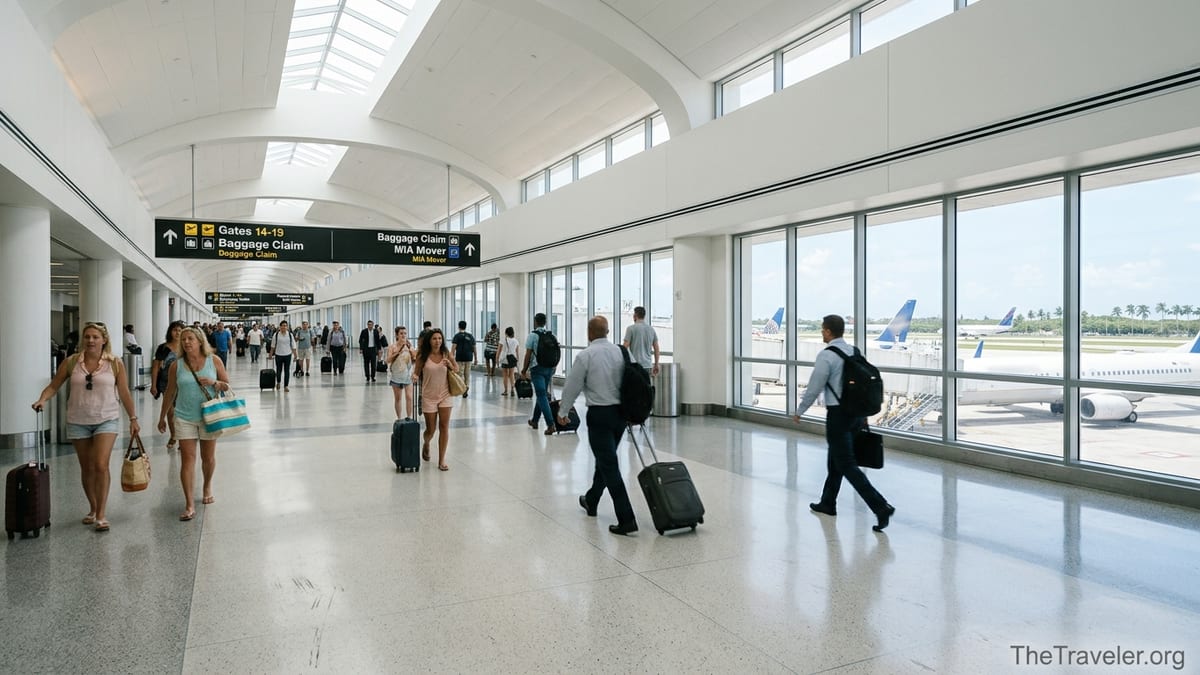
Understanding MIA’s Terminals and Layout
Miami International Airport is essentially one huge U-shaped building split into three terminals and six concourses. Locals and staff usually refer to areas by color and letter: the North Terminal (blue, Concourse D), the Central Terminal (yellow, Concourses E, F and G), and the South Terminal (red, Concourses H and J). All three sections are connected inside the building, so you can walk between them airside or landside without leaving the airport, although distances can be long if you are changing concourses.
North Terminal with its long Concourse D is home to the bulk of American Airlines flights and many of its regional and international partners. Concourse D alone stretches roughly 1.2 miles and has a Skytrain running above the concourse that stops at four stations to help you move quickly between gate areas. If you are flying American to or from Miami, there is a high chance your aircraft will use this concourse.
Central Terminal, serving Concourses E, F and G, is more mixed. Concourse E handles some American flights plus oneworld partners and a range of Caribbean and Latin American carriers. Concourses F and G see a combination of U.S. airlines and international operators, including several low cost and regional airlines. South Terminal, with Concourses H and J, is heavily international, hosting many European and South American carriers and some North American airlines that operate long haul services.
Because the building is continuous, walking from North to South Terminal is technically possible inside security in many cases, but it can take 20 to 30 minutes at a normal walking pace. If you have a tight connection and need to change concourses, use the Skytrain in Concourse D where available, moving walkways where you see them, and pay careful attention to airport signage for shortcuts and connector corridors.
Airlines, Arrivals and Departures
American Airlines dominates Miami International. It operates from the North Terminal and uses Concourse D as its main base, with some flights using nearby Concourse E. If you are connecting onto another American or oneworld flight, your connection will likely stay within the North or Central Terminal, which simplifies things. Many travelers flying from cities like New York, Dallas or Chicago into Miami for a Caribbean or Latin American connection will arrive and depart from Concourse D without switching terminals.
Other major U.S. carriers such as Delta, United, Southwest, JetBlue and Spirit typically operate from the Central or South Terminals, especially in Concourses F, G, H and J. Various international airlines from Europe, the Middle East and South America, including large network carriers, arrive into the South Terminal and use the federal inspection facilities there for immigration and customs. Always confirm your departure concourse on your boarding pass or with your airline app on the day of travel, since some carriers operate from more than one concourse depending on route and time.
Arriving passengers will follow signs to baggage claim and customs. International arrivals pass through U.S. Customs and Border Protection in areas linked to each terminal. Wait times can fluctuate depending on the time of day and the number of simultaneous long haul arrivals. Many travelers report morning waves from overnight flights from South America and Europe as the busiest. If you are a U.S. citizen or eligible foreign national, using Mobile Passport Control or Global Entry can significantly reduce your time in line compared with regular inspection queues.
For departures, arrive earlier than you might for a smaller U.S. airport. For domestic flights at MIA, many travelers aim to be at the check in area a solid two hours before departure, and for international flights, two and a half to three hours is a comfortable margin, especially during the winter high season or holiday periods. Security checkpoint lines vary by time and location; passengers using TSA PreCheck or CLEAR will often find faster screening lanes in the main terminal areas.
Ground Transportation, Rideshares and Public Transit
Once you clear customs or baggage claim, you will find clearly signed exits for taxis, rideshare pickups and the elevated MIA Mover train. Taxis line up outside the lower level; fares to popular areas such as South Beach, Downtown Miami and Brickell are typically metered, with approximate costs that can range from around 25 to 40 dollars depending on distance, traffic and tolls. Many visitors like taxis for the simplicity: you simply walk to the taxi stand and take the next available car without dealing with apps or pickup zones.
Rideshare services such as Uber and Lyft are widely used from Miami International. Once you request a car in the app, you will be directed to a designated pickup area, usually on the departures or arrivals level depending on current airport policy. In light to moderate traffic, a mid-afternoon UberX to South Beach might run around 25 to 35 dollars, while a ride to Brickell or Downtown can be slightly less. During busy weekends or major events like Art Basel or the Miami Grand Prix, surge pricing can significantly increase these fares, so checking the fare estimate in the app before committing is important.
For travelers looking to save money or avoid traffic, Miami’s public transit links are located at the Miami Intermodal Center, connected to the terminal by the free MIA Mover. This automated people mover runs between the main terminal complex and the Intermodal Center in a few minutes. At the center, you can connect to the Metrorail Orange Line, Tri Rail commuter rail, and multiple Metrobus routes. The Orange Line runs from the airport toward Downtown, Brickell and south to Dadeland, making it a practical option for travelers staying near stations like Government Center, Brickell or Dadeland South.
To reach central Miami by train, you ride the MIA Mover to the Intermodal Center, tap onto Metrorail and board the Orange Line southbound. A single Metrorail ride is usually a modest flat fare, and stored value cards can be used for transfers to Metrobus. For travelers arriving from or continuing to Fort Lauderdale or West Palm Beach, Tri Rail commuter trains stop at the Intermodal Center and connect with stations all the way north through Broward and Palm Beach counties. If you are connecting onward to the high speed Brightline service at MiamiCentral Station downtown, one straightforward route is to take Metrorail from the airport to Government Center and then walk or transfer a short distance to the Brightline terminal.
Parking, Rental Cars and Driving Away from MIA
If you are driving to Miami International or renting a car, the main parking options sit within or next to the U shaped terminal loop. The large Dolphin Garage generally serves the North Terminal side, while the Flamingo Garage is closer to the Central and South Terminals. Both offer covered parking connected to the terminal by walkways and level changes. Daily parking rates are higher for these garages, but they are the most convenient option if you are dropping someone off for a few hours or leaving your own car while on a short trip.
For longer stays, the airport and nearby private operators offer more economical long term and economy parking options. These are often located a bit farther from the terminal loop and served by shuttle buses. To choose between them, think about the length of your trip and tolerance for shuttle time. For example, a weeklong vacation might make a remote lot at a lower daily rate more attractive, even if it requires a 10 to 15 minute shuttle ride to the terminal.
All major rental car brands operate out of the consolidated Rental Car Center located at the Miami Intermodal Center. After you collect your bags, you follow the purple MIA Mover signs, ride the free train to the Intermodal Center, and then walk directly into the Rental Car Center. Counters for companies like Alamo, Avis, Budget, Enterprise, Hertz, National and others are grouped in one building, with multi level garages housing the vehicles. When comparing prices, remember to factor in daily rental fees, local taxes, insurance if needed and potential toll charges. Many Miami area highways use electronic tolling, and rental car companies often sell toll packages or charge per use fees when you pass through toll gantries.
Driving away from MIA, you will typically join State Road 836 (the Dolphin Expressway) or Le Jeune Road to connect with parts of Miami, Miami Beach and the wider South Florida region. Traffic can be heavy at peak commute hours, especially on weekdays between roughly 7 and 9 a.m. and 4 and 7 p.m. Allow extra time if you are aiming for a specific check in or tour time in places like Miami Beach, Coral Gables or Aventura, and be prepared for slowdowns near downtown interchanges.
Hotels in and Around Miami International Airport
For travelers with overnight layovers, very early departures or late arrivals, staying close to the airport can be a smart choice. The only hotel physically inside the terminal complex at Miami International is the Miami International Airport Hotel, located in the Central Terminal around Concourse E. It is accessible from the public area of the terminal and is especially convenient if you have a short overnight connection or an early morning international departure, as you can walk to check in desks without leaving the building.
Just outside the airport perimeter, a cluster of hotels along NW 36th Street and around Blue Lagoon Drive serves air travelers with frequent shuttle buses. Well known midrange brands such as Hilton, Marriott, Sheraton, Hyatt Place, Holiday Inn and La Quinta all have properties in this area. Many of these hotels provide complimentary shuttles from the terminal that run roughly every 20 to 30 minutes, though schedules can vary by time of day. For example, an airport area Hampton or Holiday Inn might include free breakfast and a free airport shuttle in a nightly rate that can be moderate outside peak season.
Travelers combining a flight with a cruise from nearby PortMiami often choose to stay either near the airport or in Downtown/Brickell. Airport area hotels with shuttles are attractive if you land late in the evening, while downtown hotels put you closer to the cruise terminals and local dining. Some Miami airport hotels work with third party companies to offer paid cruise shuttles, where a van picks passengers up in the morning and drops them at specific cruise piers. If you are cruising, check directly with your hotel ahead of time whether they offer cruise transportation and what the per person fee is, or budget for a rideshare or taxi from hotel to port.
Budget conscious travelers can sometimes find lower nightly rates in neighborhoods a short rideshare away from the airport, but should balance price with safety and convenience. If an ultra low rate appears at a property you do not recognize, it is worth reading recent traveler reviews and confirming that there is a reliable airport transportation option or straightforward public transit link such as a nearby Metrorail station.
Lounges, Amenities and Services for a Smoother Transit
Miami International has a range of airline lounges and independent lounges spread across its concourses. In the North Terminal, American Airlines operates several Admirals Club locations along Concourse D, serving eligible American and oneworld passengers as well as day pass users. A Centurion Lounge by American Express also operates in the Concourse D area, accessible to certain American Express cardholders. These spaces offer quieter seating, complimentary snacks and beverages, Wi Fi and workspaces, which can be especially valuable on long connection days.
In the Central and South Terminals, you will find additional lounges branded by global airlines and lounge operators. Examples include lounges used by European and Latin American carriers in Concourses E, H and J, along with contract lounges that accept members of popular lounge programs or sell day passes. If you hold a Priority Pass membership through a credit card or purchased plan, check the current Miami International lounge list in your app on the day of travel to confirm which lounges are available and what access rules apply, as these can change.
Apart from lounges, MIA offers typical large airport amenities: a wide range of quick service and sit down restaurants, coffee shops, grab and go kiosks, duty free shopping in international areas, newsstands, pharmacies and currency exchange counters. Dining options span from fast food brands that families will recognize to Cuban coffee counters serving strong cafecito and pastelitos, which many travelers treat as an introduction to local flavors. In Concourse D, for example, you might find a mix of national chains alongside Cuban or Latin inspired eateries and bars where locals watch sports while waiting for flights.
Other useful services for first time visitors include information desks, baggage storage in certain areas, nursing rooms for parents, pet relief areas, and business services such as printing or faxing in select lounges or service centers. Free Wi Fi is generally available throughout the terminals; connecting often requires accepting terms and conditions on a splash page. Cell service is robust across most of the building, but some interior gate areas can feel crowded, so having a portable battery pack can help if you need to charge while waiting for a departure.
First-Time Tips for Arriving in Miami
For many travelers, stepping out of the air conditioned terminal into Miami’s warmth and humidity is the real moment of arrival. If you are visiting from cooler climates, plan to shed layers before you leave the building. Comfortable, breathable clothing and footwear that can handle sudden rain showers make a big difference, particularly in the wet summer months when afternoon thunderstorms are common and temperatures often feel like the mid to high 90s Fahrenheit once humidity is factored in.
Language is another practical consideration. English and Spanish are widely used at Miami International. You will hear both over loudspeakers, and many airline agents, security officers and shop staff are bilingual. Travelers from Latin America often find it easy to navigate thanks to the prevalence of Spanish, while visitors who only speak English should still be able to manage with airport signs, which are written primarily in English with Spanish alongside in many places.
When arranging your onward transport, think carefully about what time you arrive and where you are staying. A couple landing at 10 p.m. and staying in Brickell might prefer a direct rideshare or taxi so they avoid figuring out Metrorail at night with luggage. A solo traveler arriving mid afternoon staying steps from a Metrorail station downtown might find it perfectly comfortable to use the MIA Mover and Orange Line, saving money and often time during rush hour. If you land during major events or holidays, build in extra time for traffic jams along causeways to Miami Beach or into downtown.
Safety around the airport and on transport is similar to many large U.S. cities. Inside MIA, there is constant staff, security and police presence. On public transit, it is wise to keep valuables out of sight, avoid displaying large amounts of cash and remain aware of your surroundings, especially late at night. In taxis and rideshares, check that the vehicle plate and driver details match your app, and confirm the destination verbally before setting off. For hotel stays, keep passports and spare cash in room safes where available, and carry a photo of your passport’s bio page in a secure cloud folder as backup.
The Takeaway
Miami International Airport can feel sprawling and hectic on a first visit, but once you understand its U shaped layout, three terminal zones and six concourses, it becomes far more manageable. Knowing that American Airlines concentrates in the North Terminal, that the Miami Intermodal Center and its trains sit just one free MIA Mover ride away, and that there are both in terminal and nearby hotel options helps you plan your arrival and departure days with confidence.
For most travelers, a smoother MIA experience comes down to a few principles: arrive early for departures, confirm your concourse and gate on the day of travel, choose transport that matches your budget and comfort level, and stay flexible when weather or traffic cause delays. Build a little buffer time into connections, especially if changing concourses or terminals, and do not hesitate to ask airport staff for directions if you feel lost. With realistic expectations and a calm approach, your first transit through Miami International can be the beginning, not the stress point, of a memorable Miami trip.
FAQ
Q1. How early should I arrive at Miami International Airport before my flight?
For domestic flights, many travelers aim to arrive about 2 hours before departure, and for international flights 2.5 to 3 hours is a comfortable buffer, especially during busy winter and holiday seasons.
Q2. Which terminal does American Airlines use at Miami International Airport?
American Airlines primarily uses the North Terminal, especially Concourse D, with some flights departing from nearby Concourse E in the Central Terminal depending on route and schedule.
Q3. How do I get from the terminal to public transportation like Metrorail and Tri Rail?
Follow the signs for the MIA Mover, the free elevated train from the terminal to the Miami Intermodal Center, where you can connect to Metrorail’s Orange Line, Tri Rail commuter trains and multiple Metrobus routes.
Q4. Are Uber and Lyft available at Miami International Airport?
Yes, both Uber and Lyft serve MIA. After requesting a ride, your app will direct you to a designated rideshare pickup zone near the terminal, usually on a specific level or curb marked with clear signage.
Q5. Is there a hotel inside Miami International Airport?
Yes, the Miami International Airport Hotel is located inside the terminal complex around the Central Terminal near Concourse E, allowing guests to walk directly to check in and security areas.
Q6. Where can I find rental cars at Miami International Airport?
All major rental car companies operate from the Rental Car Center at the Miami Intermodal Center. Take the free MIA Mover from the terminal to reach the building that houses rental counters and vehicles.
Q7. Does Miami International Airport have airport lounges I can pay to enter?
Yes, in addition to airline operated lounges, MIA has several independent or contract lounges that accept certain lounge memberships or sell day passes; availability and prices vary by location and operator.
Q8. What is the cheapest way to get from MIA to Downtown Miami or Brickell?
The lowest cost option is usually to ride the MIA Mover to the Intermodal Center and then take Metrorail’s Orange Line to stations like Government Center or Brickell, paying a modest flat rail fare instead of higher taxi or rideshare costs.
Q9. How long does it take to walk between concourses at Miami International Airport?
Walking from one end of the airport to the other can take 20 to 30 minutes at a normal pace. Within a single concourse or between adjacent concourses, allow at least 10 to 15 minutes, more if you are traveling with children or heavy luggage.
Q10. Is Miami International Airport easy to navigate for non Spanish speakers?
Yes. While Spanish is widely spoken and heard, airport signs are primarily in English with Spanish in many areas, and most staff working at information desks, shops and security can assist English speaking travelers.