


More news on this day
Conflict-linked airspace closures across the Middle East are continuing to unsettle global aviation networks, raising the prospect that disruption will extend into the busy June to August peak travel season.
Get the latest news straight to your inbox!
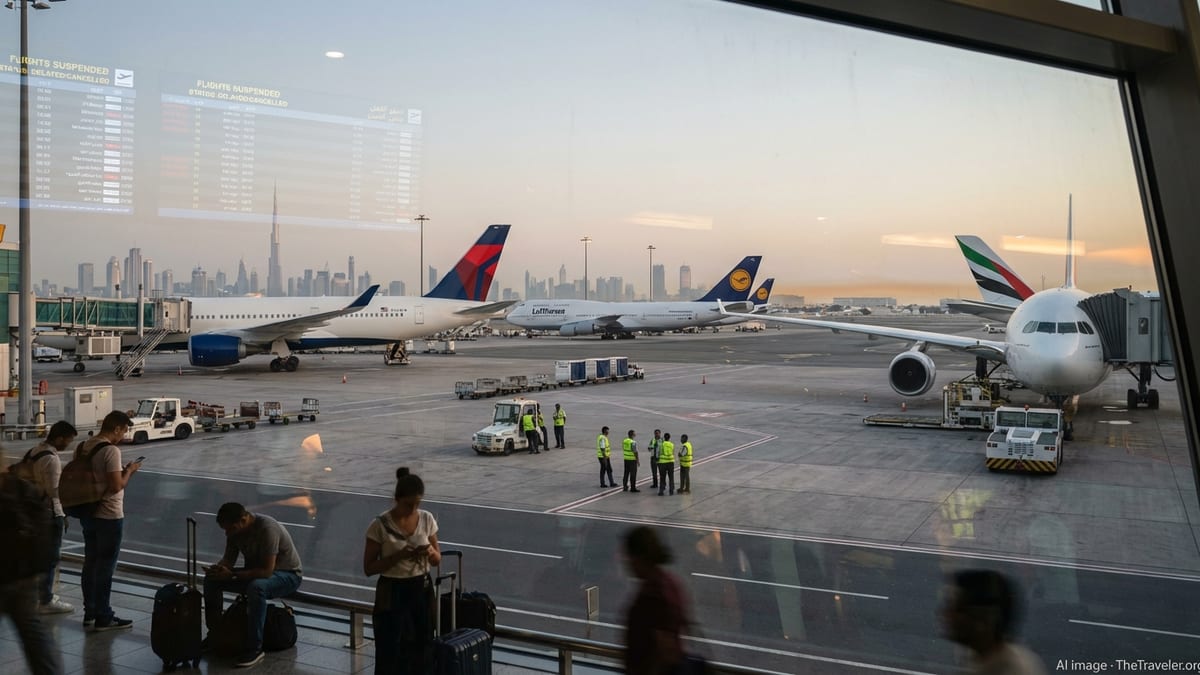
From Sudden Shutdowns to a Prolonged Squeeze
Since late February 2026, a cascading series of airspace restrictions in Iran, Iraq, the Gulf and the eastern Mediterranean has forced airlines to redraw some of the world’s most heavily used long-haul corridors. Publicly available flight-tracking data and industry briefings show that Europe–Gulf and Europe–Asia routes have been especially affected, with many services cancelled outright or diverted onto longer paths skirting conflict areas.
In early May, a security-focused corridor system over the United Arab Emirates further constrained capacity, allowing only limited flows through defined tracks and increasing flying times between Europe and Asia by close to an hour on some city pairs. Operational summaries indicate that schedules built around short, tightly timed connections at major Gulf hubs have been particularly difficult to maintain under these conditions.
Regulatory bulletins from European and other aviation authorities continue to advise operators to avoid specific conflict zones due to risks from missile activity, air defence systems and electronic interference. While some closures have shifted from total bans to partial restrictions, the overall picture remains one of reduced flexibility and elevated operational risk, complicating planning for the northern summer.
Gulf Super-Hubs Lose Ground as Alternatives Surge
The Gulf’s role as a seamless bridge between Europe, Asia and Africa has been sharply tested. Industry analyses describe thousands of cancelled flights across the wider Middle East since the end of February, with Dubai, Doha, Abu Dhabi and other hubs seeing large volumes of transit traffic disappear or reroute through alternative gateways.
Some carriers have removed substantial Middle East capacity from their published summer timetables, choosing instead to reinforce direct services between Europe and Asia or to partner with airlines in less affected regions. Data compiled by aviation consultancies points to Istanbul as one clear beneficiary, with strong growth in transfer traffic as passengers are rebooked around the Gulf bottleneck.
North African and eastern Mediterranean hubs, including airports in Egypt and Türkiye, are also absorbing displaced flows. Overflight statistics and airline schedule filings suggest rising traffic across these corridors as carriers stitch together new routings that keep aircraft away from the most sensitive airspace while still offering viable connection times.
Longer Flights, Higher Fares and Tighter Capacity
Even for journeys that continue to operate, travelers are facing longer itineraries. Rerouted services between Europe and destinations in South and Southeast Asia frequently add 40 to 90 minutes of flying time, according to operations briefings and timetable data. That increase magnifies fuel burn at a moment when the parallel Strait of Hormuz crisis is pushing up global energy costs.
Analysts tracking fare and capacity trends report that airlines are passing at least part of these higher costs on to passengers. Reduced frequencies to Middle Eastern hubs, combined with aircraft and crew being tied up on extended routings, mean fewer seats systemwide just as summer demand builds. On some Europe–Asia and Europe–Indian Ocean routes, available data indicates noticeable fare rises compared with the same period last year.
The strain is not limited to passenger traffic. Logistics updates highlight that airfreight flows through the Gulf remain disrupted, with shippers diverting cargo through secondary airports or shifting to hybrid sea–air solutions. Longer flight paths, payload limits and schedule instability are feeding into broader supply-chain uncertainty ahead of the seasonal peak.
Europe’s Summer Demand Bends Away From the Gulf
Tourism demand patterns in Europe are already reflecting these aviation stresses. Market research published in late May shows a jump in bookings for traditional short- and medium-haul holiday destinations such as Greece, Spain and other Mediterranean countries, as travelers opt for itineraries that avoid complicated long-haul connections through the Middle East.
Tour operators and online travel agencies report that some customers with existing itineraries via Gulf hubs are switching to nonstop or one-stop alternatives in Europe and North Africa, even at higher prices. For many, the perceived risk of last-minute cancellations or long diversions outweighs the appeal of cheaper fares or newer aircraft types on disrupted routes.
Industry forecasters suggest that if the current airspace restrictions stay in place through July and August, the ripple effects could be substantial. Additional European capacity deployed to soak up displaced demand may tighten hotel availability in popular coastal regions, while long-haul markets that depend on Middle East connections could see weaker visitor numbers for a second consecutive peak season.
Uncertain Outlook for Reopening Key Corridors
Forward-looking assessments from aviation risk consultancies and international industry bodies underline how difficult it is to predict when normal routing through the region might resume. Scenario planning for the second half of 2026 generally assumes at least partial restrictions over parts of the Gulf and neighboring states, alongside intermittent disruptions from drone activity, cyber interference and localized security incidents.
Airlines are responding by building more slack into schedules, keeping contingency routings on file and, in some cases, delaying the launch of new Middle East services that were planned for the upcoming season. Aircraft that might have been deployed on additional frequencies to Gulf hubs are instead being rotated onto transatlantic or intra-Asian routes where risk is perceived to be lower and operational predictability higher.
For travelers, the message from publicly available guidance is to expect ongoing volatility rather than a rapid return to the pre-crisis map. Those planning trips that would usually cross Middle Eastern airspace during the June to August window may face fewer choices, less convenient connections and higher prices, even if origin and destination airports lie far from the conflict itself.