


More news on this day
Airspace across parts of the Middle East has technically reopened after months of conflict-related restrictions, but airline schedules and routings show that disruption for passengers is far from over.
Get the latest news straight to your inbox!
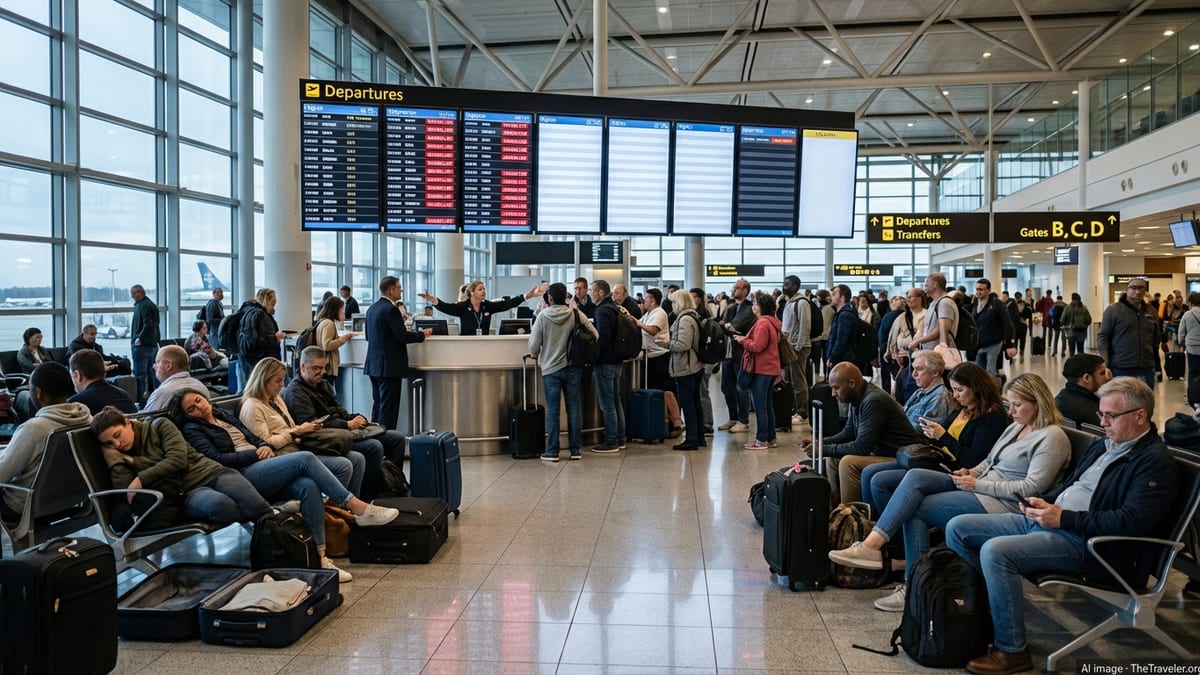
Regional airspace reopens, but risk guidance remains tight
In recent weeks, governments and aviation regulators have eased some of the emergency airspace closures introduced after the escalation of conflict involving Iran in early 2026. Notices to air missions and national advisories now permit limited operations through several flight information regions that were completely avoided at the height of the crisis. Publicly available information from international agencies, however, shows that restrictions over key corridors such as Iran and Iraq remain in place, limiting how much traffic can realistically return to pre‑crisis routings.([blog.wego.com](https://blog.wego.com/how-flights-between-europe-and-asia-are-being-rerouted-around-the-middle-east-in-2026/?utm_source=openai))
European safety bulletins updated at the end of August recommend that commercial flights do not operate in the Tehran and Baghdad flight information regions at any altitude, citing ongoing security concerns. Related guidance covering the Persian Gulf and Gulf of Oman advises operators to keep overwater flying to a minimum and to use those airspaces primarily for approaches and departures from local airports. As a result, many of the shortest great‑circle paths between Europe and Asia, or between the Gulf and the Indian subcontinent, remain effectively unavailable to most international carriers.([blog.wego.com](https://blog.wego.com/how-flights-between-europe-and-asia-are-being-rerouted-around-the-middle-east-in-2026/?utm_source=openai))
Global assessments from industry bodies point to the Middle East as one of the regions where geopolitics has removed significant portions of available airspace from routine civil use. Analysis of flight‑tracking data referenced by airline associations indicates that the March 2026 strikes on Iran produced the most severe disruption to regional air routes since the pandemic, concentrating traffic into narrower corridors and pushing more flights onto longer southern and northern detours.([iata.org](https://www.iata.org/en/iata-repository/publications/economic-reports/the-middle-east-in-global-air-traffic/?utm_source=openai))
Safety material from United States regulators underscores that international advisories about conflict zones can remain in place long after a formal reopening of airspace. Guidance on hazardous regions explains that security‑related notices may continue to warn operators away from certain areas even when overflights are technically possible, reinforcing airline decisions to avoid them in day‑to‑day scheduling.([faa.gov](https://www.faa.gov/air_traffic/publications/us_restrictions?utm_source=openai))
Major airlines keep suspensions and detours in place
Despite the loosening of some restrictions, published schedules show that many long‑haul carriers have pushed their suspensions of selected Middle East routes well into the autumn travel period. A recent survey of airline updates reported that several Asian and European airlines will keep services to Gulf cities such as Dubai and Riyadh grounded into late October, and in some cases through the end of 2026, even as regional hubs rebuild capacity.([businesstraveller.com](https://www.businesstraveller.com/news/middle-east-airline-flight-suspensions-dubai-2026/?utm_source=openai))
One analysis of schedule filings highlighted how some Asia‑based airlines have cancelled or suspended Dubai and Riyadh passenger flights until at least late November, offering affected customers rerouting via alternative hubs or refunds. Another major carrier from Southeast Asia has indicated that its daily service to Dubai will remain off the timetable until late October. These decisions reflect a continuing cautious stance on exposure to constrained routes and potential last‑minute airspace changes, rather than any lack of demand on the city pairs.([businesstraveller.com](https://www.businesstraveller.com/news/middle-east-airline-flight-suspensions-dubai-2026/?utm_source=openai))
By contrast, Gulf‑based airlines centered in the United Arab Emirates continue to operate a substantial, if reduced, network from Dubai and Abu Dhabi. Regional business publications note that these hubs remain open and connected to Europe, Asia, Africa and North America, but that services are operating at lower frequencies and with greater operational complexity than before the crisis. The same coverage points out that non‑regional airlines have cut deeper and for longer, leading to a patchwork of options for travelers depending on the airline and origin.([aegeanwire.com](https://aegeanwire.com/2026/07/uae-aviation-crisis-deepens-as-emirates-etihad-airways-and-flydubai-battle-iran-1087987?utm_source=openai))
Elsewhere in the region, national carriers in Lebanon and Jordan have restored much of their short‑ and medium‑haul activity, according to recent travel‑trade reporting. Near‑normal schedules from Beirut and Amman to major European capitals mask a more fragile reality, however, as several foreign airlines still highlight potential disruptions or short‑notice changes on routes into Lebanon through at least mid‑October.([voyages-d-affaires.com](https://www.voyages-d-affaires.com/en/middle-east-flights-tips-september?utm_source=openai))
Longer routings reshape Europe‑Asia and global connections
With the most direct east‑west corridors through Iran and Iraq effectively closed to much international traffic, airlines have been stringing together alternative routings that add distance and complexity to many journeys. Recent route‑mapping by travel analysts shows that a large share of Europe‑Asia flights now track south via Egypt, cross the Red Sea, and then traverse southern Saudi Arabia and Oman before heading across the Arabian Sea to India and beyond. This pattern keeps flights clear of the most sensitive airspace but lengthens segments that were already long.([blog.wego.com](https://blog.wego.com/how-flights-between-europe-and-asia-are-being-rerouted-around-the-middle-east-in-2026/?utm_source=openai))
Industry briefings on conflict zones estimate that detours around closed or high‑risk airspace can add double‑digit percentages to fuel burn on affected routes. For some Europe‑Asia services previously routed through the Middle East, flight time and fuel consumption have risen by as much as around 15 percent, depending on the exact path, winds and payload. These higher operating costs feed directly into pressure on fares and scheduling flexibility, particularly at a time when global jet‑fuel prices are already elevated.([iata.org](https://www.iata.org/en/iata-repository/pressroom/presentations/media-briefing-safety-operations-agm-2025/?utm_source=openai))
Capacity data compiled by airline news outlets suggest that, even with reopenings, the region’s traffic flows are still below previous trends. One recent report calculated that total capacity on key Middle East routes remained about 6 percent under pre‑crisis levels, a shortfall that matters because Middle Eastern carriers account for a substantial share of global long‑haul transit traffic. When their networks are constrained, knock‑on effects ripple across journeys connecting Europe, Asia, Africa and the Americas.([businesstraveller.com](https://www.businesstraveller.com/news/middle-east-airline-flight-suspensions-dubai-2026/?utm_source=openai))
The disruption has also altered competitive dynamics. While Gulf and many Western airlines are navigating elongated routes, commentary referenced by travel and economics forums notes that some Asia‑Pacific carriers, particularly Chinese airlines, are adding capacity on Europe services to capture traffic flows that have become more complex for competitors using Middle East routings. This shift illustrates how prolonged airspace constraints can quickly reshape long‑haul market shares.([iata.org](https://www.iata.org/en/iata-repository/publications/economic-reports/the-middle-east-in-global-air-traffic/?utm_source=openai))
Alternative hubs and planning strategies for travelers
With uncertainty persisting over Middle East routing, travelers are increasingly looking at alternative transit hubs away from the most affected airspace. Travel‑industry guides published this month highlight airports such as Cairo and Addis Ababa as viable connecting points between Europe, Africa, Asia and North America. They note, for example, that Egypt’s flag carrier is operating nonstop services from Cairo to U.S. cities including Los Angeles and Chicago, while Ethiopian Airlines continues to channel traffic through Addis Ababa between multiple continents.([blog.wego.com](https://blog.wego.com/alternative-transit-hubs-in-2026-where-to-connect-when-middle-east-flights-are-disrupted/?utm_source=openai))
These alternatives do not completely remove exposure to regional constraints, as routings must still respect ongoing conflict‑zone advisories, but they can reduce dependence on hubs that sit closer to restricted airspace. For some passengers, particularly those originating in Europe or Africa, flying via North African or East African hubs may add only modest detours compared with using a Gulf connection under current conditions.([blog.wego.com](https://blog.wego.com/how-flights-between-europe-and-asia-are-being-rerouted-around-the-middle-east-in-2026/?utm_source=openai))
Travel‑planning resources stress that reopened airspace does not automatically guarantee a return to previous journey times or fare levels. Analysts recommend that passengers check whether their chosen routing crosses any of the flight information regions highlighted in current safety bulletins and that they recheck flight status close to departure, given the potential for short‑notice adjustments as security conditions evolve. According to recent commentary, flexibility with dates and willingness to consider alternative hubs are among the most practical ways to mitigate the impact of the ongoing disruption.([blog.wego.com](https://blog.wego.com/how-flights-between-europe-and-asia-are-being-rerouted-around-the-middle-east-in-2026/?utm_source=openai))
Industry research on network resilience notes that hub‑and‑spoke systems, which dominate long‑haul travel, can become choke points during geopolitical crises. This has renewed interest in diversified routing strategies and, in some cases, multimodal links that give airlines and airports more options when airspace is constrained. For individual travelers, the immediate effect is a more complicated booking landscape in which schedules may change quickly and seemingly open skies still conceal significant operational limits.([arxiv.org](https://arxiv.org/abs/2606.31142?utm_source=openai))
How Europe–Asia flights are being rerouted around the Middle East (Wego)
Middle East airline suspensions despite reopened airspace (Business Traveller)
The Middle East in global air traffic (IATA)
Status of cancelled flights in the Middle East, airline by airline