


More news on this day
A wave of modular, solar-powered landing lights and fresh government funding is rapidly reshaping safety at remote Australian airfields, reducing night-time risks for regional and emergency flights that depend on often basic outback strips.
Get the latest news straight to your inbox!
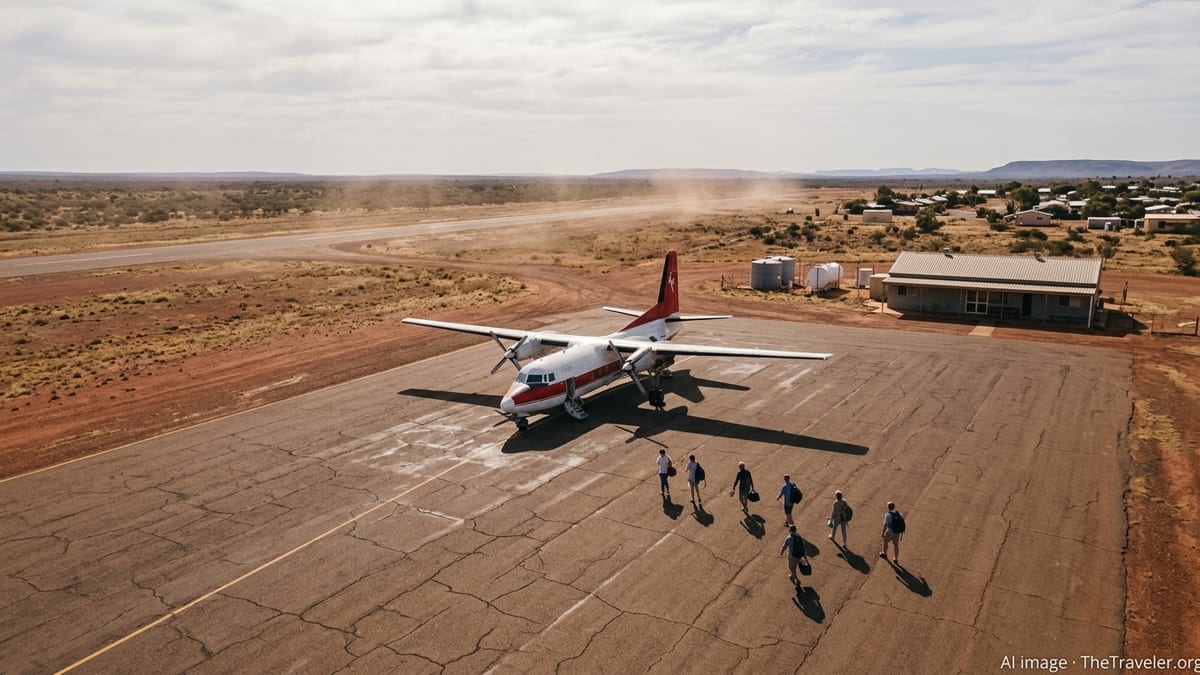
High-Risk Outback Flights Drive Demand for Smarter Lighting
Regional and remote communities across Australia rely heavily on small airfields for medical evacuations, fresh food deliveries and passenger links, yet many strips have historically operated with minimal or aging lighting. Long distances, extreme weather and limited power infrastructure have made it difficult to maintain traditional wired runway systems at these sites. Publicly available information on remote operations indicates that flights serving isolated communities frequently contend with unsealed runways, wildlife incursions and sudden storms that can quickly turn a marginal approach into a high-risk one.
Australia’s Civil Aviation Safety Authority guidance recognises lighting as a critical safety layer at non-controlled aerodromes, where systems such as pilot-activated lighting and portable runway lights are used to enhance situational awareness at night. Updated visual flight rules material notes that when an aerodrome lacks standby power, portable runway lights can remove the need to nominate an alternate, provided trained ground personnel can deploy them if primary lighting fails.([casa.gov.au](https://www.casa.gov.au/resources-and-education/publications-and-resources/video/explaining-rules-afru-and-pal-systems?utm_source=openai)) This framework has opened the door for new, modular technologies that can be transported, positioned and activated quickly at remote strips.
In practice, that means the safety margin for night operations is no longer tied solely to fixed electrical infrastructure. Portable systems give operators an additional fallback option during blackouts, and make ad hoc night operations possible at airfields that were previously daylight only. For aeromedical providers and charter operators, the difference between an illuminated strip and a dark one can determine whether a critical patient transfer proceeds as planned or is delayed until sunrise.
Modular Solar LEDs Replace Ad Hoc ‘Edge Markers’
For years, some remote communities have improvised with lanterns, vehicle headlights or basic battery beacons to mark out runways for urgent night arrivals. More recently, commercially produced solar-powered LED aviation lights have begun to standardise this improvised approach. Product specifications for portable solar runway lights highlight features such as omnidirectional output, integrated batteries, quick field deployment and the ability to integrate into broader runway lighting systems.([avlite.com](https://www.avlite.com/wp-content/uploads/2017/08/Specification-Sheet_AV-70_V4_ENGLISH2.pdf?utm_source=openai)) These devices can be laid out by local personnel before a flight and collected afterwards, without the need for trenching, cabling or grid connections.
Australia’s aerodrome standards distinguish portable runway lights from secondary power systems, but also point to their operational benefits when they are declared in official aeronautical publications.([legislation.gov.au](https://www.legislation.gov.au/F2019L01146/asmade/2019-09-06/text/1/epub/OEBPS/document_1/document_1.html?utm_source=openai)) When an airfield is known to hold a complete, compliant portable lighting kit in reserve, pilots can plan for night arrivals with greater confidence that the strip will remain usable after dusk even if fixed lights fail. This is particularly valuable in regions where storms, flooding or aging infrastructure frequently interrupt power supply.
The modular nature of these systems means a single set of units can support multiple landing areas in a region, or be temporarily reconfigured for different runway orientations and helicopter landing zones. For small councils or Indigenous community operators managing several basic strips, one containerised kit of solar LED units can effectively “rescue” night operations across an entire network of airfields that would otherwise be constrained to daylight.
Government Programs Push Safer Remote Airstrips
Alongside the technology shift, new funding is flowing into remote airfield upgrades. The Australian Government’s Remote Airstrip Upgrade Program, part of the broader Regional Aviation Access Program, is designed to enhance the safety and accessibility of aerodromes in remote and very remote areas. The latest budget measures announced an additional allocation of funding, with recent program documentation indicating a total of $50 million to extend the scheme and $25 million earmarked for the current grant round.([infrastructure.gov.au](https://www.infrastructure.gov.au/infrastructure-transport-vehicles/aviation/regional-remote-aviation/remote-airstrip-upgrade?utm_source=openai))
Program guidance states that eligible projects can include lighting and electrical works aimed at improving reliability and safety for night and poor-weather operations, particularly where aeromedical services such as the Royal Flying Doctor Service depend on regular access.([infrastructure.gov.au](https://www.infrastructure.gov.au/infrastructure-transport-vehicles/aviation/regional-remote-aviation/remote-airstrip-upgrade?utm_source=openai)) Successful applications in earlier rounds have covered a spectrum of upgrades, from basic visual aids and wind indicators to more comprehensive lighting and surface improvements at small outback strips.([infrastructure.gov.au](https://www.infrastructure.gov.au/infrastructure-transport-vehicles/aviation/regional-remote-aviation/remote-airstrip-upgrade/round-7?utm_source=openai))
State-level schemes are reinforcing this trend. In Western Australia, the Regional Airports Development Scheme provides grants for regional airport owners to renew key infrastructure. Recent project lists show funding being used specifically to relocate aerodrome lighting controls and replace traditional runway, taxiway and apron lights with modern LED systems at smaller airports.([transport.wa.gov.au](https://transport.wa.gov.au/aviation/regional-airports-development-scheme?utm_source=openai)) Other states have similar programs aimed at improving emergency access and evacuation capability for remote towns, with lighting upgrades regularly cited as a priority category.
Emergency Access and Medevac Resilience Improve
Combined, modular lighting technology and targeted grants are changing the risk profile for night operations in remote Australia. Publicly available information from health and transport agencies consistently links safe, all-weather airstrip access with timely medical evacuations and continuity of essential services. When modular solar LEDs and upgraded fixed systems keep a strip open after dark, life-saving flights are less likely to be postponed due to visibility or power concerns.
Guidance material from aviation regulators underscores that when portable lighting is available and procedures are in place for its deployment, requirements that would otherwise force pilots to nominate an alternate aerodrome at night can be relaxed.([casa.gov.au](https://www.casa.gov.au/sites/default/files/2022-02/visual-flight-rules-guide.pdf?utm_source=openai)) That shift reduces operational complexity for aeromedical crews and regional airlines, particularly on long sectors where alternate fuel reserves are already tight. It also reduces the risk of diversions that strand patients and medical teams far from their intended destination.
Reports from regional development authorities highlight that better-lit airfields also support freight and passenger connectivity, keeping supply chains open during the long winter nights or through the wet season when road access is unreliable.([infrastructure.gov.au](https://www.infrastructure.gov.au/infrastructure-transport-vehicles/aviation/regional-remote-aviation/remote-airstrip-upgrade?utm_source=openai)) For remote communities where the airstrip functions as a lifeline for mail, food and healthcare, incremental improvements in lighting can translate directly into more consistent service and lower overall risk.
Next Phase: Integrating Lighting into Wider Tech Upgrades
Australia’s aviation planning documents point to a broader technological transformation underway at regional and remote aerodromes, in which smarter lighting is one component of a more connected network. Federal policy papers exploring the future of aviation describe how emerging technologies, including advanced air mobility and uncrewed aircraft, will depend on reliable, instrumented airfields across the continent.([drones.gov.au](https://www.drones.gov.au/industry/emerging-aviation-technology-partnerships-program?utm_source=openai)) As remotely piloted and automated systems move from trial to regular use, modular lighting that can be monitored, activated or reconfigured from a distance is likely to become increasingly important.
For now, however, the most immediate impact is being felt in the outback communities where a set of portable solar LED runway lights can mean the difference between a cancelled night landing and a safe arrival. Backed by dedicated upgrade funding and evolving regulatory recognition of portable systems, these modular units are reshaping how Australia’s most isolated airstrips manage risk after dark, and helping keep critical regional travel routes open when they are needed most.
Remote Airstrip Upgrade Program – Department of Infrastructure
Remote Airstrip Upgrade Program Round 12 – business.gov.au
Regional Airports Development Scheme – Western Australia