


Naples International Airport (NAP), also known as Napoli Capodichino, is compact by European standards but can feel intense at peak summer and holiday periods. Departing smoothly from Naples is mostly about timing and knowing how the terminal is laid out. This guide brings together current, on-the-ground information about check-in, security, fast track, passport control, food, shops and lounges so you know exactly what to expect before your flight.
Get the latest updates straight to your inbox!
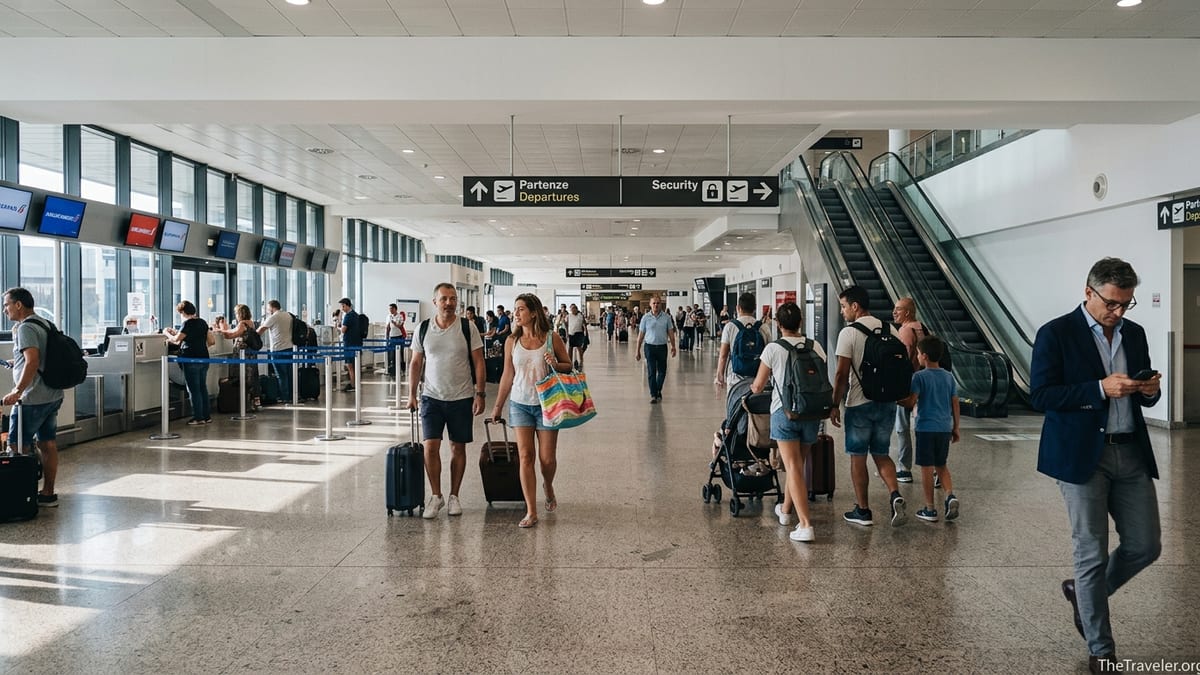
How Early to Arrive at Naples International Airport
Official airport guidance simply recommends arriving “well in advance” of your flight, but airlines operating from Naples tend to be more specific. Many carriers, including low-cost airlines like Ryanair and easyJet, open their check-in counters about 2.5 to 3 hours before departure for short-haul flights, and some long-haul or transatlantic services may open even earlier. As a practical rule of thumb, plan to be at the terminal doors 2 hours before departure for Schengen or domestic flights and 3 hours for non-Schengen destinations such as the United Kingdom or the United States, especially from April through October when leisure traffic is highest.
In real terms, that means a 10:00 flight to Paris or Milan is comfortable with arrival around 08:00, while a 10:00 flight to New York or London is safer with arrival by 07:00. Recent traveler reports from spring and early summer 2026 describe security taking as little as 10 to 20 minutes outside peak times, but passport control for departures to non-Schengen destinations occasionally backing up to around 40 minutes in busy waves. It is rare for Naples to match the multi-hour waits of major hubs, but those extra 30 to 45 minutes give you breathing room if there is a school holiday, a strike affecting public transport, or a cluster of morning departures.
Keep in mind that airline bag-drop and check-in desks generally do not open more than 2.5 to 3 hours before departure. Arriving far earlier than that will only leave you waiting in the public check-in hall with limited seating and fewer food options. Time your arrival so that counters are likely to be open, particularly if you want to reclaim VAT, need special assistance, or are traveling with oversized baggage such as bicycles or musical instruments.
Passengers connecting from the Amalfi Coast, Sorrento or the islands should build local travel delays into their schedule. Morning traffic on the highway into Naples and unexpected disruptions on the Alibus or regional trains can easily add 30 to 60 minutes. Many hotel concierges along the coast now recommend leaving Positano or Amalfi about 4.5 to 5 hours before a typical European short-haul departure from NAP and planning 5.5 to 6 hours for same-day connections to long-haul flights.
Check-In, Bag Drop and Self-Service Options
Naples has a single terminal building. Departures are on the ground and first floors, with the main check-in hall immediately visible when you enter through the front doors. Airlines are assigned banks of counters that may change seasonally, so the first stop should be the flight information screens over the hall to identify your check-in island and counter numbers. For example, Ryanair may be grouped together at one end, while full-service carriers like Lufthansa, Air France and ITA Airways occupy another bank.
Most airlines at NAP still rely primarily on staffed desks rather than extensive self-service bag drops, so expect to drop checked bags at a counter even if you checked in online. Typical opening times are around 2 to 3 hours before departure; charter and leisure carriers such as Jet2 have publicly indicated their desks open about 2 hours 40 minutes prior on seasonal routes. If you arrive earlier, you may see staff setting up but not yet accepting bags. Queue lengths vary: on a Saturday morning in August, a Ryanair or easyJet bag-drop line can stretch across the hall, while on a midweek winter departure for business destinations you might be done in 10 to 15 minutes.
If you are traveling with hand luggage only and have already checked in online, you can bypass the counters entirely and proceed directly upstairs to security. Carriers like Wizz Air, Transavia and Vueling generally accept mobile boarding passes, so you can walk straight to the first-floor security area. Just be sure you have a valid passport or ID card easily accessible; spot checks by police are common at Italian airports, and you may be asked to show your document near the entrance to the security area or at the gate even on intra-Schengen flights.
Families with strollers, passengers with reduced mobility and unaccompanied minors should allow more check-in time. Naples operates dedicated assistance desks and has designated “Sala Amica” lounges for passengers with reduced mobility, but registering your needs with the airline in advance greatly speeds up the process. For oversize items, staff will typically tag your bag at the main counter and then direct you to a separate oversize baggage belt nearby. During peak beach season, surfboards and boxed bicycles are common sights in the oversize area, so you may need an extra 10 minutes to complete this step.
Security Screening and Fast Track at NAP
Security checks for all departing passengers are located on the first floor of the terminal. After check-in, escalators and elevators lead up from the public hall to the security area. Waiting times can fluctuate sharply depending on the time of day. Recent accounts from spring 2026 suggest that off-peak mid-morning or mid-afternoon lines often move in under 15 minutes, while early-morning departures between 06:00 and 08:30 or evening weekend waves can see standard lanes stretch to 25 or 30 minutes. The queues are organized but can feel cramped, particularly in high summer when many travelers arrive with beach gear and cabin bags.
Naples offers a paid Fast Track service that allows access to a dedicated, shorter security lane. The official airport service is generally priced in the high single digits to low teens in euros when purchased directly or bundled with certain airline tickets and bank cards. Some passengers report paying around 8 to 12 euros per person when buying Fast Track at the airport’s vending machines or counters, while others access it as part of premium services. When the main queue is snaking through the hall, the Fast Track lane can reduce your wait to a few minutes, but it does not change the underlying security rules regarding liquids, laptops or screening procedures.
For some premium passengers, access to Fast Track is also included as part of lounge or credit card benefits. For example, holders of certain business-class tickets or high-tier frequent flyer status with European carriers may see a Fast Track symbol on their boarding pass, which grants them entry to the priority lane without an extra purchase. In addition, some global lounge programs and payment cards partner with the airport’s services to include Fast Track entry as part of their package, which can be particularly valuable during school holidays when standard queues are longest.
Regardless of whether you use the regular lane or Fast Track, security at NAP follows standard EU rules. Liquids must be in containers of 100 ml or less and packed in a transparent resealable bag, laptops and larger electronics are typically removed from bags unless directed otherwise, and jackets and belts often need to go into trays. Families traveling with children can bring baby food and formula in larger quantities but should expect them to be inspected. To keep things moving, have laptops and liquids near the top of your bag, empty your pockets before reaching the belt and be ready to remove metal-heavy items like watches and chunky jewelry.
Passport Control and Schengen vs Non-Schengen Departures
After security, the flow divides between Schengen and non-Schengen flights. For domestic Italian destinations and Schengen-area countries such as France, Spain, Germany or Greece, you generally proceed directly from security to the appropriate gate in the A or B pier without any additional passport control. Your ID may still be checked at boarding, but there is no systematic exit immigration for these flights.
For non-Schengen departures, including flights to the United Kingdom, the United States and some Balkan or North African destinations, you must clear passport control after security. This area can be the main bottleneck for some passengers. Travelers in early summer 2026 have reported two very different experiences: on some days, automated e-gates and staffed booths keep queues to 10 or 20 minutes; on others, especially when multiple UK and US flights depart within a short window, manual lines can stretch and waits can approach an hour.
Once past passport control, non-Schengen passengers are funneled into a dedicated departure lounge area that serves gates mainly labeled C or another separate section signed for “Extra-Schengen” flights. This area has basic seating, a small café or bar and limited retail compared with the main Schengen concourse. Travelers heading to the US in particular have commented that it can feel crowded and warm when several widebody aircraft are boarding close together. If you value a quieter pre-flight experience and you have lounge access, it is usually better to spend as much time as possible in the main airside zone before crossing passport control close to boarding time.
Occasionally, airlines and airport authorities open separate queues for passengers on specific long-haul flights, such as US-bound services, to help them reach passport control in time. Even so, do not rely on last-minute exceptions. If you are departing to a non-Schengen country at a busy time, build at least 45 minutes between clearing security and scheduled boarding into your mental schedule, even if you plan to use Fast Track at security. That buffer allows for both passport control and the walk to more remote gates.
Lounges, Meet & Assist and Premium Services
Naples offers a main VIP facility, commonly branded as the Pearl Lounge, that serves a mix of airline-invited guests and pay-in passengers. The lounge is located airside, generally accessible after security and, depending on your route, before or after passport control. Access policies vary: some full-service airlines include it for business-class travelers or top-tier frequent flyers, while independent lounge programs and online booking platforms sell single-use passes that typically allow a stay of up to around three hours before departure.
The Pearl Lounge provides a quieter space than the main concourse, with comfortable seating, work tables, light snacks, hot and cold drinks and Wi-Fi. During peak periods, particularly weekend mornings in summer holiday season, it can approach capacity and may occasionally limit walk-up entries. Many travelers appreciate that lounge entry often includes use of Fast Track security, meaning you can check in, head upstairs, bypass the longer queue and then relax with coffee and pastries away from the crowds while keeping an eye on your flight status screens.
For those seeking a more curated experience, the airport’s Meet & Assist service offers a higher-touch option. This service typically includes a personal greeter at the curb or terminal entrance, assistance with luggage, help at check-in, escort through Fast Track security, guidance at passport control and access to the VIP lounge. It can be especially useful for travelers unfamiliar with Italian airports, high-profile individuals seeking discretion or families managing multiple young children and bulky gear. Pricing is usually per party and reflects the personalized nature of the service, so it is most cost-effective when shared between several travelers.
Passengers with reduced mobility are handled separately through dedicated assistance channels. Naples operates two Sala Amica facilities, one in the check-in hall and another after security, where eligible passengers can wait comfortably until boarding assistance is provided. Requests for wheelchair or special assistance should be made through your airline at least 48 hours before departure, but if you arrive at the airport without a prior booking, you can still seek help at the information desk or the Sala Amica counter; just allow extra time before your flight.
Food, Shopping and Last-Minute Essentials
Despite its modest size, Naples International Airport offers a reasonable range of food and shopping options once you are past security. In the main Schengen departure area, you will typically find a large duty-free store as well as several cafés, bars and quick-service restaurants. These offer a mix of Italian staples such as espresso, sfogliatella pastries and panini, along with more international-style sandwiches, salads and packaged snacks. Prices are in line with other mid-size European airports: a cappuccino might cost around 2 to 3 euros, a simple sandwich 6 to 8 euros and a basic hot meal 10 to 15 euros.
Shops airside usually include a duty-free outlet with cosmetics, spirits, tobacco and confectionery, plus smaller boutiques selling Italian fashion, leather goods and accessories. It is a convenient place to pick up last-minute gifts such as a box of Neapolitan chocolates, a small bottle of limoncello sized for cabin baggage or a branded soccer jersey from the local club. There are also newsstands and convenience-style outlets where you can buy bottled water, magazines, phone chargers and travel-sized toiletries if you have forgotten something in your hotel.
In the non-Schengen area beyond passport control, the selection is more limited but still covers basics. Expect at least one café or bar offering drinks, sandwiches and pastries, plus vending machines with bottled drinks and snacks. Because this space can get busy before large departures, it is wise to pick up any substantial food and water in the main terminal before heading through passport control, especially if you are traveling with children or have specific dietary preferences.
For those on tighter budgets, consider eating before you get to the airport or in the public landside area, where some outlets may have slightly lower prices. However, keep in mind that once you go through security and especially after passport control, you cannot return landside without abandoning your departure. If you prefer to sit with a proper meal, give yourself time to select a restaurant airside before your gate is announced. At Naples, gate changes are not uncommon, but distances are short enough that you can typically walk from one end of the concourse to the other in under 10 minutes.
Practical Tips for a Stress-Free Departure
To make the most of your time at NAP, think in terms of stages: check-in, security, passport control (if applicable) and gate. For a mid-morning short-haul European flight in normal conditions, a realistic timeline might be arriving at the terminal 2 hours before departure, finishing check-in and bag drop in 20 to 30 minutes, clearing security in 10 to 20 minutes and then having 40 to 60 minutes at the gate area or in a lounge. For a non-Schengen flight, add 20 to 30 minutes for passport control, especially in high season.
If you are considering Fast Track, weigh the cost against the time of day and your tolerance for queues. For example, a family of four taking a Saturday 08:00 flight to London during school holidays might find paying for priority security worthwhile, potentially turning a 30-minute wait into one of just a few minutes. On the other hand, a solo traveler on a Tuesday afternoon flight to Milan in November might experience such short lines that Fast Track offers little added value. When purchased as part of lounge access or a premium card benefit, the incremental cost of Fast Track can be very low compared to the time saved.
Always keep boarding passes and passports within easy reach after security. Gate agents at NAP often perform document checks at boarding, and for non-Schengen flights airline staff may verify visas or return tickets. If you intend to claim VAT refunds on purchases made in Italy, handle the paperwork before you check in your luggage and leave enough time to visit the refund desk or kiosk, which is usually located landside near check-in or in a designated area before security.
Finally, remember that Naples is a city of last-minute surprises, from sudden rain showers that slow traffic to strikes affecting public transport. Build contingency into your schedule rather than cutting things fine. A relaxed espresso in the departure lounge while you watch aircraft movements and browse the duty-free is far preferable to sprinting to your gate while final calls echo over the loudspeakers.
The Takeaway
Departing from Naples International Airport is generally straightforward if you approach it with realistic expectations and a bit of planning. The terminal is compact but can feel crowded at peak holiday times, and the main pressure points are check-in for popular low-cost carriers, security during early-morning waves and passport control for non-Schengen flights. Understanding how the terminal flows, when to arrive and how services like Fast Track and lounges fit into the picture can turn a potentially hectic experience into a smooth finale to your time in southern Italy.
As a baseline, aim to arrive 2 hours before departure for Schengen and domestic flights and 3 hours before non-Schengen flights, adjust for peak seasons and consider Fast Track if you are traveling at busy times or value predictability over small extra costs. Use the main airside concourse and, if available, the Pearl Lounge to relax and eat before heading into the more compact non-Schengen zone. With these strategies in mind, Naples International Airport becomes less of an obstacle and more of a manageable final chapter to your visit, letting you leave Campania with a last good espresso rather than a story about airport queues.
FAQ
Q1. How early should I arrive at Naples International Airport for departure?
For most Schengen and domestic flights, plan to arrive about 2 hours before departure; for non-Schengen flights such as to the UK or US, 3 hours is safer, especially in summer and on weekends.
Q2. Where do I check in and drop bags at Naples Airport?
All airlines use the single terminal, with check-in counters located in the main ground-floor hall. Screens show your airline’s counter numbers. After bag drop, you go upstairs to security on the first floor.
Q3. Is Fast Track security at Naples worth paying for?
Fast Track can be worth it at peak times, such as early-morning departures or school holidays, when standard security lines can reach 25 to 30 minutes. At quieter times, the regular queue often moves quickly and Fast Track offers less benefit.
Q4. How long does security usually take at NAP?
Outside busy waves, many passengers clear security in around 10 to 20 minutes. During peak periods, allow up to 30 minutes for standard lanes. Fast Track typically reduces this considerably but does not change the screening rules.
Q5. What is passport control like for non-Schengen departures?
After security, passengers on non-Schengen flights must pass through exit passport control. Waiting times range from around 10 minutes on quiet days to 40 minutes or more when several UK or US flights depart close together.
Q6. Are there lounges at Naples Airport and how can I access them?
Yes, the main Pearl Lounge is airside and accessible to selected business-class and frequent-flyer passengers, as well as to travelers with eligible lounge passes or paid single-entry access, usually for a stay of up to about three hours.
Q7. What food and shopping options are available after security?
Airside you will find cafés, bars and quick-service restaurants offering coffee, pastries, sandwiches and simple hot dishes, plus duty-free and boutiques selling cosmetics, spirits, local food gifts, fashion and travel essentials.
Q8. Does Naples Airport have good facilities for families and passengers with reduced mobility?
Yes. Families will find baby-changing facilities and basic children’s options at some cafés. Passengers with reduced mobility can use dedicated assistance desks and two Sala Amica lounges, one landside and one airside, when arranged with the airline.
Q9. Can I rely on mobile boarding passes at Naples?
Most major airlines operating at NAP accept mobile boarding passes, allowing hand-luggage-only passengers to go directly to security. It is wise to carry a printed copy or have your file saved offline in case of app or network issues.
Q10. What should I do if I am running late for my flight?
If you are delayed, go directly to your airline’s check-in or boarding desk, explain your situation and follow staff instructions. They may fast-track you through security or passport control if possible, but this cannot be guaranteed, so building extra time into your plans is the best insurance.