


For most visitors, the Alibus shuttle is the simplest way to travel between Naples International Airport, the central train station and the port for ferries to Capri, Ischia and the Amalfi Coast. It is fast, relatively inexpensive and designed for people with luggage. Used the wrong way, however, it can also cost you time, money and frustration. This guide walks you step by step through how the Alibus works in 2026, from buying tickets and finding the correct stop to avoiding common mistakes that catch many first-time travelers.
Get the latest updates straight to your inbox!
What the Alibus Is and When It Makes Sense
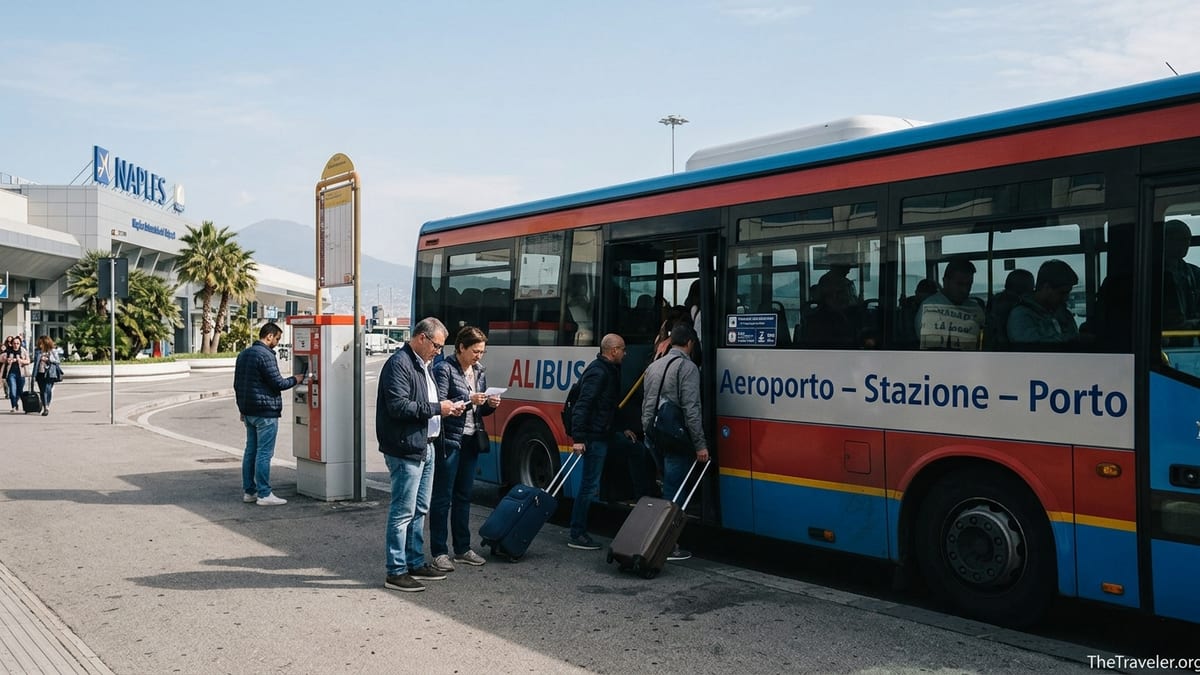
The Alibus is a special airport shuttle run by Naples public transport operator ANM. It connects Naples International Airport (Capodichino) with two key city stops: Piazza Garibaldi, where you find Napoli Centrale train station, and the port area around Molo Beverello and Porta di Massa for ferries and cruise ships. The service is designed as an express route, so it does not zigzag through neighborhoods, and it typically completes the airport to port run in around 30 to 40 minutes depending on traffic.
The standard Alibus ticket costs about 5 euros per person for a single ride and is priced higher than a normal city bus because it is a dedicated airport connection with space for luggage. You do not need a separate metro or bus ticket when using Alibus; the Alibus ticket itself is a special fare. In many situations it works out far cheaper than a taxi, where fixed rates from the airport to the station or port usually run above 20 euros for the vehicle, not per passenger.
Alibus makes the most sense if you are traveling alone or as a couple with regular luggage and you need to reach either Napoli Centrale or the port. For example, if you land at Naples at 10:30 and you have a high-speed train from Napoli Centrale at 12:00, the Alibus is usually the most straightforward connection. Likewise, if you are heading to a Capri hydrofoil from Molo Beverello or a ferry to Ischia from Porta di Massa and do not want to navigate the metro with bags, the direct Alibus link to the port is usually the most convenient option.
On the other hand, if you are a family of four with several large suitcases or if you have mobility issues and need door-to-door service, a fixed-fare taxi from the official taxi rank at the airport can be good value. In that case the total taxi price divided by four people may be close to the combined Alibus ticket price, while also saving you the short walks between stops, stations and your final accommodation.
Alibus Stops: Airport, Piazza Garibaldi and the Port
The Alibus route is simple, but understanding exactly where it stops will save you confusion on arrival. Leaving the airport, the bus first serves the stop at Naples International Airport itself. Outside arrivals, you will see a dedicated Alibus sign and a line of people with luggage; this is your boarding point in front of the terminal. There is also a separate drop-off point used by some services, but as a passenger coming out of the terminal you just need to follow the bus signs and look for vehicles clearly marked “Alibus.”
The second main stop is Piazza Garibaldi, the square in front of Napoli Centrale train station. Here the bus stops effectively at the station doors: you step off the bus and you are just across from the main entrance to Napoli Centrale and the lower-level Piazza Garibaldi metro station. This is the right stop if you are catching a train to Rome, Florence, Venice or southern destinations such as Salerno and Calabria, or if you plan to connect to the Circumvesuviana train for Pompeii or Sorrento from the lower-level platforms.
From Piazza Garibaldi, the Alibus continues to the port area. The port has several access points and terminals, and the Alibus route typically passes the large Stazione Marittima area at Molo Angioino/Beverello and then the internal port stops around Immacolatella or Porta di Massa. In practical terms, this means that if you are heading for fast hydrofoils to Capri, Positano or Ischia, you usually get off at Molo Beverello. If you are booked on a larger ferry, including many car ferries to the islands, you may need Porta di Massa, which is a short walk or internal shuttle ride from Beverello. Cruise passengers often disembark near the Stazione Marittima, which is also adjacent to the Beverello stop.
On the way back to the airport, the same stops operate in reverse: port to Piazza Garibaldi to airport. If you are staying in the historic center near Via Toledo or Spaccanapoli, it is often easiest to walk or take metro Line 1 to Municipio or Garibaldi, then catch the Alibus from there back to the airport, rather than dragging bags through the narrow streets looking for a random city bus.
Timetables, Frequency and Typical Travel Times
Alibus runs daily, from early morning to late evening, with a frequency that is generally every 15 to 20 minutes during the day. In peak tourist seasons and rush hours buses can be very frequent, while very early or very late services may run slightly less often. Because schedules may change during the year and on public holidays, it is important to check the latest timetable close to your travel date, but as a rule of thumb you can normally count on an Alibus at least every 20 minutes during regular daytime hours.
Travel time from the airport to Piazza Garibaldi is usually around 15 to 20 minutes in light traffic, but it can stretch to 30 minutes or more during weekday rush hours when traffic builds on the main access roads. From Piazza Garibaldi to the port, expect another 15 to 20 minutes, again depending on congestion through the city and along the waterfront. Overall, many travelers report an airport-to-port journey time of roughly 30 to 40 minutes in average conditions.
When planning connections, it is wise to build in a generous buffer, particularly if you are catching a specific high-speed train or a hydrofoil with limited departures. For example, if your ferry to Capri leaves at 14:00, aim to be on an Alibus from the airport around 12:45 at the latest. That allows for potential traffic delays and some time at the port to locate the correct pier, buy tickets if needed, and check in. Similarly, if you plan to take an Italo or Frecciarossa train to Rome, try to arrive at Napoli Centrale at least 25 to 30 minutes before departure, which in practice means catching the Alibus from the airport about an hour before your train.
Remember that Naples traffic can be unpredictable, especially on Fridays, during local events or when weather causes disruptions. Many regular travelers treat the “fast” in the official description as “faster than a normal city bus,” not as a guarantee of exact timing. If your flight lands late and you have a tight same-day connection onward, consider whether a taxi might offer a little more control and slightly faster travel time, though not always by much during peak congestion.
Buying Alibus Tickets and How to Validate Them
The Alibus ticket is a special fare that currently costs about 5 euros for a single journey. Tickets can be purchased in several ways: at authorized airport shops and newsstands inside the arrivals area, from automatic ticket machines where available, through the official ANM mobile app and directly on board the bus. Each option has its nuances, and choosing the right one can save you from queues or confusion.
Many travelers prefer to buy the ticket immediately after exiting baggage claim at the airport. You will usually find a newsstand or transport counter that sells Alibus tickets near the arrivals exit. This is useful if you like having everything ready before stepping outside. Another option is to use ticket machines, which are often set up close to the bus stop or within the airport building. These machines typically accept coins and banknotes, and sometimes cards, but availability and card acceptance can vary, so having some cash in small bills is still advisable.
If you board without a ticket, you can normally buy one directly from the driver or onboard staff, paying by cash or card depending on the equipment in use that day. For example, visitors in recent seasons have reported being able to tap a contactless card on a device near the driver to purchase their ticket. However, you should not rely entirely on card payments in case of temporary technical issues, especially if you are catching one of the day’s last buses.
Once you have your ticket, remember that it must be validated. Paper tickets are validated in the small machines on board the bus; you insert the ticket and it prints date and time. If you purchase via the official app or using a contactless system, validation may be automatic at the time of purchase, but it is still important to check the instructions on the screen. Inspectors sometimes board the Alibus, and having an unvalidated ticket can result in a fine, even if you paid. As a rule, do not sit down and relax until you have either stamped the paper ticket or confirmed that your digital ticket shows as “active.”
Luggage, Accessibility and Onboard Experience
Alibus vehicles are designed with airport passengers in mind, which means they have space for suitcases and larger bags. You can bring regular checked luggage, cabin bags and backpacks on board without any special extra fee. There are usually dedicated luggage racks inside the bus near the center doors, as well as open floor areas where you can keep a suitcase next to you. If you are traveling with several large cases, try to board early so you have room to place them safely without blocking doors or aisles.
For travelers with mobility difficulties, the Alibus fleet includes low-floor buses and ramps, and services are equipped to accommodate passengers using wheelchairs. Naples Airport’s own passenger guides note that the Alibus is suitable for passengers with reduced mobility, but as with any city service, actual comfort can depend on how crowded a particular run is. If you rely on a wheelchair or have difficulty standing, consider avoiding the busiest times of day when commuters and cruise passengers crowd the route between Piazza Garibaldi and the port.
Inside the bus, seating is limited and during peak periods you should be prepared to stand. The ride can be bumpy as the bus navigates city traffic, so keep one hand on the grab rails if you are standing and ensure your luggage is stable. You should keep all valuable items such as passports, wallets and phones in a secure, zipped bag that you carry on your body. Naples, like many busy cities, can experience pickpocketing on crowded public transport, although most journeys are uneventful.
Air conditioning is usually active, but in the hottest weeks of summer the bus may still feel warm. If you are sensitive to heat, carry a small bottle of water and consider dressing in layers. From the windows, you will catch your first glimpses of Naples, including residential neighborhoods and the approach to Vesuvius and the bay. Many travelers treat the ride as their first informal orientation to the city before diving into its historic streets.
Concrete Itineraries: Using Alibus for Trains, Ferries and Day Trips
A common real-world scenario is arriving at Naples in the morning and heading straight to the Amalfi Coast or Sorrento. If, for example, you land at 09:30 and have a regional train to Sorrento via the Circumvesuviana at 11:00, you can exit the terminal, follow signs to the Alibus, buy your ticket at a machine for around 5 euros, and board the next bus. After about 20 minutes you arrive at Piazza Garibaldi, step off in front of Napoli Centrale, then head downstairs to the Circumvesuviana platforms for the train to Sorrento. You avoid taxis entirely, and the only walking is from the bus stop into the station and down to the local platforms.
Another popular itinerary is airport to port for a Capri hydrofoil. Suppose your flight arrives at 13:00 and you booked a 15:35 hydrofoil from Molo Beverello. After collecting luggage, you walk out to the Alibus stop, board with your 5 euro ticket and ride directly to the port stop next to Stazione Marittima and Molo Beverello. With typical traffic this takes 35 minutes or less, leaving you plenty of time to find your hydrofoil company’s ticket office, grab a quick coffee and board your boat. If there are delays or traffic jams that slow the bus, you still have a buffer built into your plan.
Many cruise passengers also use the Alibus in reverse. After disembarking from a ship at Stazione Marittima, you can walk a short distance out of the terminal to the main road where Alibus stops near Molo Beverello. From there you ride to Piazza Garibaldi, either to catch a long-distance train or to connect to other parts of the city using metro Line 1 or Line 2. Alternatively, you can stay on board until the airport stop if you are flying home the same day. In this situation, a couple or solo traveler might spend 10 euros on two Alibus tickets instead of more than double that amount on a taxi, without much difference in total travel time in daytime traffic.
The Alibus also works well for people spending a few hours in Naples between flights. For example, if you have a daytime layover of six or seven hours and only hand luggage, you can ride the Alibus to Piazza Garibaldi, take metro Line 1 to Toledo or Museo, enjoy a pizza and a stroll through the historic center, then return via the same route. As long as you keep an eye on the time and allow for the return Alibus ride plus airport security, this can be an affordable way to get a quick taste of the city instead of sitting in the terminal.
Common Mistakes to Avoid on the Alibus
One of the most frequent mistakes visitors make is assuming that Alibus functions like a normal city bus where you can hop on with any ticket. In reality, the Alibus requires its own special ticket at a higher price point; a standard one-ride urban bus ticket is not valid. Travelers who try to board with a normal ticket or who forget to buy or validate an Alibus ticket risk fines if inspectors come on board. Always check that your ticket explicitly mentions Alibus, or buy your fare directly on the shuttle itself.
Another common error is getting off at the wrong port stop or underestimating the walking distance within the port area. The difference between Molo Beverello and Porta di Massa can feel small on a map but significant when you are hauling suitcases under the midday sun. If your ferry confirmation mentions “Porta di Massa” and you accidentally get off at Beverello, you may need an extra 10 to 15 minutes of walking or a short internal shuttle ride to reach the correct terminal. Before boarding the bus, double-check your ferry company and departure pier, and do not hesitate to ask the driver “Beverello?” or “Porta di Massa?” as you approach the waterfront.
Travelers with tight connections also sometimes underestimate traffic. Seeing a scheduled travel time of 30 minutes from airport to port can tempt you to cut things too close. But in real life, rush-hour congestion, road works or a full bus that you cannot board immediately can easily add 10 or 15 minutes to your journey. This is especially risky if you have a non-refundable train ticket or a hydrofoil that does not allow change. Building an extra margin into your plan is a small inconvenience compared to the cost of missed connections.
Finally, some visitors assume that the Alibus will drop them directly at their hotel door, especially if they have chosen accommodation labeled “near the station” or “near the port.” In reality, you will almost always have a short final walk, and in some cases you might still want a brief taxi transfer from Piazza Garibaldi or from the port to reach a specific address, especially late at night or if you are unfamiliar with the area. Looking up your hotel on a map before travel and plotting the walking route from the nearest Alibus stop will help you decide whether the shuttle alone is enough or if a combined bus-and-taxi approach is more realistic for your situation.
The Takeaway
The Alibus is a straightforward and cost-effective way to move between Naples International Airport, the main train station at Piazza Garibaldi and the city’s busy port terminals. With a clear route, simple ticketing and buses designed for luggage, it fits the needs of most solo travelers and couples arriving in or leaving the city, especially those connecting to trains and ferries.
To get the most out of the service, focus on three essentials: know exactly which stop suits your plans, buy and validate the correct Alibus ticket, and allow enough time for potential traffic. When you combine those basics with standard city awareness about your belongings and a realistic view of walking distances, the Alibus becomes an easy, reliable backbone for your arrival and departure plans in Naples.
Whether you are heading for the ruins of Pompeii, the cliffs of the Amalfi Coast or the piazzas of Naples itself, understanding how the Alibus works will help you start and end your journey with less stress and more confidence.
FAQ
Q1. Where exactly do I catch the Alibus at Naples International Airport?
When you exit the arrivals area, follow the signs for buses and look for the clearly marked Alibus stop in front of the terminal, where you will usually see people waiting with luggage.
Q2. How much does an Alibus ticket cost and is it cheaper than a taxi?
A single Alibus ticket is around 5 euros per person. This is usually much cheaper than the fixed taxi fares from the airport to the station or port, which commonly exceed 20 euros per vehicle.
Q3. Can I buy an Alibus ticket on board the bus?
Yes, in most cases you can buy a ticket directly from the driver or onboard device, paying with cash or contactless card, but it is still wise to have some cash in case card systems are unavailable.
Q4. Does the Alibus stop directly at Napoli Centrale station?
Yes. At Piazza Garibaldi the Alibus stops right outside Napoli Centrale, only a short walk from the main entrance and close to the lower-level platforms for local and Circumvesuviana trains.
Q5. How long does the Alibus take from the airport to the port?
In typical traffic it takes about 30 to 40 minutes from the airport to the port area around Molo Beverello and Porta di Massa, though heavy traffic can add extra time.
Q6. Is the Alibus suitable if I have a lot of luggage?
Yes. The buses are designed for airport passengers and have space for suitcases and hand luggage, but at busy times they can be crowded, so boarding early helps you find room.
Q7. Do I need to validate my Alibus ticket?
If you have a paper ticket, you must validate it in the onboard machine as soon as you board. Digital or contactless tickets are usually validated automatically at purchase, but always check the instructions.
Q8. Which Alibus stop should I use for ferries to Capri or Ischia?
Most fast hydrofoils to Capri, Ischia and other islands depart from Molo Beverello, so you should get off at the Beverello or Stazione Marittima stop; for many larger ferries, Porta di Massa may be the correct terminal.
Q9. Is the Alibus accessible for wheelchair users and travelers with reduced mobility?
Alibus services use low-floor buses with ramps and are equipped to take passengers using wheelchairs, although comfort can depend on how crowded a particular departure is.
Q10. How early should I leave for the airport using the Alibus?
As a general rule, aim to be on an Alibus that arrives at the airport at least two hours before a European flight and even earlier for long-haul, allowing time for traffic, check-in and security.