


More news on this day
Air passengers across the United States are facing another day of disruption after a rare nationwide ground stop on Friday, November 13, brought most departures to a halt, stranding travelers in crowded terminals and triggering a cascade of delays and cancellations that carriers warn could take days to unwind.
Get the latest news straight to your inbox!
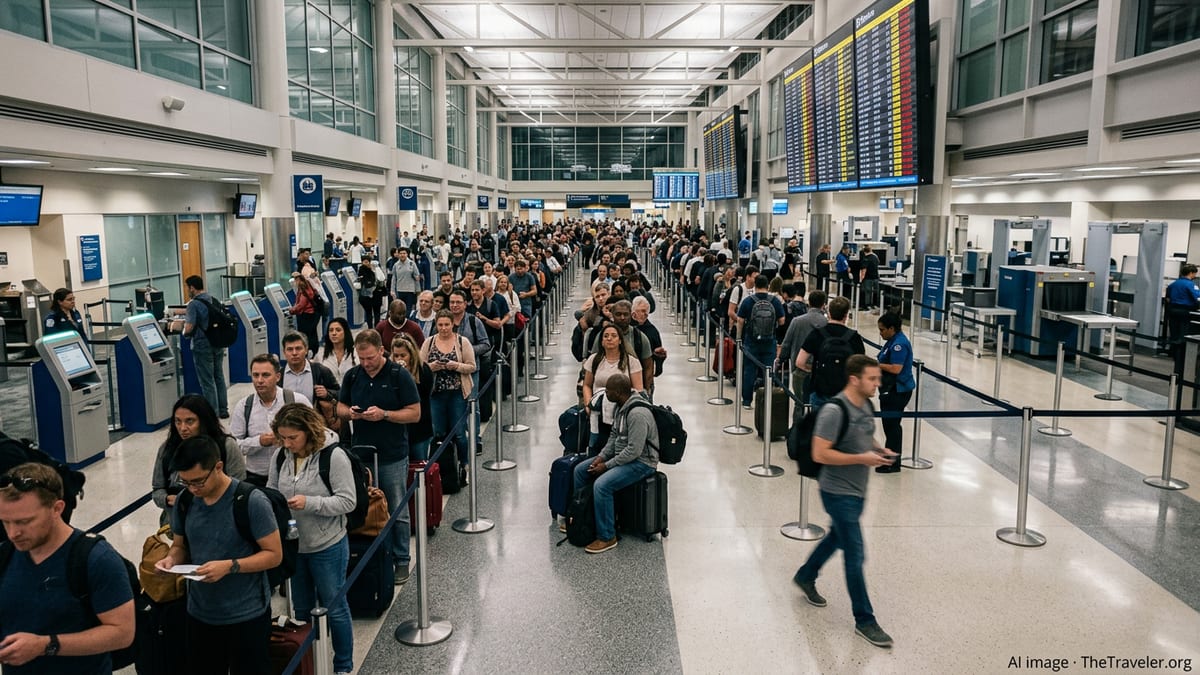
A rare halt to departures across U.S. airspace
Publicly available information from the Federal Aviation Administration indicates that a nationwide ground stop was ordered on Friday afternoon due to a telecommunications and communications-technology problem affecting air traffic control facilities across the country. The directive temporarily barred most departures from U.S. airports while flights already in the air were allowed to continue to their destinations.
Coverage from multiple outlets describes the stoppage as the broadest interruption of U.S. passenger flights since a January 2023 outage involving the FAA’s pilot-notification system and only the second nationwide halt since the aftermath of the September 11, 2001 attacks. The latest disruption focused on communication links serving the country’s 22 regional air route traffic control centers, which manage aircraft between major airports.
Reports indicate that the ground stop began to ripple through the system from about midafternoon Eastern time on Friday, hitting some of the nation’s busiest hubs at the start of a November travel weekend. Flight-tracking data cited in published coverage suggested that more than 30,000 departures and arrivals were scheduled nationwide after the order took effect, with aviation analytics firms estimating that over a million passengers had travel booked during the affected window.
By Friday evening, the FAA announced that the nationwide stop had been lifted and that technicians were working to stabilize affected systems. However, airlines warned that extensive knock-on delays and cancellations would persist as aircraft and crews were left out of position around the country.
Stranded passengers face packed terminals and long waits
At major hubs including Chicago O’Hare, Los Angeles International, San Francisco International, Miami International and airports along the East Coast, published local coverage showed departure boards taken over by long lines of delayed or canceled flights. Passengers arriving for late-afternoon and evening departures found security lines moving while aircraft remained stuck at gates or parked on the tarmac awaiting clearance.
Local television and newspaper reports from Chicago and Raleigh-Durham describe travelers learning of the ground stop only after clearing security, then confronting terminals with few clear answers and only scattered announcements about the scope of the outage. Many passengers weighed whether to wait out the disruption in the terminal, seek hotel rooms that were quickly filling near airports, or abandon flight plans entirely and rent cars for overnight drives.
In California, coverage from Los Angeles and San Francisco indicates that some travelers had already boarded flights when the ground stop took effect, only to be held on aircraft before eventually being asked to deplane and re-enter crowded gate areas. Images from Los Angeles International and San Francisco International showed passengers camped out on the floor around charging stations, clustered near airline service desks, and watching departure monitors cycle repeatedly through revised times.
Travelers at smaller regional airports also encountered a near-total halt in departures as the national order took effect. Reports from North Carolina and the Midwest note that by Friday evening some terminals showed every scheduled flight as either delayed or canceled, prompting lines at rental car counters and leading some passengers to return home to await rebooking updates.
Thousands of flights disrupted as airlines activate waivers
Data cited by national and regional outlets on Friday and Saturday indicate that more than 15,000 flights were delayed or canceled across U.S. carriers as the disruption unfolded and its aftermath stretched into the following day. The total includes both domestic and international services using U.S. airports, as departures from major gateways were frozen or sharply limited for several hours.
In response, major U.S. airlines began issuing flexible travel notices. Public customer updates show that Delta Air Lines introduced a change-fee waiver for affected flights on Friday and Saturday, while United Airlines allowed passengers booked through the weekend to switch to different flights within specified dates and city pairs without additional change fees. Other large carriers, including American Airlines and Southwest Airlines, published similar guidance urging customers to rebook through airline apps, websites or call centers rather than at congested airport counters where possible.
Despite the ground stop being lifted, airlines cautioned that recovery would not be immediate. Aircraft that had not departed remained scattered away from their next scheduled routes, and crews faced duty-time limits after extended delays on the ground. As a result, passengers whose Friday flights were canceled in many cases received rebooking notices for later in the weekend or, for heavily booked routes, for early next week.
Travel-industry analysts quoted in public commentary noted that such nationwide interruptions can take several days to fully resolve, as carriers gradually realign their fleets and reassigned crews. For travelers, that has translated into continued uncertainty, with some airports still reporting clusters of cancellations and rolling delays on Saturday morning.
Knock-on effects for sports, cargo and events
The disruption arrived at a busy moment for U.S. sports and events travel. National sports coverage notes that professional basketball and hockey teams, along with college football programs, were among those scrambling to adjust itineraries for games scheduled this weekend. Some teams were forced to delay departures, seek alternate routings, or monitor whether later commercial or charter flights would be able to operate in time for scheduled matchups.
Reports also highlight concerns in the cargo sector. Major package carriers with large overnight networks, such as those operating through Memphis, Louisville and other freight hubs, evaluated contingency plans as the ground stop unfolded. One global delivery operator publicly indicated it was prepared to enact rerouting strategies to minimize the impact on time-sensitive shipments, while cargo flights deemed critical for medical supplies and other essential goods were among the limited exceptions allowed to continue.
Beyond sports and freight, the timing of the outage affected travelers bound for concerts, conferences and family events across the country. Regional coverage from the West Coast and Midwest describes passengers missing weddings, college visits and international connections because of missed outbound flights or late arrivals into hub airports. For many, the lingering uncertainty on Saturday, as airlines worked to rebuild schedules, added to the frustration.
Travel advisors commenting publicly on the situation have urged affected passengers to document expenses related to hotels and meals, retain receipts, and review airline policies on irregular operations. While compensation rules vary by carrier and circumstance, updated Department of Transportation guidance on airline customer service dashboards provides an additional reference for understanding what support each airline offers during widespread disruptions.
Renewed scrutiny of aging aviation technology
The nationwide ground stop has renewed debate about the resilience of U.S. air traffic technology. Coverage from national outlets notes that transportation officials have pointed to overloaded or outdated systems as a factor in the failure, with calls for accelerated investment in modern communications infrastructure and backup networks to prevent similar breakdowns.
Industry reporting in recent weeks has highlighted ongoing FAA modernization programs, including efforts to phase out longstanding legacy hardware and software at air traffic control centers. Some of these initiatives are scheduled to extend into the late 2020s, reflecting the scope and complexity of upgrading systems that must remain operational around the clock while handling tens of thousands of daily flights.
Aviation experts cited in published analyses emphasize that, even with advanced automation and new routing tools, air traffic control still relies on a layered architecture of communications links, radar feeds and data-sharing platforms. When key components of that network become unstable, conservative steps such as broad ground stops may be used to preserve safety margins until engineers can confirm that core functions are restored.
For stranded travelers, those long-term debates translate into immediate questions about when they will be able to depart and whether similar events might recur. As airlines and federal agencies review the sequence of failures and responses from the November 13 incident, attention is likely to focus both on technical causes and on how quickly information reached passengers whose journeys were unexpectedly brought to a standstill.