


More news on this day
A rare nationwide ground stop ordered by the Federal Aviation Administration on November 13, 2026 left thousands of passengers stranded across the United States, triggering a patchwork of travel waivers, refunds and limited hotel assistance as airlines scrambled to reset their operations.
Get the latest news straight to your inbox!
A Historic Disruption and a Complex Recovery
The FAA’s nationwide order halted most departures at U.S. airports for several hours on Friday, November 13, after serious communications problems were reported across multiple air traffic control centers. Publicly available advisories describe a command center ground stop that affected thousands of flights, with only critical operations such as some medical and law enforcement flights allowed to continue.
The ground stop was lifted later that evening, but published coverage indicates that more than 15,000 flights were delayed or canceled as the disruption rippled through airline networks into the weekend. With aircraft and crews out of position and some pilots and flight attendants hitting duty-time limits, airlines warned that schedule irregularities could persist for days.
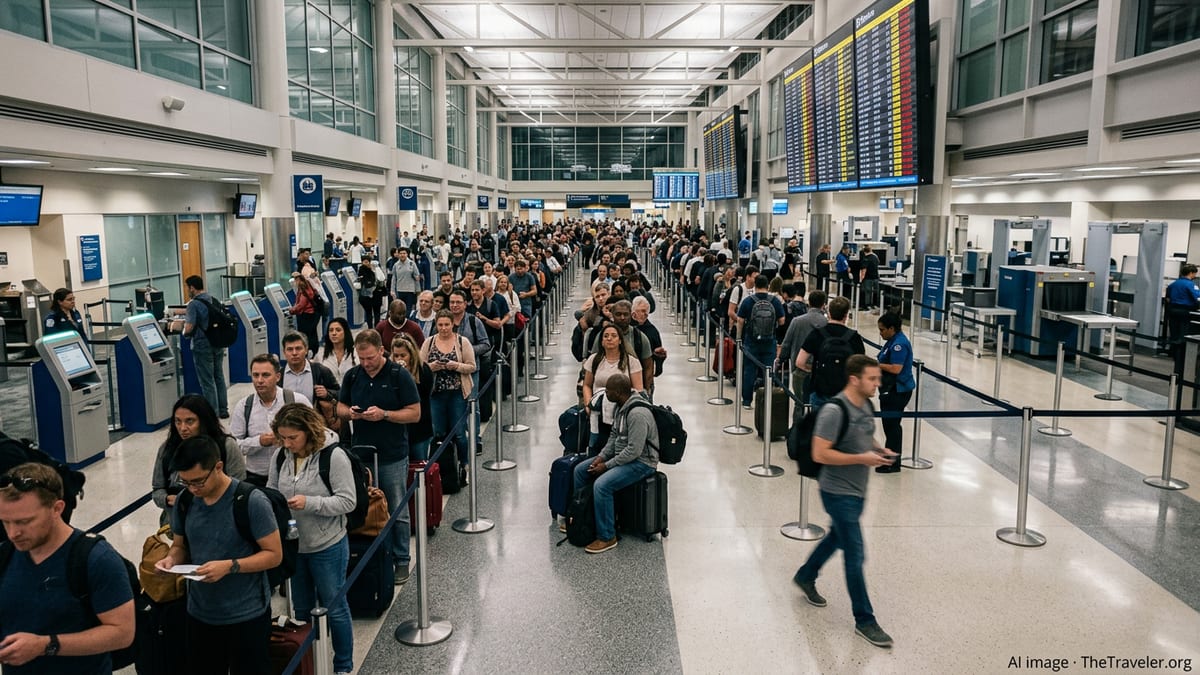
Scenes from major hubs such as Los Angeles, San Diego, Boston and Washington showed packed terminals and long lines at customer-service counters as travelers tried to secure alternative flights. Airport notices and airline statements consistently urged passengers not to head to the airport without checking their flight status first and to use apps and websites instead of in-person queues whenever possible.
The scale of the disruption invited comparison with the post-September 11 shutdown and the January 2023 outage linked to the FAA’s NOTAM system. However, transportation officials have emphasized that the latest incident stemmed from overloaded communications infrastructure rather than a security threat, and there is no public indication that a cyberattack was involved.
What Airlines Must Offer: Refunds and Rebooking Rules
For passengers, the core question after the ground stop has been what they are entitled to when flights are delayed or canceled due to an air traffic control system failure. U.S. Department of Transportation guidance states that when a flight is canceled or significantly changed and a traveler chooses not to travel, airlines must provide a refund of the fare paid, even when the underlying cause lies in the national airspace system rather than the carrier.
That obligation applies to domestic and international itineraries operated by U.S. carriers when the ticket was purchased in the United States and the airline cancels the flight or makes a major schedule change. In practice, this means that travelers whose flights were completely canceled during or after the ground stop and who decide to abandon their trip can request their money back instead of accepting vouchers or credits.
For travelers who still want to fly, airlines generally offer free rebooking in the same cabin on the next available flight to the original destination. Publicly posted airline policies refer to this as reaccommodation on the “next available” or “first available” service, although the timing may vary by route and the number of seats open. Some carriers advise that rebooking through digital channels may be faster than waiting in airport lines, particularly during mass disruptions.
Compensation beyond refunds and rebooking is more limited when the cause is categorized as an air traffic control or FAA issue. Unlike situations that carriers define as within their control, such as mechanical problems with their own aircraft, many U.S. airlines do not guarantee meal or hotel vouchers during national airspace disruptions, though some may provide assistance as a courtesy.
Carrier-Specific Waivers: Delta, United and Others
As delays mounted on November 13, several major airlines announced flexible travel waivers to give customers more options. Delta Air Lines communicated that it had halted its own departing flights while the ground stop was in effect and issued a systemwide waiver allowing affected travelers to change their itineraries without standard change fees. According to the airline’s public statement, customers were encouraged to monitor their flights through the company’s app and website as operations gradually resumed.
United Airlines issued a “Nationwide ATC Outage Travel Waiver,” according to information shared publicly by the carrier and reposted on customer forums. The waiver applied to tickets for travel on November 13 and 14 and allowed passengers whose trips were disrupted to rebook without change fees. For many itineraries, United indicated that fare differences would be waived when customers moved their travel by a short window, while longer rebookings or changes in destination could still trigger a fare difference even though the change fee itself was waived.
Other major carriers, including American Airlines, Southwest Airlines, JetBlue Airways and Alaska Airlines, published their own advisories outlining similar flexibility. These typically included the option to move travel to specified dates without incurring change fees, with the possibility of additional fare collection depending on the new routing or cabin. In some cases, airlines temporarily suspended standby and same-day confirmed change fees as they worked to clear backlogs.
Regional and low-cost airlines also adjusted policies. Some offered no-fee rebooking within narrow date ranges, while others pointed customers to general conditions of carriage and encouraged direct contact through call centers or digital channels. Travelers faced with competing offers often needed to compare not only fees but also the likelihood of finding seats on alternative departures from their home or connecting airports.
Hotels, Meals and Vouchers: What Stranded Travelers Actually Received
Beyond flights and refunds, stranded travelers focused on whether airlines would cover overnight stays, meals and ground transportation when they could not reach their destinations as planned. In the United States, federal rules do not currently require airlines to provide hotel rooms or meal vouchers when disruptions stem from national airspace or air traffic control issues. As a result, assistance in these situations is largely governed by each carrier’s internal policies.
Public reports from airports on November 13 and into November 14 indicate a mixed picture. At some hubs, airlines handed out hotel and meal vouchers to customers who were unable to travel until the following day, particularly when entire evening banks of flights were canceled. At other locations, travelers were informed that the disruption was classified as outside the airline’s control and that accommodations would be at their own expense, although agents sometimes distributed meal credits as a courtesy.
Several carriers reminded customers through public advisories that reimbursement for self-booked hotels is not guaranteed unless specifically authorized in writing. Travelers who opted to leave the airport and arrange their own lodging were often advised to retain receipts in case the airline later broadened its reimbursement policies or offered goodwill credits.
Airports themselves provided limited support. Some terminals extended operating hours, increased seating in secure areas or opened additional concessions where staffing allowed, but there is no uniform national standard for airport-provided amenities during systemwide disruptions. In many locations, travelers resorted to sleeping in gate areas while waiting for morning departures to resume.
How New Passenger Rights Rules May Shape the Response
The nationwide ground stop unfolded against the backdrop of evolving federal rules on airline accountability. The Department of Transportation has been updating its guidance and requirements on how carriers disclose and handle delays and cancellations, including new categories for reporting the causes of disruptions under the FAA Reauthorization Act of 2024. While some of these measures will not take full effect until 2027, they are already influencing how airlines describe and manage large-scale events.
Consumer advocates note that recent DOT actions have reinforced the requirement that airlines refund passengers when flights are canceled or significantly changed, regardless of whether the cause lies with the carrier or the national airspace system. The department has also encouraged airlines to voluntarily commit to standards on meal vouchers and hotel accommodations and has published comparison tools showing which carriers offer what in different scenarios.
In the wake of the November 13 ground stop, some airlines referenced these evolving standards in their public messaging, emphasizing their commitment to fee-free changes and transparent information about options. However, the divide between legally mandated refunds and optional extras such as hotels remains significant, and travelers faced a patchwork of experiences depending on their airline, itinerary and departure airport.
Observers suggest that this event may add momentum to debates over whether national airspace disruptions should trigger stronger baseline protections, particularly when millions of passengers are affected in a short window. For now, though, the combination of DOT refund rules, airline-specific waivers and case-by-case goodwill gestures defines what stranded passengers can expect after one of the most far-reaching ground stops in recent aviation history.