


More news on this day
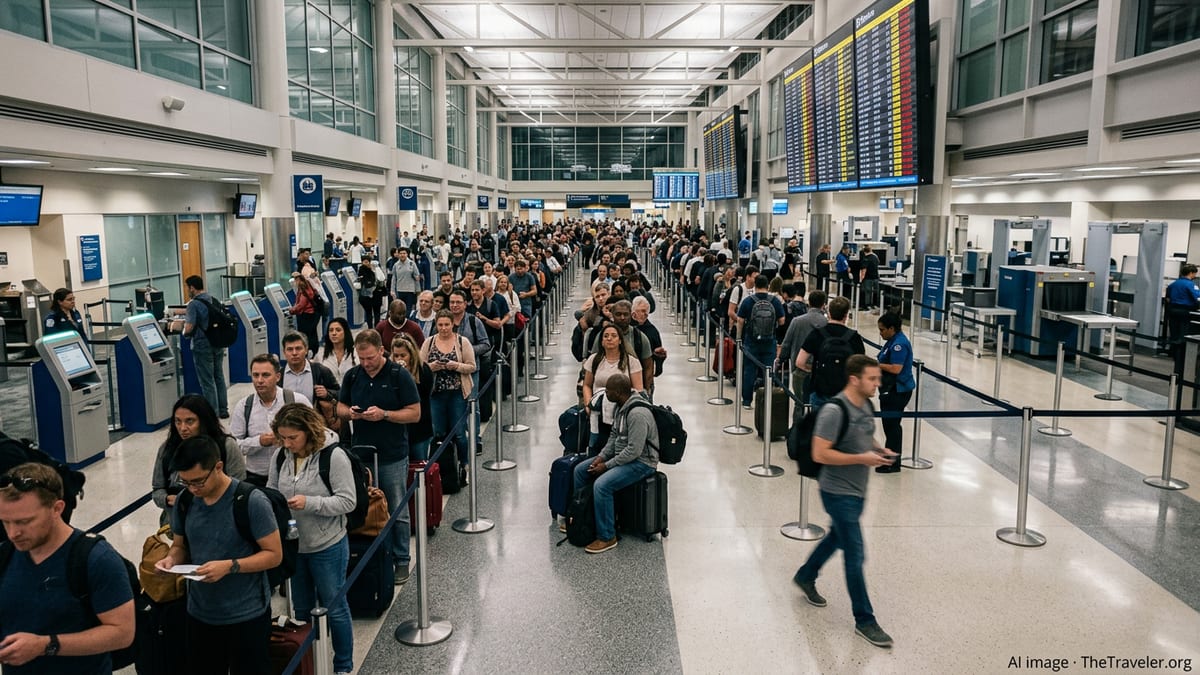
Los Angeles International Airport and major hubs across the United States were crowded with stranded passengers on Friday and Saturday after a rare nationwide ground stop halted departures, leaving some travelers fearing they "might spend the rest" of their lives in the terminal as cancellations and delays rippled through the system.
Get the latest news straight to your inbox!
Rare nationwide halt snarls travel ahead of holiday rush
Publicly available information shows that the Federal Aviation Administration ordered a nationwide ground stop on Friday, November 13, 2026, after an air traffic control system disruption. Departures were halted at airports across the country for several hours, freezing traffic in one of the busiest air corridors in the world as aircraft already in the air were diverted or delayed and scheduled departures were held at gates and on taxiways.
Tracking data compiled by flight-monitoring services indicated that more than 6,000 flights were canceled across the United States on Friday, with thousands more delayed. The impact extended well beyond the hours-long pause itself, as aircraft and crews were left out of position and evening schedules unraveled. Reports indicate that some airlines suspended all U.S. flights for the rest of the day while they attempted to reset their operations.
By Friday evening, the FAA had lifted the ground stop and described the outage as linked to an issue within the national aviation system infrastructure, rather than weather. Nevertheless, the sudden halt came at the start of a busy mid-November travel period, just one week before the traditional Thanksgiving surge, raising concern that recovery could take days rather than hours.
According to weather and aviation forecasts, unsettled conditions over parts of the Midwest and Northeast are expected to complicate efforts to move displaced travelers through the network over the weekend, increasing the likelihood of rolling disruptions as airlines rebuild their schedules.
LAX becomes a symbol of frustration and fatigue
At Los Angeles International Airport, one of the country’s primary gateways for both domestic and long haul international flights, the outages quickly translated into scenes of confusion and gridlock. Coverage from the Los Angeles Times and other outlets described departure boards filled with red cancellation notices and concourses crowded with passengers stretched out on the floor, perched on luggage and clustered around scarce power outlets.
In one widely circulated account, a traveler stranded at LAX after a series of cancellations remarked that they had come to Los Angeles “not realizing that I might spend the rest of my life here,” capturing the exasperation felt by many stuck in the terminals overnight. Social media posts and message boards showed similar sentiments, with some passengers reporting waits of four to five hours on parked aircraft and others describing missed connections that would delay family visits and international trips by several days.
Despite the congestion, publicly available information suggests that certain long haul flights, particularly some services to Asia and selected international routes, continued to operate once departures were gradually cleared. However, domestic flights into and out of Southern California were heavily affected, with travelers reporting last minute cancellations and repeated rebookings as airlines attempted to reshuffle planes and crews under tight federal duty time limits.
For many, the uncertainty around when, or if, flights would depart was as stressful as the delays themselves. As lines formed at ticket counters and customer service desks, some travelers chose to abandon their itineraries entirely, opting for refunds or scheduling new departures several days later in hopes of avoiding the initial wave of recovery chaos.
Ripple effects across California and the wider network
Reports from other California airports, including San Francisco, San Diego and Sacramento, indicated that the disruption was statewide as well as national. Sacramento International Airport issued a public advisory warning of extended delays and encouraging passengers to check with their airlines before heading to the terminal. Similar messages appeared on social media feeds and airport information pages around the country as operators tried to stem the influx of additional passengers.
Travel coverage noted that tens of thousands of people were stranded nationwide by Friday night, with large hubs such as Chicago O’Hare, Dallas Fort Worth and Atlanta also experiencing packed concourses and extensive queues. Because many aircraft and crew members ended the day in locations different from where they were scheduled to start on Saturday, aviation analysts warned that schedule irregularities could extend through the weekend and potentially into early next week.
Sports teams, cargo carriers and international travelers were all caught up in the disruption. National outlets reported that professional and college teams faced uncertainty about reaching weekend games, and logistics companies described the need for contingency plans to keep freight moving amid the constraints on air capacity. In Southern California, passengers traveling from Mexico to Los Angeles reported that their flights had been canceled entirely, with some being told that the next available seats might not be until Monday.
While the immediate focus remained on getting stranded passengers to their destinations, the episode added to a broader pattern of strain in the U.S. air travel system, which has already faced staffing challenges, weather-related disruptions and air traffic control constraints over the past several years.
What stranded travelers are being offered
Publicly available consumer guidance from the U.S. Department of Transportation indicates that when flights are canceled or significantly delayed, airlines are generally required to offer passengers the choice of a refund if they decide not to travel, even on nonrefundable tickets. If travelers wish to continue with their trip, many carriers are waiving change fees and fare differences within certain date ranges so that customers can rebook without additional cost.
Airlines have published travel waivers specific to the November 13 ground stop, allowing affected passengers to change itineraries over a several day window. Some carriers specify that rebooked travel must occur between November 12 and November 20, 2026, while others provide similar flexibility as long as customers remain in the same cabin and origin and destination cities. These policies are being updated frequently, and passengers are being urged in public messaging to review the latest terms on airline apps and websites.
Compensation for meals, hotels or alternative transportation is more limited when disruptions are attributed to factors outside an airline’s control, such as national airspace system outages. Consumer resources note that some airlines may voluntarily offer hotel vouchers or meal credits on a case by case basis, but that such assistance is not guaranteed. Travelers are being advised to keep receipts if they pay out of pocket, in case companies later broaden their policies or credit card travel protections apply.
For those still stuck at LAX and other hubs, terminal amenities have taken on new importance. Passengers have reported long lines at food outlets, difficulty finding open charging stations and crowded seating areas, while some airport lounges implemented wait lists or temporarily closed doors as capacity limits were reached.
What passengers can expect in the coming days
Aviation experts quoted across multiple outlets caution that the aftermath of a system wide ground stop can last far longer than the event itself. Aircraft and crew positioning must be rebuilt flight by flight, and duty time rules may force additional cancellations if pilots or flight attendants reach their maximum legal working hours before completing rescheduled trips.
Travelers with flights over the weekend are being advised in public reports to check their status frequently and to sign up for airline text or app alerts rather than relying solely on airport departure boards. Many carriers are allowing free same day changes when seats are available, giving passengers the option to move to earlier or later departures that are more likely to operate.
Analysts also point out that, even once schedules stabilize, the episode is likely to intensify scrutiny of the resilience of the national airspace system. Recent federal air travel consumer reports have documented ongoing issues with delays and cancellations linked to both airline controlled factors and national aviation system constraints, underscoring how quickly routine travel can be upended when a critical system fails.
For now, the task at LAX and at airports around the country remains straightforward but difficult: moving thousands of disrupted passengers to their destinations as safely and efficiently as possible, while weary travelers try to turn what felt like an endless wait into a journey that, eventually, gets back on track.