


More news on this day
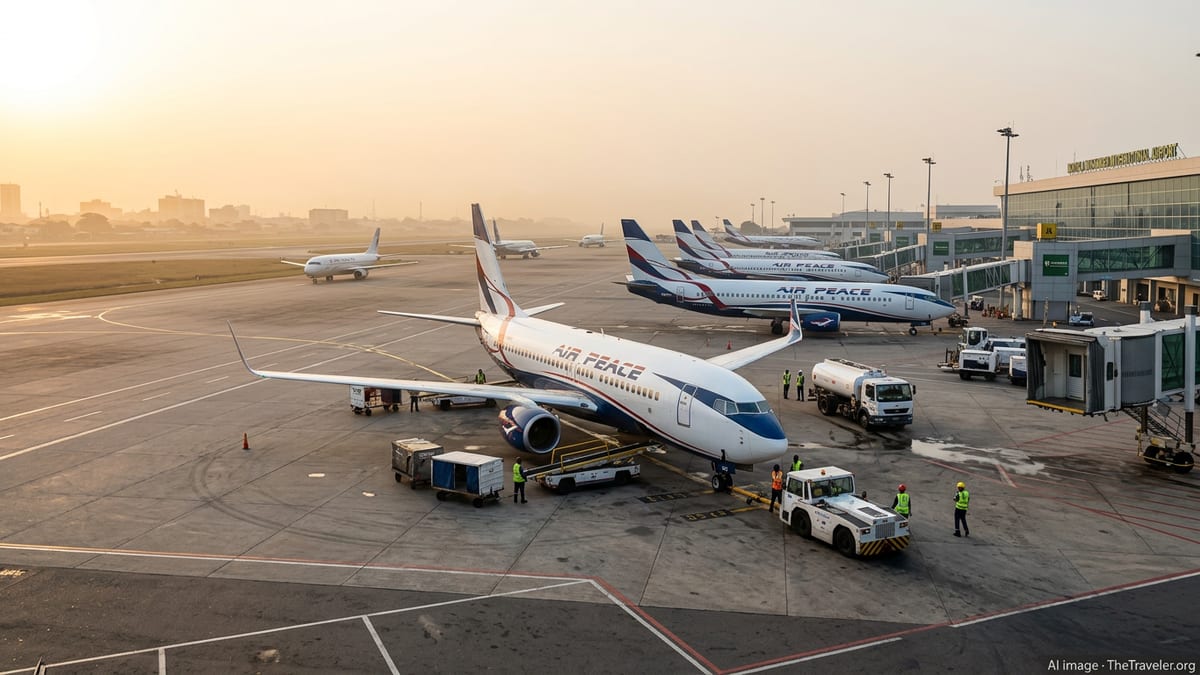
Nigeria’s civil aviation regulator has ordered Air Peace to compensate passengers affected by a disrupted Lagos–Enugu service, after a preliminary review found that travelers received incorrect notifications about the flight’s schedule and were left stranded at Lagos’ Murtala Muhammed Airport.
Get the latest news straight to your inbox!
Regulator steps in after Lagos–Enugu disruption
According to publicly available information from the Nigeria Civil Aviation Authority (NCAA), the directive follows a delay involving an early morning Air Peace flight from Lagos to Enugu on Monday, 21 September 2026. Passengers reported arriving at Murtala Muhammed Airport’s domestic terminal for the scheduled departure only to discover that the flight had already been rescheduled and later delayed again.
Reports indicate that the incident gained widespread attention after a Lagos based lawyer documented his experience on social media, stating that he had checked in the previous night and arrived at the terminal before 6 a.m. for the 6:45 a.m. departure. Public posts described long waits at the gate and uncertainty about when, or if, the service would depart for Enugu.
Following the outcry, the NCAA announced that an initial fact finding exercise had identified communication lapses on the part of the carrier. The regulator stated that passengers were sent incorrect notifications about the Lagos–Enugu flight and were not adequately informed about changes to the operating schedule, prompting the order for compensation.
At the time of writing, Air Peace has not publicly released a detailed breakdown of the compensation package, but reports indicate that the airline is expected to reach out directly to affected ticket holders in line with domestic aviation regulations on passenger rights.
What Nigeria’s passenger rights rules say about delays
Publicly available guidance from the NCAA highlights that Nigerian air travelers are entitled to specific forms of care and, in defined circumstances, financial compensation when flights are significantly delayed, cancelled, or overbooked. These protections are set out in Part 19 of the Nigeria Civil Aviation Regulations, which cover both domestic and international operations from the country’s airports.
For delays on domestic routes such as Lagos to Enugu, the rules provide for refreshments, communication support and, when disruptions extend late into the night or into the early hours, hotel accommodation and ground transport. In cases where delays become prolonged or the airline fails to notify passengers in good time, travelers may also be eligible for partial refunds or other monetary redress, calculated as a percentage of the ticket price.
The regulator’s consumer protection framework also emphasizes advance notification. Airlines are expected to inform passengers of schedule changes well before departure and to provide clear reasons for disruptions within a short time of any expected delay. The preliminary findings shared in the Air Peace case point specifically to incorrect notifications, bringing the carrier’s communication practices under scrutiny.
The latest directive therefore serves as a practical test of how Nigeria’s passenger rights regime operates in real time, particularly on busy domestic corridors where early morning flights are often used by business travelers connecting to meetings, court appearances and onward journeys.
Lagos–Enugu route under the spotlight
The Lagos–Enugu sector is one of Nigeria’s key domestic links, connecting the country’s commercial hub to the southeast via Murtala Muhammed Airport in Lagos and Akanu Ibiam International Airport in Enugu. Air Peace is among the most prominent operators on the route, alongside other Nigerian carriers that serve the corridor with multiple daily frequencies.
For travelers, the route is an essential bridge between Lagos based business activities and the southeast’s commercial and cultural centers. Legal practitioners, corporate executives, traders and family travelers commonly rely on early morning departures from Lagos to make daytime appointments in Enugu, returning on evening services the same day.
Because of this pattern, reliability and accurate communication about schedule changes are critical. A disruption to a first wave departure from Lagos can have knock on effects for connecting surface travel in Enugu, missed meetings, and lost working hours. The viral social media posts that prompted wider attention to the recent delay highlighted these downstream impacts, with at least one traveler noting that the disruption caused him to miss a scheduled court sitting.
While individual delays are not uncommon on busy domestic networks, high profile disruptions on routes like Lagos–Enugu tend to draw sharper public reaction, particularly when travelers believe they were not properly informed or taken care of during long waits at the terminal.
Implications for Nigerian carriers and travelers
The NCAA’s directive to Air Peace aligns with a series of recent statements in which the regulator has stressed that airlines operating in Nigeria will be held to account for their obligations to passengers. In previous advisories, the authority has warned carriers that failure to provide care for delayed travelers or to honor compensation rules can attract sanctions ranging from fines to more serious operational penalties.
For airlines, the Lagos–Enugu incident is a reminder that communication lapses can quickly escalate into regulatory issues, especially when disruptions unfold in full view of social media. Carriers that operate dense domestic schedules out of Lagos, Abuja and other hubs may need to invest further in real time passenger communication tools, staff training and contingency plans in order to stay within the bounds of consumer protection regulations.
For travelers, the case underscores the importance of understanding their rights under Nigerian aviation law. Passengers whose flights are significantly delayed or rescheduled at short notice can document the disruption, retain boarding passes and receipts, and file complaints with both the airline and the NCAA’s consumer protection department when they believe their entitlements have not been met.
While it remains to be seen how Air Peace will structure the ordered compensation for the Lagos–Enugu passengers, the NCAA’s intervention is already being viewed by many observers as a signal that regulators intend to take a firmer stance on domestic flight disruptions, with potential ripple effects across Nigeria’s wider aviation network.
Broader context for domestic flight reliability
The Air Peace directive comes against a backdrop of ongoing debate about punctuality and service standards on Nigeria’s domestic routes. In recent years, local media and passenger advocacy discussions have frequently highlighted issues such as last minute schedule changes, extended tarmac waits and limited information during irregular operations at major airports.
Industry analysts point to several contributing factors, including infrastructure constraints at some terminals, weather related disruptions during harmattan season, operational challenges linked to aircraft availability, and rising costs for fuel and maintenance. Nevertheless, regulators and passenger rights groups maintain that even in a challenging operating environment, airlines retain clear responsibilities for informing customers and providing assistance when flights do not run as planned.
As Nigeria’s aviation market continues to grow, with increasing demand on trunk routes between Lagos, Abuja, Port Harcourt and Enugu, observers note that visible enforcement actions on passenger compensation may become more common. The NCAA’s handling of the Lagos–Enugu case will likely be closely watched by both travelers and carriers as a benchmark for how future disruptions are addressed.
For visitors and domestic travelers planning trips within Nigeria, particularly those connecting critical business or legal commitments to domestic flights, the latest developments serve as a timely reminder to build some flexibility into itineraries and to stay alert to notifications from airlines in the hours leading up to departure.