


More news on this day
A fiber-optic failure at a key Federal Aviation Administration facility has been identified as the cause of a major air-traffic outage that forced 165 flights to divert from their planned destinations, with Newark Liberty International Airport bearing the brunt of the disruption.
Get the latest news straight to your inbox!
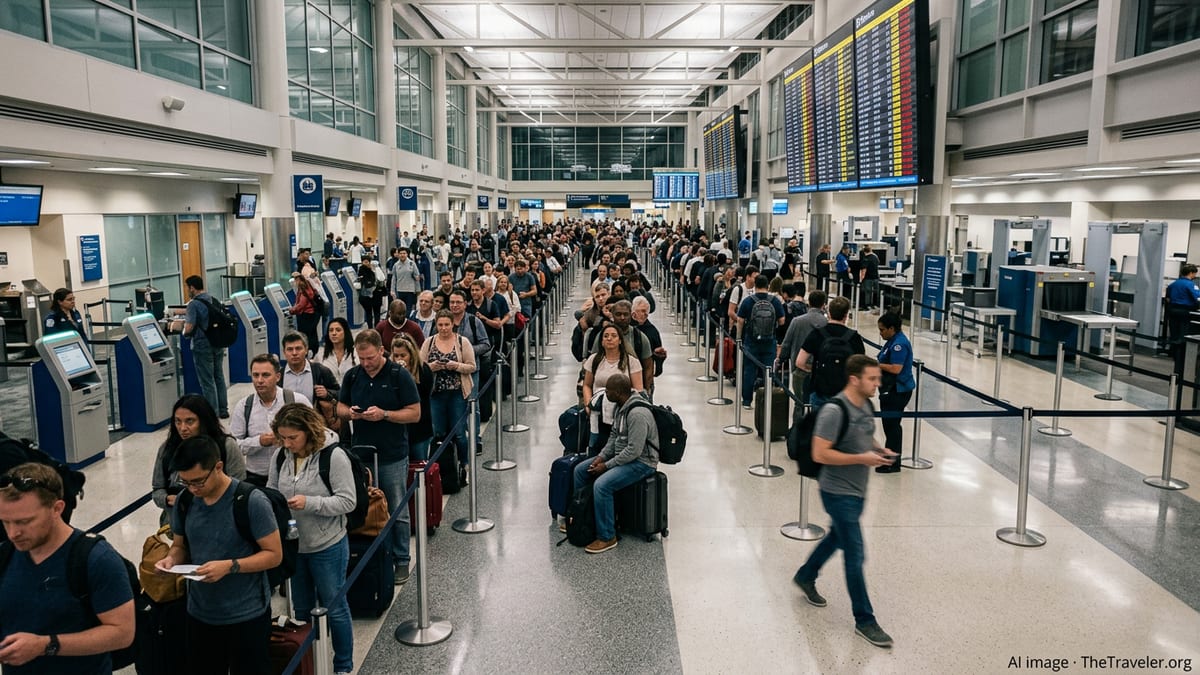
How a damaged fiber line shut down Newark arrivals
Publicly available information indicates that the disruption on September 21 began at the Philadelphia air traffic control facility that manages approach traffic for Newark Liberty International Airport and other major hubs in the region. A primary telecommunications circuit supporting radar displays and communications failed first, according to published coverage of the incident.
Reports indicate that when controllers attempted to rely on a backup route, that secondary fiber line had already been severed during unrelated construction work in New Jersey. With both the main and backup circuits unavailable, radar feeds and key communications links for the airspace serving Newark and Philadelphia were significantly degraded for several hours.
Flight-tracking data and news reports show that the outage effectively halted commercial landings at Newark from about mid-morning until late afternoon, transforming one of the nation’s busiest hubs into an almost empty field while jets circled, diverted or never left their departure airports.
Scope of the disruption across the Northeast
According to multiple analyses of flight-tracking data, the failure ultimately forced 165 arriving flights to divert across the Northeast, including 109 aircraft that had been scheduled to land at Newark Liberty International Airport. Those diversions scattered aircraft to 43 alternate airports, from major hubs such as Boston Logan and Washington Dulles to smaller regional fields that suddenly found themselves handling unexpected international and transcontinental arrivals.
Separate tallies of delays and cancellations indicate that thousands of flights across the United States were affected in some way, with the greatest concentration of cancellations at Newark and Philadelphia. Public data from services that monitor global aviation activity show that Newark lost more than half of its normal schedule during the roughly eight-hour outage window.
Even after the damaged lines were repaired and ground stops were lifted, residual disruption continued into the following morning. Aircraft and crews were out of position across the network, leading to additional cancellations and delays for travelers who had not been caught in the initial wave of diversions.
Airlines and passengers caught in cascading delays
Newark’s position as a major hub meant that some carriers were hit harder than others. Published coverage notes that United Airlines, which operates an extensive domestic and international network from Newark, recorded several hundred cancellations and many more delays as its schedules unraveled. American Airlines and other large carriers serving the Northeast also reported significant operational impacts.
Individual long-haul flights experienced particularly disruptive outcomes. One Lufthansa service from Europe to the New York area is reported to have turned back across the Atlantic after spending around eight hours in the air, illustrating how a localized failure in ground infrastructure can ripple out to affect travelers thousands of kilometers away.
For passengers already airborne toward Newark, diversion airports became unexpected waypoints. Travelers found themselves landing in cities such as Boston, Washington, Toronto and Syracuse, where airlines worked to refuel aircraft, clear customs where necessary and arrange onward travel once the airspace around Newark reopened.
What the outage reveals about FAA infrastructure
The incident has drawn renewed attention to the resilience of air-traffic infrastructure in one of the world’s most complex airspace regions. Public descriptions of the event highlight that a single failed circuit combined with a previously damaged backup line was sufficient to sharply curtail operations at multiple major airports, including Newark, Philadelphia, John F. Kennedy and LaGuardia.
Recent government reports and past outage investigations have already pointed to vulnerabilities in some parts of the Federal Aviation Administration’s communications and radar network. The Newark-area airspace has faced previous disruptions tied to equipment and telecommunications issues, including shorter outages that led to delays and reduced capacity.
According to open congressional and oversight documents, the FAA has been under pressure to modernize critical systems and strengthen redundancy, particularly in high-density regions such as the New York metropolitan area. The latest outage is likely to intensify scrutiny of how backup circuits are routed, monitored and protected during nearby construction work.
Implications for future travelers using Newark
For travelers planning to use Newark Liberty International Airport in the coming weeks, airlines and airport operators are working with a largely restored schedule, but some knock-on effects from the disruption may briefly persist as fleets and crews are realigned. Most carriers are advising passengers to monitor flight status closely on the day of travel and to allow additional time for connections through the New York region.
Travel-compensation specialists note that, because the disruption stemmed from an external telecommunications failure affecting air-traffic control, many passengers may face limited options for statutory compensation on U.S. domestic itineraries. However, airlines have issued travel waivers in some cases, allowing customers to rebook without change fees, and some international travelers may have additional rights under foreign or cross-border regulations.
For now, publicly available information shows that the damaged fiber link has been repaired and that traffic levels at Newark have largely returned to typical volumes for late September. Even so, the scale of the diversion operation and the speed at which normal operations were disrupted are likely to keep the September 21 outage at the center of policy discussions about how to safeguard one of the country’s most important air travel gateways.