


More news on this day
Air travelers across the United States faced another difficult day as more than 896 flights were delayed and about 200 were canceled, with weather, staffing gaps and scattered technology issues combining to disrupt schedules at some of the country’s busiest hubs.
Get the latest news straight to your inbox!
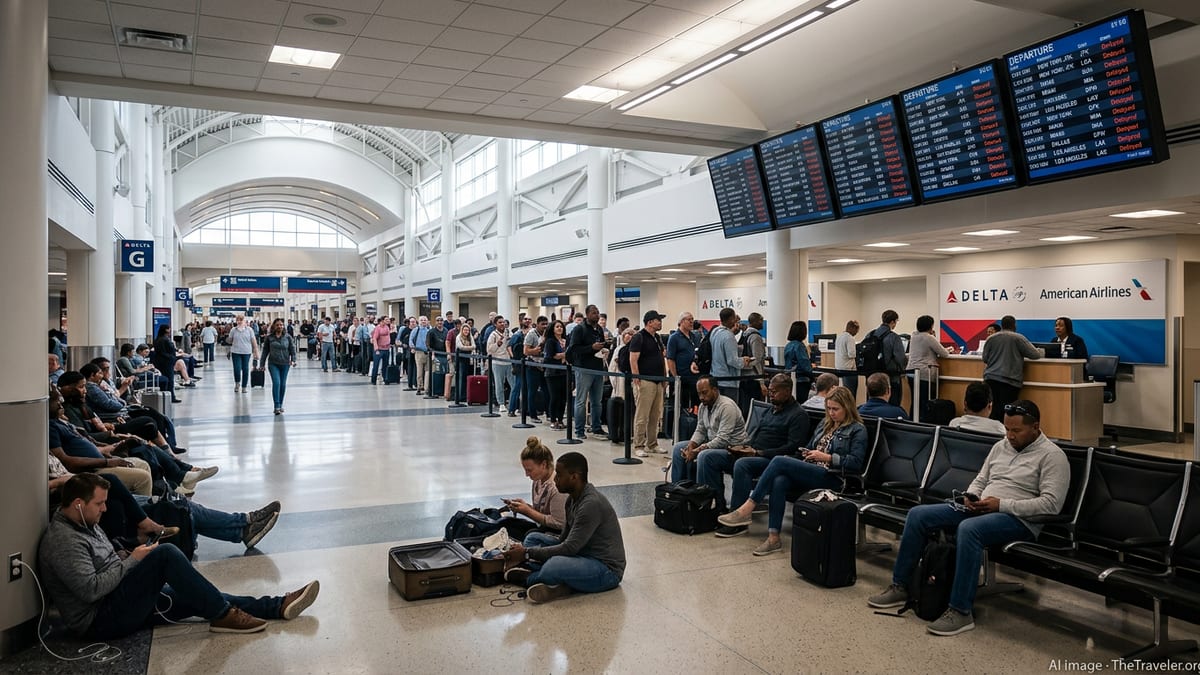
Delays Concentrated at Major U.S. Hubs
Publicly available flight-tracking data shows that the latest disruptions were concentrated at large connecting hubs, where even modest schedule changes can quickly cascade into widespread delays. Major airports in the Northeast, Midwest and Texas reported some of the heaviest congestion, reflecting their role as critical waypoints for domestic and international itineraries.
Reports indicate that American Airlines, United Airlines, Delta Air Lines, Southwest Airlines and JetBlue accounted for a significant share of the delays and cancellations. As of early afternoon, several of these carriers were each managing hundreds of delayed departures and arrivals, according to live statistics from flight-tracking dashboards that aggregate data from airports and airlines nationwide.
The knock-on effect at hub airports meant that travelers far from the primary weather systems or technical problems also encountered late departures and missed connections. Once delays extended into peak afternoon and evening banks, recovery became more difficult, with aircraft and crew often out of position for their next scheduled legs.
Travel industry coverage notes that this pattern has become familiar during peak travel periods, when tight schedules and high load factors limit the margin for error. A single ground stop, thunderstorm cell or software outage can quickly lead to rolling delays that persist for hours.
Weather, Staffing and IT Issues Drive the Turbulence
Recent reporting links the current disruptions to a combination of strong storm systems, air traffic control constraints and localized IT challenges that have periodically affected U.S. airlines this summer. Storms in particular can force ground stops, reroutes and extended taxi times, triggering a wave of knock-on delays throughout the national airspace system.
Staffing shortfalls, especially in specialized roles such as pilots, flight attendants, maintenance staff and air traffic controllers, continue to limit the ability of airlines and the Federal Aviation Administration to absorb irregular operations. When flights are pushed back because of weather or mechanical checks, there are fewer spare crews available to cover the resulting gaps, which can in turn lead to cancellations later in the day.
This latest episode follows other high-profile disruptions in recent months tied to technology outages and scheduling bottlenecks. In late July, for example, a major U.S. carrier briefly halted departures nationwide after an IT problem, leading to more than a thousand delays and hundreds of cancellations in a single day, according to published coverage that drew on real-time tracking data and airline disclosures.
Analysts note that while large carriers have invested heavily in new systems and recovery tools since the pandemic, the complexity of modern airline operations means vulnerabilities remain. When multiple stressors, such as convective weather and a system glitch, collide during a busy travel period, the network can struggle to recover before the next wave of departures.
What the Disruptions Mean for Summer and Fall Travelers
The latest round of delays underscores how fragile the system can be at the height of the travel season. Demand for leisure and business trips has remained strong, and schedules published for 2026 show increased peak-day flying at several major hubs compared with last year, according to data cited in recent aviation analysis.
More flights and fuller planes can be good news for tourism destinations and airline revenues, but they also raise the risk that individual disruptions ripple widely. When an early-morning departure from a hub leaves late, the same aircraft may arrive behind schedule for subsequent legs, producing a chain of late flights that extends into the evening.
For travelers, this means that even on days with fewer than a thousand cancellations nationwide, long waits, missed connections and unexpected overnight stays can still occur. Passengers with tight connections or complex itineraries are particularly exposed, especially when traveling through weather-prone regions or at the end of the day, when recovery options are limited.
Travel planners and consumer advocates often recommend that passengers factor in this heightened volatility when choosing flights, building in longer connection times where possible and avoiding the last departure of the night on critical routes if schedules allow.
Key Steps for Passengers Facing Delays or Cancellations
Publicly available guidance from consumer advocates, travel publications and airline customer-service pages outlines several strategies for travelers caught up in days like this. The most consistent advice is to monitor flight status frequently, starting 24 hours before departure, using both airline apps and independent flight-tracking tools that sometimes show aircraft movements before official delay notices are posted.
When a delay or cancellation appears, experts recommend moving quickly to explore alternatives. Many airlines now allow same-day changes or rebooking within a defined travel window through their apps or websites, which can be faster than waiting in line at a gate or calling a contact center. Some carriers also issue travel waivers during major weather events, allowing passengers to move their trips without change fees or fare differences.
U.S. Department of Transportation guidance states that when a carrier cancels a flight or imposes a significant schedule change and the traveler chooses not to fly, the airline is generally expected to provide a refund for the unused portion of the ticket rather than only a credit, according to public regulatory documents and agency explainer pages. Travelers are often advised to keep records of communications with airlines and to document out-of-pocket expenses in case they need to pursue refunds or reimbursements later.
Travel experts also point out that booking with a credit card that includes trip interruption or delay coverage can provide an additional backstop, particularly for costs such as meals and lodging when disruptions extend overnight. Policies vary significantly, so passengers are generally encouraged to review card benefits and any separate travel insurance they may have purchased before departure.
How Airlines and Regulators Are Responding
The current wave of disruptions comes amid intensified scrutiny of airline reliability and passenger protections. Regulatory filings and policy proposals published by the U.S. Department of Transportation over the past two years highlight concerns about rising rates of long delays and multi-day disruption events, particularly during peak travel seasons.
In response, several major U.S. carriers have publicly detailed efforts to strengthen their operations, including hiring additional crew, upgrading scheduling tools and overhauling outdated IT infrastructure. Airlines have also emphasized investments in de-icing capacity, standby aircraft and cross-utilization of staff as ways to improve resilience when storms or technical problems arise.
Policy discussions in Washington have focused on giving passengers clearer information about their rights when flights are significantly delayed or canceled, as well as on potential rule changes that could require more consistent compensation or service guarantees. Consumer advocates argue that greater transparency around the causes of disruptions and the remedies available to travelers would help rebuild trust in the system.
For now, the data from this latest episode of 896 delays and roughly 200 cancellations suggests that even routine summer storm systems can quickly expose the pressure points in U.S. air travel. With more busy holiday weekends and storm seasons ahead, both airlines and travelers are likely to remain on alert for further bouts of turbulence in the nation’s skies.
https://travel.yahoo.com/news/articles/over-896-flights-delayed-200-145631754.html
https://www.flightaware.com/live/cancelled/