


More news on this day
JetBlue is introducing a new BlueFirst cabin on routes that do not feature its Mint product, sharpening the carrier’s focus on higher-yield travelers as American Airlines, Delta Air Lines and United Airlines all accelerate plans to add more premium seats across their fleets.
Get the latest news straight to your inbox!
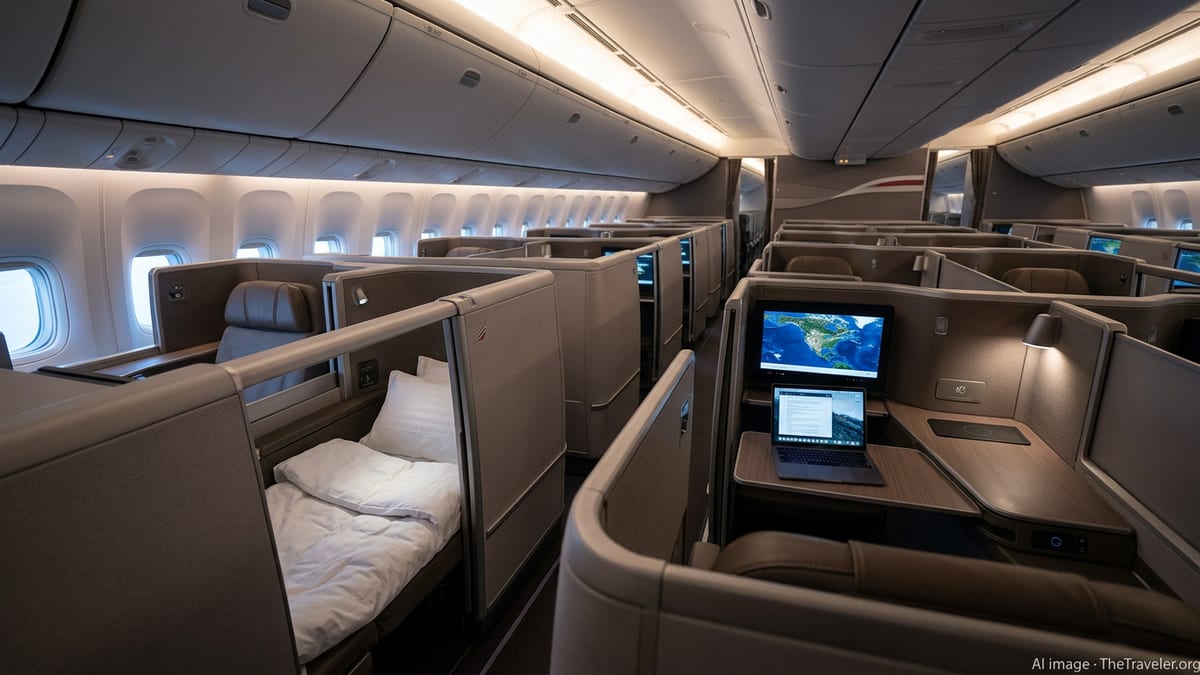
JetBlue Adds BlueFirst to Fill the Gap Below Mint
JetBlue has refreshed its fare structure and quietly confirmed plans to launch BlueFirst, described in the airline’s online materials as “a fresh take on first” for flights that do not offer its Mint lie-flat suites. According to the carrier’s updated fare guide, BlueFirst is scheduled to begin rolling out later in 2026, giving JetBlue a dedicated premium cabin across a wider portion of its network while maintaining Mint as its flagship product on key transcontinental and select international routes.
Publicly available information indicates that BlueFirst will be positioned above JetBlue’s existing core economy fares and its extra-legroom seats, offering a more traditional domestic first-class experience on aircraft that lack the Mint layout. While detailed seat maps and specific aircraft types have not yet been fully published, the new cabin is expected to include wider seats, additional pitch and enhanced service compared with the main cabin, aligning JetBlue more closely with the premium offerings of larger U.S. network carriers.
The move marks a strategic shift for JetBlue, which historically differentiated itself with a single-class cabin plus extra-legroom seating before debuting Mint on select routes. As competitive pressure in the premium market increases, BlueFirst gives the New York-based airline a way to pursue higher-yield customers on shorter and mid-haul routes where Mint’s fully flat suites would be difficult to justify from a cost and utilization perspective.
Industry analysts suggest that the new product also responds to evolving traveler expectations, as high-value leisure passengers and small-business travelers increasingly look for extra comfort, privacy and amenities even on domestic flights. By using BlueFirst on non-Mint routes, JetBlue appears to be betting that a more consistent premium experience will help it better compete for those travelers.
American Targets Big Growth in Lie-Flat and Premium Economy Seats
American Airlines is in the midst of a multiyear effort to significantly expand its inventory of premium seats. Investor presentations and product overviews show that the airline is targeting roughly 50 percent growth in lie-flat business and premium economy seating by the end of the decade, driven by a mix of new aircraft deliveries and widebody retrofits. The plan centers on the Flagship Suite business-class seat, which adds privacy doors and more personal space, alongside a redesigned premium economy cabin with increased storage and upgraded finishes.
On long-haul aircraft such as the Boeing 787-9 and Airbus A321XLR, American is configuring cabins with a higher proportion of premium seating than in previous generations. The 787-9s are slated to feature more than 50 Flagship Suite seats and over 30 premium economy seats, while the A321XLR will introduce 20 Flagship Suite seats and a dedicated premium economy cabin. These layouts reduce the overall number of standard economy seats in favor of more revenue-generating premium offerings.
American is also refreshing the interiors of its existing Boeing 777-200ER and 777-300ER fleets, phasing out traditional international first class and reallocating space to business-class suites and premium economy. Company filings and product documentation indicate that the retrofit program increases the number of business-class seats on some aircraft by more than one-third, while maintaining or slightly expanding premium economy capacity. The changes reflect a clear recalibration toward customers willing to pay for additional comfort and privacy on long-haul routes.
Alongside the hard-product upgrades, American has rolled out new bedding, amenity kits and dining options in its premium cabins and premium economy on hundreds of international and transcontinental flights. The airline presents these enhancements as part of a broader effort to attract high-spend corporate travelers and affluent leisure passengers, positioning itself as a full-service competitor in an increasingly segmented market.
Delta Scales Up Suites and Premium Mix Across Its Fleet
Delta Air Lines is similarly reshaping its fleet around more premium seating, including the next generation of its Delta One business-class suite. According to the airline’s recent product announcements, a new Delta One suite design will debut on the Airbus A350-1000, which is expected to enter service in 2027 with a premium-heavy configuration in which roughly half of the seats are in premium cabins. The layout underscores Delta’s strategy of maximizing revenue from high-value passengers on long-haul routes.
Delta is also upgrading the interiors of its existing Airbus A330-200 and A330-300 fleets, adding suites with privacy doors in the Delta One cabin for the first time on those aircraft. Carrier communications highlight larger 4K seatback screens and Bluetooth connectivity at every seat, including in economy, extending a consistent technology and comfort upgrade across cabins. The changes support Delta’s positioning as a design-forward airline and are intended to narrow the experience gap between business, premium economy and standard economy.
More broadly, Delta reports that more than 800 aircraft will receive updated interiors over a five-year period, a program that includes premium economy-style cabins on select international routes. These cabins are designed to appeal to travelers seeking a step up from economy without the price of full business class, mirroring similar strategies at American and United. As the upgrades roll out, Delta’s network will offer a larger share of seats with extra space, enhanced dining and bundled amenities.
By leaning into suites and premium economy, Delta is sharpening its focus on travelers who place value on comfort and privacy, whether paid directly or booked through corporate contracts. The growth in premium seating also gives the carrier more flexibility to manage demand swings, as seats can be sold as business or upgraded from lower cabins depending on market conditions.
United Pushes Premium on New Widebodies and Narrowbodies
United Airlines is expanding its own premium footprint through new aircraft deliveries and cabin designs. The airline has introduced an “Elevated” interior on its Boeing 787-9 Dreamliners that features two new Polaris business-class suites, a larger Premium Plus cabin and some of the largest 4K OLED seatback screens among U.S. carriers. The configuration brings the highest total number of premium seats of any aircraft in United’s fleet, underscoring the company’s emphasis on high-yield customers on intercontinental routes.
United’s premium strategy extends beyond widebodies. The carrier is preparing to deploy Airbus A321XLR aircraft on transatlantic and other long-range narrowbody routes, outfitting them with lie-flat Polaris business seats, a robust Premium Plus cabin and extra-legroom economy. Recent coverage of cabin previews notes that these aircraft will also feature high-speed satellite connectivity and advanced inflight entertainment technology, positioning them as a competitive alternative to larger widebody jets on thinner long-haul markets.
United has been progressively retrofitting a large share of its fleet with Polaris business-class seats and Premium Plus cabins since the late 2010s. The latest generation of interiors extends that effort with more suites, upgraded soft products in premium cabins and enhanced technology features across all classes. This approach aligns with a broader trend among global network carriers to pivot capacity into higher-margin seats, even as overall seat counts on some aircraft decline.
The addition of premium seats across both widebody and narrowbody fleets supports United’s broader network strategy, which relies heavily on long-haul flying from hubs such as Newark, Chicago and San Francisco. By emphasizing a consistent Polaris and Premium Plus experience, the airline is aiming to retain high-value customers who might otherwise consider foreign competitors on transatlantic and transpacific routes.
Premium Cabin Expansion Redefines the Competitive Landscape
The introduction of BlueFirst at JetBlue comes at a moment when all major U.S. carriers are recalibrating their cabins around premium demand. American is expanding its Flagship Suite and premium economy footprint, Delta is preparing an even more premium-heavy A350-1000 and upgrading A330s with suites, and United is rolling out elevated interiors on new 787-9s and incoming A321XLRs, each with significantly more high-end seating than previous generations.
Industry data and airline disclosures suggest that premium cabins generate a disproportionate share of revenue and profit, particularly on long-haul international and key domestic business routes. As leisure travelers show continued willingness to pay for additional space and amenities, and as corporate demand gradually recovers, carriers are responding by adding more seats that bridge the gap between economy and full business class. Products such as BlueFirst, Premium Plus, Delta One suites and Flagship Suite are central to that strategy.
For travelers, the shift means a growing variety of options above standard economy, but also a reconfiguration of aircraft in which fewer seats may be priced at the lowest fares. On many routes, particularly across the Atlantic and on U.S. transcontinental corridors, premium cabins are likely to occupy a larger share of the cabin footprint than in past cycles.
As JetBlue, American, Delta and United move further into this premium-focused era, competition is increasingly defined not only by schedules and loyalty programs but also by the quality, density and pricing of premium seating. BlueFirst’s debut illustrates how even carriers that once emphasized a single-class value proposition are adapting to a market where comfort and privacy at the front of the cabin are becoming central to the business model.