


More news on this day
European aviation regulators have narrowed their Gulf airspace warning to focus on specific high-risk waters, even as Dubai forecasts heavier long-haul traffic between Europe, the Gulf and Asia in the coming weeks.
Get the latest news straight to your inbox!
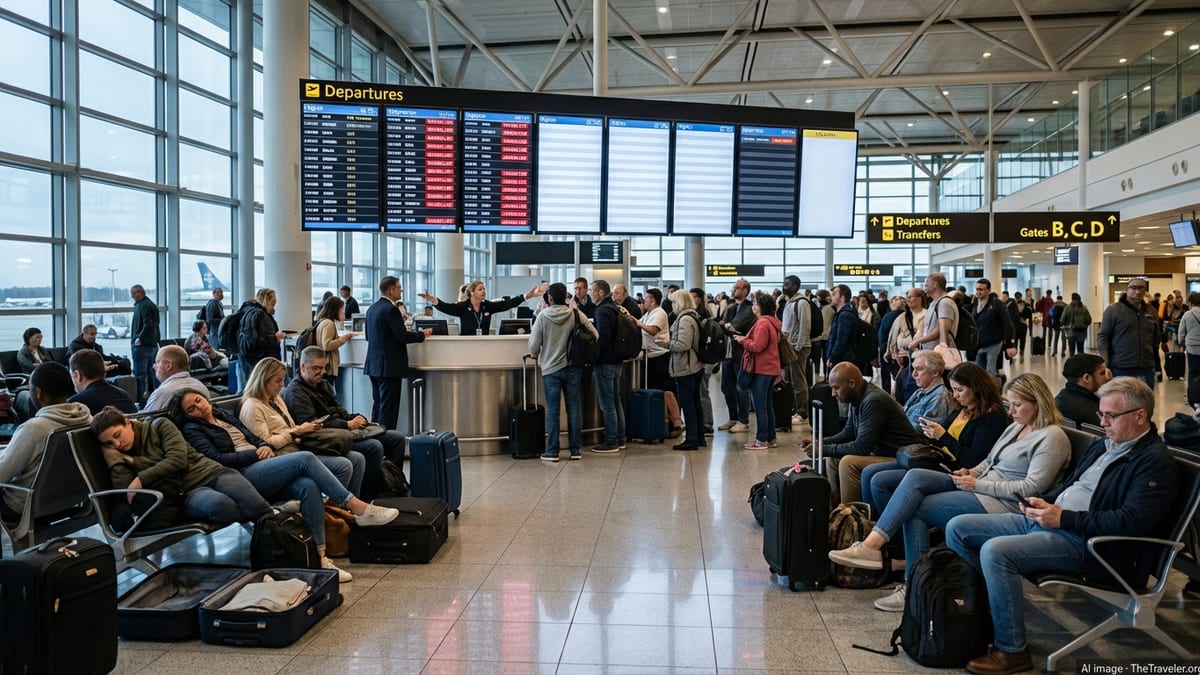
Europe Refines Gulf Conflict-Zone Guidance
The European Union Aviation Safety Agency (EASA) has updated its conflict-zone advisory for the Gulf, extending its warning to September 30, 2026 but narrowing the area where airlines are urged to avoid flying. The latest bulletin focuses on airspace over the waters of the Arabian or Persian Gulf within the flight information regions of Bahrain, Kuwait, Qatar and the UAE, as well as parts of the Gulf of Oman managed by Oman’s Muscat centre. Earlier guidance had recommended avoiding the entire airspace of multiple Gulf states at all altitudes, including over land.
Reports indicate that EASA still advises airlines not to operate in the airspace of Iran, Iraq and Lebanon through at least the end of September, while recommending caution over the land territory of Gulf states where overflight is no longer explicitly discouraged. The shift reflects a move from broad regional avoidance toward more targeted risk management along key maritime corridors that have seen recent military activity and missile and drone use. ([arabnews.com](https://www.arabnews.com/middle-east/eu-aviation-safety-agency-narrows-gulf-airspace-warning-2656425?utm_source=openai))
According to analysis of the updated conflict-zone bulletin, operations necessary for arrivals and departures to airports in affected countries may proceed if airlines apply additional mitigation measures and continuous risk monitoring. That wording effectively allows continued access to major hubs such as Dubai, Abu Dhabi and Doha, while still discouraging use of high-risk overwater segments for transit flights between Europe and Asia. ([cntravellerme.com](https://www.cntravellerme.com/story/europe-has-updated-its-gulf-airspace-warning-as-us-iran-tensions-continue-heres-what-it-means-for-air-travel?utm_source=openai))
Dubai Expects Busier Skies Despite Regional Tensions
The timing of Europe’s refined guidance coincides with expectations of heavier passenger flows through Dubai, where September traditionally marks the end of the summer lull and the start of a busy season for business travel, events and long haul connections. Publicly available information from regional aviation coverage suggests that Dubai International Airport is preparing for some of its strongest volumes since the start of the Middle East crisis earlier this year, particularly on routes linking Europe with South and Southeast Asia via Gulf hubs. ([gulfnews.com](https://gulfnews.com/business/aviation/uae-flight-update-today-emirates-etihad-air-arabia-status-europe-extends-gulf-airspace-warning-1.500658875?utm_source=openai))
Industry data compiled by Eurocontrol earlier in 2026 showed that hostilities and related airspace closures cut traffic between Europe and the broader Middle East by more than half at the height of the disruption, including flights merely overflying the region. As schedules are gradually rebuilt, Gulf hubs such as Dubai are again acting as key relays between Europe, Asia and Africa, even though airlines continue to work around no go zones over Iran, Iraq and parts of the eastern Mediterranean. ([eurocontrol.int](https://www.eurocontrol.int/sites/default/files/2026-03/eurocontrol-aviation-trends-issue-11.pdf?utm_source=openai))
Analysts note that the return of demand on core Europe–Dubai and Europe–Doha trunk routes is being balanced against the operational complexity of longer routings and altitude restrictions. While EASA’s narrower warning opens more flexibility than the sweeping advisories issued in the early weeks of the conflict, carriers still face higher fuel burn and tighter scheduling windows as they thread through approved corridors into and out of the Gulf. ([eurocontrol.int](https://www.eurocontrol.int/sites/default/files/2026-03/eurocontrol-aviation-trends-issue-11.pdf?utm_source=openai))
What the New Warning Means for Airlines and Routes
For European and international airlines, the latest change in EASA’s Gulf guidance effectively redraws the risk map for flights to and from the UAE and its neighbours. Many carriers had already adjusted routings to avoid large parts of the region, but the refined advisory formalises a distinction between higher risk overwater segments and comparatively less exposed land corridors. European media reporting on the new bulletin indicates that airspace over Jordan has been removed from the strongest warnings, although operators are still urged to exercise caution. ([arabnews.com](https://www.arabnews.com/middle-east/eu-aviation-safety-agency-narrows-gulf-airspace-warning-2656425?utm_source=openai))
In practice, long haul flights from Europe to the UAE, Qatar and other Gulf destinations are likely to continue operating with detours that skirt the most sensitive areas, adding time to journeys. Some European carriers have maintained suspensions on routes to select Gulf and Levant cities or have limited frequencies while the conflict-zone bulletins remain in force. Others have concentrated traffic on a smaller number of gateways, relying on code share partners and Gulf airlines to provide onward connectivity to South Asia, East Africa and Australasia. ([gulfnews.com](https://gulfnews.com/business/aviation/uae-travel-advisory-flight-cancellations-gulf-airspace-warnings-what-travellers-need-to-know-now-1.500608738?utm_source=openai))
Regional carriers based in the UAE and neighbouring states have also introduced tactical changes, including temporary suspensions or reduced services to Kuwait, Bahrain and certain Levant destinations, according to recent travel advisories. Flight tracking and radar snapshots published in local media show dense traffic along narrow, approved corridors into the Gulf, alongside empty stretches of sky over areas where EASA and local authorities advise against civilian overflight. ([gulfnews.com](https://gulfnews.com/business/aviation/uae-flight-update-today-emirates-etihad-air-arabia-status-europe-extends-gulf-airspace-warning-1.500658875?utm_source=openai))
Impact on Passengers: Uncertainty Persists
For travellers, the narrowing of Europe’s Gulf airspace warning does not immediately translate into a return to pre crisis normality. Publicly available schedules for early September still show a patchwork of cancellations, reroutings and temporary suspensions affecting services between the UAE and parts of Europe, the Levant and North America. Some airlines continue to publish flexible rebooking policies for tickets that touch the region, reflecting the possibility of rapid changes in routing or departure times. ([gulfnews.com](https://gulfnews.com/business/aviation/uae-travel-advisory-flight-cancellations-gulf-airspace-warnings-what-travellers-need-to-know-now-1.500608738?utm_source=openai))
Travel advisories from regional outlets recommend that passengers flying to or from Dubai, Abu Dhabi and other Gulf hubs monitor their flight status closely in the 24 hours before departure and remain prepared for last minute gate or timing changes. With EASA’s bulletin valid until at least September 30 and broader notices for Iran, Iraq and Lebanon expected to remain in place through the same period, airlines have limited scope to restore point to point links that rely on now restricted airspace. ([arabnews.com](https://www.arabnews.com/middle-east/eu-aviation-safety-agency-narrows-gulf-airspace-warning-2656425?utm_source=openai))
Industry assessments suggest that while demand for UAE travel is strong, especially from European markets, the combination of longer routings and constrained corridors keeps pressure on fares and on-time performance. Passengers connecting via Dubai to South and Southeast Asia may continue to see extended journey times or enforced overnight stops, particularly on days when congestion builds up along the permitted approach paths into the Gulf. ([thetraveler.org](https://www.thetraveler.org/europe-eases-gulf-airspace-warning-as-dubai-braces-for-surge/?utm_source=openai))
Outlook: Risk Management Becomes the New Normal
Aviation analysts tracking the Middle East crisis describe Europe’s latest Gulf airspace update as part of a broader shift from emergency measures to a more structured, long term risk management approach. Rather than treating an expansive region as uniformly unsafe, regulators and network managers are using evolving intelligence to differentiate between overwater and overland segments, high altitude and low altitude profiles, and specific flight information regions. This approach is intended to preserve critical connectivity for hubs such as Dubai while keeping civilian traffic out of areas where military activity is most intense. ([eurocontrol.int](https://www.eurocontrol.int/sites/default/files/2026-03/eurocontrol-aviation-trends-issue-11.pdf?utm_source=openai))
For the UAE, that means Dubai and Abu Dhabi can continue building back long haul schedules, even if routings remain longer and more complex than before the crisis. Forecasts from regional aviation observers point to a gradual recovery in Europe to Gulf flows over the coming months, assuming no further escalation and no additional closures of key corridors. At the same time, the persistence of conflict-zone bulletins into late September and potentially beyond underscores that heightened risk is likely to remain a feature of the regional aviation landscape rather than a short lived disruption. ([thetraveler.org](https://www.thetraveler.org/europe-eases-gulf-airspace-warning-as-dubai-braces-for-surge/?utm_source=openai))
Travellers and airlines alike are therefore entering a period in which up to date risk assessments, flexible scheduling and close monitoring of regulatory advisories will be central to keeping Europe Gulf and onward Asia traffic moving. With Dubai expecting some of its busiest weeks since the crisis began, how effectively carriers navigate the updated European guidance will be closely watched across the global travel industry. ([gulfnews.com](https://gulfnews.com/business/aviation/uae-flight-update-today-emirates-etihad-air-arabia-status-europe-extends-gulf-airspace-warning-1.500658875?utm_source=openai))
Arab News: EU aviation safety agency narrows Gulf airspace warning
Condé Nast Traveller ME: Europe has updated its Gulf airspace warning
Gulf News: UAE flight update and Europe Gulf airspace warning