


More news on this day
A newly opened London hotel reported 75 rooms booked in just 30 minutes as passengers stranded by a major UK air traffic control disruption raced to secure last-minute accommodation in the capital.
Get the latest news straight to your inbox!
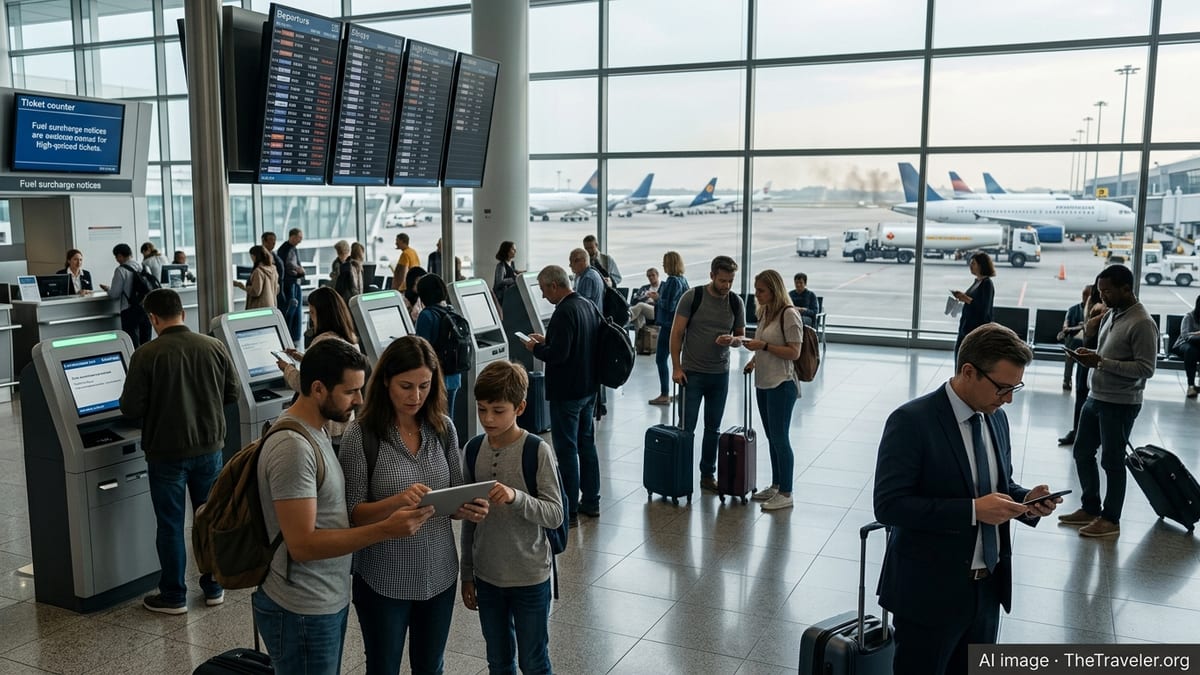
Flight disruption strands thousands across UK airports
The air traffic control systems issue affecting UK airspace on 8 September triggered widespread delays and cancellations at some of the country’s busiest hubs, including Heathrow, Gatwick, Stansted and London City. Published coverage indicates that more than a thousand flights were disrupted in total, leaving aircraft grounded, diversions in place and passengers facing extended waits both on board and in terminals.
Analysis from aviation data providers shows that hundreds of services were cancelled or heavily delayed over the course of the afternoon and evening, with the heaviest impact reported between midday and midnight. Heathrow and Gatwick, which together handle a large share of UK long haul and short haul traffic, experienced gridlock as departure boards filled with red and amber alerts and inbound flights were rerouted to regional airports.
Travel alerts issued by major tour operators on 9 September note that, although the immediate technical issue has been resolved, knock on disruption continues as airlines reposition aircraft, clear backlogs and rebook affected customers. Some carriers have advised that passengers may continue to experience delays, schedule changes and, in a minority of cases, cancellations while operations stabilise.
Social media posts and community travel forums are filled with accounts of travellers waiting hours on parked aircraft, missing onward connections and being rebooked days later. In several instances, passengers describe being advised to arrange their own hotel rooms and seek reimbursement later, adding extra pressure on already stretched airport area accommodation.
Hotel capacity in London comes under sudden pressure
As disruption escalated on the evening of 8 September, attention quickly shifted from departure boards to bed availability. With aircraft out of position and crews timing out, large numbers of passengers were forced to overnight in or near London rather than continue to their intended destinations. Public postings from affected travellers describe long queues at airline service desks and reports of airline arranged hotel blocks filling within minutes.
Forum threads dedicated to the incident include multiple references to passengers struggling to find vacant rooms anywhere within reasonable distance of Heathrow and Gatwick, with some travellers ultimately securing beds as far away as Essex and other outer commuter belt locations after central London availability tightened. One widely shared account describes searching “all over” by phone and online while relatives at home attempted to secure a room, only to find that many properties were already fully booked.
Industry booking data published earlier this year indicated that UK hotel demand for late summer and early autumn was already firm, with September highlighted as a particularly strong month for both occupancy and room rates. Against that background of solid baseline demand, an unplanned spike in displaced airline passengers had an immediate amplifying effect on availability, especially around key transport hubs and central rail termini.
For hoteliers, the situation brought a rapid, unscheduled surge in bookings concentrated into a short time window. For travellers, it meant competition for the remaining rooms intensified quickly, particularly at mid range and budget properties typically favoured for airport stopovers.
New London opening records 75 bookings in half an hour
Within this wider squeeze on capacity, a recently opened London hotel close to key transport links reported that 75 of its rooms were booked in the space of just 30 minutes as the disruption peaked. According to published coverage and live booking data, the property, which had been trading with a gradual ramp up of occupancy, saw a sudden wave of reservations as passengers turned to central London in search of alternatives after airport area hotels filled.
The rush was driven in part by location, with easy rail access from Heathrow and Gatwick helping funnel stranded travellers into the surrounding neighbourhood. Travel forums advising passengers to head into central London rather than continue to search for scarce airport rooms may also have contributed to the sharp uptick, directing demand toward properties within walking distance of major stations.
The episode illustrates how newly opened hotels can experience an accelerated debut during periods of transport disruption. Instead of a slow build of awareness, the property was effectively stress tested by an exceptional spike in demand, handling a volume of last minute check ins more typical of a major event weekend than a standard weekday in early September.
While such surges can generate immediate revenue and visibility, they also place pressure on operational teams that may still be refining processes after opening. Managing staffing levels, housekeeping turnaround and guest communications becomes more complex when bookings arrive at a pace measured in seconds rather than hours.
Passengers weigh up price, distance and flexibility
For many affected travellers, the scramble for accommodation involved balancing proximity against price and cancellation flexibility. Publicly available booking pages for airport adjacent hotels on 9 September show limited remaining inventory in some room categories, with flexible rates commanding a premium over advance purchase options and higher categories selling out ahead of standard rooms.
Some passengers recount opting for hotels in suburban locations linked by commuter rail or motorway access to reduce costs while still remaining within reach of the airport for rebooked flights. Others chose to move into central districts such as Paddington or the West End, where the density of hotels increases the likelihood of finding late availability even at elevated rates.
The situation also prompted renewed discussion of passenger rights and reimbursement processes. Posts on consumer forums reference travellers paying several hundred pounds for a single night’s stay during the disruption, with questions raised about how quickly airlines will process claims and to what extent compensation rules apply when a technical issue in air traffic control is involved.
Travel advisers suggest that, in rapidly evolving situations, securing a room first and resolving cost recovery later is often the most practical option, particularly for families and older travellers. However, they also highlight the value of travel insurance policies that explicitly cover accommodation during extended delays or missed connections.
What the surge signals for London’s hotel market
The rapid sell out of 75 rooms at a single new hotel, combined with reports of citywide scarcity around London, offers a snapshot of how closely connected the capital’s hotel market is to air transport resilience. When flight operations falter, booking patterns can shift within minutes, temporarily transforming midweek occupancy profiles.
Recent industry data already pointed to a solid September for UK hotels, with modest gains in bookings, room nights and average daily rates compared with the previous year. The latest disruption adds a layer of short term volatility to that picture, producing sharp peaks in demand on specific nights around major gateways.
Looking ahead, hotel operators near airports and along key rail corridors are likely to review their contingency plans for sudden influxes of stranded passengers, including how inventory is allocated between direct channels and intermediaries, and how late night staffing is managed. At the same time, airlines and tour operators are expected to assess how accommodation support is communicated when large numbers of customers require overnight stays.
For travellers, the events of this week serve as a reminder that flexibility remains essential when navigating complex transport networks. In major hubs such as London, the sheer scale of the hotel market offers options even in challenging circumstances, but those options can disappear quickly when disruption cascades across multiple airports at once.
Associated Press coverage of UK air traffic control disruption
TUI UK travel alert on the UK air traffic control systems issue
OAG analysis of UK flight disruption and cancellations
UKHospitality data on UK hotel booking trends in 2025 and 2026