


More news on this day
Long haul low cost carrier Norse Atlantic Airways has suspended all flights after warning on 25 November 2026 that its financial position is “critical” and that it needs emergency funding to continue operating, a move that has already disrupted Pakistan International Airlines’ UK routes and raised urgent questions about the future of the young transatlantic airline.
Get the latest news straight to your inbox!
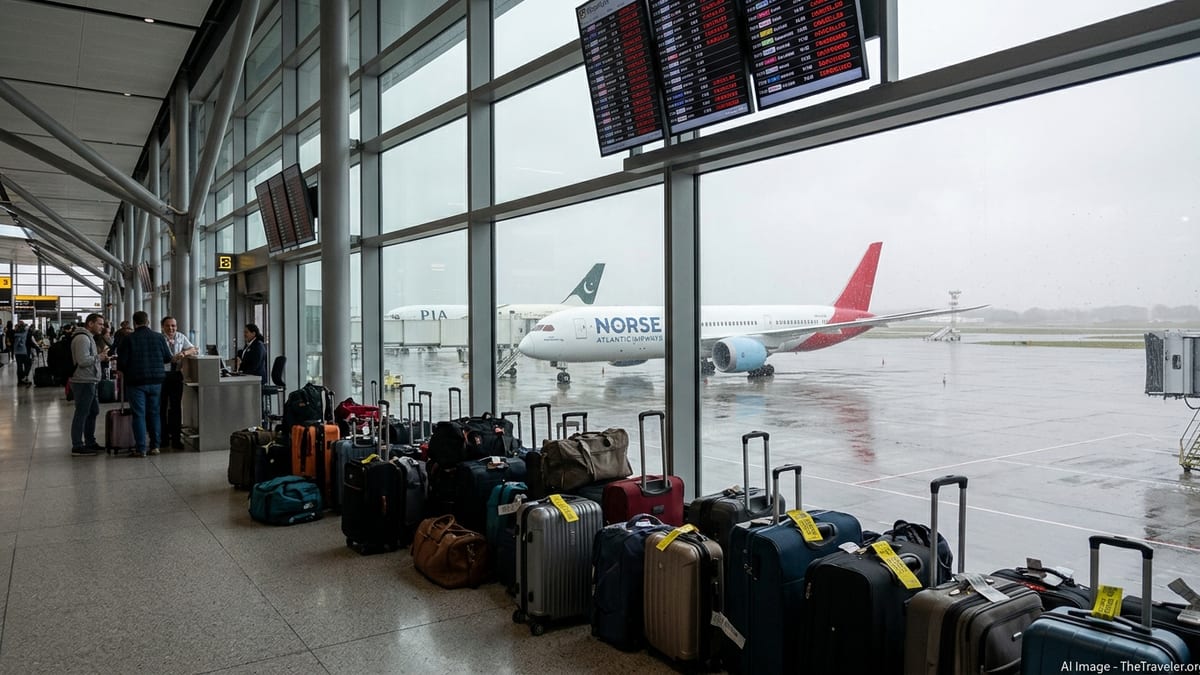
Flights Suspended As Liquidity Crisis Deepens
Norse Atlantic’s suspension followed a stark stock exchange announcement on 25 November 2026 in which the company told investors that its financial situation was critical and that continued operations depended on securing short term financing. The disclosure, filed in Oslo shortly before trading, confirmed that the carrier was exploring options including a potential takeover, new wet lease contracts and other strategic arrangements, while cautioning that there was no assurance any of these efforts would yield a viable solution.
By Wednesday evening, publicly available flight tracking data and industry reports indicated that aircraft operated under both Norse Atlantic’s Norwegian and UK air operator certificates were no longer in the air, with scheduled departures cancelled across the network. The company’s own booking channels subsequently stopped displaying bookable services, effectively confirming that all flights had been halted while discussions with potential financiers and partners continue.
As of 27 November 2026, Norse has not announced a formal bankruptcy filing or permanent closure. Its latest statements refer to a suspension of operations and an ongoing strategic review, leaving open the theoretical possibility of a recapitalisation, sale or relaunch in some form. However, the combination of grounded aircraft, cancelled services and a share price collapse to pennies has led markets and many passengers to treat the carrier as being at immediate risk of insolvency.
Immediate Impact On Pakistan International Airlines’ UK Network
The first visible impact for travellers came in the United Kingdom, where Pakistan International Airlines (PIA) had only recently begun using Norse Atlantic under a wet lease agreement to operate selected services. PIA confirmed that on the evening of 25 November it was forced to cancel flight PK786 from London Heathrow to Islamabad and flight PK710 from Manchester to Lahore after receiving short notice that its Norwegian partner had suspended operations.
Passengers were already at Heathrow and Manchester airports preparing to board when the cancellations were communicated, according to statements from PIA and subsequent local media coverage. The Pakistani flag carrier apologised publicly to affected travellers and attributed the disruption to what it described as a sudden and unannounced suspension by Norse Atlantic of its obligations under the lease.
PIA had signed an ACMI, or wet lease, agreement with Norse in October 2026 covering two Boeing 787 9 Dreamliner aircraft for services between the UK and Pakistan. Under this structure, often used by airlines to add capacity quickly, Norse provided the aircraft, crew, maintenance and insurance, while PIA marketed and sold the flights under its own code. With Norse’s aircraft and crews no longer available, PIA announced that from 26 November it would revert all UK services to its own Boeing 777 fleet in order to stabilise its schedule and reduce reliance on external partners.
How Norse Atlantic Reached A Breaking Point
Norse Atlantic Airways was founded in 2021 and launched its first commercial service in June 2022, operating as a low cost, long haul carrier primarily linking European cities with North American destinations using a fleet of Boeing 787 Dreamliners. Much of its initial fleet consisted of aircraft previously flown by Norwegian Air Shuttle, whose own long haul low cost venture was abandoned during the pandemic, giving Norse access to relatively young widebodies on lease.
From the outset, Norse pursued a flexible mix of flying on its own ticketed network and operating aircraft for other airlines on an ACMI basis. This dual strategy was intended to smooth the impact of seasonal demand swings on transatlantic routes and to keep expensive long haul jets earning revenue year round. Over time, Norse increased its focus on ACMI and charter work, including high profile arrangements with IndiGo in India and later PIA in Pakistan, to supplement its core routes from bases such as Oslo, London Gatwick and Berlin.
However, successive financial disclosures show that the business struggled to reach break even. Norse reported substantial net losses in both 2024 and 2025 and continued to burn cash through the first half of 2026 despite high load factors on many routes. The company raised fresh capital through a rights issue and arranged new secured financing in 2026 to support liquidity, but its auditors had already highlighted material uncertainty over the group’s ability to continue as a going concern absent a sustained improvement in profitability.
Lost ACMI Deals, Rising Fuel Costs And Regulatory Pressure
The deterioration in Norse’s position in 2026 appears closely tied to a series of external and contractual shocks. One of the most significant was the unwinding of its agreement with India’s IndiGo, under which Norse had been operating Boeing 787 9s on long haul flights while IndiGo prepared to introduce its own Airbus A350 fleet. IndiGo and Norse agreed to end the ACMI cooperation around 1 November 2026, citing commercial pressures including higher fuel prices, airspace restrictions and lengthened routings related to geopolitical tensions affecting flights between India and Europe.
With the end of the IndiGo deal, five Norse operated aircraft that had been deployed for the Indian carrier were returned to Norse’s control in quick succession. The Norwegian group had indicated that it was seeking other ACMI customers and would redeploy some of this capacity on its own most profitable routes, but it faced the challenge of doing so at the start of the slower northern winter season, and in a market where several airlines were also trimming long haul capacity.
At the same time, Norse remained exposed to jet fuel price volatility because, unlike some larger carriers, it did not hedge a significant portion of its fuel needs. The conflict driven rise in oil prices through 2026, compounded by detours around restricted airspace on certain routes, increased operating costs just as higher interest rates were pushing up the burden of aircraft lease and financing payments. In its stock exchange warning, the company referenced these factors alongside softer than expected commercial performance on some services as contributing to the liquidity crunch.
Regulatory pressure was also building in its home market. On 25 November, Norway’s Civil Aviation Authority announced that it had imposed a daily enforcement penalty on Norse Atlantic for failing to pay passenger compensation that the airline had already acknowledged as owed under European air passenger rights rules. The authority set a fine of 8,000 Norwegian kroner per business day from 20 November 2026 until Norse demonstrated that eligible passengers had been reimbursed or otherwise compensated. The regulator emphasised that financial difficulties do not remove an airline’s obligation to meet statutory passenger rights, adding another drain on Norse’s limited cash.
Uncertain Future For Norse’s Dreamliner Fleet And Booked Passengers
Norse Atlantic’s fleet of twelve Boeing 787 Dreamliners is entirely leased, which means the aircraft themselves are likely to be redeployed relatively quickly even if the airline does not survive in its current form. Lessors can seek to place the jets with other carriers through new ACMI or traditional operating lease deals, or potentially support a restructured Norse if a buyer or investor emerges. Industry databases already show strong demand for fuel efficient widebodies, although the timing and terms of any transfers will depend on the outcome of negotiations between Norse, its creditors and potential partners.
For passengers, the more immediate question is what happens to existing bookings. Norse’s suspension of flying has already led to cancellations affecting both its own branded routes and flights it was operating on behalf of other airlines. In the UK and European Union, travellers whose flights were cancelled while Norse was still trading would ordinarily have rights to refunds and in some cases compensation, but those claims can become difficult to enforce if an airline enters formal insolvency and lacks funds to pay. Consumers who purchased tickets with credit cards may ultimately need to rely on chargeback schemes or local financial protection mechanisms where applicable.
Airlines that contracted Norse on a wet lease basis, such as PIA, are separately responsible for passengers on their own flight numbers. In practice, that means they must decide whether to rebook customers on alternative services, operate replacement flights with their own aircraft or issue refunds. PIA has already shifted its UK–Pakistan schedules back to its in house Boeing 777 fleet and is working through the backlog of disrupted passengers from the cancelled 25 November departures.
What Travellers Should Do Next
With Norse Atlantic’s future unresolved and all flights currently suspended, travellers holding tickets involving the airline should first check the status of their specific booking directly via the airline’s website or app where possible, and monitor communications from the carrier for any official updates on reinstated services or refund procedures. Given the rapid pace of developments, flight status information from airports and independent tracking services can provide an additional check on whether an upcoming departure is still planned to operate.
Customers booked on routes where Norse was providing aircraft to another airline under a wet lease should contact the marketing carrier shown on their ticket, such as Pakistan International Airlines, rather than Norse itself. That airline is responsible for handling rebooking, rerouting or refunds on its own flight numbers. Where a journey forms part of a package holiday sold by a tour operator, local package travel regulations may entitle travellers to alternative arrangements or refunds through the organiser.
Given the stated risk that Norse may be unable to continue trading without new financing, passengers considering booking future long haul travel with the airline or its successors may wish to wait for clarity on any restructuring outcome, or ensure they have robust financial protection through credit card purchases or relevant insurance. Regulators in Norway, the UK and the European Union are expected to monitor the situation closely, but for now the key practical step for affected travellers is to secure alternative travel or refunds as early as possible while the airline’s next move remains uncertain.