


For many first-time visitors to Istanbul, Ortaköy is the moment when the city finally makes sense. The square where the Bosphorus laps at the stones, the neo-Baroque mosque glows against the water, ferries and container ships slide past, and the Bosphorus Bridge rises overhead in steel and cables. Add rows of kumpir stalls, busy cafés and a Sunday handicraft market, and you have one of the city’s most photographed corners, but also a neighbourhood where locals actually live, commute and go out. This guide explains what Ortaköy is, how to get there, what to eat and drink, and how to experience the area safely and confidently on your first trip to Istanbul.
Get the latest updates straight to your inbox!
What and Where Is Ortaköy?
Ortaköy is a compact Bosphorus-front neighbourhood on Istanbul’s European side, administratively part of Beşiktaş district. The name means “middle village,” a reference to its position on a slight projection into the Bosphorus, roughly midway between the old city and the northern reaches of the strait. Today it is wedged between the waterfront road of Çırağan Caddesi and the first Bosphorus Bridge, officially the 15 July Martyrs Bridge, which looms overhead as it jumps from Europe to Asia.
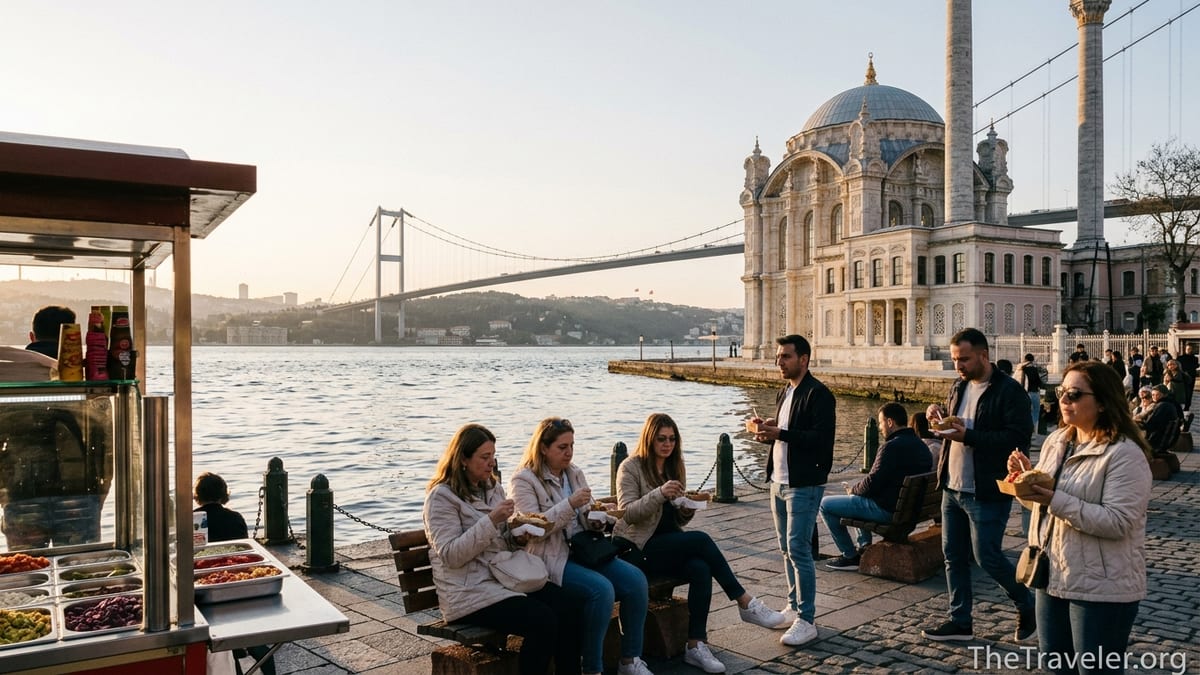
The heart of Ortaköy is the stone-paved waterfront square in front of Ortaköy Mosque. Around this small piazza you will find almost everything people associate with the area: lines of kumpir (stuffed baked potato) stalls, waffle counters, simit sellers, Bosphorus-view cafés, short-cruise boats touting tickets, and the weekend market of handicrafts and jewellery. Behind the square, a grid of narrow lanes curls up the hill, filled with mid-range restaurants, hookah cafés, small hotels and everyday shops serving local residents.
In practice, most visitors experience Ortaköy as part of a Bosphorus day. Many come by bus or taxi from Sultanahmet or Taksim in the afternoon, wander the square, photograph the mosque with the bridge behind it, share a kumpir on a bench and then either walk the coast north towards Kuruçeşme and Bebek or catch a short sightseeing cruise. Because the area is relatively small, you can see the main sights in an hour or two, but it also rewards lingering if you want to feel a real neighbourhood rather than just “checking off” a monument.
Although Ortaköy is firmly on the tourist map today, it still carries traces of its older, mixed character. Historically, Muslims, Jews and Greeks lived side by side here, and you can still see a mosque, synagogue and church within a few streets of each other. This diversity adds another layer for visitors who take the time to explore a little beyond the waterfront.
Ortaköy Mosque and Bosphorus Views
Ortaköy Mosque, officially the Büyük Mecidiye Camii, is the visual icon of the neighbourhood. Perched almost at the edge of the water, the mid-19th-century mosque was commissioned by Sultan Abdülmecid I and designed by members of the Balyan family, the Armenian-Ottoman architects also responsible for Dolmabahçe Palace. Its ornate neo-Baroque façade, tall windows and slim twin minarets make it stand out from the more classical Ottoman mosques elsewhere in the city.
For most visitors the experience is as much about setting as architecture. Standing at the railings in front of the mosque, you see tankers headed for the Black Sea, small fishing boats, white passenger ferries and the continuous backdrop of the Bosphorus Bridge overhead. Early morning and late afternoon are the most atmospheric times: in the morning the light hits the façade from the Asian side, while at golden hour the mosque and bridge silhouette against the sky as the water turns bronze. On clear days you can see the TV tower on Çamlıca Hill on the Asian side, and at night the bridge lights create colourful reflections along the strait.
The mosque is an active place of worship, so visitors should dress modestly: covered shoulders and knees, and women should bring a scarf to cover their hair. Outside prayer times, tourists are generally welcome to step inside briefly. Expect simple checks at the entrance such as leaving shoes on racks or plastic covers. Photography is normally allowed, but avoid flash and be discreet if people are praying.
Even if you do not enter the mosque, walk the short pier just to the right of it. This is where many of the postcard images are taken, and where local couples, wedding photographers and groups of friends queue for their own versions. From here, you also see how close the Bosphorus Bridge really is: traffic rolls directly overhead, and the road that dives under the bridge and continues north becomes a pleasant waterfront promenade all the way to Bebek.
Kumpir, Waffles and What to Eat in Ortaköy
Kumpir is almost synonymous with Ortaköy. This is Turkey’s maximalist take on a baked potato: a huge potato baked in special ovens, split open, then mashed together with butter and shredded kaşar cheese until it becomes fluffy and almost creamy. Then the vendor piles on toppings from stainless-steel trays: Russian salad, sweet corn, olives, pickles, sausages, red cabbage, kisir (bulgur salad), olive paste, spicy pickled peppers and more. The street along the left side of the square as you face the mosque is lined with several nearly identical kumpir stalls, each with glass-fronted displays and touts calling out in multiple languages.
A typical Ortaköy kumpir in 2026 costs in the region of 150 to 250 Turkish lira depending on size and toppings. Portions are substantial; many couples share one potato and still feel full, especially if they add a few stuffed mussels (midye dolma) from nearby street vendors. Locals often pick a stall based on small personal preferences: one might be known for being extra generous with toppings, another for slightly crispier potato skin. Quality differences are real but not dramatic, so as a first-timer you can simply choose a busy stall where the potatoes are turning over quickly, which helps ensure they are freshly baked rather than sitting too long.
Alongside kumpir you will see waffle counters offering soft, made-to-order waffles loaded with spreads like chocolate and hazelnut, sliced bananas and strawberries, crushed nuts and colourful candies. These are particularly popular with younger crowds and families in the evening. Expect to pay roughly 120 to 200 lira for a fully loaded waffle. If you prefer a sit-down experience, several cafés on the square or just behind it on Dereboyu Caddesi offer Turkish breakfast plates, menemen (scrambled eggs with tomatoes and peppers), gözleme (hand-rolled flatbreads) and simple grilled dishes throughout the day.
For something more relaxed, step away from the waterfront. A few minutes’ walk inland along Dereboyu Caddesi brings you to independent cafés with quieter back patios and better coffee, popular with local students and freelancers. North along the coast road, towards Kuruçeşme, waterfront spots offer all-day brunches, burgers and modern Turkish dishes with open-air terraces. These usually cost more than inland eateries but compensate with direct Bosphorus views: you are paying for the scenery as much as the plate. If you are on a tight budget, consider grabbing a simit from a street vendor and tea from a local tea house; you can still sit on the public benches and enjoy exactly the same view.
Cafés, Nightlife and Neighbourhood Atmosphere
Ortaköy balances tourist energy with real local life. By day, the square and its side streets feel like a seaside village turned outdoor café. Locals sip tea in small tulip glasses at simple tables, often spending hours chatting or playing tavla (backgammon), while visitors drift past with cameras and paper cones of roasted chestnuts in cooler months. Independent cafés on side streets mix students from nearby universities with remote workers and residents; it is common to see laptops on tables, Turkish pop or international playlists in the background, and shelves of English and Turkish books.
As evening approaches, the mood shifts. Some waterfront restaurants pivot towards more formal dinners with white tablecloths and fresh fish displays on ice. You will see classic meyhane-style meals with rakı, mezzes and grilled sea bass or sea bream, though prices here tend to be higher than in less scenic parts of the city. In high season, a simple fish, salad and drink might cost the equivalent of a mid-range dinner in central European capitals. For a gentler spend, look for places set a street or two back from the water, where menus often list grilled meat plates, pide and mantı at more moderate prices.
Nightlife in Ortaköy is lively but not as intense as in Taksim or the club strip in Beşiktaş. You will find cocktail bars in restored historic buildings, shisha cafés with bridgeside views, and lounges where a single drink buys you time on a comfortable sofa, waterfront breeze included. Many locals use Ortaköy as a starting point: dinner and a relaxed drink here, then either a taxi or ride-share to more energetic bars and clubs in nearby Kuruçeşme, Arnavutköy or further inland around Beşiktaş square.
Noise and crowds can be significant on warm weekend nights, especially when there is a football match or concert nearby, but step a few blocks inland and the streets become residential and fairly quiet. If you choose to stay in Ortaköy, this split is important when picking accommodation: hotels right on the square or waterfront often have views but less peace, while those uphill in the backstreets trade panoramas for more restful nights.
Getting To and Around Ortaköy
For first-time visitors based in Sultanahmet, Ortaköy feels further away on the map than it really is. In reality, travel times are often 25 to 40 minutes depending on traffic. By public transport, a common route is to take the T1 tram from Sultanahmet to Kabataş, then transfer to a bus heading along the Bosphorus such as lines towards Beşiktaş and Ortaköy. Ask for a bus that stops at Ortaköy; the driver or fellow passengers will usually nod and tell you when to get off. You need an Istanbulkart (the reusable city transport card) to tap in on trams, buses and ferries, which you can buy and top up at major stops and kiosks.
From Taksim, options are similar. You can ride the funicular down to Kabataş and then continue by bus, or take buses that run directly along the main road above Ortaköy and then walk down. In non-peak hours, taxis from Taksim or Karaköy to Ortaköy can be reasonably priced for a small group, especially when you divide the fare between three or four people. Always insist that the driver turns on the meter if it is not already running, and be prepared to politely step out and choose another taxi if they refuse.
Traffic on the Bosphorus coastal road is notoriously heavy during weekday rush hours and on Friday evenings, so build in extra time if you have a dinner reservation or cruise booking. A practical approach is to head to Ortaköy in late morning or early afternoon, spend time exploring, then have an early dinner or sunset drink before returning after the worst of the evening traffic.
Within Ortaköy itself, everything is walkable. The streets are cobbled and sometimes uneven, so wear comfortable shoes rather than thin sandals. If you enjoy walking, one of the most pleasant short itineraries on the European shore is the flat waterfront path from Ortaköy north through Kuruçeşme and Arnavutköy to Bebek. This takes about an hour at a relaxed pace, with views of wooden waterfront mansions, small parks and cafés where you can stop for tea or ice cream.
Safety, Scams and Practical Tips in Ortaköy
For most tourists, Ortaköy feels and is relatively safe, especially during the day and early evening. Istanbul as a whole has rates of violent crime against visitors that are generally comparable to other major European cities, and the main risks are petty theft, minor scams and traffic. The square and waterfront are usually busy with families, couples and groups of friends, and there is a visible police and municipal security presence, particularly on weekends and during events.
That said, the same common-sense precautions that apply in any crowded urban area are wise here. Keep valuables zipped and in front pockets or cross-body bags, especially when weaving through tight crowds around the kumpir street or during the Sunday market. Be cautious of overly friendly strangers who insist on guiding you to a bar or carpet shop, or who offer unsolicited help with transport cards and ATMs. In Istanbul generally, and in touristy areas like Ortaköy, a small number of bars have been reported elsewhere for inflated bills or expensive drinks pushed on customers, so always check menus before ordering and ask if service charges are included.
Solo travellers, particularly women, should be prepared for occasional unwanted attention such as comments or persistent small talk. In most cases a firm but polite “no thank you” and walking away is enough. Dress codes in Ortaköy are generally relaxed by Istanbul standards, especially on the waterfront, but remember that the mosque is a functioning religious site; bring a scarf or wear clothing that can easily be adjusted to be more modest when entering. At night, stick to lit streets and main routes, and consider using licensed taxis or well-known ride-hailing apps rather than walking long distances along dark backstreets.
One safety issue that surprises many visitors is road traffic. The Bosphorus coastal road and the streets threading under the bridge can be fast and busy, with drivers less likely to stop at crossings than in some Western European cities. Always cross at signals where possible, stay alert to scooters and delivery bikes that weave through traffic, and avoid stepping backwards into the road when taking photographs of the mosque or bridge. If you are travelling with children, keep a close grip on them near the waterfront railings and the road.
For added reassurance, check your own government’s latest travel advisories for Turkey before your trip and register your visit if your country offers such a program. Carry basic copies of your passport and travel insurance details, and know the local emergency number: 112 is the general emergency line used across Turkey, connecting you to ambulance, police and fire services.
First-Time Istanbul Tips, With Ortaköy in Your Plan
Many first-time visitors try to fit Ortaköy into an already packed list of Istanbul highlights: Hagia Sophia, the Blue Mosque, Topkapı Palace, the Grand Bazaar, Galata Tower and a Bosphorus cruise. The key to enjoying it is to accept that you cannot see everything in a single day and to give Ortaköy its own breathing space. A realistic first-timer itinerary might pair the historic core in the morning with an afternoon and evening on the Bosphorus, ending in Ortaköy for views, street food and a relaxed stroll.
If you have three full days in Istanbul, consider dedicating one afternoon to Bosphorus neighbourhoods: start in Beşiktaş for lunch at a simple lokanta, catch a short cruise or local ferry, then end in Ortaköy as the light softens. This sequencing makes practical sense as public transport from the historic peninsula flows naturally up the European shore. It also lets you contrast the monumental Ottoman architecture of Sultanahmet with the more intimate, waterfront-scale buildings and everyday life along the strait.
Budget-wise, Ortaköy can be as affordable or as indulgent as you choose. A simple outing might involve public transport, one shared kumpir, tea from a local çay bahçesi (tea garden) and a walk north along the water, all for a modest sum. A higher-end experience might add a sit-down seafood dinner on a terrace, cocktails at a design-forward bar in a renovated Ottoman building and a taxi ride back to your hotel. Check menu prices before committing and remember that anywhere directly on the water, especially with a bridge view, will usually be significantly more expensive than a place two or three streets inland.
Finally, remember that Istanbul is a city of microclimates and moods. In winter, Ortaköy can be cold and windy, with Bosphorus spray blowing across the square and locals nursing hot salep under outdoor heaters. In spring and autumn, it is one of the best places in the city to sit outside for hours, watching ships and seabirds and the occasional pod of dolphins slicing past the bridge. Plan clothing accordingly, with layers and a light jacket even in late spring; the water keeps the air cooler here than in the inland parts of the city.
The Takeaway
For a first-time visitor to Istanbul, Ortaköy offers a compact summary of what makes the city compelling: a historic mosque almost in the water, a giant modern bridge arching overhead, street food on every corner, lively cafés and bars, and a tangible mix of locals and visitors sharing the same square. It is close enough to the historic center to fit into a short trip, yet different enough to feel like you have stepped into another version of the city.
Treat Ortaköy not as a rushed photo stop, but as a half-day chapter in your Istanbul story. Wander the lanes behind the square, choose a kumpir stall and watch your potato being mashed and piled high, linger with tea on a bench facing Asia, and walk a stretch of the Bosphorus north or south. With basic awareness of crowds, traffic and the usual big-city scams, it is an area that feels approachable, atmospheric and rewarding on a first visit.
Build it into your itinerary, ideally timed for late afternoon and sunset, and Ortaköy will likely become one of the images you carry home when you think back on Istanbul: the glow of the mosque, the curve of the bridge, and the sound of water meeting stone.
FAQ
Q1. Is Ortaköy worth visiting on a short first trip to Istanbul?
Yes. Even with only two or three days in Istanbul, Ortaköy is worth a half-day or evening for its unique combination of Bosphorus views, Ortaköy Mosque, kumpir stalls and local atmosphere. It gives you a feel for modern, lived-in Istanbul beyond the historic monuments.
Q2. How much time should I plan for Ortaköy?
Plan at least two to three hours to wander the square, visit the mosque, eat a kumpir and enjoy the views. If you add a sit-down dinner or a walk along the Bosphorus to Kuruçeşme or Bebek, allow four to five hours.
Q3. What is the best time of day to visit Ortaköy?
Late afternoon into sunset is ideal. You avoid the harsh midday light, the mosque and bridge look beautiful in golden hour, and you can stay for dinner or a drink as the lights come on along the Bosphorus.
Q4. How do I get to Ortaköy from Sultanahmet using public transport?
Take the T1 tram from Sultanahmet to Kabataş, then transfer to a bus heading along the Bosphorus that stops in Ortaköy. Use an Istanbulkart to pay for both legs, and ask fellow passengers or the driver to tell you when the Ortaköy stop arrives.
Q5. Is Ortaköy safe at night for tourists and solo travellers?
Ortaköy is generally busy and feels safe into the evening, with families, couples and groups out late, especially in good weather. Normal big-city precautions apply: stick to well-lit streets, keep valuables secure and use licensed taxis or reputable ride-hailing apps for late-night journeys.
Q6. How much does a kumpir cost in Ortaköy, and is it really that good?
In 2026 a fully loaded kumpir typically costs around 150 to 250 Turkish lira, depending on size and toppings. It is a fun, filling street-food experience rather than fine dining, and Ortaköy is still the classic place in Istanbul to try it at least once.
Q7. Can I visit Ortaköy Mosque inside, and what should I wear?
Yes, visitors are usually welcome outside main prayer times. Dress modestly with shoulders and knees covered; women should cover their hair with a scarf. You will need to remove your shoes at the entrance and should keep noise and photography discreet.
Q8. Are there good vegetarian or non-seafood options in Ortaköy?
Yes. Kumpir is easily made vegetarian, many cafés serve meat-free meze and salads, and inland restaurants offer dishes like mantı, pide with cheese and vegetable toppings, and classic Turkish breakfast spreads that are mostly vegetarian.
Q9. Is Ortaköy a good area to stay in for first-time visitors?
It can be, especially if you value Bosphorus views and a neighbourhood feel over being walking distance from the historic core. You will rely more on public transport or taxis to reach Sultanahmet, but you gain quieter residential streets and easy access to the waterfront.
Q10. What should I watch out for to avoid tourist scams in Ortaköy?
Be wary of unsolicited invitations to bars or shops, always check drink and food prices before ordering, insist on taxi meters being used and keep an eye on your belongings in crowds. These are standard Istanbul precautions rather than Ortaköy-specific problems, but staying aware helps you enjoy the area more relaxed.