


Palma de Mallorca Airport is the main gateway to Mallorca and, for most travelers, the very first taste of the island. It is a busy, modern airport that handles tens of millions of passengers a year, especially in summer, yet it is relatively compact and straightforward once you know how it works. This guide walks first-time visitors through the essentials: how to navigate arrivals and departures, get into Palma or the resorts, choose between taxis, buses or car rental, use the lounges and parking, and avoid the most common first-timer mistakes.
Get the latest updates straight to your inbox!
Getting Oriented at Palma de Mallorca Airport (PMI)
Palma de Mallorca Airport, also known as Son Sant Joan and using the code PMI, sits about 8 kilometers east of Palma city. There is a single large passenger terminal with different modules (A, B, C and D) rather than completely separate terminals, which keeps transfers straightforward. Most European holiday flights arrive and depart from modules C and D, while some domestic and low-cost carriers may use other modules depending on the season.
After landing, you will follow the usual path through corridors and escalators to passport control if arriving from outside the Schengen Area, then down to the main baggage reclaim hall on Level 0. Baggage belts are clearly numbered, with large electronic screens listing arriving flights. Budget and leisure carriers often use remote stands, so expect a short bus ride from plane to terminal in peak summer.
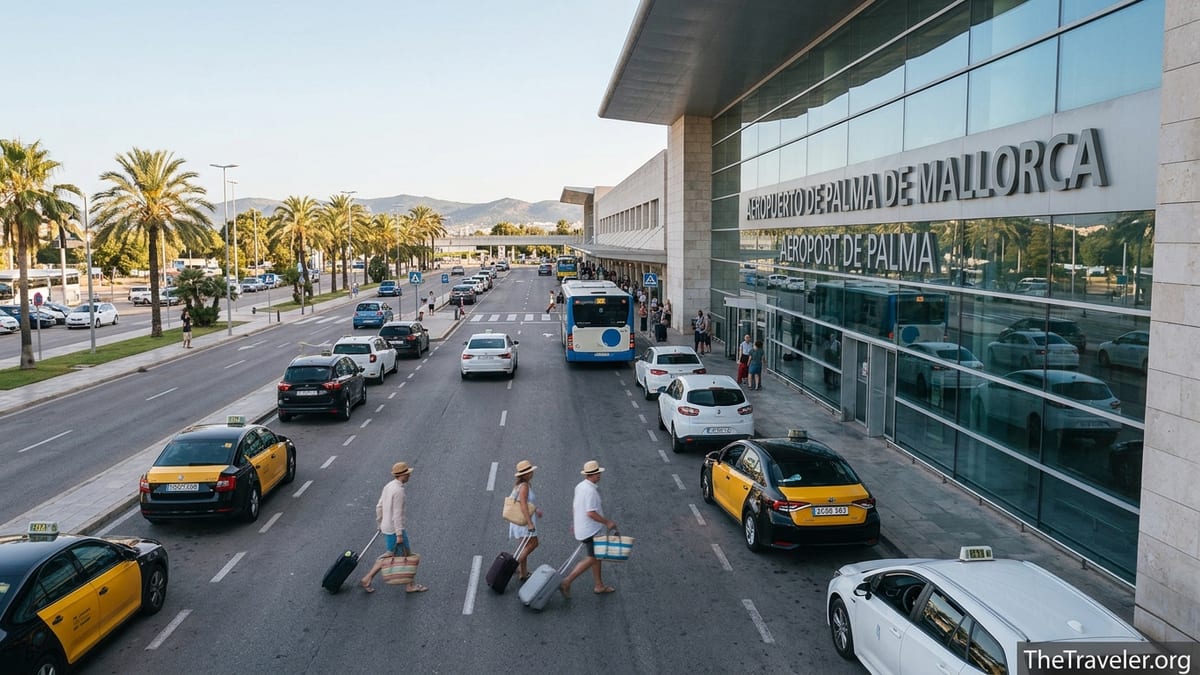
Once you have your luggage, the arrivals flow leads into a large public arrivals hall on Level 0. This is where you will find the main taxi rank exit, city bus stops just outside, desks for several car rental brands, as well as ATMs and a few cafés. If someone is meeting you, this hall is usually where they will wait behind the railings near the sliding doors.
For departures, check-in counters are generally on Level 2, accessible by lifts, escalators, and ramps from the arrivals level. Airlines are grouped by zone and screens show which counters are open for each flight. After check-in and bag drop, security screening leads to the departures area and the four gate modules. Walking times can be surprisingly long, especially to the far end of Module D, so allow a little extra once you are through security.
Arrivals: From Plane Door to Island Doorstep
On arrival, passport control can be quick or quite slow depending on how many international flights arrive at once. Outside the busiest summer weekends, non-EU passengers often clear in 15 to 30 minutes, but around Saturday midday in July or August it can take longer. EU and EEA passports usually benefit from automated gates when staffed and open, so keep your passport ready and follow signs for EU lanes.
The baggage reclaim hall has information desks and several screens showing belt numbers. If your luggage is delayed, lost and found counters for the main ground handling companies are located near the belts. Keep your baggage tag handy; staff will ask for it when opening a report. While you wait, there are vending machines and a small café where you can grab water or a quick coffee before you head into the arrivals hall.
As you leave customs into the arrivals hall, you will see car rental counters to one side and meeting points for tour operators and package holiday representatives on the other. Major European tour brands often have dedicated desks where staff direct guests to transfer coaches lined up in the coach parking just outside. Independent travelers will typically head straight for the taxi rank, bus stop or car rental desks depending on their plans.
If you are staying in central Palma, many hotels in the Old Town or Santa Catalina are used to late-night arrivals and provide 24-hour reception. For resorts like Alcúdia, Cala Millor or Cala d’Or, travel times by road can range from 45 minutes to nearly 90 minutes, so factor that into your arrival time, especially if you are landing late in the evening and have children in tow.
Transport into Palma and the Resorts
The simplest way into central Palma is the EMT A1 city bus, which runs between the airport and Plaça d’Espanya, the city’s main transport hub. The journey typically takes around 20 minutes in light traffic. As of mid-2026, a standard ticket bought on board costs only a few euros using contactless bank card, with a slightly higher airport tariff if paying cash. The bus runs roughly every 12 to 20 minutes during the day and less frequently late at night. Look for the blue and white EMT buses at the stop just outside the arrivals level; there are large “Airport – City Centre” signs.
For beach areas near Palma, such as Can Pastilla or Playa de Palma, the EMT A2 line connects the airport with hotel zones strung along the coast. Travel times are short, often under 15 minutes to Can Pastilla and around 20 to 25 minutes to parts of Playa de Palma. This is a good option if you are staying in a mid-range beach hotel like BG Java or HM Tropical and want to avoid a taxi on a budget. Buses carry luggage without issue, but in high season they can be busy, so be prepared to stand.
Taxis are widely available directly outside the arrivals hall at a signed rank. Official Palma taxis are white with a stripe and taxi sign on the roof. Fares are metered and include airport supplements; a ride into central Palma typically costs in the region of 15 to 25 euros, depending on traffic, time of day and exact destination. For example, a standard daytime trip to a hotel near Plaça Major might come in around the lower end of that range, while late-night or weekend rides can be more. Taxi queues can form at peak times in July and August, but turnover is generally fast.
For resort transfers, you have several options. Shared shuttle buses booked in advance can be cost-effective if you are traveling alone or as a couple, though they may involve multiple hotel stops and longer total journey times. Private transfer companies and ride-hailing operators also serve the airport and can be pre-booked door to door to places like Port de Pollença or Cala Bona, often costing between 70 and 120 euros each way depending on distance and vehicle size. Public intercity bus services run from Palma’s central bus station rather than directly from the airport, so to use them you would typically first take the A1 bus into town, then connect onwards.
Car Rental, Parking and Driving Out of the Airport
For travelers planning to explore the island independently, Palma de Mallorca Airport is one of the busiest car rental hubs in Spain. Inside the arrivals area you will find counters for major international brands such as Avis Budget, Europcar, Hertz and Sixt, as well as Spanish and Mallorcan operators like Record go, Goldcar and OK Mobility. Many have vehicles parked in multi-story car parks directly connected to the terminal, reached via covered walkways and elevators.
On-airport rental desks are convenient if you value speed and simplicity, especially when arriving with children or several suitcases. A typical compact rental in shoulder season might cost around 30 to 50 euros per day when booked in advance, though prices can be significantly higher in August. Off-airport companies, including some local outfits with shuttle buses, often advertise lower daily rates, but pickup can involve waiting for a minibus and queuing again at a separate office, which is worth factoring into your arrival plans.
When choosing a car rental provider, first-time visitors should look carefully at fuel policies, insurance coverage and deposit amounts rather than just headline price. Full-to-full fuel and comprehensive insurance with a modest excess can avoid unwelcome surprises. Keep photos of the car at pickup and drop-off, paying attention to existing scratches and wheel damage, and allow a few extra minutes at return to have the car checked. At Palma, rental returns are generally signposted “Car Rental” or “Rent a car” on approach roads; you drive directly into the dedicated levels in the parking structure where staff or key-drop boxes are located.
If you are not renting a car but need to park your own vehicle, the airport offers several parking options. There is a short-stay car park connected to the terminal by elevated walkways, convenient for drop-offs or pick-ups and charged by the minute or hour. For longer trips, official long-stay parking is usually cheaper per day and is connected by a shuttle bus to the terminal. During busy holiday periods, it is sensible to reserve parking in advance on the operator’s online platform, as discounts are frequently offered for pre-booking and some areas can reach capacity.
Departures: Check-in, Security and Lounges
For departing flights, it is prudent for first-time visitors to arrive at the airport at least two hours before scheduled departure for domestic and Schengen flights, and around three hours ahead for non-Schengen or peak-summer charter services. Large tour operators often advise even earlier check-in times on Saturdays in July and August when charter movements are heavy. Palma’s terminal can feel very busy in those windows, with long lines at airline desks and security.
Check-in and bag drop counters are arranged in long islands on Level 2, clearly labeled with the airline names and flight ranges. Many airlines provide self-service bag tag machines and separate drop counters, which can save time if you have already checked in online. Luggage rules vary, so double-check cabin size limits, as budget carriers operating to Palma can be strict and gate checks are common when flights are full.
Security screening is centralized, with several lanes feeding into a main queuing area. At busier times, waiting can reach 20 to 30 minutes or more, although early morning and late evening often move faster. Families with small children, and passengers with reduced mobility who have pre-notified their airline, can make use of special assistance lanes. Once through security, you will emerge into the main departures retail zone with cafes, duty-free and seating, and then follow signs to your gate module. Walking distances to more distant gates can be 10 to 20 minutes, so keep an eye on boarding time.
Palma de Mallorca Airport has several VIP lounges available regardless of airline or ticket class, typically operated in partnership with the airport authority. Access can be included with business-class tickets on full-service airlines, granted via certain bank or lounge cards, or bought as a paid one-off entry. Lounges usually offer a selection of cold and hot snacks, drinks including local wines, workspaces, Wi-Fi, and quieter seating away from the main terminal crowds. Booking ahead online is recommended in peak months, as capacity can be limited, and walk-up entry is not always guaranteed at very busy times of the day.
Airport Hotels and Where to Stay on Your First Night
Palma de Mallorca Airport does not have a hotel physically inside the terminal building, but there are many options within a short taxi or bus ride. For travelers with late arrivals or early morning departures, staying in nearby Can Pastilla or Playa de Palma can be especially practical. Hotels such as BG Hotel Java, HM Gran Fiesta or BG Hotel Caballero are roughly 5 to 10 minutes’ drive from the airport, with some offering seasonal shuttle services or easy access to the EMT A2 airport bus along the seafront.
These beachside hotels provide a more relaxed first night on the island, with the chance to stroll along the promenade and find dinner even after a late flight, rather than heading all the way into the city. Room rates vary by season, but in May or October it is often possible to find mid-range double rooms for moderate prices, whereas in August seaside properties can command significantly higher rates.
If you prefer to be close to Palma’s historic center, you can head straight into town from the airport and stay around the Old Town, La Lonja or Santa Catalina neighborhoods. Boutique hotels in renovated palacios, such as converted townhouses near the cathedral, offer a more atmospheric urban experience with cafes and tapas bars within walking distance. A taxi from the airport to these central areas usually takes about 15 minutes outside rush hour.
Families with very early morning flights sometimes choose to spend their last night near the airport even if most of their holiday was elsewhere on the island. In that case, a simple modern hotel in Can Pastilla or a business-style property near the main airport access road can make the pre-dawn check-in experience much less stressful, especially if you have rental car returns or multiple suitcases to manage.
First-Time Mallorca Travel Tips Starting at the Airport
For a smooth first arrival in Mallorca, consider pre-deciding how you will leave the airport. If you know you will take the EMT A1 bus to Plaça d’Espanya, for example, have a contactless card handy for quick payment and jot down the name of your hotel and its nearest bus stop in Palma. If a taxi is your choice, keep the hotel address written out clearly or saved on your phone, including the postal code, as some street names have similar-sounding versions in Spanish and Catalan.
Language is rarely a barrier at Palma Airport. Most staff working in customer-facing roles speak at least some English, as well as Spanish and often German. However, it can be helpful to know a few basic words like “equipaje” for luggage or “taxi al centro” when communicating with drivers. Keeping a calm, patient attitude in queues is important in high season when flights from across Europe arrive close together and tempers can fray in the heat.
For money matters, there are several ATMs in the arrivals area, but fees and exchange rates for foreign cards can vary. Many services on the island, including buses and taxis, now accept contactless card payments. For example, tapping a bank card on the bus validator often triggers a slightly lower “regular rider” style fare than paying cash, and taxis will typically have card terminals available, though it is wise to confirm before setting off.
If you are renting a car, first-time visitors should remember the basics of driving in Spain: you drive on the right, seatbelts are compulsory, and mobile phone use at the wheel is heavily fined. Speed limits on major roads around the airport are generally 120 km/h on motorways, dropping as you approach Palma or coastal resorts. On arrival, it can be tempting to race straight for the beach, but after an early start and a long flight it is often safer to build in a short break at a service area or café before driving long distances to the far north or east of the island.
The Takeaway
Palma de Mallorca Airport is busy, sometimes crowded and at first glance a little overwhelming, but for most travelers it works efficiently once you understand its layout and options. With one main terminal, clear signage in several languages, and a straightforward connection to Palma city and the nearby beach areas, it is an accessible gateway even for nervous first-time flyers or families with children.
The key to an easy start is preparation. Decide in advance whether you will take the EMT bus, a taxi, a transfer or a rental car, and have your hotel details and payment preferences ready. Allow realistic time for passport control and baggage in high season, arrive early enough for departures, and think through small practicalities such as water, snacks and phone battery before you join security queues.
Do that, and Palma de Mallorca Airport becomes simply the first stage of your island holiday rather than an ordeal. From the moment you wheel your suitcase into the bright arrivals hall to your final glance at the runway as you depart, a little knowledge helps you trade confusion and lost time for a smoother, more relaxed start and finish to your Mallorca trip.
FAQ
Q1. How far is Palma de Mallorca Airport from Palma city centre?
The airport is roughly 8 kilometers from central Palma, and the journey usually takes about 15 to 20 minutes by taxi or around 20 minutes by EMT A1 city bus.
Q2. What is the cheapest way to get from the airport to Palma?
For most visitors the cheapest option is the EMT A1 airport bus to Plaça d’Espanya, which costs only a few euros using a contactless bank card and runs frequently during the day.
Q3. How much does a taxi from the airport to Palma cost?
Official taxis waiting at the airport typically charge between about 15 and 25 euros to central Palma, depending on time of day, traffic and the exact location of your hotel.
Q4. Are there late-night transport options if my flight arrives very late?
There are fewer EMT buses late at night, but services usually run until around midnight depending on the season, and taxis operate around the clock from the official rank outside arrivals.
Q5. Should I rent a car at the airport or use public transport?
If you plan to explore the island widely or stay in rural areas, renting a car at the airport is convenient. If you are mostly staying in Palma or well-served resorts, buses and taxis often suffice.
Q6. How early should I arrive at Palma Airport before my departing flight?
As a rule of thumb, arrive at least two hours before European flights and around three hours before non-Schengen or peak-season charter flights, especially on busy summer Saturdays.
Q7. Does Palma Airport have lounges I can use even if I fly economy?
Yes, there are several VIP lounges that accept paying guests regardless of airline or ticket class, and access can usually be booked in advance or purchased on the day if space allows.
Q8. Is there a hotel inside Palma de Mallorca Airport?
There is no hotel inside the terminal, but nearby areas like Can Pastilla and Playa de Palma offer many hotels within a 5 to 10 minute taxi or bus ride of the airport.
Q9. Is it easy to find my rental car at the airport?
Yes. Most major rental companies have desks in the arrivals area and dedicated parking spaces in nearby multi-story car parks, all reached by covered walkways and clear “Car rental” signs.
Q10. Can I pay for buses and taxis with a credit or debit card?
Most EMT airport buses accept contactless card payments, and official taxis usually have card terminals, though it is still wise to carry some cash as a backup.