


More news on this day
Dozens of passengers remained stranded at Hong Kong International Airport on Monday, a day after Typhoon Noul disrupted hundreds of flights and left airlines racing to clear a heavy backlog of travelers.
Get the latest news straight to your inbox!
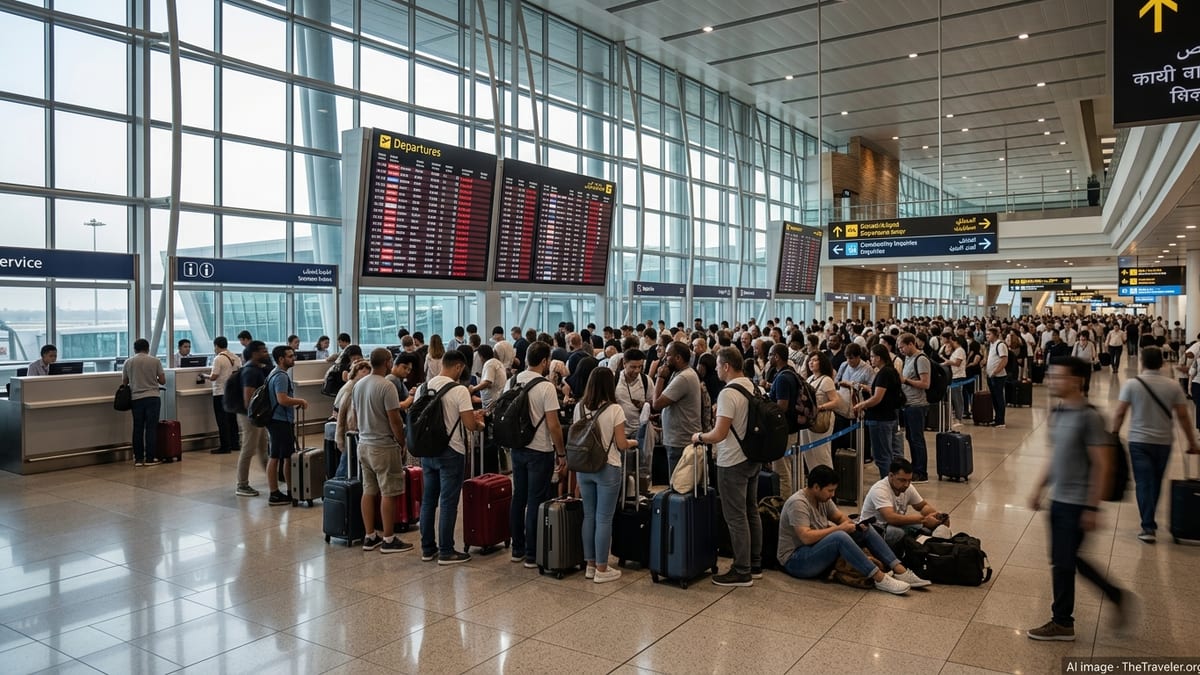
Slow return to normal after weekend of severe disruption
According to published coverage, Hong Kong International Airport entered Monday still dealing with the fallout from Noul, which swept past the city over the weekend bringing gale-force winds and heavy rain. Flight schedules were badly affected on Sunday as the Observatory raised higher tropical cyclone signals, prompting widespread cancellations and delays across regional and long-haul routes.
Reports indicate that about 350 flights were canceled on Sunday alone, leaving roughly 2,000 passengers stuck at the airport overnight as connections collapsed and outbound services were suspended. By Monday, many of those travelers had managed to rebook or leave, but some remained without confirmed seats as airlines continued to rebuild their schedules and reposition aircraft and crew.
Publicly available information from the airport operator shows that more than 600 flights were expected to operate on Sunday, with around 360 canceled as Noul approached and passed. On Monday, services were gradually ramped up as wind signals were lowered and traffic resumed along key approach routes, yet the knock-on effects from crews and aircraft out of position continued to ripple through the system.
Airlines serving the city, including major regional carriers and low-cost operators, had issued travel alerts in recent days warning passengers to check flight status and consider flexible options. Despite those notices, a significant number of travelers still arrived at the terminal only to discover last-minute cancellations or long waits for available seats.
Passengers face overnight stays, long queues and scarce hotel rooms
Coverage from local media describes crowded departure halls on Sunday night, with lines forming at airline service counters as passengers tried to secure rebookings and accommodation. Some travelers were reported to have spent the night on terminal seats, resting on their luggage or finding quieter corners in the concourses as storm conditions made travel to and from the airport difficult.
Reports also highlight complaints over sharply higher room rates at nearby hotels, with some properties quoted at between HK$2,000 and HK$3,000 per night. For budget-conscious passengers, these prices made overnight stays outside the terminal prohibitively expensive, contributing to the number of people opting to remain inside the airport while waiting for new flights.
Publicly available information from broadcasters in Hong Kong notes that public transport links, including services using the Hong Kong–Zhuhai–Macau Bridge, were disrupted by the severe weather, stranding some transit passengers who had planned to continue their journeys by road or ferry. With options limited, many travelers faced hours of uncertainty as they monitored departure boards and checked airline apps for updates.
Airport staff and volunteers were reported to be assisting with guidance and basic support, including distributing meal vouchers at certain points over the weekend. Even with those measures, the combination of full flights, constrained hotel capacity and weather-sensitive transport links created a challenging situation for passengers still in limbo on Monday morning.
Airlines work through backlog as weather improves
By Monday, Noul had weakened significantly after moving inland over southern China, with conditions in Hong Kong improving and wind signals lowered. According to publicly available meteorological reports, the storm’s departure allowed carriers to resume more regular operations, with additional flights scheduled where possible to accommodate displaced travelers.
Some airlines indicated in online travel advisories that flexible rebooking policies remained in place for passengers originally scheduled to fly between July 25 and 27. These arrangements included waivers on change fees and fare differences in certain booking classes, designed to encourage travelers to shift to later flights and ease immediate pressure on airport facilities.
Despite these steps, the backlog could not be cleared instantly. Aviation analysts note that after a major weather disruption, aircraft and crew often end up in the wrong locations, limiting how quickly normal timetables can be restored. The need to comply with crew rest regulations and secure available landing slots at busy regional airports can slow the recovery even once local weather has improved.
Publicly available information on social media and traveler forums suggested that some passengers departing Hong Kong on Monday encountered long lines at check-in and security, particularly on routes that had seen back-to-back cancellations. However, many also reported that their flights eventually departed close to revised schedules, a sign that the system was slowly stabilizing.
Storm underscores vulnerability of regional air hub
Noul’s impact on Hong Kong International Airport highlighted once again how quickly a powerful tropical cyclone can disrupt one of Asia’s busiest aviation hubs. The facility operates around the clock and serves as a primary gateway for the Greater Bay Area, meaning that even a short shutdown can affect tens of thousands of journeys across multiple continents.
Historical information on previous storms affecting the city shows a recurring pattern of mass cancellations, stranded passengers and lengthy recovery periods when strong typhoons pass close to the territory. Comparisons with earlier events, such as major systems in 2018 and 2019, indicate that while forecasting and communication have improved, the core challenge of operating safely in extreme weather remains unchanged.
Airport planning documents and resilience reports published in recent years describe efforts to strengthen emergency coordination, including the activation of dedicated crisis centers, deployment of passenger care teams and closer alignment with airlines and public transport providers. The handling of Noul is likely to be reviewed in that context, with particular attention to how information on cancellations, rebooking options and ground transport disruptions was shared with travelers.
For now, the priority for operators and carriers on Monday remained clearing the remaining backlog and returning to standard schedules. With the typhoon season still under way in the northwest Pacific, the experience of passengers left waiting at Hong Kong’s terminals after Noul will continue to inform planning for the next major storm.