


More news on this day
Pennsylvania is set to significantly expand its intercity rail network, with a second daily Amtrak Pennsylvanian train linking Pittsburgh, Harrisburg, Philadelphia and New York City scheduled to begin service in mid-November 2026, marking the first increase in passenger rail frequency to and from Pittsburgh in decades.
Get the latest news straight to your inbox!
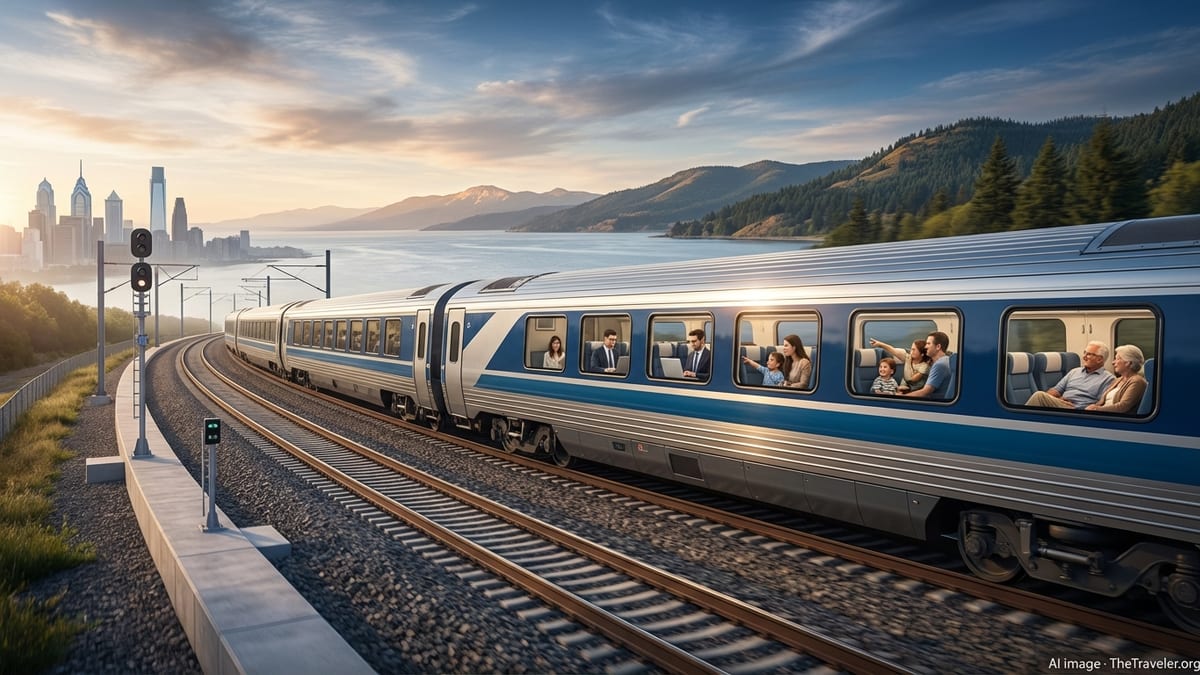
New Daily Round Trip Will Double Pittsburgh–New York Service
Publicly available information from the Commonwealth of Pennsylvania and Amtrak indicates that the Pennsylvanian route, which currently operates a single daily round trip between Pittsburgh and New York City via Harrisburg and Philadelphia, will be expanded to two daily round trips later this year. The additional service is expected to begin in mid-November 2026, creating a second daily option in each direction between western Pennsylvania and the Northeast Corridor.
The Pennsylvanian now departs Pittsburgh in the morning and arrives at New York Penn Station in the late afternoon, with an eastbound journey of roughly nine and a half hours. A single westbound trip currently leaves New York late morning and reaches Pittsburgh in the evening. Published coverage of the expansion indicates that the new frequencies will add a second set of departures, giving travelers more flexibility on both ends of the route.
State fact sheets and Amtrak route information show that the Pennsylvanian is the only direct intercity rail service connecting Pittsburgh with Harrisburg, Philadelphia and New York. Until now, passengers seeking alternative times have had to rely on overnight long-distance routes, limited-stop buses, or driving. The new schedule is expected to make same-day business trips and more spontaneous leisure travel by rail more practical across the state.
Reports also note that this is the first sustained increase in conventional passenger rail service for Pittsburgh in many years, a notable shift in a region where long-distance trains and a single state-supported corridor have handled most of the intercity demand. The move is being framed as a step toward rebuilding a more frequent, corridor-style rail offering between western Pennsylvania and the East Coast.
Infrastructure Investments Unlock Added Capacity
The expansion of Pennsylvanian service is tied to a multiyear program of infrastructure improvements along the Keystone West segment between Harrisburg and Pittsburgh, which runs over Norfolk Southern’s busy freight main line. According to state transportation documents and federal funding announcements, Pennsylvania committed more than 200 million dollars in rail upgrades to enable additional passenger trips while maintaining freight capacity.
Those investments, supported in part by around 143 million dollars in Federal-State Partnership funding, include new and extended sidings, upgraded signaling, and other capacity and reliability projects between the state capital and Pittsburgh. The goal is to create enough operational flexibility for Amtrak to run a second state-supported train while freight carriers continue to move significant volumes of goods across the same tracks.
Earlier agreements between the Pennsylvania Department of Transportation and Norfolk Southern outlined the conditions under which additional Pennsylvanian frequencies could be introduced once construction milestones were met. Public briefings on those agreements emphasized that improvements along the line would benefit both passenger and freight operations by reducing bottlenecks and improving on-time performance.
The November 2026 launch date follows several years of planning, environmental review, design and construction along the Keystone Corridor. In that time, Pennsylvania has also advanced other rail initiatives, including new corridor concepts such as Scranton to New York, signaling a broader statewide strategy to expand passenger rail options beyond the traditional Philadelphia–Harrisburg segment.
What the New Trains Mean for Travelers
For travelers in Pittsburgh, Johnstown, Altoona, Harrisburg, Lancaster, Philadelphia and other intermediate communities, the second Pennsylvanian round trip is expected to substantially improve schedule choice. Coverage of the planned service suggests that the added train will offer alternative departure and arrival times to complement the existing morning eastbound and midday westbound runs, although final timetables will be set closer to launch.
More frequent departures typically make train travel more competitive with driving along the Pennsylvania Turnpike and Interstate 80, where congestion, tolls and weather can affect journey times. With two daily Pennsylvanian trains, passengers will gain more flexibility in planning weekend getaways, sports and cultural trips, college visits, and family travel, particularly between western Pennsylvania, Philadelphia and New York City.
Onboard, the Pennsylvanian is expected to continue offering a mix of coach and Business Class seating, along with café service, as described in current Amtrak route materials. The train is known for its scenic passage through the Allegheny Mountains, including the famed Horseshoe Curve near Altoona, as well as through Pennsylvania Dutch Country east of Harrisburg. The additional frequency will give more travelers an opportunity to experience that route during daylight in both directions.
For New York and Philadelphia residents, the added train should make it easier to plan overnight or long weekend trips to Pittsburgh without relying on a single daily departure or late-evening arrivals. The expanded schedule may also support increased tourism to smaller intermediate destinations that are currently constrained by limited train times.
Part of a Broader Expansion of Pennsylvania Passenger Rail
The move to add a second daily Pennsylvanian fits into a wider effort by Pennsylvania to improve and extend its passenger rail network. Existing Keystone Service trains already provide frequent Harrisburg–Philadelphia–New York trips on the electrified eastern portion of the corridor, with more than a dozen round trips on weekdays between the state capital and Philadelphia. State materials describe plans to modernize stations, rolling stock and infrastructure along this route to keep up with demand.
In parallel, Pennsylvania is advancing new corridor concepts, including a Scranton to New York route that would restore passenger trains to a region that has not seen regular service in more than half a century. PennDOT outlines a vision of multiple daily round trips on that proposed corridor, using a mix of active and rebuilt rail segments in partnership with Amtrak and regional authorities.
Federal infrastructure programs have accelerated many of these efforts by offering competitive funding for states that can demonstrate ready-to-build projects and strong local support. Pennsylvania has positioned the Keystone Corridor as a priority, emphasizing the economic and environmental benefits of shifting more trips from highways and short flights to rail.
Observers note that the second daily Pennsylvanian could serve as a model for future expansions, demonstrating how targeted capacity upgrades and state-federal partnerships can unlock more frequent service on freight-owned corridors. If ridership responds positively, it may strengthen the case for additional investments and further frequency increases in the years to come.
Economic and Regional Connectivity Impacts
State briefing materials and news coverage present the expanded Pennsylvanian service as an economic development tool as well as a transportation upgrade. More frequent trains are expected to improve access to jobs, universities and cultural institutions across Pennsylvania, particularly for residents who do not drive or prefer not to navigate congested highways.
Improved rail connectivity can be particularly important for mid-sized cities and smaller communities along the route, where commercial districts and campuses sit within walking or short transit distance of train stations. Additional departures may make it easier for visitors and potential investors to travel into these locations without needing a car, supporting local businesses and downtown revitalization efforts.
The second daily round trip also strengthens Pittsburgh’s direct rail connection to the Northeast Corridor, linking the city more closely with New York, Newark, Trenton, Philadelphia and intermediate stops. That connection can support tourism in both directions, as well as links between the region’s technology, health care and academic sectors and counterparts in the New York and Philadelphia metro areas.
In environmental terms, state and federal analyses often cite intercity rail as a lower-emissions alternative to driving and short-haul aviation on medium-distance corridors. By making it more feasible for travelers to substitute trains for cars or planes between Pittsburgh and New York City, the expanded Pennsylvanian service aligns with broader goals of reducing transportation-related emissions in the Northeast and Mid-Atlantic.
Commonwealth of Pennsylvania: Expanded Pennsylvanian Train Service Announcement
PennDOT: Federal Funding for Keystone West Passenger Rail Expansion
Amtrak: Pennsylvanian Route Information
Axios Pittsburgh: More Amtrak Service From Pittsburgh Starts in November