


More news on this day
Hundreds of thousands of passengers are facing days of disruption at Heathrow and Gatwick after a major failure in the UK’s air traffic control system led to around 2,000 flight cancellations and widespread delays across Britain and Europe.
Get the latest news straight to your inbox!
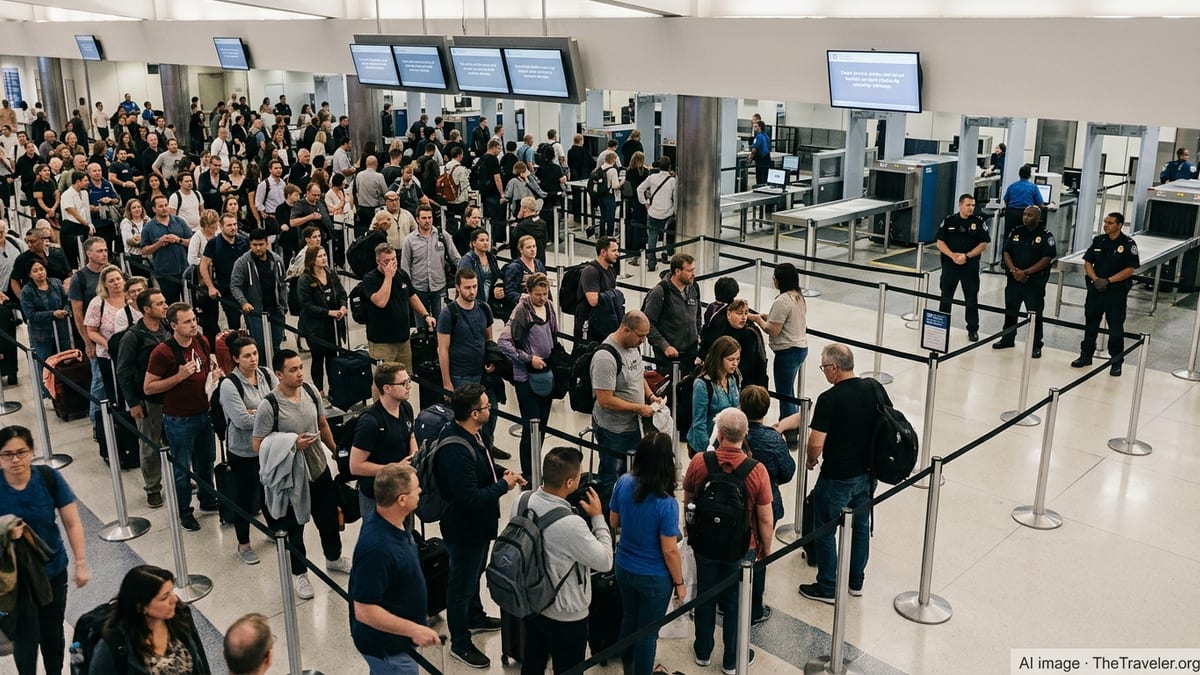
System failure triggers mass cancellations across UK network
The disruption began on Tuesday, 8 September, when a technical fault hit the flight processing systems of National Air Traffic Services (NATS), the UK’s air traffic control provider. Published reports describe it as an outage that forced controllers to restrict departures and manually handle flight data, sharply reducing the number of aircraft that could safely operate in UK airspace.
Data from aviation analytics firm Cirium indicates that more than 2,000 flights were cancelled over Tuesday and Wednesday, affecting services at Heathrow, Gatwick, Manchester, Stansted and other major airports. At Heathrow alone, where roughly 30 percent of departures were grounded on Tuesday, airlines continued to pare back schedules into Wednesday as they tried to clear the backlog and reposition aircraft and crews.
Coverage from multiple outlets shows that the disruption rippled far beyond the UK, with cancellations and delays affecting flights to and from Europe, North America, the Middle East and Asia. Flight-tracking services reported that hundreds of additional services were delayed, even when they were able to operate, as aircraft and crew ended up in the wrong locations.
By Wednesday, the UK transport secretary had summoned the NATS chief to explain the failure, as scrutiny intensified over why a single technical problem could inflict such widespread damage on airline operations for a second consecutive day.
Heathrow and Gatwick passengers sleeping on terminal floors
Heathrow and Gatwick, the country’s two busiest hubs, have borne the brunt of the disruption. Images and eyewitness accounts published by UK and international media show passengers lying on terminal floors beside their luggage, queuing at customer service desks and scanning departure boards filled with cancellations and long delays.
Reports from Heathrow describe travellers stuck for many hours on grounded aircraft before being told their flights would not depart, while others landed in London only to learn that their onward connections had been cancelled and nearby hotels were already full. Some passengers stranded overnight abroad have been warned it could take several days before they can be rebooked on new flights to the UK.
At Gatwick, about 50 kilometres south of central London, published coverage notes that passengers have been forced to bed down in the terminal as late-night and early-morning departures were scrubbed. Low-cost carriers operating dense short-haul schedules from the airport have been particularly affected, with some travellers advised that the next available seats to certain destinations may not be until the weekend.
Publicly available information from Heathrow and Gatwick advises passengers not to travel to the airports unless their flight is confirmed as operating, and to check directly with airlines before leaving home. Both airports caution that even flights still listed as running may face lengthy delays as the system gradually recovers.
Knock-on disruption could last for days
Although air traffic control services have been restored and flights are now operating again, airlines and analysts warn that the knock-on disruption at Heathrow and Gatwick could persist for several days. Published commentary from aviation industry specialists points out that large hubs run close to capacity under normal conditions, leaving limited room to reinsert hundreds of cancelled flights at short notice.
Airlines are now attempting to rebook tens of thousands of passengers, but their efforts are complicated by aircraft and crews being out of position after the shutdown. According to coverage citing Cirium data, hundreds of flights were still being cancelled on Wednesday as carriers trimmed schedules to stabilise operations and free up capacity for stranded travellers.
Repositioning widebody aircraft used on long-haul routes is likely to be particularly complex for airlines at Heathrow, which serves many intercontinental connections. Some passengers have reported being rebooked on indirect routings via continental hubs, while others have been offered flights several days later than originally planned, reflecting the scale of the backlog.
Previous episodes of severe disruption at UK airports, including thunderstorms earlier this summer and a separate air traffic control failure in 2023, suggest that recovery from such events can take several days even after the immediate technical problem is resolved. Industry observers note that this latest incident has struck during a busy travel period, further constraining spare capacity.
Passenger rights, refunds and limited compensation
The scale of the cancellations at Heathrow and Gatwick has raised urgent questions for passengers about refunds, rerouting and compensation. Guidance from the UK Civil Aviation Authority (CAA), cited in media reports, states that when a flight is cancelled, airlines must offer affected travellers the choice of a refund or an alternative flight at the earliest opportunity, including on rival carriers where seats are available.
However, legal experts quoted in published coverage caution that passengers are unlikely to be entitled to fixed cash compensation for delays or cancellations directly caused by the air traffic control failure. Under UK and European air passenger rules, compensation is generally not payable when disruption is attributed to “extraordinary circumstances” beyond the airline’s control, such as airspace closures or control system failures.
Airlines are still required to provide care and assistance, including meals, refreshments and hotel accommodation where necessary, while passengers wait for alternative flights. Reports from Heathrow and Gatwick indicate that many travellers have received food vouchers and overnight stays, although some have struggled to find available rooms near the airports due to the large numbers affected.
Consumer advocates advise passengers to keep all receipts for essential expenses, such as meals and transport to alternative airports, and to contact their airline in writing if they believe they have not been offered sufficient support under the applicable regulations.
Calls for review of NATS and investment in resilience
The incident has intensified the spotlight on NATS and the resilience of UK air traffic management. According to published analysis, this is the third significant failure at the provider in recent years, following a major system outage in 2023 that also resulted in around 2,000 cancelled flights and cost airlines an estimated nine-figure sum in refunds, compensation and operational disruption.
In the wake of that earlier failure, the UK’s aviation regulator commissioned an independent review that issued dozens of recommendations aimed at strengthening contingency planning, staffing and communication during major incidents. Publicly available information shows that regulators had reported this year that these reforms had been implemented, increasing pressure to explain why a similar-scale outage has occurred again.
Opposition politicians and some aviation industry figures are now urging a fresh independent inquiry into the latest failure, with particular attention on backup systems, redundancy in flight data processing and the speed at which airports, airlines and passengers were notified as the situation unfolded. Think tanks and passenger groups are also calling for clearer contingency plans to protect travellers from being stranded for days when core aviation infrastructure fails.
For now, travellers using Heathrow and Gatwick over the coming days are being urged by airports and airlines, via public statements and online updates, to monitor flight information closely and be prepared for last-minute changes. With thousands still waiting to be rebooked, the full impact of the air traffic control breakdown on passenger journeys and the wider aviation sector is expected to unfold well beyond the immediate 48-hour crisis.
Channel News Asia: UK air traffic failure and flight cancellations
The Independent: Flight chaos and calls for inquiry
Evening Standard: Heathrow and Gatwick passenger disruption live
Streamline Feed: Passengers stranded as 2,000 flights cancelled