


Reykjavik is Iceland’s compact coastal capital, wrapped around a working harbor on the country’s southwest shore. With around 140,000 residents in the city proper, it feels more like a lively town than a sprawling metropolis. For visitors, that scale is a major asset. The core districts around the harbor, Laugavegur shopping street and Hallgrímskirkja church form a walkable grid where most key sights sit within roughly 10 to 20 minutes on foot of each other, as confirmed by current city maps and local tourism guides that actively promote Reykjavik as a “walk everywhere” destination. This guide is designed to help you decide when to visit, how long to stay and how to structure your time if you are using Reykjavik as either a standalone city break or a base for exploring wider Iceland.
Get the latest updates straight to your inbox!
Who Reykjavik Suits (and Who It Does Not)
Reykjavik rewards travelers who enjoy atmosphere, culture and food as much as headline sights. The city is rich in galleries, design shops, small museums and live music venues, and it has an outsized dining scene for its size, from casual hot dog stands to high-end Nordic tasting menus. Slow travelers who like wandering waterfront paths, browsing independent boutiques along Laugavegur and Skólavörðustígur, or lingering in geothermal pools will find plenty to do for several unhurried days.
The capital is also a strong base for organized experiences. Numerous tour operators run Northern Lights excursions in the darker months, whale watching and puffin boat trips in season from the Old Harbour, and full-day coach tours to the Golden Circle and South Coast that pick up from central stops. Independent travelers who are happy to book flights, accommodation and day tours themselves will find Reykjavik straightforward to navigate and welcoming to couples, solo visitors and small groups of friends.
On the other hand, travelers who expect dramatic volcanic scenery around every corner may find the city itself visually modest compared with Iceland’s interior. Reykjavik has coastal views, distant mountains, a few hills and landmark buildings, but the classic postcard landscapes are generally reached by car or organized tour. For most visitors who dream of waterfalls, glaciers and black sand beaches, the best approach is to treat Reykjavik as a relaxed urban base and pair city time with day trips or a longer road journey.
Similarly, those who dislike cool, changeable weather year-round or who are on a very tight budget may find the combination of wind, rain and high prices challenging. Yet even these travelers can enjoy a short stopover if expectations are set correctly and indoor cultural options and pools are part of the plan.
Best Time to Visit: Seasons, Daylight and Weather
Reykjavik sits just south of the Arctic Circle, so seasons are defined as much by daylight as temperature. Using recent climate normals for 1991 to 2020, typical daily high temperatures in the city are around 2 to 4 degrees Celsius in January and February, rising to the mid-teens Celsius in July and early August. Winters hover near freezing rather than plunging to severe cold, while summers are cool and often breezy rather than hot.
Daylight swings are dramatic. Around the December solstice, Reykjavik has roughly four to five hours of full daylight, with long periods of twilight on either side. In contrast, from late May through late July, nights remain bright and the sun sets only briefly, with usable light extending far into the early hours. Spring and early autumn offer a middle ground, with enough daylight for comfortable sightseeing while still having dark evenings suitable for Northern Lights tours when solar and weather conditions cooperate.
Weather is notoriously changeable in all seasons, with passing showers and strong winds frequent, especially from late autumn through early spring. This affects how pleasant walking feels and can lead to slippery pavements in winter. Good waterproof outer layers, insulating mid-layers and sturdy footwear are important even for city visits. In terms of wildlife, whale watching tours from Reykjavik’s Old Harbour typically run year-round with different species seen in different months, while puffin-watching boat trips cluster in the nesting season from roughly late spring into mid or late summer.
Prices and crowds track these seasonal shifts. High summer and the Christmas and New Year period are usually the busiest and most expensive times for flights and hotels. Shoulder seasons such as May, September and early October often bring slightly better value while still offering reasonable daylight and the possibility of Northern Lights on darker nights. Deep winter can bring lower rates and a strong chance of aurora-friendly darkness, but travelers must be prepared for storms and potential itinerary changes.
How Long to Stay: From Stopovers to Weeklong Hubs
A short 1 to 2 day stay works well as an Iceland stopover or quick city break. Without a rental car, you can still walk the compact center, visit icons like Hallgrímskirkja church, Harpa Concert Hall and the Sun Voyager sculpture, and spend time at at least one geothermal pool such as Laugardalslaug or a premium lagoon on the edge of the capital area. One full day might be largely devoted to the city itself, and the other to a close-by organized tour such as the Golden Circle or a half-day whale watching cruise, depending on season.
For many first-time visitors, 3 to 4 days in Reykjavik offers a more balanced introduction. With that amount of time and no rental car, you can comfortably combine two city-focused days with one or two organized day trips. A typical pattern might be to dedicate one day to museums, street art and the harbor area, another to pools and neighborhoods, plus a day or two for the Golden Circle, South Coast waterfalls or a winter Northern Lights chase. Public buses and hotel or central pick-up points for tours make this feasible without driving.
A week in Reykjavik suits travelers who prefer to unpack once and take multiple full-day or half-day excursions. Using the city as a hub, you can join different day tours to various directions of the island, interspersed with slower urban days. This can be attractive for small groups who do not want the responsibility of winter driving or who enjoy evenings in consistent neighborhood restaurants and bars. Over seven nights you might fit in several major nature excursions, a food or beer-tasting walk, extra time in geothermal pools and perhaps a domestic day trip flight from the city’s inner airport to another region.
Repeat visitors sometimes use Reykjavik for even longer stays, working remotely or relaxing between road segments. In those cases, relying on buses, walking and occasional tours continues to be practical, though renting a car for specific days can unlock nearby hiking areas and lesser-known thermal spots.
Top Things to Do in Reykjavik
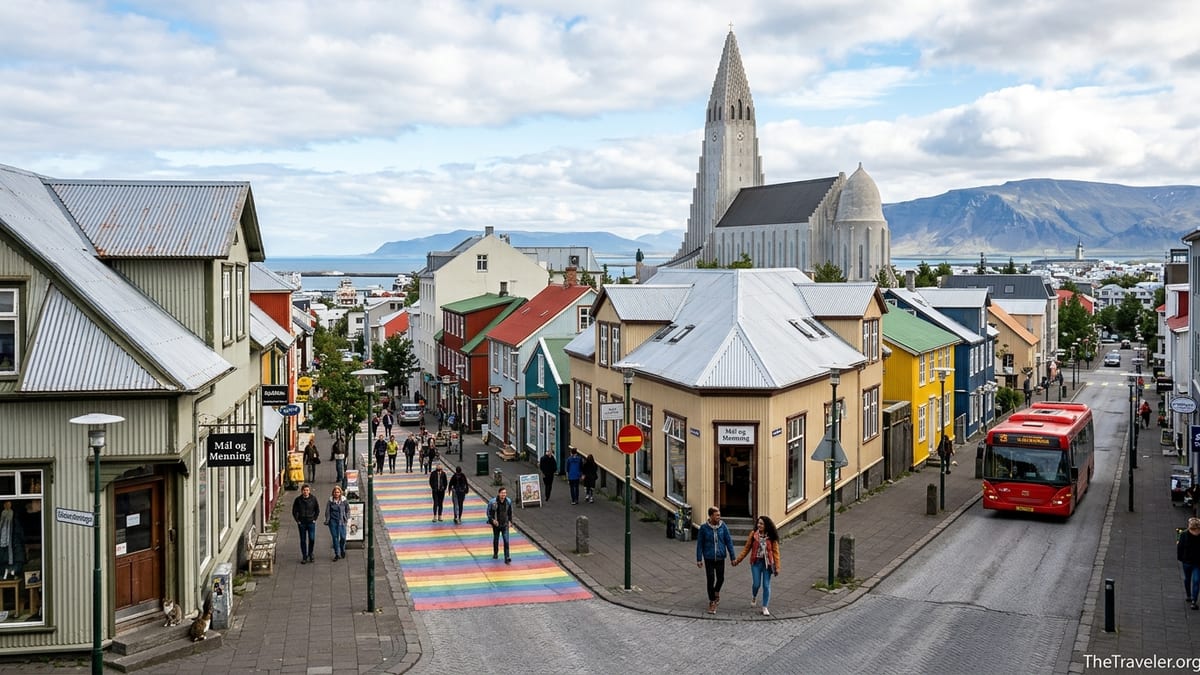
Hallgrímskirkja, the striking concrete church that towers over central Reykjavik, is both a place of worship and a practical viewpoint. Visitors typically spend 30 to 60 minutes here, exploring the interior and, when operating, taking the lift to the tower viewing platform for panoramic views of the colorful rooftops and harbor. Current information from church staff indicates there is elevator access to the tower, with a few steps at the top, and tickets are usually purchased on site during opening hours that vary slightly by season. Those with mobility needs should check the latest details before visiting.
Down by the waterfront, Harpa Concert Hall has become a modern symbol of Reykjavik with its faceted glass facade overlooking the harbor. Visitors can walk freely into the public atrium during the day to admire the architecture, stop for a coffee or check the schedule for concerts and events. Allow at least 30 minutes for a quick look, or longer if attending a performance. The building was designed with step-free access and lifts serving all major public floors, making it one of the more accessible cultural venues in the city.
A short walk along the seafront brings you to the Sun Voyager sculpture, a gleaming steel artwork that suggests both a Viking ship and a dream vessel. This is essentially an outdoor photo stop rather than a lengthy visit, but the combination of sculpture, sea and mountain backdrop is one of Reykjavik’s most famous images. Continuing along the pathways, you reach the Old Harbour and adjacent Grandi district, areas that have evolved from purely functional docks into mixed zones with cafes, galleries, museums and departure points for whale watching and puffin tours. Visitors typically spend one to three hours here, longer if joining a boat trip. Surfaces are mostly flat but can be uneven or icy in poor weather.
Within the wider city, geothermal bathing is a core experience. Laugardalslaug is one of Reykjavik’s main public pools, with outdoor swimming lanes, multiple hot tubs and steam facilities that locals use daily. It is suited to an hour or two of relaxation and people-watching at modest entry prices. On the southwestern edge of the capital area, a newer upscale lagoon offers longer opening hours, warmer soaking areas, swim-up refreshments and views over the North Atlantic, typically reached by shuttle or taxi rather than on foot from downtown. Advance booking is strongly recommended for this kind of premium lagoon experience, particularly in peak seasons and evenings.
Other worthwhile in-city experiences include exploring Reykjavik’s varied street art, which lines many walls and side streets near Laugavegur, and visiting museums such as the National Museum of Iceland for history, the Reykjavik Art Museum for contemporary work or Perlan for interactive exhibits and a panoramic viewing deck. Most major museums can be visited in one to two hours each and offer elevators and accessible entrances, but it is sensible to confirm current opening hours, ticketing and any renovation closures on official channels shortly before your visit.
Key Neighborhoods for Visitors
The heart of visitor life is the 101 Reykjavik area, often described as the Old Town or city center. Here you find a mix of older low-rise houses, newer apartment buildings, small hotels and an easy walk to the pond by City Hall, the harbor and Hallgrímskirkja on the hill. Streets are narrow but largely walkable, and there is a high concentration of cafes, bars and independent shops. Noise levels can be lively at weekends near some nightlife streets, which is part of the appeal for many younger visitors but something lighter sleepers may wish to factor in when choosing accommodation.
Running through the center is Laugavegur, Reykjavik’s main shopping street, along with the intersecting Skólavörðustígur, which climbs toward Hallgrímskirkja and is known for its colorful painted pavement in parts of the year. This combined area offers fashion boutiques, outdoor outfitters, bookstores, bakeries and a range of casual dining options, from cheap eats to mid-range restaurants. It is an excellent base for visitors who want to step out of their hotel or guesthouse door and immediately be in the middle of things, with most central attractions reachable in 10 to 20 minutes on foot.
Down towards the sea, the Old Harbour and neighboring Grandi district feel more industrial and spacious. Restored former warehouses and newbuilds host design studios, food halls, coffee roasteries, small museums and tour operator offices. The mood here is relaxed and slightly hip, with the water and mountains creating a strong sense of place. Staying in this area gives especially easy access to whale watching and other boat tours, plus pleasant waterfront walking, while still keeping you within a short walk or quick bus ride of Laugavegur.
Just beyond the central core, Laugardalur is a greener district known for its parkland, sports facilities and the Laugardalslaug pool complex. The atmosphere is more residential and family-oriented, with larger hotels often used by tour groups. For independent travelers it can be a good choice if you prefer quieter evenings and do not mind a 20 to 30 minute walk or short bus ride into the very center. Paths and sidewalks are generally good, though distances are longer than in 101 Reykjavik, so robust footwear and layered clothing are useful in marginal weather.
Getting Around the City and To the Airports
Reykjavik has no metro or tram system. Most visitors move around primarily on foot within the central districts, supported by city buses, taxis and organized tour or airport shuttles. The compact nature of the downtown area means that fit travelers can often spend an entire day sightseeing without needing motorized transport beyond the initial airport transfer.
The city bus network, operated under the Strætó brand, connects central Reykjavik with outlying neighborhoods and suburbs, including areas such as Laugardalur and the domestic airport. Buses are modern and generally reliable, though service reduces late at night and on some holidays. Tickets can usually be purchased via mobile app or from certain vendors and drivers, and visitors planning heavy use may find a city pass with included bus travel cost-effective. Taxis are available but relatively expensive by international standards, so they are best reserved for short hops, bad weather or late-night returns when buses are infrequent.
Reykjavik Airport, handling domestic flights and some regional services, sits just south of the city center, only a few minutes’ drive or a modest walk from many central hotels. In contrast, Keflavik International Airport, where most overseas flights arrive, lies on the Reykjanes Peninsula roughly 50 kilometers from downtown Reykjavik. The journey typically takes about 45 minutes to an hour each way by road in normal conditions, as confirmed by current airport transport guidance.
Several companies operate dedicated airport buses between Keflavik and central Reykjavik, with many services timed to meet arriving flights and offering hotel or bus stop drop-off options. Representative recent pricing for these shared shuttle services is on the order of a few thousand Icelandic krónur each way for adults, with discounts for children. Public bus route 55 offers a lower-cost but less frequent alternative, and metered taxis from the airport into the city are considerably more expensive, often costing several times the shuttle price. Weather, volcanic activity and road conditions on the main highway can occasionally affect travel times, so it is wise to build in a buffer before flights.
Money, Costs and Everyday Practicalities
Iceland uses the Icelandic króna, and card payments are accepted almost everywhere in Reykjavik, from supermarkets and buses to street food stands. Many visitors never need to withdraw cash, though having a small amount of local currency can be useful in rare situations. Prices are high compared with many European and North American cities, and they can fluctuate with exchange rates and local economic conditions, so any figures should be treated as approximate snapshots rather than fixed rules.
As a rough guide, a simple sit-down meal in a casual restaurant in central Reykjavik currently tends to cost the equivalent of a modest two-course dinner in a mid-range Western European city, with more upscale venues charging significantly more. A standard coffee from an independent cafe is often priced around what you might expect in other Nordic capitals, and a draught beer in a bar can quickly add up, particularly outside happy hour. Museum entry fees for major institutions generally fall into a moderate band rather than being token amounts, reflecting Iceland’s high cost base.
Organized day tours from Reykjavik vary widely in price depending on duration and inclusions. A representative full-day coach excursion to the Golden Circle or South Coast, excluding extras such as snowmobiling, typically runs to several tens of thousands of Icelandic krónur per adult at recent rates. Shorter experiences like walking food tours or whale watching cruises are somewhat less but still substantial compared with many destinations. Careful budgeting and prioritization help, particularly for longer stays, and self-catering some meals or choosing more informal dining can balance the overall spend.
Visitors should also remember that mistakes are expensive. Missing a pre-booked tour departure, taking a long taxi ride when buses would suffice or underestimating the cost of airport transfers can all quickly inflate the trip budget. Checking current prices before departure and leaving room in your plan for unexpected expenses is wise.
Safety, Weather Sense and Local Etiquette
Reykjavik is generally regarded as a safe city with relatively low violent crime rates. Petty theft can occur but is less common than in many larger capitals. Standard urban precautions still apply: watch your belongings in busy bars, do not leave valuables visible in parked vehicles and take extra care late at night around nightlife areas if alcohol is flowing freely.
Environmental conditions are a more significant safety factor than crime for most visitors. Winter in Reykjavik can bring strong winds, sleet, snow and ice, sometimes all within a single day. Sidewalks may be slippery, especially on hills leading up to Hallgrímskirkja or in residential areas. Wearing traction-friendly footwear, walking carefully and accepting that some days may be better suited to indoor museums than long hikes around the bay will keep your experience enjoyable. Even in summer, wind-chill on the harbor and sudden showers are common, so carrying a windproof, waterproof outer layer is recommended year-round.
Tipping culture in Iceland is restrained. Service charges are typically included in restaurant and bar prices, and staff are paid relatively higher base wages than in some countries. Locals do not routinely tip for everyday services, although rounding up or leaving a small extra amount for excellent service is appreciated but never required. Alcohol is strictly regulated, with stronger drinks sold only in government-run stores outside bars and restaurants, and drink-driving laws are stringent, which is another reason many visitors rely on tours and buses rather than using a car after an evening out.
On the etiquette front, respect for nature and public spaces is taken seriously. Even within Reykjavik, this means staying on marked paths where requested, not disturbing birdlife along the shoreline and packing out any rubbish from waterfront walks or nearby nature areas. In pools, strict hygiene rules require showering naked with soap before entering the water, a practice that may feel unfamiliar but is considered non-negotiable by locals. Observing these norms helps maintain the facilities and landscapes that travelers come to enjoy.
Linking Reykjavik With Wider Iceland: Itinerary Ideas
Reykjavik works best when viewed as both a destination in its own right and a flexible base for day or overnight excursions. A typical first-time itinerary of three or four nights might include one fully urban day exploring Hallgrímskirkja, Harpa, the Old Harbour, street art, cafes and a public pool; one long day tour to the Golden Circle or South Coast; and a more relaxed day that allows for a food walk, museums and a premium lagoon visit. In winter, an evening Northern Lights tour can be layered onto one of these days when conditions look favorable.
For a weeklong stay, you can weave in extra excursions in different directions: perhaps a Snæfellsnes Peninsula day tour, a dedicated whale watching and puffin boat trip in season, and time to explore the Reykjanes Peninsula volcanic landscapes either by tour or, if comfortable with the conditions, a short-term rental car. Between these outings, slow days in Reykjavik itself give space to adjust to jet lag, enjoy local coffee culture and soak unhurriedly in geothermal pools.
Repeat visitors might skip some of the classic highlights and instead use Reykjavik as a launchpad for domestic flights to the north or east of Iceland, still returning to the capital’s familiar streets and eateries at the beginning and end of their journeys. In all cases, the key decisions this guide aims to support are when to visit, how long to stay, which neighborhood to base yourself in and what balance to strike between city experiences and organized nature trips.
With those choices made, Reykjavik’s small scale and robust tourism infrastructure make it straightforward to book flights, accommodation and tours independently. Whether you are planning a single-night stopover or a weeklong hub stay, understanding the city’s seasons, layout, transport and costs will help you build a trip that feels both manageable and memorable.