


More news on this day
Rwanda is sharpening its bid to become a premier African aviation and tourism hub as national carrier RwandAir expands its Airbus A330 widebody fleet, adding capacity to long-haul routes that connect Kigali with key markets in Europe, Asia and the Middle East.
Get the latest news straight to your inbox!
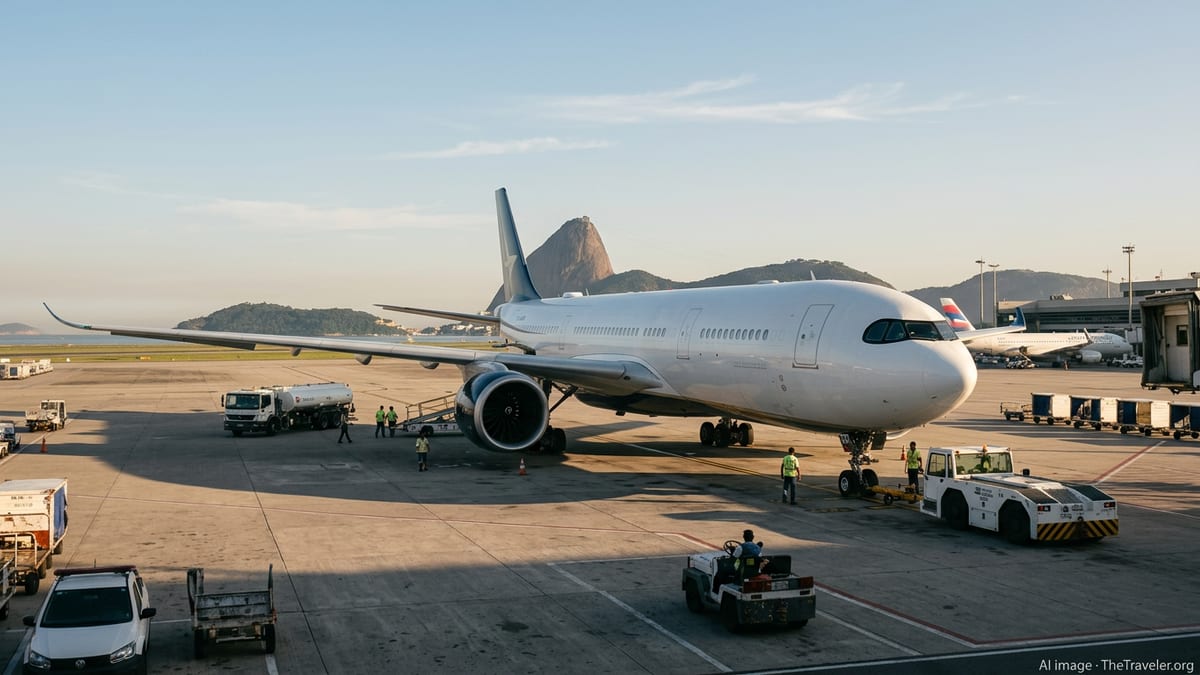
A Larger A330 Fleet to Anchor Long-Haul Growth
Publicly available fleet data shows that RwandAir now operates four Airbus A330 aircraft, comprising a mix of A330-200 and A330-300 variants, giving the airline more widebody capacity than at any time in its history. The newest A330 addition builds on earlier deliveries that first introduced the type into the RwandAir fleet and marked the airline’s entry into true long-haul operations.
Aviation industry coverage indicates that the latest A330 is being deployed primarily to reinforce high-demand routes such as Kigali–London and other intercontinental services. By adding another widebody of the same family, RwandAir can improve scheduling flexibility, provide backup capacity during maintenance, and better match aircraft size to peak-season demand across its network.
The A330 family’s range and payload make it central to RwandAir’s strategy of linking Kigali with major global hubs. The aircraft’s configuration, including a three-class cabin on most units, supports Rwanda’s push for premium tourism and business travel, aligning onboard product with the country’s positioning as a high-value destination.
Industry order and delivery tables for the A330 underline how significant this fleet size is for a carrier of RwandAir’s scale. For an airline serving just over 30 destinations, operating four long-haul widebodies signals a deliberate shift toward intercontinental connectivity as a core pillar of its growth plan rather than a peripheral niche.
Kigali’s Emerging Role as a Pan-African Aviation Hub
Rwanda’s aviation strategy places Kigali International Airport at the center of wider economic ambitions. Government and trade reports describe aviation as critical to a landlocked economy that depends on air links for both tourism and high-value exports. Plans for a new international airport at Bugesera, developed in partnership with Qatar, are intended to handle significantly greater passenger volumes and position Kigali as an intercontinental transfer point.
Guidance from trade promotion agencies highlights that Rwanda aims to transform Kigali into East Africa’s leading aviation hub after Addis Ababa. Fleet expansion at RwandAir, including the growing A330 contingent, is closely tied to this objective, with published targets indicating plans to increase total aircraft numbers and passenger throughput toward the end of the decade.
With the A330s at the top of its fleet, RwandAir has the aircraft needed to connect Africa’s interior to long-haul destinations without relying on third-country hubs. This supports Kigali’s emergence as a one-stop option between secondary African cities and global business centers in Europe, the Gulf and Asia, competing directly with larger regional players.
Recent network developments by other airlines into Kigali, including new links from Gulf carriers and regional operators, point to a growing ecosystem around the hub. RwandAir’s long-haul capability on the A330 family provides the backbone of that ecosystem, carrying high-yield passengers and feeding regional services that distribute visitors and business travelers across Rwanda and neighboring markets.
Tourism Surge Underpins Demand for Long-Haul Capacity
Rwanda’s tourism sector has been posting record numbers, providing a strong demand base for expanded intercontinental air services. Data from the Rwanda Development Board and international trade sources show tourism receipts reaching historic highs in 2024 and 2025, with nature-based tourism, particularly mountain gorilla trekking, and high-end lodges driving significant spending.
These figures are complemented by strong growth in Meetings, Incentives, Conferences and Exhibitions (MICE) tourism. Kigali has become one of Africa’s top conference destinations, supported by purpose-built venues and a coordinated strategy to attract global events. International associations and sporting federations have increasingly chosen Rwanda for flagship gatherings, bringing in large numbers of long-haul delegates.
As these visitor segments expand, additional A330 capacity gives RwandAir the ability to scale frequencies and seats on key markets where high-spend tourists originate, including Europe, North America via partner connections, and Asia. The widebody fleet is also critical for transporting conference and incentive groups that require coordinated travel and premium cabin options.
Rwanda’s broader tourism investment pipeline, from new national park infrastructure to cultural attractions in Kigali, is designed to lengthen stays and increase per-visitor revenue. Reliable long-haul airlift on aircraft like the A330 helps convert that investment into actual arrivals, ensuring that demand can keep pace with upgraded accommodation and experiences across the country.
Partnerships and Codeshares Extend Global Reach
RwandAir’s long-haul ambitions are amplified by strategic partnerships that extend its network far beyond what a carrier of its size could serve alone. A comprehensive codeshare agreement with Qatar Airways, for example, allows passengers to connect between RwandAir-operated flights and Qatar’s global network, accessing dozens of cities across Europe, Asia and the Americas.
Publicly available information on this partnership emphasizes that Kigali and Doha function as complementary hubs, with traffic flowing in both directions. The A330 fleet is central to this arrangement, operating trunk routes that can connect efficiently with widebody services at partner hubs and maintaining a competitive onboard product for long-haul itineraries.
These alliances effectively multiply the value of each A330 RwandAir operates. Rather than relying solely on point-to-point demand from Rwanda, the airline can tap into broader flows of passengers traveling between Africa and other continents who are willing to connect through Kigali. This model strengthens load factors and justifies the investment in additional widebody aircraft.
By pairing physical fleet growth with deeper commercial cooperation, Rwanda is pursuing a hybrid strategy seen at other successful mid-sized hubs. The approach seeks to balance national connectivity goals with the economics of long-haul flying, which typically require scale and diversified traffic sources to remain sustainable.
Connectivity Gains Feed into Wider Economic Growth
Stronger long-haul connectivity is increasingly reflected in Rwanda’s broader economic indicators. Official reporting points to travel and tourism contributing a growing share of GDP and employment, with export sectors such as horticulture, high-value agriculture and time-sensitive manufactured goods benefitting from reliable air links to major markets.
Air cargo capacity on passenger widebodies like the A330 is particularly important for these exports. While the new aircraft is primarily configured for passengers, its belly-hold space contributes additional freight capacity on routes to Europe and Asia, supporting exporters who rely on short transit times and high schedule reliability.
Improved connectivity also reinforces Rwanda’s branding as a gateway for investment into the wider Great Lakes region. As more multinational companies scout sub-Saharan Africa for regional headquarters and logistics hubs, the presence of multiple long-haul options, modern airport infrastructure and an expanding national carrier becomes a key differentiator.
RwandAir’s expanded A330 fleet, therefore, carries significance beyond aviation metrics. Each additional widebody helps tie Rwanda more closely into global tourism, trade and investment flows, supporting the country’s long-term ambition to move up the value chain and establish Kigali as one of Africa’s most connected and competitive capitals.
U.S. International Trade Administration – Rwanda Aviation Overview
U.S. International Trade Administration – Rwanda Travel and Tourism