


Saskatchewan sits in the heart of Canada, framed by Alberta to the west and Manitoba to the east. It is one of the country’s least densely populated provinces, a place of huge skies, wheat fields and native grasslands, but also of thousands of lakes, winding rivers and pockets of boreal forest. Travelers come here for road trips, national parks, lake country escapes and small but energetic cities, rather than dense urban sightseeing. If you are curious about what there is to do, this guide introduces the key regions and practicalities so you can decide how to shape a first visit.
Get the latest updates straight to your inbox!
Is Saskatchewan the Right Destination for You?
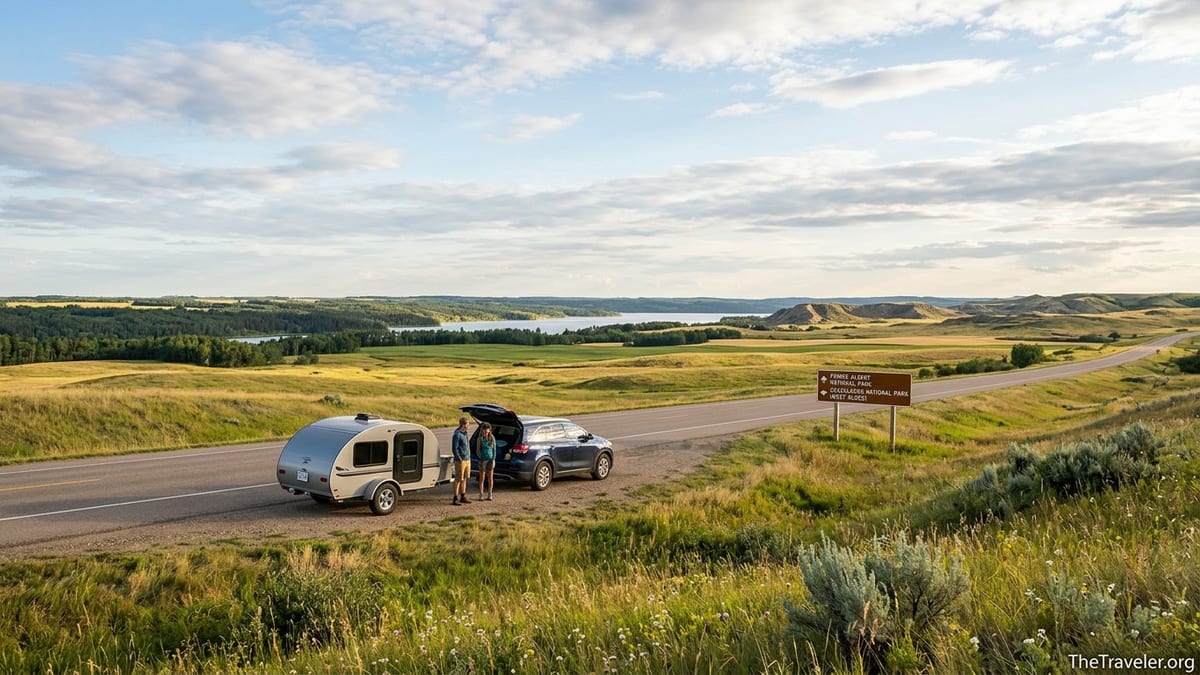
Saskatchewan is ideal for travelers who are happiest outside or on the road. Road trippers, RV travelers and campers will find long, quiet highways, well developed campgrounds and many provincial and regional parks. National park lovers are drawn to Prince Albert National Park in the central boreal forest and Grasslands National Park in the southwest, both managed by Parks Canada. Anglers, paddlers and birders are well served by the province’s lake districts, while families often appreciate the slower pace, accessible hiking and uncrowded beaches.
The province is less compelling for travelers focused on big city culture or nightlife. Saskatoon and Regina are lively regional hubs with good food, craft breweries, museums and summer festivals, but they are compact and relaxed rather than intense urban destinations. Those who prefer to explore on foot and by public transit only will quickly hit limits, as much of Saskatchewan’s appeal lies in rural areas, lakes and parks that are easiest to reach by car.
International visitors often pair Saskatchewan with neighboring Alberta or Manitoba. The contrast between prairie, forest and mountain landscapes can be striking in a single trip. For Canadians, especially from Ontario and British Columbia, Saskatchewan can be a quieter alternative to more crowded national park gateways, with simpler logistics and a strong sense of local community.
If you are willing to rent a car, drive longer distances and embrace variable weather, Saskatchewan rewards you with open horizons, dark night skies and the chance to experience a part of Canada that many visitors overlook.
How Long to Spend in Saskatchewan
Trip length shapes what you can realistically cover. For a short break of three or four days, it is best to focus on one city and its nearby countryside. Saskatoon pairs well with day trips along the South Saskatchewan River valley or into rolling parkland and lake regions to the north. Regina combines easily with visits to the Qu’Appelle Valley or Moose Mountain Provincial Park, both within a few hours’ drive.
With seven to ten days, you can add one of the national parks and a lake or provincial park region. A common structure is to arrive in Saskatoon, spend a couple of days in the city, then drive to Prince Albert National Park for several nights of hiking, paddling and wildlife viewing. Alternatively, you might base in Regina and then loop through Grasslands National Park in the southwest before returning via lake country or valley routes.
Two weeks or more allows you to connect both national parks with time in each city and a few nights at a lakeside cabin or campground. Distances remain manageable by Canadian standards, but you should plan conservative daily driving times and include buffer days for weather. Saskatchewan is not a place to rush; many of its rewards come from lingering in one region rather than trying to see the entire province.
Whichever length you choose, build in rest days from driving, especially if you are covering the Trans Canada Highway or crossing from another province. Wide horizons and straight roads can be deceptively tiring.
Getting to Saskatchewan and Getting Around
Most international visitors arrive by air into Saskatoon or Regina. Saskatoon John G. Diefenbaker International Airport serves domestic and limited international routes and has several on site car rental agencies with vehicles parked just outside the terminal. Regina International Airport also offers domestic and some transborder flights and hosts multiple major rental brands with cars a short walk from the terminal building. Both airports are small and relatively easy to navigate.
If you prefer to drive, the Trans Canada Highway crosses southern Saskatchewan from east to west, linking Regina with Manitoba and Alberta. Secondary highways connect north to Saskatoon, Prince Albert and lake regions, as well as south to the U.S. border. Travelers from the northern United States often enter at border crossings in Montana or North Dakota and then follow highways north toward Regina, Moose Jaw or Swift Current before heading into parks and lake districts.
Within Saskatoon and Regina, local buses serve the main urban areas and downtown cores are walkable for sightseeing, dining and riverfront or park strolls. However, public transit is not designed for visitors who want to reach national parks, lakes or rural attractions. For regional exploration, renting a car is effectively essential unless you join an organized tour or travel with someone who has a vehicle.
When planning, account for road safety and connectivity. Wildlife, including deer and occasionally moose, can be active near roads, particularly at dawn and dusk, so many residents avoid long distance night driving on rural highways. In remote areas and within parks, cell coverage can be patchy or absent. Before setting out, check provincial road condition reports and weather forecasts, carry extra water and snacks, and download offline maps so that you can navigate even if your signal drops.
Key Regions and Anchor Destinations
Saskatchewan’s landscapes range from flat prairie to forest and badlands. Tourism Saskatchewan organizes the province into several travel zones that reflect these differences, including prairie and city regions, a band of lakes and parkland, and the more remote northern forest and waterways. For a first trip, most visitors focus on a core band that stretches from the south around Regina and Grasslands National Park up through Saskatoon to Prince Albert National Park.
Saskatoon sits on the South Saskatchewan River and uses its riverside setting well. Walking paths line the riverbank, and bridges connect neighborhoods and parks. The city’s cultural attractions include art galleries, heritage sites and a growing food scene, while festivals in summer add outdoor concerts, theatre and cultural events. Many travelers spend two or three nights here, using one day for urban exploring and another for a short drive to nearby parks or historic sites.
Regina, the provincial capital, is built around Wascana Centre, a large urban park that encircles a man made lake and includes walking and cycling paths, green space and major institutions such as the provincial legislature and museums. The city also hosts sports events and cultural festivals during the warmer months and has a compact core with restaurants, cafes and arts venues. Two or three days is typically enough for a relaxed first stay, with time to enjoy the park, visit museums and perhaps take a short trip into the surrounding prairie or valley landscapes.
Beyond the cities, anchor destinations for nature focused trips include Prince Albert National Park in the central boreal forest, Grasslands National Park’s East and West Blocks in the southwest, lake regions such as those around Lake Diefenbaker, and scenic valleys like the Qu’Appelle and the uplands of Moose Mountain. Each offers distinct terrain and activities, from forest hiking to stargazing under some of the darkest skies in Canada.
Prince Albert and Grasslands: Saskatchewan’s National Parks
Parks Canada currently administers two national parks in Saskatchewan: Prince Albert National Park and Grasslands National Park. Both are confirmed in federal legislation and highlighted by Tourism Saskatchewan as the province’s national park offerings. Writers and editors should verify that this remains accurate before publication in case additional national parks or major access changes are announced in the future.
Prince Albert National Park lies in central Saskatchewan where parkland transitions into boreal forest. It protects a large area of lakes, forest and fescue meadows and supports wildlife such as bison, elk, bears and many bird species. Visitors typically come for hiking, canoeing and kayaking, lakeside relaxation and winter activities such as cross country skiing and snowshoeing. The small resort community of Waskesiu inside the park provides services, accommodations and a base for exploring. Many travelers devote three to five days to the park, either in a single stay or as part of a longer loop from Saskatoon.
Grasslands National Park occupies two separate blocks in the southwest of the province near the U.S. border. It protects one of Canada’s few remaining areas of undisturbed mixed grass prairie and is known for wide open views, eroded coulees and badlands formations. Wildlife viewing can include plains bison, pronghorn and prairie dogs, and the park has been designated a Dark Sky Preserve, making it excellent for stargazing and, in the right solar conditions, occasional aurora viewing. Activities tend toward hiking, scenic driving, photography and backcountry camping rather than high service resort stays.
Because Grasslands is remote and services are limited, visitors often plan two or three nights in either the East Block, the West Block or both, combining frontcountry campgrounds or roofed oTENTik style shelters with day hikes and evening sky watching. It is important to check current details on seasonal road openings, campsite and oTENTik availability and any access advisories from Parks Canada before you travel, as facilities and operating dates can change from year to year.
For both national parks, reservations are strongly recommended in the main summer season and on Canadian long weekends. Parks Canada’s reservation system opens months in advance, and popular campgrounds and roofed accommodations can book up quickly once dates are released.
Lakes, Valleys and Provincial Parks
Although Saskatchewan is often associated with prairie, the province has a remarkable number of lakes and river valleys that lend themselves to summer holidays. Tourism Saskatchewan highlights regions of “unlimited lakes and parkland” and “northern lights and waterways,” reflecting the many opportunities for boating, fishing, paddling and lakeside camping. For a first visit focused on the southern half of the province, you can still experience this side of Saskatchewan without driving all the way to the far north.
Lake Diefenbaker in south central Saskatchewan is a large reservoir with an irregular shoreline, beaches and a mix of provincial parks and recreation sites. It draws boaters, anglers, campers and families looking for warm weather swimming and water sports. Many visitors stay in campgrounds or cabin resorts along the shore and use their days for hiking, beach time or guided fishing trips. A stay of two to four nights works well in combination with Regina, Saskatoon or Grasslands National Park.
East of Regina, the Qu’Appelle Valley cuts across the prairie in a series of lakes, coulees and wooded slopes. This area supports several provincial parks and resort communities and is known for rolling scenery, beaches and cottage country atmospheres. It can be visited as a day trip from Regina or as a two or three night stay for walking, paddling and relaxed time by the water. Moose Mountain Provincial Park, southeast of Regina, adds forested uplands, lakes and an extensive trail network, making it a popular regional camping and cabin destination.
Provincial parks typically offer serviced and unserviced campsites along with basic amenities such as washrooms, playgrounds and beaches. Some have rental cabins or yurts, while others focus purely on camping. As with the national parks, operating seasons, reservation windows and facility details can shift, so you should consult current provincial park information when planning, particularly for shoulder season visits in spring and autumn.
Seasonality, Weather and When to Go
Saskatchewan has a strongly seasonal climate with marked differences between winter and summer. Winter brings cold temperatures, snow cover and short days, but also clear skies and crisp air that can be ideal for certain experiences. In the north and away from city lights, there is potential to see the aurora borealis when solar activity cooperates, and both national and provincial parks may offer groomed trails for cross country skiing, snowshoeing and fat biking. Services are more limited, however, and many lake resorts and campgrounds close or reduce operations outside the main season.
Spring and autumn act as shoulder seasons that can be rewarding but variable. In spring, prairie landscapes gradually green and migratory birds return, making it a good period for birdwatching in wetlands and along shorelines. Trails can be muddy and some backroads soft, so flexible plans and waterproof footwear are useful. Autumn often features clear days, colorful foliage in parkland and forest regions and fewer insects than summer, but nights grow cooler and some facilities begin to close or reduce hours.
Summer is the prime travel season. Days are long, and typical temperatures are warm enough for camping, swimming and evenings outdoors. This is when festivals in Saskatoon and Regina are most active, and when most campgrounds, lodges and tour operators are open. It is also the busiest time at popular parks and lakes, particularly around school holidays and long weekends. Travelers should expect more competition for campsites and accommodations and plan accordingly.
Writers preparing Saskatchewan content should consult up to date climate normals for Saskatoon and Regina from an official meteorological source and present temperatures as ranges rather than single numbers, reflecting the natural variability from year to year. Emphasize that conditions can change quickly and that visitors should check detailed forecasts and park advisories shortly before departure, especially in winter and during the shoulder seasons.
Where to Stay and What It Costs
Saskatoon and Regina both offer a full spectrum of city accommodations from budget motels and chain hotels through to higher end properties in central locations. A scan of mid range hotels in each city typically shows that centrally located options with modern rooms and amenities sit in a middle price band, with lower rates often available at motels or hotels on the outskirts and higher prices for boutique or full service downtown properties. Rates tend to rise during peak summer months, major festivals and conference periods.
Along major highways, particularly the Trans Canada corridor and key north south routes, travelers will find a network of roadside motels and smaller town hotels. These are popular with road trippers and workers moving between communities. Standards and amenities vary, but many offer simple, functional rooms, parking and basic breakfast options. Prices usually sit below those of central city hotels, though high demand in smaller communities during busy periods can narrow the gap.
In parks and lake regions, accommodation often centers on campgrounds, cabin resorts and seasonal lodges. Provincial and national park campgrounds usually have a mix of unserviced and serviced sites, with fees that are generally lower than mid range hotel rates but that may rise for sites with power or additional services. Parks Canada has introduced oTENTik and similar micro shelter options at some campgrounds, which are usually priced above regular campsites but below typical hotel rooms. Many provincial parks and private operators offer lakeside cabins or cottages at nightly or weekly rates that reflect location, amenities and season.
Farm and ranch stays and Indigenous owned accommodations are increasingly visible, offering a way to connect with local cultures and rural life. Availability varies by region, and offerings range from simple guest rooms in family homes to full service lodges and guided experience packages. Across all accommodation types, summers and Canadian long weekends fill quickly. Travelers should book well ahead for July and August stays in popular parks, lake districts and city centers, and consider more flexible dates to secure better choices and value.
Culture, Festivals and Local Life
While Saskatchewan is best known for its landscapes, cultural experiences add depth to a visit. Saskatoon’s festivals in summer often include jazz, folk and theatre events, along with food, art and cultural celebrations that make good use of its riverfront parks and downtown venues. Regina hosts its own suite of festivals and arts gatherings, as well as sporting events and community celebrations in Wascana Centre and across the city.
Museums and galleries in both cities highlight provincial history, Indigenous cultures, natural history and contemporary art. Visitors can also seek out historic sites and interpretive centers outside the cities, including places linked to the history of the prairies, settlement and the Métis and First Nations communities. These sites help contextualize the landscapes that travelers see when driving between parks and towns.
Smaller towns and rural communities contribute their own events, from rodeos and agricultural fairs to local music and cultural festivals. Many of these are seasonal and community run, with dates that shift year to year. Writers and travelers should confirm current festival names, dates and featured events for the intended year of travel through up to date regional event listings and tourism information.
Engaging with local life can be as simple as spending time in small town cafes, farmers’ markets and community halls, where visitors often find an easy welcome and first hand insight into prairie culture. As with much of Saskatchewan, the pace tends to be informal and friendly rather than polished or hurried.
Practical Trip Ideas for First Time Visitors
One straightforward framework for a shorter trip is to spend three or four days based in Saskatoon. Allocate one or two days to explore the city’s riverfront, neighborhoods, museums and dining, and use an additional day for a drive along the South Saskatchewan River valley or into nearby parkland or lake country. This suits travelers who want a gentle introduction to the province with minimal long distance driving.
For a week, consider a loop that combines Saskatoon with Prince Albert National Park. Fly into Saskatoon, spend two nights in the city, then drive north to Waskesiu in Prince Albert National Park for three or four nights of hiking, paddling and wildlife viewing. On the final day or two, return to Saskatoon or continue southward toward another province. This works well for families, outdoor enthusiasts and those who value a balance between services and wilderness.
Another seven to ten day option centers on the southern half of the province. Begin in Regina with two or three nights exploring Wascana Centre and the city’s cultural attractions, then drive southwest toward Grasslands National Park for two or three nights in either the East Block, the West Block or both, focusing on hiking, scenic drives and dark sky viewing. If time permits, add a stop at Lake Diefenbaker, the Qu’Appelle Valley or Moose Mountain Provincial Park on your way back. This itinerary favors travelers keen on prairies, badlands and big sky experiences.
These frameworks are starting points rather than fixed itineraries. Saskatchewan is spacious, and distances between key sites reward slower travel. Choosing one city, one major park and, if time allows, one lake or valley region is often the most satisfying way to experience Canada’s prairie province on a first visit.