


More news on this day
Saudi Arabia’s domestic and regional air network is facing a sharp spike in disruption, with operational data for a recent peak summer travel day showing 286 delayed flights and 199 cancellations across major airports, complicating travel plans for thousands of passengers already contending with wider Middle East instability.
Get the latest news straight to your inbox!
Data Shows One of the Busiest Disruption Days This Summer
Published operations figures and flight-tracking snapshots for Saudi Arabia indicate that the combined total of 286 delays and 199 cancellations marks one of the most disrupted individual days for the kingdom’s air network so far this summer. The impact has been most visible at Jeddah’s King Abdulaziz International Airport and Riyadh’s King Khalid International Airport, which together handle a large share of domestic connections and regional links.
The pattern of disruption points to a familiar snowball effect for airline operations. Early morning delays on key domestic rotations appear to have cascaded through the day, eventually forcing carriers to cancel some sectors altogether once crew duty limits, aircraft positioning issues and tight turnaround times made recovery within the same schedule cycle increasingly difficult.
While the headline numbers are significant, airports in Saudi Arabia remain open and functioning. Publicly available status pages and airline schedules show that the majority of flights are still operating, albeit with longer-than-usual delays on certain routes and a more compressed selection of departure times compared with earlier in the summer.
Domestic Corridors Under Pressure as Peak Travel Continues
The brunt of the disruption has been felt on busy domestic corridors linking Jeddah, Riyadh, Dammam, Abha and other high-demand cities. These routes are central to Saudi Arabia’s internal mobility, catering to business travelers, religious visitors, and residents moving between coastal and inland regions during the peak summer holiday period.
High load factors on many of these flights mean that when one departure is delayed or cancelled, there are limited spare seats on subsequent services to absorb displaced passengers. Booking data and advisory notes from regional travel platforms suggest that some travelers have been forced to accept rerouting via secondary airports or to postpone their journeys by 24 hours or more, particularly on late-evening and early-morning departures where frequencies are already stretched.
In some cases, the disruption has spilled over into regional connections. Domestic delays have caused missed onward links to neighboring Gulf countries, forcing airlines to rebook passengers onto later international flights or alternative routings. This has added to pressure on airport infrastructure, as more travelers remain airside for longer periods while they wait for new boarding times.
Regional Tensions and Operational Constraints Form a Volatile Backdrop
The jump in delays and cancellations is unfolding against a wider backdrop of tension and volatility in Middle East airspace. Since renewed conflict involving Iran and regional powers earlier this year, carriers across the Gulf have been adjusting routings, increasing block times and in some cases suspending individual services, all of which have reduced scheduling flexibility and increased exposure to knock-on disruption when problems occur.
Supply-chain and logistics bulletins monitoring Middle East airfreight and passenger flows describe Saudi Arabia’s aviation environment as “operational but fluid,” noting selective delays and occasional short-notice cancellations as airlines respond to evolving airspace advisories and congestion on alternative routings. Higher jet fuel costs linked to the broader regional crisis have also added to the pressure on carriers, limiting scope for running extra recovery flights during peak demand.
Despite these headwinds, most scheduled services to and from Saudi Arabia continue to operate. International network adjustments, such as temporary suspensions on certain long-haul routes and tighter capacity on others, appear designed to protect core domestic and regional connectivity. However, this strategy means that when a day with heavy disruption occurs, as reflected in the 286 delays and 199 cancellations, options for rapid recovery are constrained.
Passenger Experience: Long Queues, Rebookings and Extended Stays
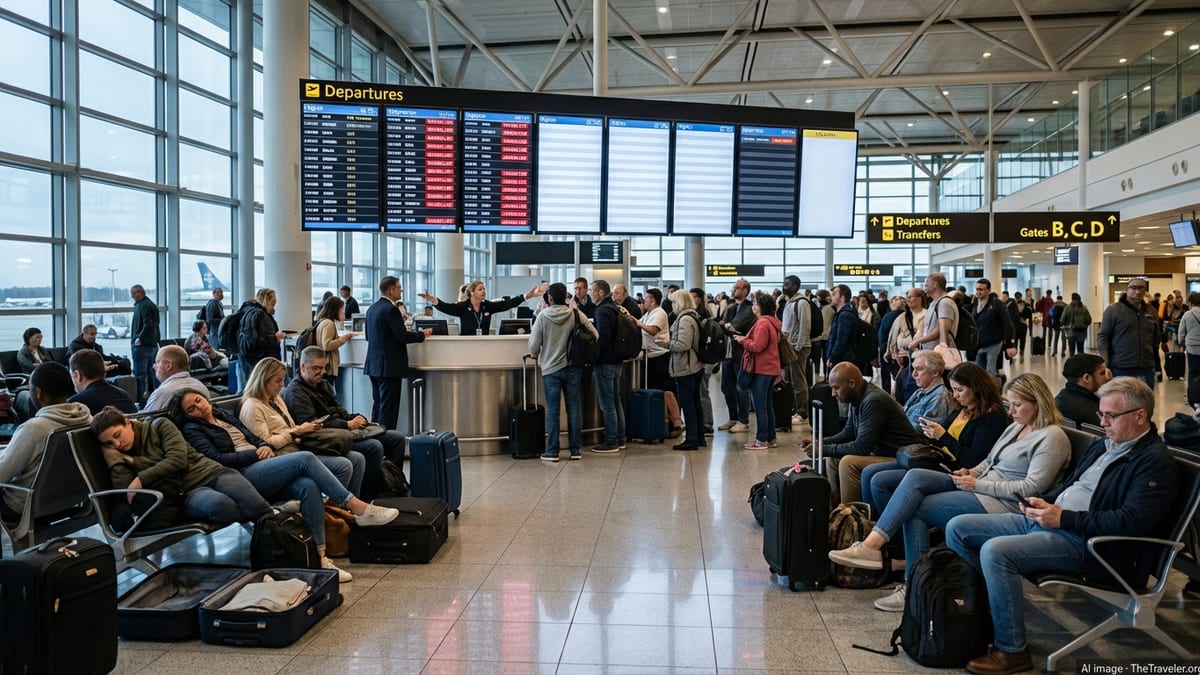
For passengers passing through Saudi airports during the disruption spike, the most immediate effects have been longer queues at check-in, security and transfer desks, as well as crowding around airline service counters. Social media posts and informal reports from travelers describe several-hour waits in terminal buildings, with some families and tour groups facing overnight stays due to missed connections or lack of available seats on same-day alternatives.
Travel advisories issued by online agencies and booking platforms urge passengers to monitor their flight status in real time through airline apps and to arrive at the airport earlier than usual, particularly if connecting onward to another international destination. Travelers are also being encouraged to keep flexible arrangements for accommodation and ground transport in case departure times shift repeatedly over the course of the day.
For those already in the air cargo and logistics chain, the same disruption pattern has translated into extended transit times and occasional last-minute rerouting of time-sensitive consignments. Logistics providers note that while Saudi airports remain open, the combination of reprofiled routings and aircraft schedule changes can add several hours, and occasionally a full day, to delivery windows.
What Travelers Should Expect in the Coming Days
Industry observers expect the Saudi network to gradually work through the backlog from the disruption spike, but emphasize that the system is likely to remain sensitive to further shocks during the peak summer period. With aircraft and crews running close to full utilization, any combination of adverse weather, additional airspace constraints, or technical issues could again push delays and cancellations higher on individual days.
Publicly available airport and airline data indicate that carriers are using standard recovery tools such as aircraft swaps, crew rerostering and selective consolidation of lower-demand flights to stabilize operations. At the same time, advisory notes caution that passengers should not assume that schedules advertised far in advance will remain unchanged, particularly on high-frequency domestic routes where adjustments are easiest to make.
For travelers planning to fly to, from or within Saudi Arabia in the coming days, the practical guidance from travel platforms is consistent: check flight status repeatedly before departure, keep documents and contact details for airlines and agents readily available, and anticipate that additional time at the airport may be required. While the day with 286 delays and 199 cancellations stands out as an extreme example, the broader pattern suggests that elevated disruption risks will likely persist at least through the height of the summer season.