


More news on this day
Rail passengers traveling between Aberdeen and Montrose experienced disruption after a lineside fire near the tracks led to delays, cancellations and revised services on one of northeast Scotland's key rail corridors.
Get the latest news straight to your inbox!
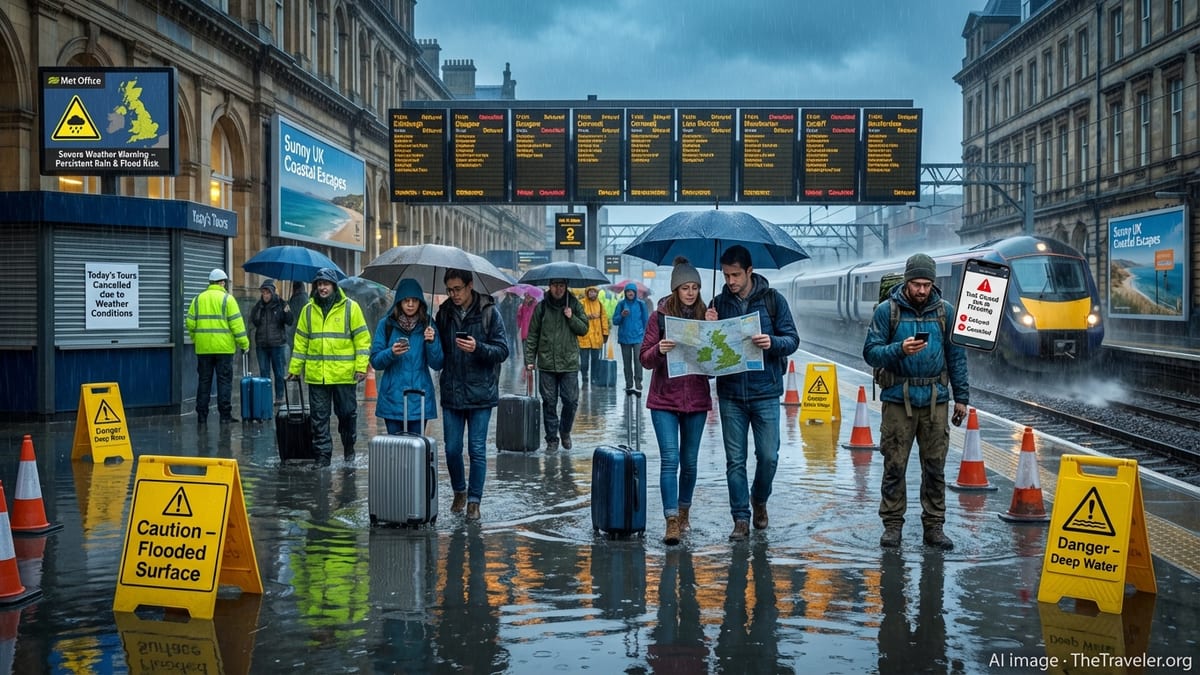
Services disrupted on key northeast corridor
The main line between Aberdeen and Montrose forms a vital section of Scotland's east coast rail network, carrying ScotRail commuter services as well as longer-distance trains. Publicly available service updates indicate that a fire close to the railway resulted in restrictions on this stretch, with trains subject to delay and alteration while the incident was managed.
Reports suggest that, as a precaution, some services were held outside affected sections of track or diverted where possible, while others were cancelled outright. The combination of operational restrictions and train displacement created knock-on delays, particularly for services starting or terminating at Aberdeen and for stopping services serving smaller coastal communities.
The impact was felt by commuters, leisure travelers and visitors using the line to connect with wider services across Scotland and to England. The Aberdeen to Montrose corridor is also an important link for communities in Angus and Aberdeenshire, leaving many passengers needing to reassess their travel plans at short notice.
According to published travel information, disruption continued beyond the immediate period of the fire while rail staff checked infrastructure and worked trains back into their scheduled positions.
Safety checks and speed restrictions following the fire
When a fire occurs near a rail line, rail operators typically introduce temporary speed restrictions and additional safety checks before allowing normal traffic to resume. In the case of the incident between Aberdeen and Montrose, publicly available information indicates that trains were required to run at reduced speed through the affected section while the extent of any damage was assessed.
Lineside fires can affect signalling equipment, trackside cabling and vegetation, all of which must be inspected once conditions are safe. Even if no structural damage is ultimately identified, the resulting reduction in line capacity can quickly lead to a build-up of delays on a single-track or predominantly two-track route such as the Aberdeen to Montrose corridor.
The line has a history of weather and infrastructure related disruption, with previous incidents involving flooding, signalling faults and safety inspections leading to similar patterns of cancellations and altered services. Recent performance data and historic incident reports underline the vulnerability of key pinch points on the route, where any restriction can have an outsized effect on punctuality.
Following the latest fire-related disruption, services required time to recover as trains and crews were repositioned and the timetable gradually brought back into alignment.
Advice for affected ScotRail passengers
During rail disruption of this kind, rail operators typically advise passengers to check live journey planners and social media feeds before setting out. Publicly accessible journey planners and incident summaries for Scottish rail routes recommended that travelers between Aberdeen and Montrose consider alternative services, allow extra time, or postpone non-essential journeys while disruption was ongoing.
On previous occasions when this corridor has been significantly affected, replacement bus services have been used to maintain links between key stations when the line has been fully closed. In the case of the lineside fire, the priority appears to have been keeping some trains moving through the affected area under restrictions, which can reduce the need for large-scale bus substitution but still leaves services vulnerable to delay.
Rail tickets on this corridor are often accepted on alternative routes during major disruption, though the scope of such arrangements can vary by incident. Passengers holding advance tickets whose booked trains are cancelled are usually permitted to travel on earlier or later services, subject to capacity and any updated operator guidance at the time of the disruption.
Travel advice also stresses the importance of checking the status of late-evening services in particular, as earlier delays can sometimes lead to short-notice alterations or early termination of the last trains of the day.
Broader pressures on Scotland’s coastal rail routes
The latest fire-related disruption between Aberdeen and Montrose comes at a time when Scotland’s rail network is managing a combination of factors, including extreme weather events, ongoing infrastructure works and timetable changes. Recent alterations to ScotRail timetables have aimed to improve reliability and provide more consistent stopping patterns on routes serving Aberdeen and its surrounding communities.
Coastal routes on the east of Scotland are particularly exposed to weather-related risks, with heavy rain, flooding and high winds all capable of triggering speed restrictions or safety inspections. In parallel, hotter, drier spells can increase the likelihood of lineside fires and vegetation-related problems, which in turn require prompt operational responses.
Publicly available performance reports show that any incident affecting the relatively constrained section of line between Montrose and Aberdeen can quickly ripple through to services across the wider network. Trains linking Aberdeen with the Central Belt, Inverness and cross-border destinations often share this corridor, meaning a localised problem can have national implications for punctuality.
For travelers planning journeys in the coming weeks, published guidance suggests paying close attention to advance engineering work notices as well as short-notice incident alerts. This is especially relevant for weekend and evening travel, when planned works and reduced timetables can limit flexibility if unplanned disruption occurs.