


More news on this day
Seattle’s rise as a next‑generation cruise homeport is intersecting with Holland America Line’s largest fleet upgrade in more than a century, signaling a new phase in premium, sustainability‑minded travel from the Pacific Northwest.
Get the latest news straight to your inbox!
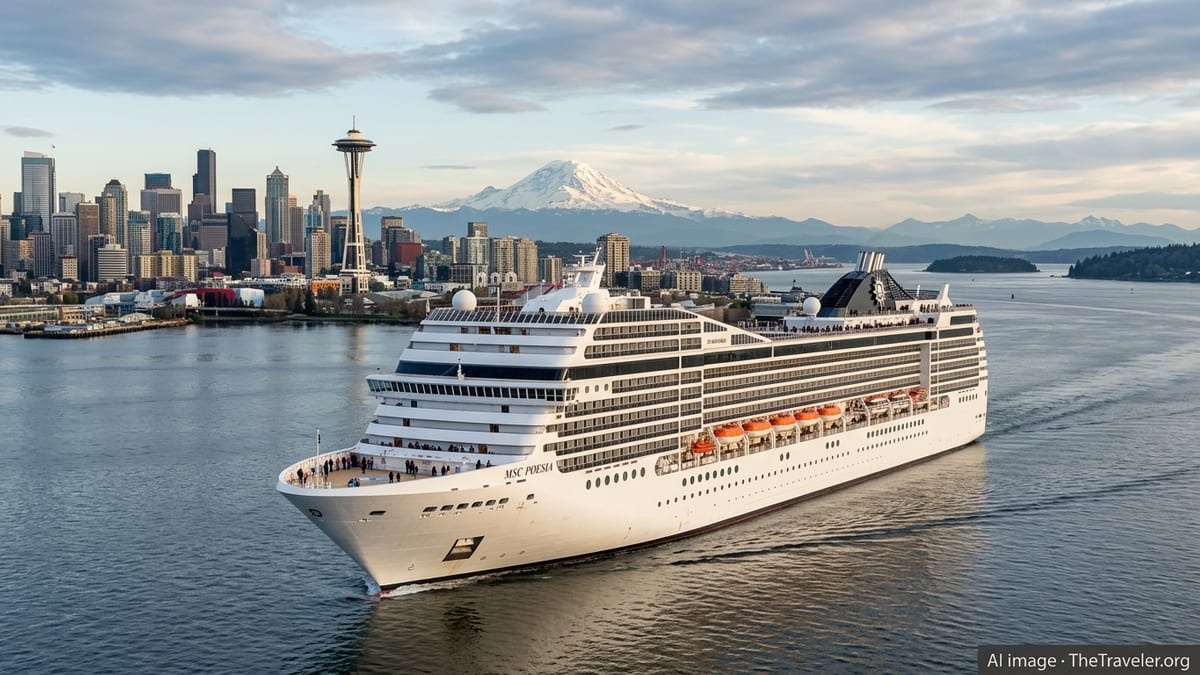
Seattle Emerges as a Strategic Hub for Premium Cruising
Publicly available information shows that Seattle is consolidating its position as one of North America’s most important cruise gateways, especially for Alaska itineraries. Two downtown cruise terminals and direct air links make the city a preferred departure point for voyages across the Pacific Northwest and to Alaska, underpinning a regional travel economy that increasingly leans on cruise visitors.
Port documentation indicates that both Smith Cove Cruise Terminal at Pier 91 and Bell Street Pier at Pier 66 now operate with full shore‑power capability at every berth, placing Seattle among a small group of ports worldwide able to support ship electrification at this scale. This infrastructure allows compatible vessels to switch off their engines in port and draw electricity from the grid, aligning local operations with broader decarbonization goals.
Economic impact data from the Port of Seattle highlights that each homeport call contributes several million dollars in direct and indirect spending across lodging, dining, attractions, and transport. As more lines position ships in Seattle for longer seasons, the city’s role is shifting from a simple embarkation point toward a central node for multi‑week and extended itineraries that begin and end in the region.
Within this landscape, Holland America Line, headquartered in Seattle, occupies a prominent place among the homeported brands. Its long history in Alaska and the Pacific Northwest reinforces the city’s identity as both a cruise operations base and a testing ground for new premium and environmental initiatives.
Holland America Evolution Marks a New Luxury Benchmark
In April 2026 Holland America Line introduced Holland America Evolution, described in public materials as the largest fleet update in the company’s 153‑year history. The multiyear program focuses on six mid‑sized Vista and Signature class ships, aiming to bring them closer in feel and amenities to the line’s newer Pinnacle class vessels such as Rotterdam, Koningsdam, and Nieuw Statendam.
According to company information, Evolution involves cohesive redesign rather than isolated refurbishments. Plans include refreshed staterooms, the introduction of new suite categories, expanded Pinnacle‑inspired venues like Grand Dutch Café, and reworked public spaces intended to improve guest flow and social interaction. The objective is to align hardware and design across the fleet while maintaining the smaller‑ship atmosphere that has long differentiated the brand in the premium segment.
Subsequent announcements in mid‑2026 identified Zuiderdam as the next ship slated for Evolution work, including newly revealed Pinnacle and Bridgeview Suites. Renderings show light‑filled accommodations with large verandas and expanded living areas positioned as a bridge between traditional balcony cabins and top‑tier suites, signaling a more layered luxury offering for guests sailing from ports such as Seattle.
Parallel dry docks for Pinnacle class ships in 2026, with Koningsdam and Rotterdam undergoing updates, indicate that Evolution is not limited to older hardware but is intended to harmonize the entire fleet’s aesthetic, entertainment, and dining standards. For travelers, the result is expected to be a more consistent onboard experience regardless of ship size or class.
Elevated Onboard Product Targets Premium‑Plus Travelers
Holland America’s repositioning is also visible in how it bundles services and amenities. The line’s “Have It All” premium package combines shore excursion credits, specialty dining, beverage options, and Wi‑Fi at a fixed daily rate, marketed as offering savings compared with purchasing each component individually. This structure is designed to appeal to guests who appreciate inclusive pricing without committing to the fully all‑inclusive luxury segment.
Club Orange, another product tier, layers further exclusivity inside that framework. Public descriptions list benefits such as priority check‑in, tendering, and disembarkation, expanded room‑service breakfast, and enhanced main dining room access, with suite guests on certain ships automatically receiving many of the perks. On Pinnacle class vessels, Club Orange also operates as a dedicated restaurant, creating an intimate dining environment that mirrors the feel of small‑ship luxury dining rooms.
Industry analysis and recent ship reviews suggest that these enhancements, combined with refined entertainment under an “Entertainment Evolution” initiative, are repositioning the brand toward what some observers describe as a premium‑plus category. Live music concepts, regionally themed performers, and more immersive destination programming are being used to add depth to evenings on board, especially on longer itineraries from Seattle to Alaska and beyond.
This layered approach allows Holland America to compete for travelers who might previously have looked to small luxury lines or boutique hotels on land, offering higher‑touch experiences while keeping ship sizes in the mid‑range. The strategy also aligns with the company’s stated emphasis on destination immersion and culinary quality as key pillars of its identity.
Sustainability and Shore Power Anchor the Seattle Connection
Environmental credentials are increasingly central to cruise decision‑making, and Seattle’s shore‑power investments directly support Holland America’s fleet evolution. Port of Seattle fact sheets show that all cruise berths at the city’s terminals are now shore‑power capable, following a phased expansion project that culminated in full coverage. Earlier data from the port noted that a majority of Holland America calls at Pier 91 were already plugging in as the systems came online.
Electrification allows compatible ships to significantly cut local emissions of greenhouse gases and air pollutants while alongside. Port documents note that Seattle was one of the first homeports in North America to offer shore power to cruise vessels, and recent upgrades have expanded capacity to meet growing demand from lines investing in retrofits and newbuild compatibility.
Holland America’s public materials emphasize that the Evolution program is not limited to visual redesign but also includes technical updates where feasible. While specific shipyard scopes vary by vessel, the combination of shipboard upgrades and shore‑based infrastructure in Seattle is presented as part of a broader decarbonization pathway, supported by regional initiatives such as the proposed “Green Corridor” linking Pacific Northwest ports with Alaska.
For travelers embarking in Seattle, these developments create the outline of a new kind of premium cruise experience: one that pairs suites and culinary upgrades with visible sustainability features, from shore‑power connections at the pier to itinerary planning that highlights lower‑impact operations in sensitive environments like Alaska.
Seattle’s Cruise Future and the Competitive Luxury Landscape
Forward‑looking port documents for the 2025 season describe a robust schedule of nearly 300 sailings across multiple brands, signaling that Seattle will continue to be a competitive battleground for premium and luxury‑leaning cruise lines. Holland America’s deep Alaska experience and its local corporate base create an advantage as the company rolls out Evolution upgrades across ships homeporting in the city.
Analysts note that other premium and luxury lines are also increasing their presence in Seattle, using the city as a springboard for longer voyages to the Arctic, Asia, and the South Pacific. In this context, Holland America’s focus on mid‑sized ships, extensive veranda inventory, and layered service tiers is emerging as a distinct market position rather than a purely traditional offering.
As more of the Vista and Signature class vessels complete their Evolution refits, travelers are likely to encounter a more uniform Holland America experience across ships and routes. For Seattle, that uniformity means that the city’s cruise revolution is not only about more ships or longer seasons, but about an increasingly upscale onboard product that reflects both local sustainability priorities and the global expectations of modern luxury travelers.
Combined, these trends point to a future in which Seattle functions as a showcase for how a legacy cruise brand and a forward‑leaning port can jointly shape the next chapter of premium cruising, aligning guest expectations of comfort and style with growing demands for responsible, lower‑impact travel.
Holland America Evolution fleet program details
Holland America Evolution overview and ship updates