


More news on this day
A semi trailer was cut in half after a collision with a train near Hartley, Iowa, prompting an emergency response, road closures and rail delays as investigators worked to document the scene and clear the debris.
Get the latest news straight to your inbox!
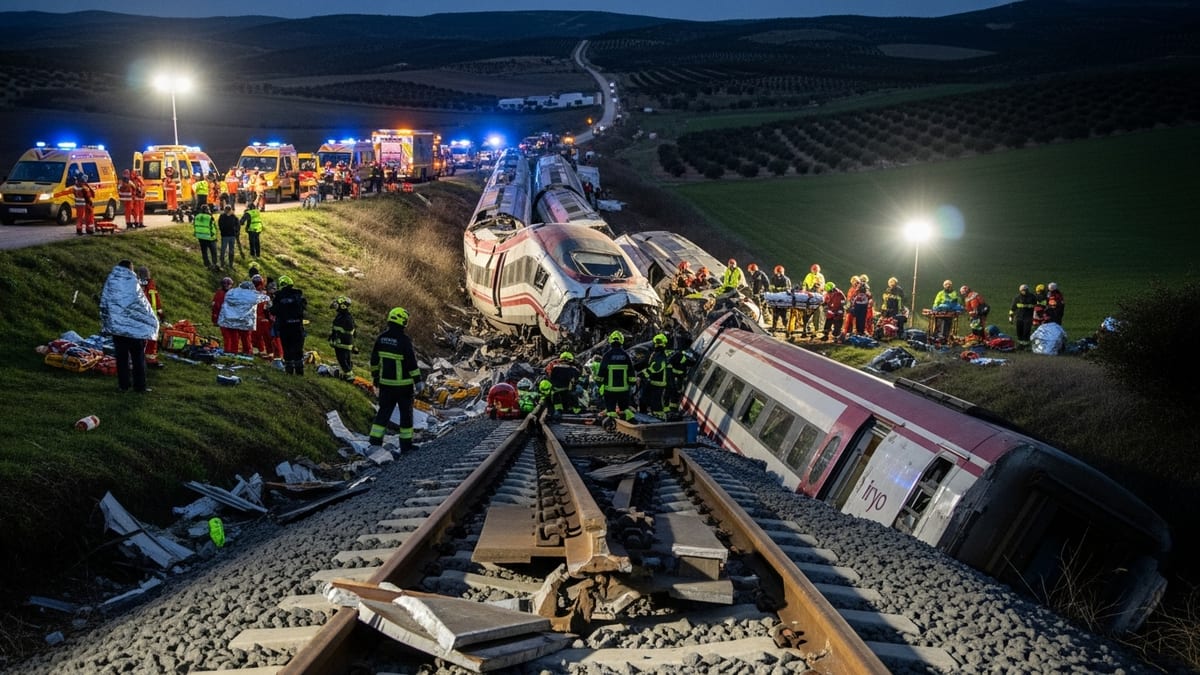
Collision Near Rural Crossing Outside Hartley
Published reports indicate the crash occurred at a rural rail crossing just outside Hartley in northwest Iowa, where a freight train struck a semi trailer that was positioned on or across the tracks. Early information available from local coverage suggests the impact sheared the trailer into two sections, scattering cargo and metal debris along the right of way and adjacent roadway.
Details on the moments leading up to the crash remain limited in publicly available information. Initial descriptions describe a standard grade crossing without an overpass, typical of many rural junctions in the region where farm and commercial traffic frequently intersects with mainline rail routes. Weather conditions around the time of the collision were reported as seasonable for late July, and no severe weather advisories have been tied to the incident.
The collision occurred in an area where rail lines run through active agricultural territory, connecting smaller communities in O’Brien County and beyond with larger distribution hubs. The combination of heavy truck traffic and frequent freight movements has made such crossings a longstanding point of concern for transportation and safety planners across Iowa.
Semi Trailer Torn Apart, Debris Scattered Along Tracks
Images and descriptions shared through regional news outlets show the semi trailer effectively split into two major sections by the force of the collision. One portion of the trailer reportedly came to rest near the crossing, while the remaining section was pushed down the track in front of the locomotives, a pattern consistent with other high-speed train and trailer impacts documented in the Midwest in recent years.
Observers at the scene described substantial damage to the trailer frame and suspension components, with cargo spilling onto the ballast and shoulder. The tractor unit, which typically bears the brunt of energy transfer in many highway crashes, appeared significantly less damaged than the trailer itself, reflecting how trains tend to impact the mid or rear sections of long trucks positioned on the rails.
Rail equipment involved in the collision reportedly remained upright, and early accounts do not indicate a significant derailment of locomotives or freight cars. Even when rail vehicles stay on the tracks, however, collisions of this kind can cause damage to couplers, underframe components and braking systems, which must be inspected before normal operations resume.
Emergency Response, Closures and Operational Disruption
Emergency responders from the Hartley area and neighboring jurisdictions were dispatched to the crash site shortly after reports of the collision began circulating. According to open-source incident summaries, the roadway serving the crossing was closed to traffic while responders secured the area, assessed any injuries and monitored for leaking fuel or other hazardous materials.
Rail traffic in the vicinity was halted while crews inspected the track structure and signals for damage and worked to remove pieces of the destroyed trailer from the right of way. Freight trains approaching from either direction reportedly held at controlled points up and down the line, a standard precaution while collision investigations and track inspections proceed.
Local travelers encountered detours as law enforcement and road departments redirected vehicles around the affected corridor. For residents and commercial drivers in the Hartley area, even short closures can complicate access to farms, grain elevators and regional highways, reinforcing the importance of single rail crossings to day-to-day mobility in rural counties.
Focus Turns To Rail-Crossing Safety In Rural Iowa
The collision near Hartley adds to a series of recent incidents across Iowa and the broader region involving trains and heavy trucks at grade crossings. Publicly available safety data and transportation coverage have highlighted similar crashes in farm and industrial areas, where long vehicles may require extra time to clear tracks and visibility can vary with terrain, vegetation and roadway design.
Transportation analysts frequently note that many rural crossings rely on basic protections such as crossbucks or stop signs rather than full signalized gates. In such locations, collision risk can rise when truck drivers misjudge train speed or distance, become delayed while shifting gears on uneven approaches, or find trailers at awkward angles relative to the rails.
Recent rail crossing improvement programs in Iowa have focused on upgrading surfaces, adding or modernizing signals and, in higher traffic locations, evaluating whether at-grade crossings can be consolidated or replaced with overpasses. The Hartley collision is likely to be reviewed in that broader context, as agencies and railroads weigh potential engineering changes and enforcement efforts.
Travelers Advised To Expect Delays, Exercise Caution Near Crossings
For travelers passing through northwest Iowa, the aftermath of the Hartley area collision serves as a reminder that rail incidents can disrupt both local and regional movement with little warning. Even when injuries are limited and rail equipment remains upright, the time required to investigate, clear debris and inspect tracks can lead to multi-hour closures of roads and rail lines.
Motorists in the region are being encouraged, through local public information channels, to allow for extra travel time when routing trips near active rail corridors and to follow posted detours while crews complete cleanup and repairs. Commercial drivers hauling long or low-clearance trailers are regularly advised to approach crossings at low speeds, ensure there is enough room to fully clear the tracks ahead and avoid stopping on or near the rails for any reason.
As rail and road traffic continue to grow across the Midwest, transportation safety advocates emphasize that interactions between trains and large trucks will remain a critical focus area. The severe damage to the semi trailer near Hartley illustrates how quickly routine travel can turn into a major disruption when a truck and train attempt to occupy the same space at a rural crossing.