


More news on this day
Thunderstorms sweeping through major hubs in the Northeast and Mid-Atlantic have triggered widespread air travel disruption across the United States, with publicly available tracking data showing at least 4,367 delays and 210 cancellations nationwide as airlines and air traffic controllers work to keep operations moving through unstable weather.
Get the latest news straight to your inbox!
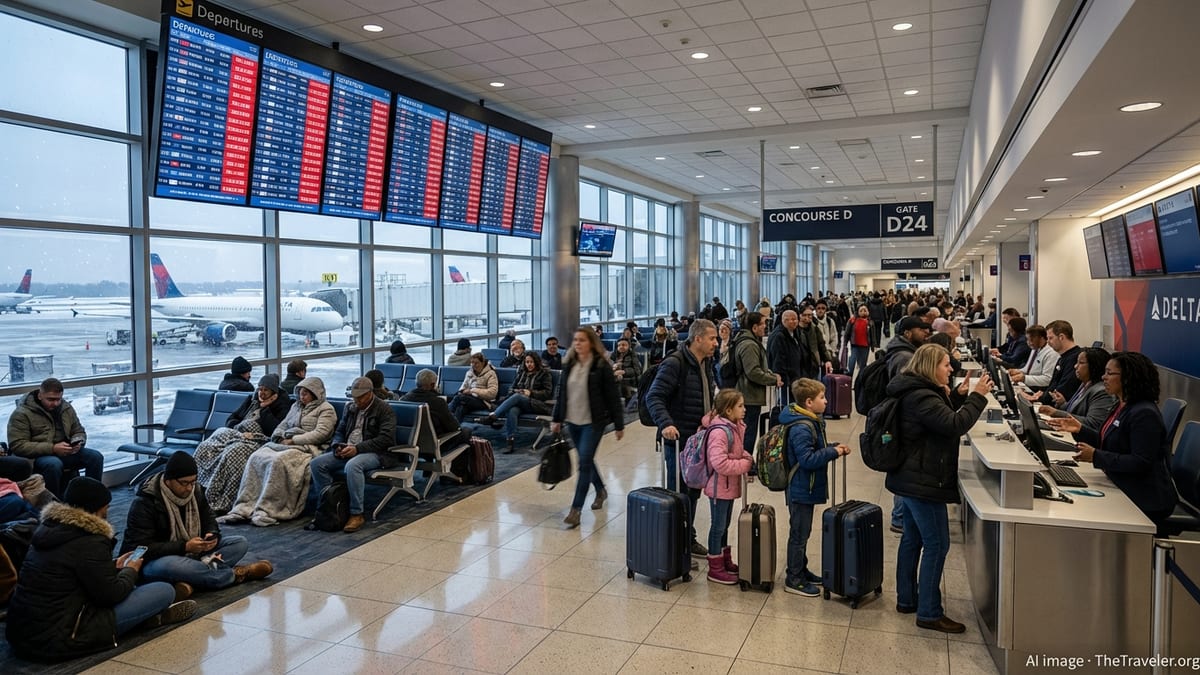
Storm Systems Snarl Busy Northeast and Mid-Atlantic Corridors
Weather maps and aviation advisories indicate that a band of strong storms moving along the Eastern Seaboard is at the center of the latest disruption. Thunderstorms and low cloud ceilings around the New York City area, Philadelphia and other key gateways have reduced arrival and departure rates, forcing airlines to slow or suspend some operations.
New York area airports, including John F. Kennedy, LaGuardia and Newark Liberty, are among the most heavily affected. Reports from passengers and airline operations updates describe rolling delays as storms redevelop through the afternoon and evening, making it difficult to safely maintain normal traffic volumes.
The broader airspace impact extends well beyond the immediate storm zones. Because New York and other East Coast hubs serve as critical connecting points, delays there ripple across the national network, affecting flights as far afield as the Midwest, the South and the West Coast.
Traffic Management Programs and Weather Waivers Activated
According to publicly available information from flight tracking services and airline travel advisories, air traffic managers have implemented a series of flow control measures to manage traffic into constrained airports. These include ground delay programs, which hold departing flights at their origin until arrival slots open up, and reroutes that send aircraft along longer paths to avoid hazardous weather cells.
In parallel, several major carriers have issued weather waivers for affected regions, allowing travelers to change their itineraries within specified date ranges without paying standard change fees. These waivers are typically tied to airports in the storm path and are designed to reduce the number of passengers attempting to travel into areas where significant operational disruption is expected.
Such measures can help prevent further congestion at busy terminals, but they also contribute to the raw numbers of delays and cancellations. Preemptive cancellations, in particular, are being used to align schedules with the reduced capacity of weather-impacted airports and to avoid having aircraft and crew stranded in the wrong locations as conditions evolve.
Nationwide Ripple Effects for Airlines and Travelers
Although the most acute weather impacts are concentrated in the Northeast and Mid-Atlantic, the disruption has quickly become national in scope. Flights originating in the South and Midwest and destined for New York, Boston and Washington have been delayed or cancelled, while aircraft scheduled to continue on to other cities are held out of position.
This kind of network effect means that travelers far from the storms can still feel the impact. A flight leaving a relatively clear-weather airport in the interior of the country may be delayed because its incoming aircraft is stuck behind a ground stop on the East Coast, or because crews have reached their federally mandated duty limits after a long day of weather-affected operations.
Airlines are attempting to recover by consolidating lightly booked flights, swapping aircraft and reassigning crews, but recovery typically lags behind the weather itself. Even after storm cells weaken or move offshore, airports can face hours of backlog as they work through delayed departures and arrivals built up during the worst of the conditions.
Travelers Face Long Lines, Tight Rebookings and Limited Options
Accounts shared on public forums and social platforms describe crowded terminals, long customer service lines and limited same-day rebooking options at some of the worst hit hubs. With many flights departing full at the height of summer travel, a single cancellation can leave hundreds of passengers competing for a small number of open seats on later departures.
In some cases, passengers are being rebooked one or two days later, particularly on popular routes where subsequent flights are already near capacity. Hotel availability can tighten quickly near major airports during significant weather disruption, adding further strain for travelers who are unexpectedly forced to stay overnight.
Industry data and government guidance indicate that weather-related disruption is generally considered outside an airline’s control. While carriers may provide meal vouchers or hotel assistance in some circumstances, policies vary, and compensation is more consistently offered when disruptions are caused by factors within the airline’s control, such as mechanical problems or staffing issues.
What Passengers Can Do as Disruptions Continue
With storms expected to linger or redevelop across parts of the East Coast and interior states, publicly available forecasts suggest that flight operations may remain fragile over the short term. Travelers scheduled to fly through affected regions are being advised, through airline and airport updates, to monitor their flight status frequently and to allow extra time at the airport.
Travel experts often recommend booking the earliest feasible departures during unsettled weather periods, as morning flights are less exposed to knock-on delays from earlier disruptions. Keeping airline apps updated, enabling notifications and checking both the airline’s website and independent flight tracking tools can provide early warning of schedule changes.
For those whose flights are cancelled, contacting the airline through multiple channels such as mobile apps, websites and call centers can sometimes yield faster rebooking than waiting in line at the airport alone. Passengers traveling through storm-prone hubs may also benefit from proactively discussing alternative routings through less affected cities when speaking with airline representatives.