


More news on this day
Shanghai is moving closer to launching its first cross-Yangtze metro corridor, as Line 22 completes full track connection and advances train testing on the route linking Pudong with Chongming Island.
Get the latest news straight to your inbox!
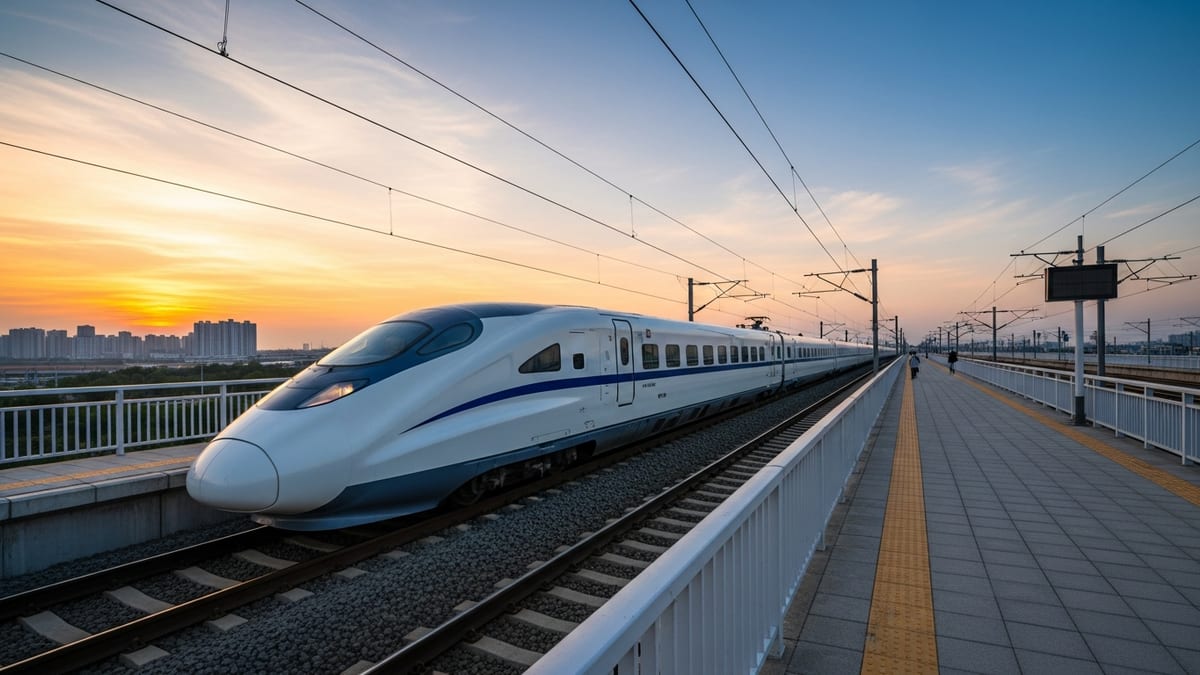
Milestone for Shanghai’s First Cross-Yangtze Metro Line
Recent project updates indicate that Shanghai Metro Line 22, also known as the Chongming Line, has achieved full track continuity along its 42.3-kilometer route. Construction information released in April 2026 describes the line as the city’s first urban rail link designed to cross the Yangtze River, positioning it as a strategic addition to Shanghai’s already extensive metro network.
The line runs from Jinji Road Station in Pudong New Area to Yu’an Station on Chongming Island, passing via Changxing Island through tunnels beneath separate channels of the Yangtze. Publicly available government and corporate construction reports describe the cross-river sections as among the project’s most technically challenging elements, involving long underwater tunnel drives and complex geological conditions.
Local government statements from Chongming describe Line 22 as the district’s first rail transit route and highlight its role in integrating the island more closely with Shanghai’s urban core. The project builds on earlier road-only links provided by the Shanghai Yangtze River Tunnel and Bridge, which connected Chongming and Changxing islands with the mainland but left a reserved lower deck for future rail transit that Line 22 will now activate.
Track Completion and System Testing Signal Final Construction Phase
According to construction updates issued in spring 2026, the final steel rails for Line 22 were welded into place at Chenjia Town Station on April 21, marking full track completion along the entire corridor. Engineering bulletins from the project’s contractors describe this event as a critical handover point, allowing teams to transition from heavy civil works to electromechanical installation and integrated systems testing.
Subsequent notices from Shanghai’s transport authorities indicate that dynamic testing of trains is now underway on both the southern and northern segments of the line. South of the river, test trains began operating between Jinji Road and Changxing Island in late May, focusing on validating track geometry, power supply, and signalling performance. By late June, test operations had extended to the northern section between the Chenjia Town depot and Changxing Island, enabling end-to-end dynamic trials.
Project schedules published at district level continue to reference a target of full line opening by the end of 2026, subject to the outcome of system integration, safety assessments, and regulatory approvals. With the track fully connected and all train sets entering testing, Line 22 is widely viewed in local coverage as having entered its final implementation phase.
New Trains and Service Patterns to Reshape Daily Travel
Technical profiles compiled from open sources describe Line 22 as a rapid transit route using multi-car electric multiple units comparable to rolling stock on Shanghai’s newer metro lines. While exact interior layouts have not been detailed in English-language summaries, design briefs emphasize a focus on high-capacity, all-longitudinal seating arrangements to accommodate commuter peaks between Chongming and central districts.
Operational planning documents and media analyses suggest that Line 22 will initially function as a limited-stop corridor, with relatively wide station spacing and long interstation distances on the river-crossing sections. Transfer connections at Jinji Road Station, which links to existing east–west metro lines in Pudong, are expected to provide through-journey options from Chongming to major employment clusters and high-speed rail hubs elsewhere in the city.
Commentary in local media has highlighted the potential for the new trains to cut surface travel times dramatically. Journeys that previously required a combination of bus, ferry, and expressway travel are projected to shift to a single-seat metro ride, with indicative travel-time estimates placing Chongming much closer in practical terms to core business districts on both sides of the Huangpu River.
Transforming Access to Chongming Island and the Yangtze Estuary
Chongming Island, situated at the mouth of the Yangtze River, has historically relied on ferries and later highway links for access to the Shanghai mainland. The opening of the Shanghai Yangtze River Tunnel and Bridge in the late 2000s provided continuous road connections via Changxing Island, but public transport options remained limited, with intercity buses and private vehicles carrying most cross-river traffic.
By inserting a metro corridor into this existing bridge-and-tunnel complex, Line 22 is expected to change both daily commuting patterns and long-term development prospects on Chongming. Planning documents from the Yangtze River Delta region have long identified the island as a key area for ecological, recreational, and low-carbon development, with calls for rail-based access to support more sustainable travel demand.
Analysts note that the cross-Yangtze metro connection dovetails with broader regional strategies aimed at strengthening ties between Shanghai’s northern districts and neighboring cities along the river. Although Line 22 is primarily designed as an urban route, it is expected to interface with other rail and highway projects around the estuary, reinforcing Shanghai’s role as a transport hub at the Yangtze’s seaward gateway.
Integration with Shanghai’s Expanding Metro and Regional Rail Network
Line 22 is being built as part of a wider expansion phase of the Shanghai Metro, which has pursued simultaneous construction of multiple new corridors to serve outer districts and suburban clusters. Network planning diagrams place the line within a future web of metro, suburban, and intercity routes that will knit together the city’s core with its peri-urban and rural fringes.
Transfer connections at Jinji Road and other interchange stations are expected to give Chongming residents access to high-speed rail services at Shanghai’s principal railway hubs through one or two changes. Commentators in local business media have suggested that this improved accessibility could make the island more attractive for tourism, conferences, and environmental research facilities, complementing existing eco-park and wetland projects.
As Shanghai prepares for the phased commissioning of Line 22, the project is increasingly described in public reporting as both a symbolic and practical milestone: symbolic in providing the city’s first cross-Yangtze metro link, and practical in delivering new trains and services that are set to alter how residents and visitors move across one of China’s most significant river estuaries.