


Third party rental car insurance has exploded in popularity as travelers look for ways to avoid the steep fees charged at rental counters. Bonzah is one of the best known of these providers, selling standalone rental car insurance you buy online before you pick up the keys. But should you trust Bonzah for rental car insurance abroad, or are you better off sticking with the rental company, your auto insurer, or a credit card benefit? The answer depends on where you are going, what kind of coverage you really need, and how comfortable you are dealing with a separate insurer if something goes wrong.
Get the latest updates straight to your inbox!
What Bonzah Actually Is, and How It Works
Bonzah is a U.S. based company that sells rental car insurance as a separate product from the vehicle rental itself. You book your car with Hertz, Avis, Sixt, Europcar, or a local agency, then go to Bonzah’s website and purchase coverage for the rental dates you plan to drive. The idea is simple: pay Bonzah instead of paying the rental counter for its collision damage waiver and extra liability options, often at a lower daily price.
Bonzah markets its policies as primary coverage for damage to the rental car and, for U.S. originated rentals, liability protection that satisfies local legal minimums and can be topped up with supplemental liability. Its site highlights that coverage is sold in 24 hour blocks, and can be tailored for short trips such as a 48 hour weekend rental as easily as for a two week road trip. For frequent renters who do not own a car at home, Bonzah positions itself as an affordable way to have meaningful protection when they occasionally drive.
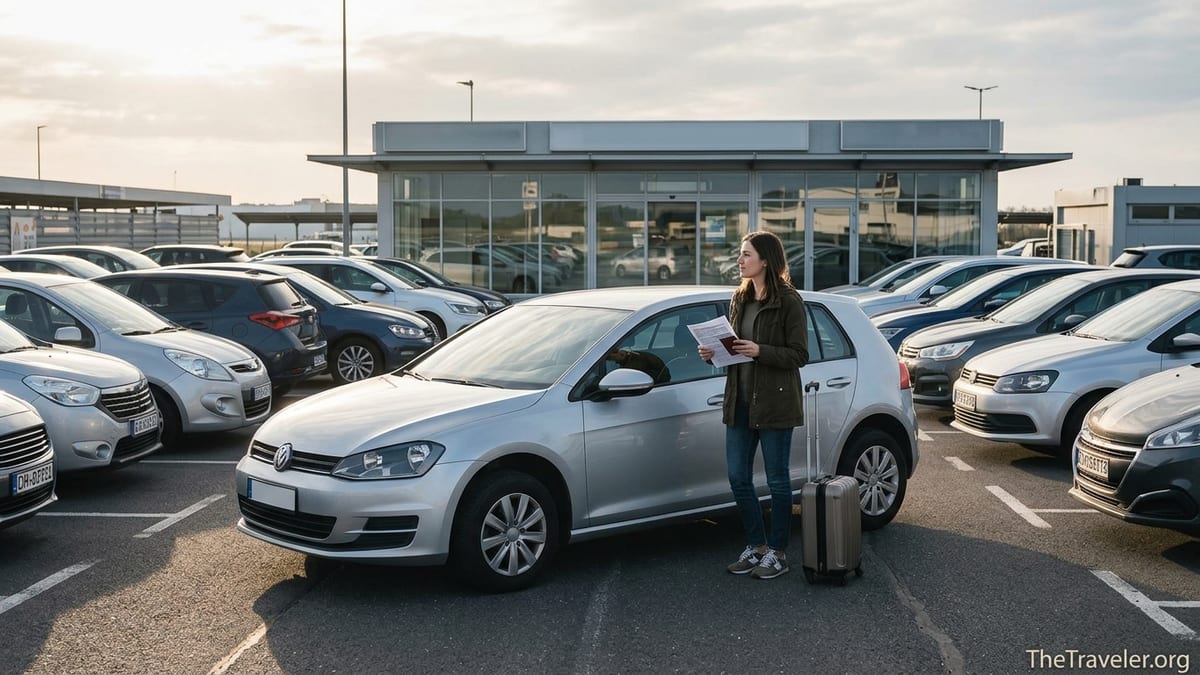
In practical terms, a typical traveler might reserve a compact car at Los Angeles International Airport for seven days, then buy a Bonzah policy that covers collision damage and supplemental liability for those same seven days. At the counter, the renter declines the agency’s collision waiver and liability add ons, presents the Bonzah documents if asked, and relies on Bonzah if an accident or damage occurs. All claims are handled directly with Bonzah, not with the rental company’s insurance arm.
Bonzah has also expanded beyond auto into home, renters, pet and small business insurance, which suggests it is trying to position itself as a broader insurance brand. For travelers, though, its rental car products remain the core offering and the reason most people encounter the name for the first time.
Where Bonzah Covers You, and the Limitations Abroad
When you ask whether you can trust Bonzah for rental car insurance abroad, the first question is geographic scope. Bonzah prominently serves rentals that originate in the United States and can extend cover into Canada. Its marketing materials emphasize that it "loves international drivers" in the sense that foreign visitors picking up a rental in the U.S. can use Bonzah, but that is different from an American traveler renting in Italy, Mexico, or South Africa and expecting Bonzah to respond.
This is an important distinction. If a Canadian traveler books a car in Miami and drives to the Florida Keys, Bonzah can work as a primary damage and liability solution. If the same traveler flies to Madrid and rents a car for a Spain and Portugal road trip, Bonzah may not offer a policy for that rental at all, or it may only offer a damage product with specific exclusions. Many third party providers, Bonzah included, restrict liability coverage to cars picked up within the U.S. and sometimes Canada, both because of regulatory complexity and because every country has its own compulsory insurance rules.
Even for damage coverage, countries such as Italy, Ireland, Israel, and some Latin American destinations have historically been more complicated. Local law can require the rental company to include basic protection in the base rate, and some agencies are hesitant to recognize a foreign third party policy, especially one they do not sell themselves. Travelers renting in Costa Rica or Mexico, for instance, frequently report mandatory local liability insurance that must be purchased from the rental company, regardless of what a credit card or third party provider claims to cover.
If you are considering Bonzah for a rental entirely outside the United States and Canada, you need to run a live quote for that specific pickup location and read the offered policy wording carefully. In some cases you may find that Bonzah does not offer a policy, in others that the product only addresses damage to the rental car and leaves you to rely on local mandatory liability included in the rate. As a rule of thumb, Bonzah is strongest for U.S. based rentals, usable for some North American cross border trips, and far less relevant in places where rental insurance is heavily regulated or bundled.
What Bonzah Covers Compared With Rental Counters and Credit Cards
To understand whether Bonzah is worth trusting, compare its coverage to what you already have. Bonzah’s rental car offerings are centered around two pillars: damage to the rental vehicle and liability to third parties. Its primary damage insurance is typically advertised as covering up to a fixed dollar amount in collision or loss damage to the rental car, subject to policy conditions. Some Bonzah materials reference coverage up to around 35,000 dollars for standard cars, while separate language describes higher limits for loss damage waivers on certain plans, which is in the same general range as other third party providers.
On the liability side, Bonzah sells coverage that meets the minimum state required liability for bodily injury and property damage in the state where the rental originates, and allows you to add supplemental liability that increases the total limit substantially, often into the hundreds of thousands of dollars. For a New York renter picking up in California, that might mean relying entirely on Bonzah for liability instead of a personal U.S. auto policy, which could be attractive for city dwellers who do not own cars.
At the rental counter, by contrast, collision damage waivers can easily run 25 to 40 dollars per day in the United States, and supplemental liability packages can add another 10 to 15 dollars. For a one week rental in Denver, a midsize SUV could incur 300 dollars or more in insurance fees alone if you buy everything from the rental company. Independent comparisons conducted by consumer finance outlets regularly find third party providers coming in 40 to 60 percent cheaper than those counter rates, even after factoring in add ons.
Credit cards add another layer. Cards such as the Chase Sapphire Preferred, Chase Sapphire Reserve, some World Elite Mastercards, and certain American Express products offer primary or secondary rental car coverage for damage, but usually not liability. These benefits often exclude commercial style vehicles, very expensive luxury brands, and rentals in certain countries. Most cards also require that you decline the rental company’s collision waiver and pay for the car with the card for coverage to apply. In this ecosystem, Bonzah is competing mainly on convenience and price for people who lack a robust credit card benefit and do not have a personal auto policy that extends to rentals.
Real World Pricing and Claim Experiences
Travelers researching Bonzah in 2025 and 2026 will find a mix of pricing examples and customer reviews that illustrate both the appeal and the frustrations of third party rental insurance. On the pricing side, consumer guides often cite sample quotes that show Bonzah undercutting the rental counter by a meaningful margin. For instance, a mid level "full protection" style package for a U.S. rental has been quoted around 40 dollars per day in some analyses, compared with 50 dollars per day for an equivalent bundle of waivers and liability sold at a major agency counter. Over a seven day rental, that difference of about 10 dollars per day translates into roughly 70 dollars in savings.
Other sources reference Bonzah damage only policies starting near the low 20 dollar range per day for smaller, shorter rentals, which can still be noticeably cheaper than a 30 dollar plus per day collision waiver from companies like Enterprise, Avis, or Budget. For a traveler picking up a compact car in Orlando for four days, paying 22 dollars per day to Bonzah instead of 34 dollars per day for the rental company’s collision waiver could save around 48 dollars on that short trip.
Customer review platforms paint a more nuanced picture. On sites like Trustpilot, Bonzah has maintained an overall rating in the low 4 out of 5 range based on hundreds of reviews, with many renters praising the straightforward purchase process, clear documentation, and successful reimbursement after a ding, cracked windshield, or scraped bumper. One recurring theme is that people who understood what was covered and followed the claims instructions precisely often report being reimbursed within a few weeks of submitting invoices and photos.
At the same time, scattered negative reviews describe frustrations with claim processing delays, disputes about what qualifies as covered damage, and customer service that can feel slow or scripted during busy periods. Some travelers also express irritation when rental desks overseas either do not recognize or outright dismiss third party policies, forcing them to buy local coverage anyway to get the keys, then sort out any overlap later. These mixed experiences are not unique to Bonzah; they mirror similar feedback for competitors like Allianz’s rental car products and RentalCover. The lesson is that while online rental insurance can be cost effective, it is not always as frictionless in real life as the marketing suggests.
When Bonzah Makes Sense for International Travelers
Despite the caveats, there are clear situations where Bonzah can make sense for travelers, including those coming from or heading to other countries. One of the strongest use cases is for international visitors renting a car in the United States who do not have local auto insurance. A traveler from Germany flying into San Francisco, for example, might find that adding the rental company’s collision waiver and liability pushes a one week compact rental from 400 dollars to 650 dollars. If Bonzah offers a primary damage and supplemental liability package for the same dates at a total of 350 to 400 dollars, the all in cost could drop substantially, particularly on longer rentals.
Another good fit is the domestic or Canadian traveler without a personal auto policy. An urban resident in Boston who normally relies on public transit may occasionally rent a car for a long weekend in Quebec. Without Bonzah or similar coverage, they would either need to buy expensive waivers from the rental company or accept significant risk. If Bonzah is willing to cover a vehicle picked up in Vermont and driven into Canada, the renter can structure the policy to match a Friday to Monday rental and know that damage to the car and liability exposures are addressed without owning a full year auto policy back home.
Bonzah can also be appealing for travelers who hold credit cards that provide only secondary collision coverage and no liability. For instance, a traveler whose Visa Signature card will reimburse damage only after other insurance is exhausted might still face a gap if they do not own a car or carry minimal liability limits. Buying liability through Bonzah to sit alongside the card’s damage benefit can be a way to build a more complete protection package while still declining expensive options at the rental counter.
The key for international use, however, is aligning Bonzah’s geographic and legal reach with your itinerary. For a road trip primarily within the United States and Canada, Bonzah can be a strong option. For a loop through Tuscany, a drive across Iceland, or an exploration of Costa Rica’s Nicoya Peninsula, you are more likely to need either a local policy from the rental company or a different third party provider that specifically supports those markets.
Red Flags, Fine Print, and Situations to Avoid
Trust in an insurance product depends heavily on understanding its exclusions. With Bonzah, there are several areas where travelers need to read closely before relying on the policy abroad. Vehicle type is one. Bonzah explicitly excludes a long list of brands and models it will not insure, including high end manufacturers such as Ferrari, Lamborghini, McLaren, Aston Martin, Porsche, and ultra luxury models like Rolls Royce and certain Mercedes classes. While this is unlikely to affect most mainstream travelers, it can surprise someone renting a premium SUV or sports car in Europe who assumes any rental is covered.
Another crucial topic is what counts as covered damage. Bonzah’s descriptions emphasize collision damage and loss or theft in certain cases, but they also note exclusions for mechanical breakdown due to misuse, off road driving, and some single vehicle incidents. If you intend to drive on unpaved roads in Iceland, rural Portugal, or parts of Mexico, you need to confirm whether the planned routes qualify as "on road" under the policy definitions. Tire and windshield issues can be areas of dispute if the wording is not crystal clear.
Rental car company acceptance is a softer but real risk. There are documented cases where a renter purchased third party liability coverage through Bonzah, only to have a rental desk agent insist that local law required purchasing the agency’s own liability package anyway. In one California example discussed online, a renter without personal auto insurance tried to rely entirely on Bonzah for liability, but the rental company refused to accept it and would not release the car without their own coverage added. Bonzah later told the customer that it was illegal to decline a valid policy, but this did not change the fact that the traveler had to make a choice in the moment between paying more or walking away.
For overseas rentals, this kind of conflict is even more common. In Mexico, Costa Rica, and parts of Central America, mandatory local liability and damage waivers often cannot be declined, even if you show a third party policy. In continental Europe, some agencies are familiar with products like Allianz’s rental car protection and may grudgingly accept them, while others are not. If your trip hinges on a specific rental desk letting you leave the lot with only Bonzah in hand, you could be setting yourself up for a stressful argument in a foreign language after a long flight.
How Bonzah Compares With Other Third Party Options
Bonzah is part of a growing field of third party rental car insurers, including Allianz, RentalCover, and travel insurance brands that bolt on car coverage to trip policies. For a traveler deciding whether to trust Bonzah abroad, it is useful to consider how it stacks up. In many U.S. based comparisons, Allianz’s rental car protector product is quoted at around low double digits per day for damage cover up to a relatively high limit, making it attractive for budget conscious travelers who mainly care about the car itself and not liability.
RentalCover has built a strong presence in Europe, Australia, and other international markets, partnering with online travel agencies and comparison sites. Its policies are often structured to reimburse the renter for damage charges levied by the rental company, including excesses and administrative fees, rather than acting as the rental company’s primary insurer. This reimbursement model can be less seamless at the rental desk, but it is widely accepted because the rental company simply charges the renter as if there were no third party coverage, and the renter then recovers from the insurer.
Bonzah’s proposition is slightly different in focusing more heavily on primary style coverage for U.S. rentals, with clear bundles for primary damage, basic liability, supplemental liability, and personal accident or effects. For an American or international visitor whose trips are mostly within the United States, that emphasis makes sense. For someone planning multiple rentals in Europe or Asia, however, a provider like RentalCover that has specifically built products for those regions might be a more natural fit.
In practice, savvy travelers often mix and match. A frequent flyer might use Bonzah for a long U.S. national park road trip in a rented SUV, rely on a premium credit card’s primary collision coverage for a short business rental in Toronto, and then buy a local excess reimbursement policy through RentalCover or a European broker for a holiday in France. The important thing is not loyalty to a single brand, but rather understanding which tool is best suited to each country and rental scenario.
The Takeaway
So should you trust Bonzah for rental car insurance abroad? The honest answer is that Bonzah can be a trustworthy, cost effective solution in some scenarios, especially for rentals that start in the United States and may include cross border driving into Canada. Its primary damage coverage, flexible supplemental liability options, and often lower prices compared with rental counter packages make it a compelling alternative for travelers who understand what they are buying.
At the same time, Bonzah is not a universal answer for every international rental. Its geographic limits, list of excluded vehicles, and the sometimes uneasy relationship between third party policies and rental desk staff overseas mean that you should not assume Bonzah will fully replace local insurance in Europe, Latin America, or other regions. For those trips, you may still need to purchase certain protections from the rental company or consider different third party providers that focus on those markets.
If you decide to use Bonzah, treat it like any other serious insurance decision. Run a live quote for your exact pickup location and dates. Read the full policy wording, not just the marketing bullet points. Confirm whether liability is included or only damage, and whether the insurer will reimburse you or deal directly with the rental company. Then compare that package to what your credit cards, personal auto policy, and the rental agency itself offer, both in coverage scope and real cost over the length of your trip.
Used thoughtfully, Bonzah can be part of a smart strategy to avoid overpriced rental counter insurance while still protecting yourself financially. Used casually, especially on complex overseas rentals, it can leave gaps you only discover when you are already dealing with an accident in a foreign country. The safest approach is to view Bonzah as one tool in your travel insurance toolkit, rather than a one size fits all solution.
FAQ
Q1: Does Bonzah cover rentals outside the United States and Canada?
Bonzah focuses primarily on rentals that originate in the United States and can extend into Canada. For rentals picked up in other countries, availability and coverage can be limited or unavailable, so you must check for your specific pickup location before relying on it.
Q2: Can I decline all rental car insurance at the counter if I have Bonzah?
In some U.S. locations you can safely decline the rental company’s collision damage waiver and optional liability if Bonzah provides equivalent coverage. However, certain states and many foreign countries require you to purchase specific local protections from the rental company, regardless of any third party policy.
Q3: Does Bonzah include liability insurance, or only damage to the rental car?
Bonzah offers products that cover damage to the rental car and separate options for liability that meet state minimums, with supplemental liability available in many U.S. states. For international rentals, liability may not be included, so always verify what is and is not part of your chosen policy.
Q4: How does Bonzah compare in price to rental counter insurance?
Independent comparisons often find Bonzah and similar third party providers to be roughly 40 to 60 percent cheaper than buying full protection packages at the rental counter. Exact savings depend on your rental location, vehicle type, and coverage level.
Q5: Will the rental desk recognize my Bonzah policy?
In the United States, many major rental brands are familiar with third party insurance and will accept your decision to decline their waivers. Abroad, some agents may insist on selling you their own insurance regardless, so be prepared for the possibility of pushback or mandatory local coverage.
Q6: What kinds of cars does Bonzah not cover?
Bonzah typically excludes high end and exotic brands and models, such as Ferrari, Lamborghini, certain high value Mercedes and BMW models, and ultra luxury cars like Rolls Royce. Standard economy, compact, and midsize rentals are usually eligible, but always confirm vehicle eligibility before booking.
Q7: How are claims handled if my rental car is damaged?
Usually the rental company will charge you for the damage or take it from your deposit, and you then submit a claim to Bonzah with invoices, photos, and any police or incident reports. After review, Bonzah may reimburse you up to the policy limit if the claim is approved.
Q8: Can I use Bonzah if I do not own a car or have personal auto insurance?
Yes, one of Bonzah’s target groups is renters who do not own a car and therefore lack a personal auto policy. Its primary damage and liability products are designed to stand on their own for the duration of the rental period.
Q9: Is Bonzah better than using a credit card’s rental car insurance?
It depends on your card and needs. Many credit cards offer solid collision damage coverage but no liability, and some are secondary to other insurance. Bonzah can fill liability gaps or provide coverage for travelers without qualifying credit cards, but it may cost more than simply relying on a premium card benefit.
Q10: What is the safest way to use Bonzah for an overseas road trip?
The safest approach is to use Bonzah for rentals that start in the United States, confirm any cross border allowances into Canada, and rely on local insurance or region specific third party providers for rentals picked up in Europe, Latin America, or other regions where Bonzah’s coverage is limited or not offered.