


More news on this day
A Southwest Airlines flight from Nashville to Fort Lauderdale diverted to Atlanta on Friday evening after a reported security concern on board prompted an emergency-style landing and a heavily armed law enforcement response, according to multiple published reports and flight-tracking data.
Get the latest news straight to your inbox!
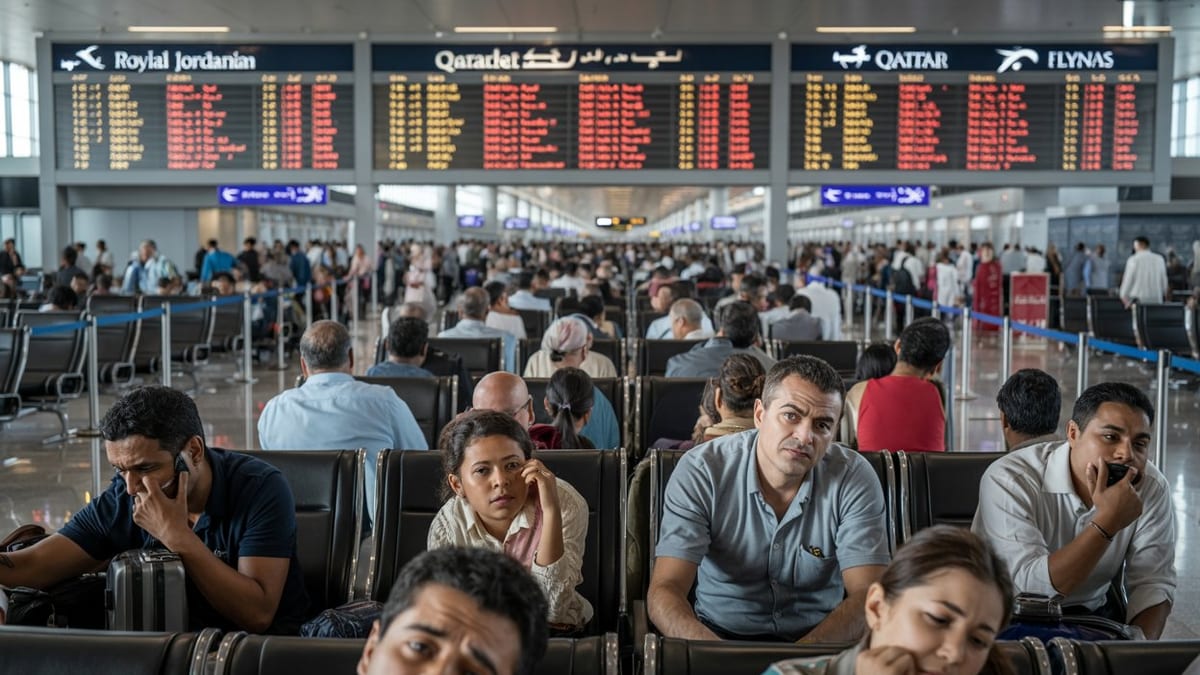
Flight From Nashville Diverts En Route to South Florida
Publicly available flight-tracking information shows that Southwest Airlines Flight 2094 departed Nashville International Airport on Friday evening bound for Fort Lauderdale-Hollywood International Airport in South Florida. The Boeing 737 reached cruising altitude before altering course toward Atlanta, landing at Hartsfield-Jackson Atlanta International Airport around 9 p.m. local time.
Reports indicate the crew requested to divert after becoming aware of what the airline later described as a possible security matter involving a passenger. The change of route took the aircraft away from its planned southbound track over Georgia and instead directed it to the country’s busiest airport for an unscheduled stop.
Coverage by local and national outlets describes the landing as controlled and uneventful from an operational standpoint. No injuries were reported among passengers or crew, and there have been no indications of mechanical issues with the aircraft.
According to published accounts, the aircraft taxied to a remote area of the airfield, where it was surrounded by airport and law enforcement vehicles as responders prepared to board.
Onboard Instructions and Law Enforcement Boarding
Video shared by passengers and highlighted in broadcast and online coverage shows a tense scene inside the cabin in the minutes surrounding the diversion. In recordings circulated by news organizations, a flight attendant can be heard instructing travelers to place their heads down and raise their hands as the aircraft prepared for arrival in Atlanta.
The footage depicts passengers complying with the directions as the aircraft came to a stop on the ground. Additional video and photos published on social and traditional media show armed law enforcement officers, some in tactical gear, moving down the aisle after the cabin door was opened.
According to multiple reports, one passenger was removed from the aircraft following the landing. The individual was escorted off the plane while other travelers remained seated, with hands visible, until responders completed their checks.
Subsequent coverage indicates that no explosives or weapons were publicly reported to have been found on board. Early summaries of the incident characterize the response as precautionary, focused on rapidly containing a potential threat until it could be assessed on the ground.
Investigation Focuses on Reported Security Concern
Publicly available statements from the airline, cited across several news outlets, describe the incident as a response to a possible security matter without detailing the exact nature of the concern. Reporting from national and regional media notes that the event centered on a specific passenger whose behavior or reported actions prompted the diversion and heightened response at the gate.
As of the latest coverage, there has been no formal indication that a broader or ongoing security threat existed beyond the individual removed in Atlanta. Outlets following the story report that initial reviews did not identify a credible threat to the aircraft itself, though law enforcement agencies typically continue internal assessments after such events.
Public records and aviation incident databases commonly show that diversions for security reasons remain relatively rare compared with weather or medical-related reroutes. When they do occur, responders and airlines generally prioritize rapid, highly visible interventions designed to neutralize any risk before passengers disembark.
The Atlanta incident is being referenced alongside other recent security-related disruptions across U.S. airports, illustrating the heightened sensitivity around potential threats in the commercial aviation system, even when those concerns ultimately prove unfounded.
Passenger Journey Extended After Transfer in Atlanta
Travelers bound for Fort Lauderdale experienced significant disruption as a result of the diversion. According to multiple published accounts, passengers remained on the ground in Atlanta for an extended period while the aircraft was secured, the involved passenger was removed, and the cabin was cleared for deplaning.
Reports indicate that customers were eventually moved to another Southwest aircraft allocated to continue the journey to South Florida. Flight-tracking and media timelines suggest that the onward flight to Fort Lauderdale arrived in the early morning hours, turning what is normally a roughly two-hour trip into an overnight ordeal lasting several additional hours.
Passenger descriptions shared with news outlets and across social media channels describe a mix of anxiety during the law enforcement response and frustration over the lengthy delay. Nonetheless, accounts also emphasize that the flight ultimately reached its destination without physical harm to those on board.
Such diversions can have a ripple effect on airline schedules, with aircraft and crews displaced from their planned rotations. However, publicly available operational data around the incident suggests that disruptions were largely limited to the affected flight and its immediate rotations.
Context Within Broader Airline Security and Operations
The Southwest Airlines diversion into Atlanta has added to an ongoing public conversation about how airlines and airports respond to perceived threats in flight. Aviation analysts often note that modern airline protocols are designed to err on the side of caution when there is uncertainty around passenger behavior or reported risks, even when those concerns later appear overstated.
Historically, U.S. carriers have diverted flights for a range of security-related reasons, from verbal threats to suspicious objects or passenger disturbances. In most cases, subsequent investigations determine that there was no imminent danger, but the incidents still lead to temporary airport disruptions, significant delays, and in some instances, criminal or civil proceedings for those involved.
For travelers, the Southwest Flight 2094 episode underscores how quickly an otherwise routine journey can be reshaped by an in-flight incident. It also highlights the prominent role of large hub airports such as Hartsfield-Jackson Atlanta International in absorbing diverted traffic, thanks to their extensive law enforcement, emergency response, and operational resources.
As of the latest public reports, Flight 2094’s diversion is being treated as a contained security event with no broader impact on the safety record of the route between Nashville and Fort Lauderdale. Regular scheduled services on that corridor continue to operate, while the investigation into the specific circumstances behind the diversion in Atlanta proceeds within standard security and aviation oversight channels.