


More news on this day
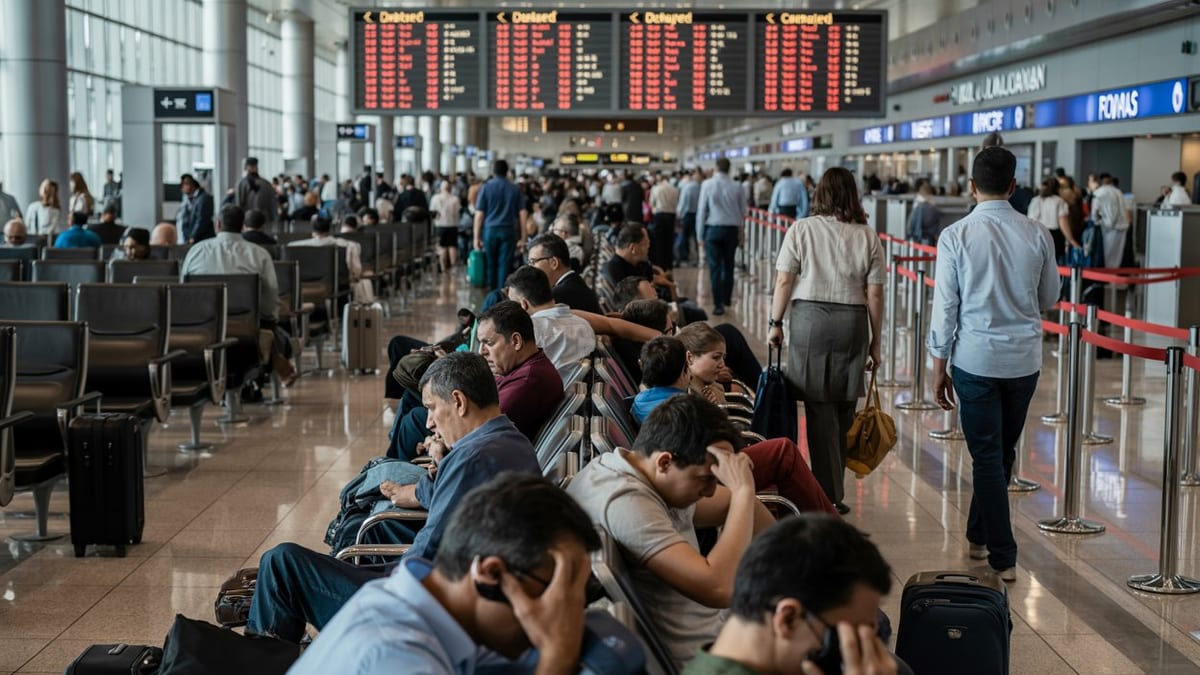
More than 180 passengers on a SpiceJet flight from Delhi were left waiting for several hours at Indira Gandhi International Airport after a prolonged delay, with videos and reports from the terminal showing growing frustration over limited information and basic support before the airline publicly addressed the disruption.
Get the latest news straight to your inbox!
Long wait at IGI as departure repeatedly pushed back
Reports from Indira Gandhi International Airport indicate that the affected SpiceJet service, operating from Delhi to a domestic destination, was initially scheduled to depart earlier in the day before its departure time was repeatedly revised. Passengers who had already cleared security and reached the gate found themselves waiting for hours as the flight remained grounded.
Accounts shared from the terminal describe families with children and elderly travelers sitting on the floor near the boarding gate as the delay stretched on. Many passengers had arrived at the airport well in advance of the original departure time and, with each subsequent schedule change, found it increasingly difficult to make alternative arrangements.
Publicly available information suggests that the disruption lasted well beyond the type of short operational hold that travelers routinely experience. Instead, the delay extended into a multi-hour wait inside the terminal, with passengers uncertain if and when boarding would begin.
Some coverage of the incident notes that tempers flared as the delay passed the several-hour mark, with passengers reportedly approaching airline counters and gate staff to seek clarity on the revised schedule and any assistance available during the wait.
Airline response cites operational reasons and offers apology
According to published coverage of the incident, SpiceJet later issued a statement acknowledging the extended delay and attributing the disruption to operational reasons. The airline expressed regret for the inconvenience faced by passengers and maintained that it had shared updated timing information with travelers once revised schedules were confirmed.
Reports indicate that SpiceJet referenced factors such as aircraft rotation and turnaround challenges while explaining the cause of the disruption. The carrier has faced scrutiny in recent years for a series of delays on domestic routes, and observers noted that this latest episode at Delhi’s main airport will likely renew questions about its ability to maintain reliable schedules.
The airline’s public messaging around the event emphasized that safety and regulatory compliance remain its top priorities, a standard framing used by carriers when delays are linked to technical checks, crew availability or other operational considerations. However, the absence of clear real-time information at the gate, as described by multiple passengers, has become a focal point of criticism.
While there is no indication of any safety compromise in connection with this particular flight, the drawn-out wait at the terminal has reinforced wider concerns about how disruptions are communicated and managed on busy domestic sectors.
Passengers highlight gaps in communication and basic support
Several recent cases involving SpiceJet disruptions have triggered online discussions among Indian travelers about communication standards during long delays. In this latest incident, passenger accounts point to limited proactive updates at the gate and inconsistent notification through text messages or app alerts, resulting in confusion over the true expected departure time.
Reports from the scene indicate that some stranded travelers raised questions over access to drinking water, snacks and seating, particularly as the wait crossed multiple hours. Under India’s passenger charter rules, airlines are expected to provide certain amenities depending on the length of delay and the stage at which passengers are informed, but implementation often varies in practice.
Travelers who had onward connections or time-sensitive commitments were among the hardest hit. With the flight still on the ground hours after the scheduled departure, some passengers were left recalibrating hotel bookings, local transport and even professional or family obligations at short notice.
The experience has added to a growing body of anecdotal evidence suggesting that while long delays may sometimes be unavoidable, the level of care and clarity provided during disruptions can differ significantly between carriers and even between individual flights.
Spotlight on reliability as India’s domestic market expands
The incident at IGI airport comes at a time when India’s domestic aviation market is expanding rapidly, with record passenger numbers passing through major hubs such as Delhi and Mumbai. As more travelers rely on air transport for business, family visits and leisure, punctuality and disruption management have become key factors in airline choice.
Available industry data show that SpiceJet operates as one of India’s low-cost carriers, competing on price-sensitive routes where small fare differences can influence booking decisions. However, a pattern of delays or perceived inconsistency in service can erode traveler confidence, particularly when widely shared on social media and consumer forums.
Analysts note that operational resilience, including aircraft availability, crew planning and ground handling reliability, is critical for carriers that run dense schedules with tight turnarounds. Even a single technical or crew-related issue can, in congested airspace and crowded airports, cascade into a series of knock-on delays across the network.
For passengers, the latest disruption at Delhi is another reminder to factor in buffer time for connections and key appointments, especially when flying at peak hours or during seasons prone to weather or congestion-related snarls. For airlines, it underscores the reputational cost when delays are not matched by transparent communication and visible efforts to support those left waiting at the gate.
Growing calls for stronger enforcement of passenger rights
The Delhi incident has also reignited debate about how effectively India’s passenger protection rules are being enforced. While the Directorate General of Civil Aviation has set out obligations around meals, refreshments and accommodation during long delays, travelers frequently report that they are either unaware of their entitlements or find them difficult to claim in real time.
Consumer advocates argue that consistent, visible standards at airports would help to reduce confusion during disruptions. Clear notices at gates, standardized vouchers for meals and simplified processes for rebooking or refunds are among the measures often cited as ways to reduce stress when flights are significantly delayed.
Recent public discussions around flight disruptions across multiple Indian carriers suggest that passengers are more willing than before to document their experiences, file formal complaints and pursue redress through regulatory channels or consumer forums. Episodes like the SpiceJet delay at IGI airport are likely to feed into that trend.
As India’s aviation sector continues to grow, policymakers and airlines alike face rising expectations that long delays affecting hundreds of passengers will be handled with greater transparency, consistent care and an emphasis on minimizing the human impact of time spent stranded inside terminals.