


More news on this day
Stormy Thanksgiving weather is disrupting one of the busiest travel days of the year across the United States on Thursday, with heavy rain, high winds, coastal flooding and pockets of snow triggering hundreds of flight cancellations and hourslong delays just as tens of millions of people head to airports and highways.
Get the latest news straight to your inbox!
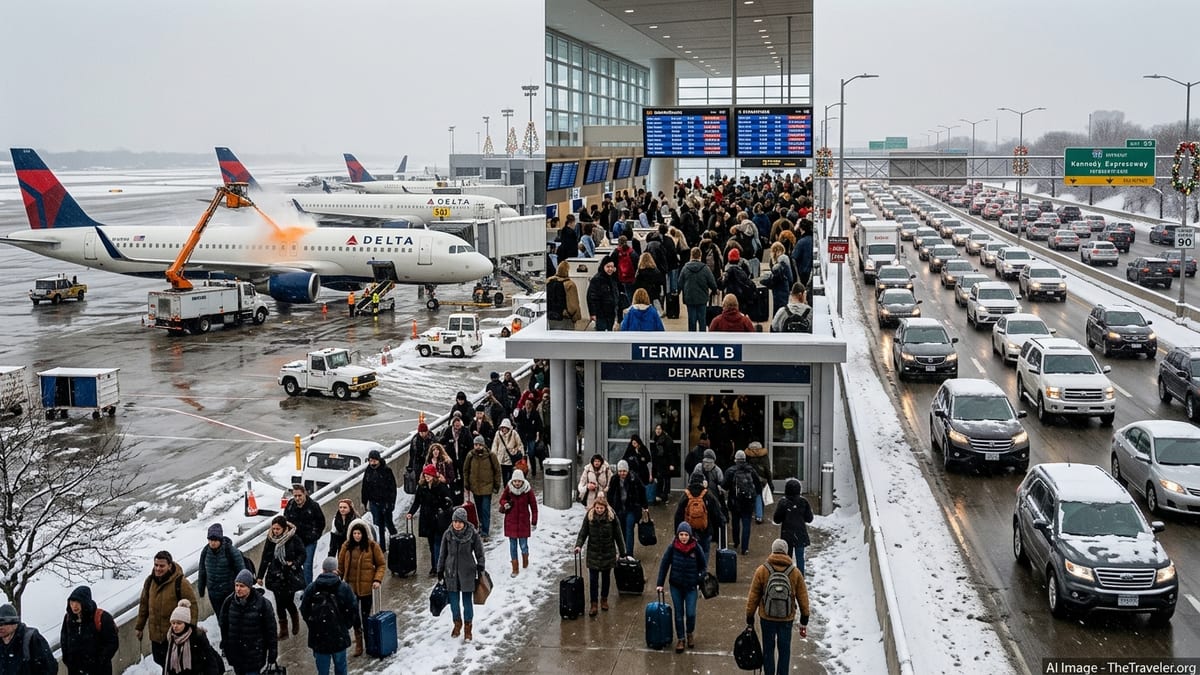
Storm system hits key travel corridors on Thanksgiving Day
Forecasters say a large storm system is tracking along the East Coast on Thursday, November 26, bringing bands of heavy rain and wind gusts strong enough to disrupt flights and slow traffic on major interstate corridors. Meteorologists have warned of reduced visibility, turbulence and aircraft icing risks in parts of the Northeast and Mid-Atlantic, conditions that can force airlines and air traffic controllers to slow or temporarily halt operations at busy hubs.
Farther west, the same sprawling system and associated fronts are combining with colder air to produce accumulating snow in portions of the Upper Midwest and interior Northeast. Those areas are seeing slick roads and slower highway speeds, which could lengthen drive times for drivers traveling 50 miles or more to reach holiday gatherings. Snow totals remain highly localized, but transportation agencies in several states have urged motorists to allow extra time and be prepared for changing conditions through Thursday night.
On the West Coast, separate Pacific systems are bringing bouts of heavy rain and pockets of coastal flooding, particularly in low-lying areas near bays and river mouths. That has prompted scattered road closures and minor detours in some coastal communities. While major airports along the Pacific coast have remained open, the combination of low clouds, rain and wind has contributed to spacing requirements between arrivals and departures that can ripple through airline schedules.
Flight delays mount as millions pass through airports
Early data from flight-tracking services on Thursday morning show elevated levels of delays and cancellations at key U.S. airports, with conditions worsening at times as heavier bands of rain or stronger wind gusts move through major metro areas. A nationwide map compiled from airline and Federal Aviation Administration reports indicates clusters of delayed and canceled flights along the Eastern Seaboard, from Florida up through the Mid-Atlantic and into the Northeast, as well as at some large hubs affected by upstream weather and congestion.
The Transportation Security Administration has forecast that it will screen about 17.6 million passengers over the Thanksgiving travel period from Tuesday, November 24 through Monday, November 30. That projection, based on airline schedules and historical patterns, underscores why relatively modest weather disruptions can translate quickly into long lines at checkpoints and crowded boarding areas when volumes are this high.
By Thursday morning, some travelers arriving the recommended two to three hours before departure reported facing extended waits at security and check-in at the busiest hubs, especially at peak morning bank times. While TSA and airport operators have deployed additional staff and opened more lanes in anticipation of the rush, processing millions of passengers in a compressed holiday window has left little margin when weather or operational issues slow the flow of aircraft at the gates.
Ground stops, earlier outages and operational strains add to anxiety
Weather is only one factor behind the Thanksgiving travel headaches this year. Earlier in November, a nationwide ground stop ordered by the FAA after a technical issue with an air traffic system led to more than 9,000 flight cancellations over a roughly 24-hour period, according to recent data analyses. That disruption, while resolved, remains fresh in the minds of many travelers and airlines as they navigate this week’s storms.
In addition, several large U.S. carriers have reported technology outages or system glitches in the days leading up to the holiday, including disruptions that briefly halted flights at some of their biggest hubs. Although those problems were not tied to FAA systems and were eventually cleared, they contributed to rolling delays and aircraft misplacements that can take days to unwind, especially with planes flying near capacity for a major holiday.
The strain on the network has been visible at individual airports. In South Florida, for example, a FedEx cargo aircraft overran a runway at Miami International Airport on Wednesday evening, November 25, temporarily closing all but one runway and forcing some inbound flights to hold or divert while crews responded. By early Thursday, the FAA was reporting residual delays at Miami and several other large hubs, compounded by the arrival of poorer weather in some regions.
Road travel remains dominant but also slowed by storms
Despite the aviation disruption, the vast majority of Americans moving for Thanksgiving this year are traveling by car. AAA projects that about 81.5 million people will journey at least 50 miles from home between November 24 and November 30, with roughly 72.9 million of them driving. While that total is slightly below last year’s record, it still represents one of the busiest Thanksgiving travel periods on record and keeps pressure on interstate highways and regional routes in nearly every part of the country.
On Thursday morning, transportation agencies in several states reported heavier-than-normal congestion on major highways, particularly in traditional choke points around large metropolitan areas and popular cross-state corridors. In affected regions, the combination of holiday volumes with heavy rain, ponding on roadways or patches of snow and ice has reduced average speeds and increased the risk of minor collisions, further slowing the flow of traffic at peak times.
While gas prices remain higher than a year ago in many markets, recent declines at the pump have not been sufficient to deter most holiday travelers, according to AAA and state-level data. Instead, some drivers have shifted departure times in response to weather forecasts, leaving earlier in the morning to avoid afternoon downpours or waiting until later in the day in hopes that snow or high winds ease. Those staggered departures may help reduce some of the worst congestion but have not eliminated bottlenecks where physical capacity is limited.
What travelers can still do today and through the weekend
With storms continuing to affect multiple regions on Thursday and additional ripple effects likely into the weekend, airlines and transportation agencies are urging travelers to monitor conditions and build in extra time for their journeys. For air passengers, checking flight status frequently through airline apps or websites before heading to the airport remains essential, since schedules can change rapidly as weather bands move or as air traffic control adjusts flow rates into busy hubs.
Several major airlines have issued weather-related travel waivers for select regions, allowing passengers booked on affected dates and routes to change to alternate flights without standard change fees or fare differences, subject to specific conditions. These waivers are typically limited in geography and timeframe and may be updated as forecasts evolve, so travelers are advised to review the exact terms on their carrier’s site rather than assuming all routes are covered.
For those still considering backup plans, consumer advocates recommend having a clear understanding of airline and federal rules around cancellations and significant delays. In general, passengers are entitled to a refund if an airline cancels a flight and the customer chooses not to travel, even if the underlying cause is weather. Compensation for delays and additional expenses such as hotels or meals is more variable and depends on the airline’s policies and whether the disruption is within the carrier’s control.
Drivers, meanwhile, are encouraged to consult state transportation department alerts, navigation apps and local news for updates on road closures, flooded segments or heavy snowfall that could require detours. Given the forecast for lingering rain and wind along the East Coast and unsettled conditions in parts of the West and Midwest, shifting departure times away from the worst of the weather, checking tire tread and windshield wipers, and ensuring an emergency kit is in the vehicle can all help reduce the impact of delays.
Conditions are expected to gradually improve in many regions from Friday into the weekend, with the large post-holiday return peak anticipated on Sunday. Travelers planning to head home then may still face crowded roads and busy airports, even if the current storms have passed. Officials recommend that anyone traveling between now and Monday continue to verify itineraries, leave earlier than they might on a normal day and be prepared for longer-than-usual waits as the strained system works through one of its most challenging weeks of the year.