


More news on this day
Holiday travelers across South Florida faced mounting flight delays on the day before Thanksgiving, as Miami, Fort Lauderdale and Palm Beach airports all reported significant schedule disruptions tied to weather and lingering system issues across the national air network.
Get the latest news straight to your inbox!
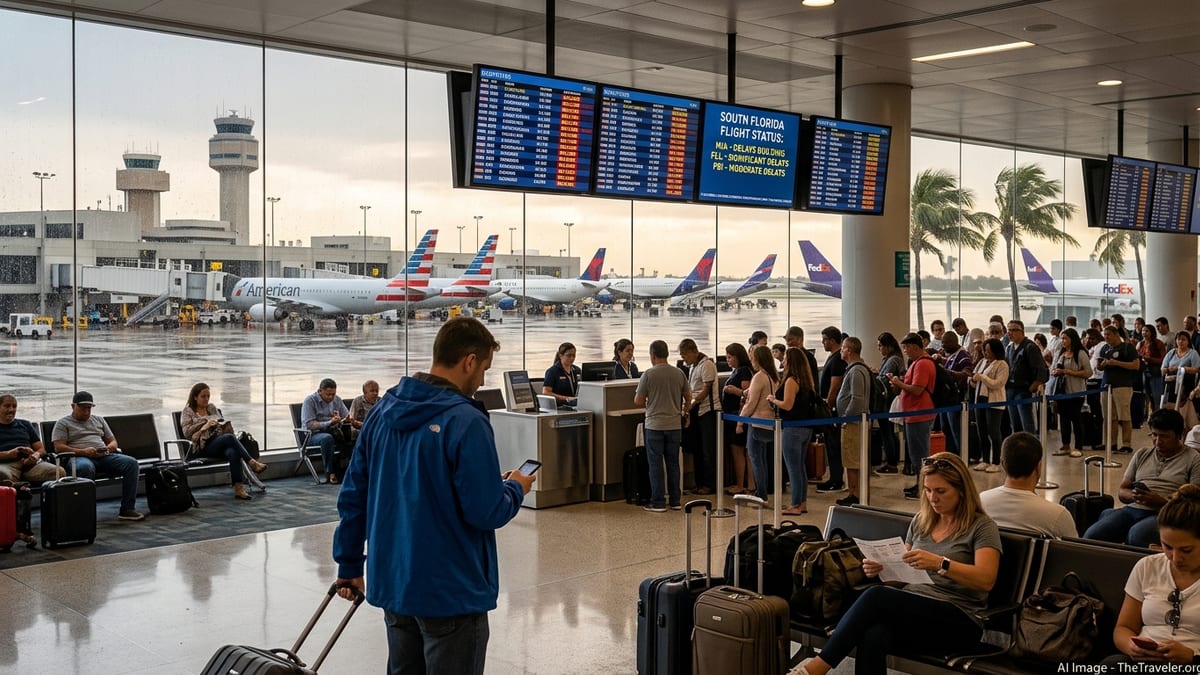
Delays Build At Miami, Fort Lauderdale And Palm Beach
By late afternoon on Wednesday, November 25, 2026, data from flight-tracking services showed several hundred delayed flights across South Florida’s three largest commercial airports. Miami International Airport recorded the highest disruption levels, with more than 300 delayed departures and arrivals and a handful of cancellations reported by mid to late afternoon. Fort Lauderdale–Hollywood International Airport also saw well over 200 delayed flights and several cancellations, while President Donald J. Trump International Airport in Palm Beach County reported dozens of delays but comparatively few cancellations.
The figures fluctuated throughout the day as weather systems moved across the region and airlines adjusted schedules. Midday snapshots from FlightAware indicated that Miami had surpassed 180 delays before noon, rising to well over 300 by around 4 p.m., while Fort Lauderdale delays more than doubled over the same period. Palm Beach’s counts grew more slowly but still reflected a busier-than-normal pre-holiday afternoon, with dozens of late departures and arrivals affecting travelers on both domestic and limited international routes.
Nationwide, the ripple effects were significant. By midafternoon Wednesday, FlightAware was tracking several thousand delayed flights within, into or out of the United States, alongside dozens of cancellations. Those national pressures, combined with South Florida’s role as a major connecting region to Latin America and the Caribbean, contributed to extended gate holds, late-arriving aircraft and tighter turnaround times at all three airports.
Weather, Earlier Ground Stops And A Runway Incident Add Pressure
Weather was the most visible factor behind Wednesday’s disruptions. The Federal Aviation Administration reported intermittent departure delays at South Florida airports during the morning and early afternoon tied to low clouds and rain bands moving across the region. At times, traffic management initiatives introduced spacing between aircraft, which increased taxi and gate hold times at Miami and Fort Lauderdale and reduced how many flights could depart per hour.
Those localized issues came on the heels of broader system challenges earlier in the Thanksgiving travel period. In the days before Wednesday, a rare nationwide ground stop linked to a federal systems issue, along with separate regional programs in major hubs such as Atlanta and Houston, had already created a backlog of delayed and rescheduled flights. Airlines entered the peak travel window with aircraft and crews out of their ideal positions, leaving operations more vulnerable to further disruption when South Florida’s weather deteriorated.
Late Wednesday night, a separate incident at Miami International further constrained capacity. A FedEx cargo aircraft arriving from Memphis overran a runway on landing, prompting emergency crews to respond and leading authorities to temporarily close all but one runway. Passenger terminals continued operating, but the reduced runway capacity forced additional arrival and departure delays for some late-evening flights and complicated overnight recovery efforts ahead of Thanksgiving Day services.
Record Holiday Demand Strains Airport Facilities
The operational challenges unfolded against one of the busiest Thanksgiving travel periods on record for South Florida. Miami International Airport projected that about 1.9 million passengers would pass through its facilities over the broader Thanksgiving travel window. Fort Lauderdale–Hollywood International expected several hundred thousand travelers across the week, and Palm Beach’s President Donald J. Trump International, while smaller, also anticipated elevated volumes compared with typical November weeks.
High passenger numbers translated into pressure from curb to gate. The Transportation Security Administration reported long security screening lines at major Florida airports on Wednesday morning, including wait times of more than an hour at Miami during some peak periods. Local media in Palm Beach County described steady afternoon crowds but relatively smoother security operations compared with the larger South Florida hubs, even as departure boards there filled with moderate delays rather than widespread cancellations.
Parking facilities, rental car centers and airport access roads also felt the strain. At Miami and Fort Lauderdale, peak arrival times for departing passengers overlapped with heavy vehicular traffic, particularly during the midmorning and early evening banks of flights. Airport operators urged travelers to arrive earlier than they might during non-holiday periods and to consider using public transit links, app-based rides or off-site parking to reduce congestion around terminal roadways.
How South Florida Travelers Are Experiencing The Disruptions
For many travelers, the practical impact of Wednesday’s delays was measured in missed connections, compressed layovers and late-night arrivals. At Fort Lauderdale–Hollywood International, early-morning passengers reported standing in security and check-in lines for close to an hour before reaching their gates, with some flights boarding while queues were still being processed. Those departing for domestic destinations within Florida and along the East Coast were among the first to feel the squeeze, as weather-related traffic management programs briefly slowed departures at several East Coast hubs.
In Miami, the combination of international arrivals, connecting traffic and weather-related spacing requirements produced rolling gate holds throughout the day. Some inbound flights from Latin America and the Caribbean arrived behind schedule, narrowing connection windows to domestic departures. Airlines attempted to mitigate the impact by rebooking passengers onto later flights where seats were available, but high holiday load factors left limited slack in the system.
Palm Beach’s President Donald J. Trump International experienced a different pattern. There, most flights operated with shorter delays, often under an hour, and cancellations remained limited by late afternoon. However, even modest disruptions had outsized effects for travelers with tight ground connections or appointments, such as cruise departures from nearby ports or scheduled events across South Florida. Car rental counters and ride-hailing pickup points reported evening surges as delayed flights finally arrived.
What Travelers Should Check Next
While Wednesday is traditionally the most challenging air travel day of the Thanksgiving period, knock-on disruptions can continue into Thanksgiving Day and the weekend as airlines reposition crews and aircraft. With South Florida airports working through the combination of weather-related delays, the overnight runway incident in Miami and residual effects from earlier national ground stops, schedules may continue to shift on Thursday, November 26, and into Friday.
For those flying from Miami, Fort Lauderdale or Palm Beach over the remainder of the holiday period, the most reliable information remains flight-specific updates from airlines. Carriers continue to encourage customers to monitor their reservations through airline apps, text alerts or websites on the day of departure, even after checking in. Some airlines have issued temporary travel alerts for parts of the Southeast and East Coast that allow customers to move trips within a limited date range without change fees, particularly when weather is the primary cause of disruption.
Travelers departing South Florida in the coming days should build extra time into their plans for airport access, parking, check-in and security, and should verify both departure and arrival conditions if they have close onward connections or time-sensitive plans on arrival. Flight-tracking tools such as airport status dashboards and delay maps can help travelers understand whether their route is affected by local weather, congestion at a connecting hub or other traffic management measures. With volumes still near holiday peaks and operations recovering from multiple overlapping disruptions, flexible timing and close monitoring of flight status remain the most practical ways to reduce the risk of significant Thanksgiving travel headaches in and out of South Florida.