


More news on this day
Millions of Americans making last-minute Thanksgiving trips on November 26 are facing a difficult travel day, as a sprawling storm system brings heavy rain, snow and strong winds to major corridors just weeks after a rare nationwide FAA ground stop and airline tech outages upended thousands of flights.
Get the latest news straight to your inbox!
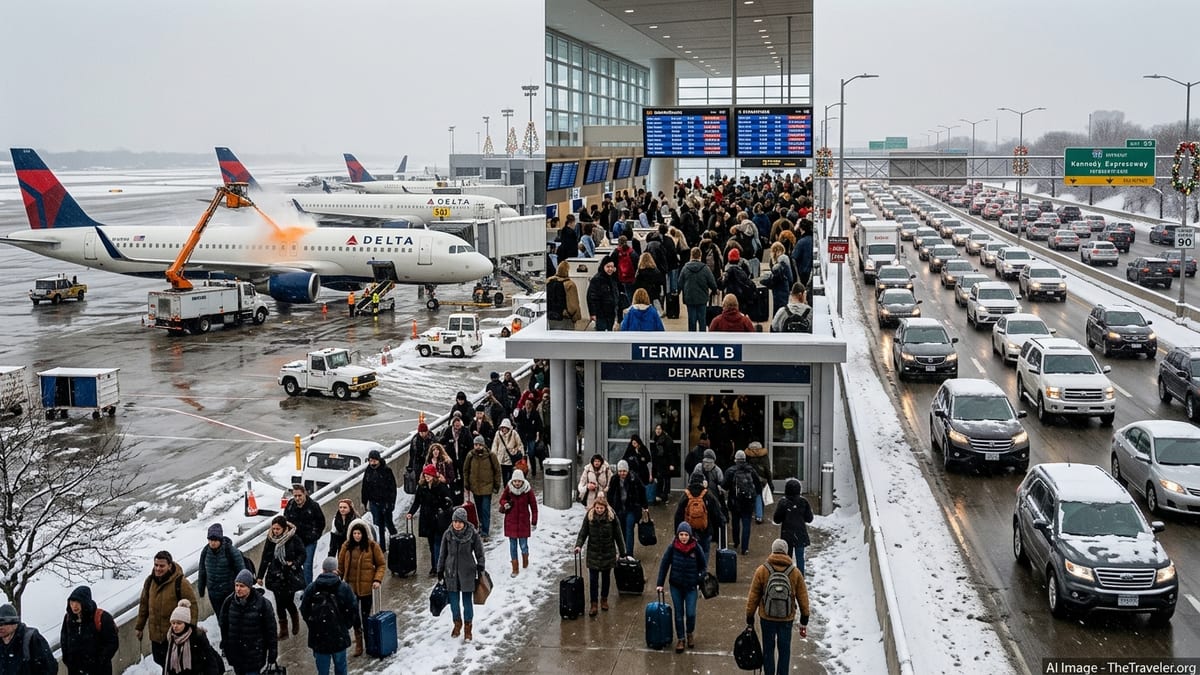
Storm system hits key Thanksgiving corridors
Forecasters expect disruptive weather across several major U.S. travel regions through Thanksgiving Day, with conditions varying by corridor. Along parts of the East Coast, a strong frontal system is bringing periods of heavy rain, gusty winds and localized coastal flooding, affecting busy routes around New York, Boston, Philadelphia and Washington. Inland, lower cloud ceilings and reduced visibility are increasing the likelihood of delays at large hub airports where traffic volumes are already high.
Across the Midwest, colder air on the storm’s western flank is supporting accumulating snow, with winter storm warnings and advisories in effect in parts of states such as Missouri and Illinois. In some locations, forecasters have signaled the potential for several inches of snow, enough to complicate driving conditions on interstates and prompt deicing operations at regional airports. Even where impacts are less severe, intermittent snow showers and slick pavement are expected to slow both road and air traffic.
On the West Coast, the same system and associated moisture plume are producing bouts of heavy rain and coastal flooding in select low-lying areas, particularly in the Pacific Northwest and parts of California. While the worst impacts are expected along vulnerable shorelines and burn scars, the combination of ponding water, reduced visibility and occasional strong wind gusts is likely to slow highway traffic and contribute to spacing restrictions and minor flow delays at some coastal airports.
Flight cancellations follow weather and earlier system disruptions
By Thanksgiving morning, flight-tracking services were already reporting hundreds of cancellations and a larger number of delays across the U.S. network, concentrated at hubs directly under the storm band and at their downline destinations. The number of affected flights has fluctuated during the day as airlines adjust schedules, swap aircraft and reposition crews, but the pattern reflects a system under strain from both weather and recent operational shocks.
The latest round of delays comes less than two weeks after the Federal Aviation Administration ordered a nationwide ground stop on November 13 following a telecommunications failure that affected air traffic control facilities. According to an FAA question-and-answer update and subsequent congressional and emergency-management summaries, the stoppage lasted nearly five hours and contributed to more than 12,000 flight cancellations that day, including over 9,000 cancellations by major airlines. That event, one of the most severe nationwide interruptions since 9/11, required carriers to roll out multi-day recovery schedules and left many travelers wary of further system stress as the Thanksgiving period began.
In the days around the ground stop, several large U.S. carriers also reported technology problems of their own, including a significant outage at United Airlines and a failure of Delta Air Lines’ automated weight-and-balance system. These issues, documented in public statements and operational updates, forced additional delays and flight cancellations on top of the FAA disruption. While those systems have since been restored, the cluster of outages has elevated public concern about the resilience of airline and aviation technology during peak travel periods and is shaping how passengers interpret new delays linked primarily to weather.
Record-number travelers test airports and roads
The renewed operational stress is colliding with one of the busiest Thanksgiving travel periods in recent years. Multiple analyses of AAA data for 2026 indicate that roughly 81.5 million Americans are expected to travel at least 50 miles from home between Tuesday, November 24 and Monday, November 30. Of those, approximately 72.9 to nearly 73 million are forecast to travel by car, representing close to 90 percent of all Thanksgiving trips and keeping highways congested even where skies are clear.
Air travel volumes are also elevated. The Transportation Security Administration, in a national press release ahead of the holiday, projected that it would screen about 17.6 million passengers at airport checkpoints from November 24 through November 30. That forecast, combined with a separate Department of Transportation outlook suggesting the busiest Thanksgiving skies in roughly 16 years, has translated into heavy footfall at large hubs, long queues at security and more pressure on terminal infrastructure. Reports from several major U.S. airports on November 25 already described lines stretching through check-in halls as travelers heeded official advice to arrive earlier than usual.
Rail, bus and cruise operators are also seeing heightened demand, though on a much smaller scale than airlines and private vehicles. AAA estimates suggest that around 2.6 million people are using these modes over the Thanksgiving window. While these sectors are not immune to weather and connection-related delays, their smaller share of total volume means that the main pressure points for most travelers continue to be at airport security checkpoints, airline gate areas and heavily trafficked interstates near major metro regions.
Residual impact of the November 13 FAA ground stop
Although airlines have substantially completed the immediate operational recovery from the November 13 outage, the scale of that ground stop still has ripple effects for some travelers’ plans and expectations this week. The FAA has confirmed that the telecommunications disruption prompted a nationwide halt to most departures into and within U.S. airspace, while already-airborne flights were allowed to continue to their destinations. Once the ground stop lifted, carriers faced the challenge of aircraft and crew misalignment, leading to schedule adjustments, rolling cancellations and rebookings that continued into the following days.
Individual airlines released their own operational updates in the aftermath. One large U.S. carrier, for example, issued a Saturday evening bulletin on November 14 noting that it had completed its planned recovery cancellations for that night and the next day but still cautioned that some additional flights could be removed from the schedule as operations were normalized. Such statements underscore that even when the airspace itself is reopened, full restoration of regular timetables can take several days, particularly when disruptions overlap with a period of seasonally high demand like Thanksgiving.
For travelers, the November 13 episode has increased awareness of system-wide vulnerabilities at the same time that meteorologists are warning of ordinary seasonal hazards such as rain, snow and low clouds. Passenger advocacy groups and some members of Congress have called for detailed explanations of the outage and assurances about redundancy in critical aviation systems, but investigations and policy responses are still at an early stage. In the near term, the main practical effect is that many passengers are now monitoring airline apps, airport status boards and FAA advisories more closely, and may be less willing to assume that a posted on-time departure will remain unchanged when storms approach.
How travelers can reduce the risk of disruption
Travel experts and consumer advocates say there are concrete steps passengers can take on a day like this to reduce the risk of major disruption, though they cannot eliminate weather-related delays entirely. One of the most consistent recommendations is to build extra time into any itinerary that involves a connection or a critical arrival deadline, such as a family gathering or cruise departure. Because delays tend to cascade as the day progresses, early-morning flights often remain less affected than afternoon and evening departures, making them a preferred choice when schedules allow.
Another common suggestion is to monitor flight status continuously through multiple channels, including airline apps, text alerts and airport websites, in the hours leading up to departure. This allows travelers to spot irregular operations early, when there may still be alternative flight options available. Some passengers choose to hold a refundable or flexible backup booking on a different airline or a later departure, particularly when forecasters have signaled severe weather at either their origin or destination. While this approach involves tying up additional funds temporarily, fully refundable tickets can typically be canceled for a complete refund if the original flight operates on time.
Consumer-rights organizations also emphasize the importance of understanding ticket conditions and federal passenger protections before problems arise. In the United States, airlines are required to provide refunds when a flight is canceled and the passenger chooses not to travel, regardless of the cause of the cancellation, but they are not uniformly obligated to offer compensation for delays. Individual carrier policies may go further, especially when disruptions are within the airline’s control. Weather-related issues, by contrast, are frequently classified as outside the carrier’s control, limiting eligibility for hotel or meal vouchers. Reading fare rules, checking airline customer-service plans and retaining receipts for additional expenses can help travelers pursue any benefits that apply to their situation.
What to watch for through the rest of the holiday period
Looking beyond Thanksgiving Day, operational and weather conditions are expected to evolve as the storm system moves east and weakens, but follow-on impacts are likely. As precipitation tapers and winds gradually ease in many regions, airlines will work through backlogs of delayed passengers, which may lead to relatively full flights on Friday and the weekend even where schedules appear normal. Travelers with flexible plans may find more reliable conditions if they can avoid peak return days, which forecasts suggest will cluster around Sunday and Monday when many Americans head home.
Highway conditions will also change as the storm progresses. In some Midwestern and interior Northeastern areas, fresh snow may persist on secondary roads even after main interstates are plowed and treated, requiring continued caution for drivers heading to smaller communities. On the West Coast and in coastal sections of the East, residual flooding and debris could remain in low-lying or poorly drained areas for a time after the heaviest rain ends. Checking state transportation department alerts and navigation-app incident reports shortly before departure can give motorists a clearer picture of any lingering closures or slowdowns along planned routes.
For those yet to depart, the most practical advice over the remainder of the Thanksgiving period is to verify every segment of a trip before leaving home, allow for longer-than-usual processing times at airports and anticipate that weather-related constraints can affect operations far from the immediate impact zone. With aviation authorities and airlines still scrutinizing the causes and consequences of the November 13 ground stop, additional formal findings and policy responses are expected in the weeks ahead. In the meantime, passengers traveling today and through the weekend will primarily be contending with more familiar challenges: crowded terminals and roads, seasonal storms and the limited flexibility of packed holiday schedules.