


More news on this day
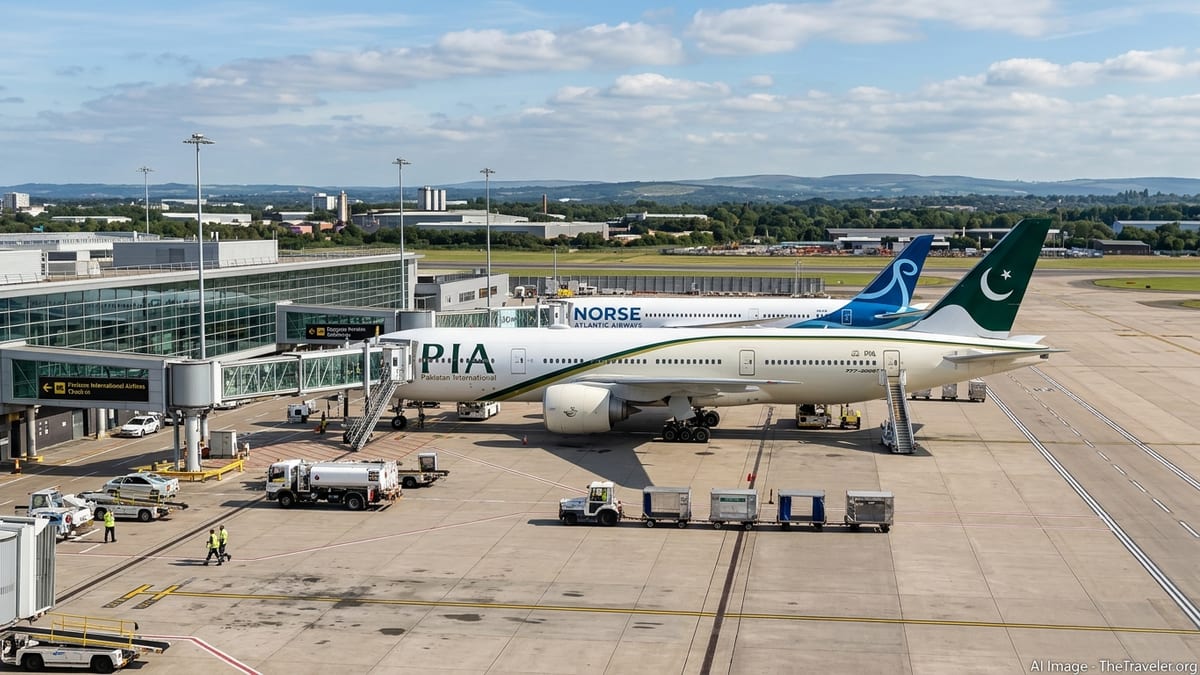
Pakistan International Airlines has restored its flight operations between Pakistan and the United Kingdom after abruptly cancelling two departures when wet-lease partner Norse Atlantic Airways suspended services, leaving passengers in London and Manchester facing last-minute disruption.
Get the latest news straight to your inbox!
What happened to disrupt PIA’s UK services?
Pakistan International Airlines (PIA) cancelled two UK-bound flights on the evening of 25 November 2026 after Norse Atlantic Airways, which was operating aircraft for the carrier under a wet-lease agreement, suddenly stopped providing services. The affected flights were PK786 from London Heathrow to Islamabad and PK710 from Manchester to Lahore, both of which had been scheduled to operate using Norse Atlantic Boeing 787-9 aircraft.
According to statements issued by PIA and reported by multiple outlets, the cancellations followed an “unexpected operational suspension” by Norse Atlantic that was communicated without prior notice as passengers were preparing to board. The suspension came just weeks after the airlines signed an agreement on 9 October 2026 for Norse to provide two 787-9s to PIA, with operations beginning in early November. The wet-lease arrangement had been intended to reinforce PIA’s long-haul capacity on routes between Pakistan and the UK.
The disruption coincided with Norse Atlantic warning investors of a critical liquidity situation and suspending ticket sales on its own network. Industry reports and flight-tracking data on 25 and 26 November indicated that Norse aircraft were no longer operating commercial services, although at the time of writing detailed restructuring or insolvency outcomes for Norse had not yet been formally confirmed.
How PIA has restored UK operations
On 26 November, PIA confirmed that it had restored flight operations between Pakistan and the United Kingdom by switching its UK schedule from Norse-operated Dreamliners to PIA’s own Boeing 777 fleet. The airline said that, following the cancellations a day earlier, subsequent flights would operate as planned but with PIA aircraft and crew, allowing it to maintain connectivity on its core UK routes.
PIA had already been operating to London Heathrow and Manchester with a mix of its own widebody aircraft and the newly introduced wet-leased 787-9s. Since the UK Civil Aviation Authority lifted its pandemic-era suspension on PIA in July 2025, the carrier has gradually rebuilt its presence, including the resumption of Islamabad–London services in 2025 and subsequent additions from other Pakistani cities. By replacing the Norse aircraft with its 777s, PIA can continue those services without relying on the financially troubled Norwegian carrier.
The airline has not publicly detailed the precise number of weekly frequencies affected or any longer-term capacity changes that may follow the end of the Norse arrangement. Available schedules and recent airport information confirm that PIA continues to link Islamabad, Lahore and other major Pakistani cities with London Heathrow and Manchester, but passengers may notice aircraft type changes and potential short-term timetable adjustments as the airline rebalances its fleet.
Impact on passengers and what help is being offered
The immediate impact of the Norse suspension was felt most acutely by passengers booked on PK786 and PK710 on 25 November, many of whom were at London Heathrow Terminal 4 and Manchester Airport when they were informed that their flights had been cancelled. Local media and passenger accounts described scenes of confusion as travelers sought clarification on rebooking options and overnight arrangements.
PIA issued an apology to affected customers, stating that it “deeply regretted” the disruption and the distress caused. The airline said it would re-accommodate passengers on upcoming PIA-operated services and on alternative routings where available. It directed travelers needing immediate assistance to its 24/7 call center and to PIA desks at London Heathrow and Manchester. At the time of writing, the carrier has not published a consolidated list of specific re-accommodation options, so passengers with near-term travel dates are being advised to contact the airline or their travel agent for individual rebooking.
Under UK and EU-style air passenger rights frameworks, responsibility for care and assistance normally rests with the operating carrier. Because these flights were part of PIA’s scheduled operations and sold under PIA flight numbers, passengers are being instructed to pursue remedies directly with PIA even though the disruption originated with Norse Atlantic’s suspension of services. Travelers who purchased tickets through third-party agents may need to coordinate with both the airline and the agent to confirm new itineraries or refund processes, especially if they choose not to travel on rescheduled dates.
Background: PIA’s return to the UK and use of wet-leased aircraft
The disruption comes during a period when PIA has been rebuilding its long-haul network to the UK and Europe after several challenging years. In June 2020, UK authorities suspended PIA’s permission to operate to the United Kingdom following concerns over pilot licensing and safety oversight. That suspension, mirrored by restrictions in the European Union, effectively ended PIA’s direct services to Europe and the UK for several years.
Following safety and oversight improvements documented by Pakistan’s aviation regulator and by PIA, the UK Civil Aviation Authority lifted its suspension in July 2025, allowing the airline to resume direct flights subject to regulatory conditions. Islamabad–London Heathrow services restarted in 2025, with subsequent route additions and schedule adjustments as PIA sought to restore connectivity for Pakistan’s sizable diaspora communities in Britain and for business and leisure travelers in both directions.
To meet demand on these restored routes, PIA turned in part to wet-leased capacity. The October 2026 agreement with Norse Atlantic for two Boeing 787-9 aircraft was one element of that strategy, supplementing PIA’s own fleet while the airline progresses with a longer-term fleet renewal that includes orders and leases for additional widebody aircraft. Wet-leasing allowed PIA to deploy modern, fuel-efficient jets quickly, but also introduced dependence on the operational and financial stability of the lessor, a risk that became evident once Norse suspended its services.
What travelers should check now
For travelers with upcoming trips between Pakistan and the UK, the key message is that PIA has restored its UK operations and intends to run its published services using its own Boeing 777 aircraft instead of Norse-operated 787-9s. However, given the very recent nature of the change, it is prudent to verify flight details before departure. Passengers should pay particular attention to any updated departure times, flight numbers or terminal information communicated by the airline or their booking agent.
Those booked on or around the affected dates of 25 and 26 November 2026 should confirm whether their tickets have been reissued for new travel dates or alternative flights. Where itineraries involved connecting services beyond London or Manchester, either within the UK or onward to other destinations, travelers may need to reconfirm their entire journey to ensure minimum connection times are respected and through-checked baggage arrangements remain valid.
Looking ahead, PIA has not signalled further cancellations related to the Norse Atlantic situation, and current information indicates that the airline plans to maintain its Pakistan–UK network with its own fleet. Nonetheless, because fleet redeployments and schedule adjustments can take time to stabilise after the sudden end of a wet-lease, passengers planning travel in the coming weeks should continue to monitor their bookings, ensure that contact details with the airline are up to date, and allow extra time at the airport in case of last-minute gate or timing changes.