


More news on this day
Millions of Americans making last‑minute Thanksgiving journeys on November 26 are encountering a difficult mix of severe weather, crowded airports and lingering disruption from this month’s nationwide FAA ground stop, resulting in significant flight delays, cancellations and slower‑than‑usual highway traffic across large parts of the country.
Get the latest news straight to your inbox!
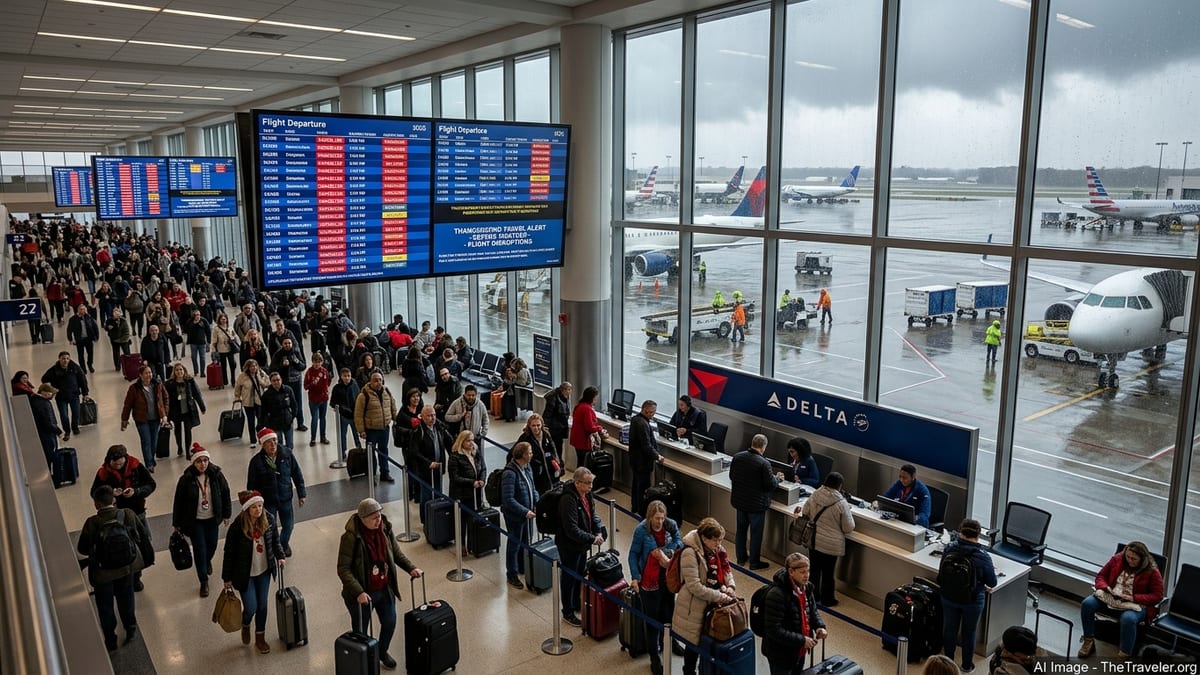
Storm system complicates Thanksgiving Day travel across multiple regions
A large storm system moving along the East Coast on November 26 is bringing periods of heavy rain and strong winds from the Carolinas through New England, conditions that have reduced visibility, slowed airport operations and triggered scattered delays at major hubs. Forecasts from federal and private meteorological agencies indicate that gusty winds near coastal airports are likely to persist through much of Thanksgiving Day, periodically affecting arrival and departure rates rather than prompting sustained ground stops.
On the West Coast, a separate Pacific storm has brought bands of moderate to heavy rain to parts of California, Oregon and Washington, with localized flooding concerns on some low‑lying roads and highway ramps. Transportation officials in several states have warned that standing water and reduced traction could lead to slower‑than‑normal Thanksgiving Day driving, particularly in urban areas where surface streets and freeway interchanges tend to pond during intense showers.
Farther inland, colder air interacting with the same storm system is producing accumulating snow in portions of the Upper Midwest and interior Northeast. State highway departments in several snow‑belt states reported active plowing and treatment operations on the morning of November 26 and urged motorists to build in additional time, carry winter gear and be prepared for reduced speeds on higher‑elevation interstates and secondary routes through the afternoon and evening.
Flight cancellations follow a week of strain on the aviation system
As of Thanksgiving morning, data from major flight‑tracking services showed hundreds of cancellations and a larger number of delays at U.S. airports, with disruptions concentrated at East Coast and Midwest hubs most directly affected by rain, wind or snow. While individual totals have been shifting through the day as airlines adjust schedules, the pattern reflects a stressed network operating near capacity after a week of unusual disruption.
The current round of weather‑related problems comes less than two weeks after the Federal Aviation Administration ordered a nationwide ground stop on Friday, November 13, in response to a telecommunications failure affecting air traffic control facilities. According to public FAA summaries and subsequent federal analyses, the pause lasted roughly 4 hours and 45 minutes and ultimately led airlines to cancel more than 12,000 flights that day, including over 9,000 flights on major U.S. carriers. That event created multi‑day knock‑on effects as aircraft and crews were repositioned, and it remains a factor in how airlines are managing buffers and spare capacity during the Thanksgiving peak.
Separate technology failures at United Airlines and Delta Air Lines in the days following the ground stop, as well as outages affecting widely used tools such as Microsoft 365 and major payment systems, have further heightened traveler concern about potential last‑minute disruptions. While these incidents have been resolved, they have prompted closer scrutiny of backup systems and have made some passengers more cautious, with many choosing earlier departures or building longer layovers into holiday itineraries in case of renewed problems.
Record‑high skies contrast with a modest dip in total holiday travel
Despite the weather and recent operational issues, overall travel demand for the Thanksgiving period in 2026 remains very high. The American Automobile Association’s national forecast, published in mid‑November, projects that about 81.5 million people will travel 50 miles or more from home between Tuesday, November 24 and Monday, November 30. That is a slight decline from the 81.6 million estimated over the same period in 2025, ending a three‑year streak of record totals, but it still ranks among the busiest Thanksgiving travel weeks on record.
Within that total, AAA expects roughly 72.9 million people to travel by car during the seven‑day holiday window, a marginal decrease compared with last year’s 73.1 million road travelers. The association’s breakdown indicates that driving remains the dominant mode, even as many travelers contend with rain, localized flooding and winter weather along popular interstate corridors. For Thanksgiving Day itself, traffic volumes typically fall below the Tuesday and Wednesday peak as more travelers are already at their destinations, but the current storms are still affecting those driving longer distances or making same‑day trips between metro areas.
Air travel is running counter to the slight overall dip in movement. Figures released by the U.S. Department of Transportation and the FAA this week show that airlines scheduled about 417,000 flights nationwide over the broader Thanksgiving period from November 23 to December 1, the busiest holiday skies in approximately 16 years. The Transportation Security Administration has forecast that it will screen about 17.6 million passengers between Tuesday and the Monday after Thanksgiving, with nearly 6 million domestic air travelers expected over the core holiday window, according to estimates shared by AAA and other data providers.
Lingering impact of the November 13 FAA ground stop
The unprecedented nationwide ground stop on November 13, initiated after a telecommunications disruption affected multiple air traffic control facilities, continues to shape airline operations heading into and during Thanksgiving. FAA and Department of Transportation briefings indicate that the agency halted departures nationwide out of caution while technicians isolated and resolved the underlying issue, gradually lifting the order later that evening once communication capabilities were restored.
Federal data and subsequent analyses from congressional and oversight bodies indicate that the November 13 event resulted in more than 12,000 flight cancellations across the U.S. system that day, including approximately 9,000 flights on major airlines. While normal operations resumed in the days that followed, many carriers continued to operate with some schedule adjustments through the subsequent weekend as they repositioned aircraft and crew, and a number of airports reported elevated cancellation and delay levels into the early part of the following week.
In public updates issued ahead of Thanksgiving week, several airlines advised customers that they had completed most planned schedule changes related to the ground stop but warned that individual flights could still be affected by aircraft or crew imbalances, particularly when combined with adverse weather. Some carriers extended flexible rebooking policies for passengers traveling on peak days in late November, allowing same‑day changes without additional fees when seats were available, though the specific terms have varied by airline and route and are subject to ongoing revision.
What travelers can do on Thanksgiving Day and through the weekend
With the holiday travel period still under way through Monday, November 30, passengers are being urged by federal agencies, airports and airlines to build in additional time and actively monitor conditions. The TSA recommends arriving at the airport at least two hours before domestic flights and three hours before most international departures during the holiday week, while some large hubs have advised adding even more time during the busiest early‑morning and late‑afternoon periods based on local screening volumes observed on November 24 and November 25.
Airlines and the FAA are emphasizing the importance of checking flight status before leaving for the airport and again upon arrival, using official airline apps, websites or customer alerts. Given the combination of unsettled weather and a system still recovering from the earlier ground stop, travelers booked on tightly timed connections on November 26 and 27 may wish to identify alternative routings in advance. Some passengers have mitigated risk by holding refundable or flexible backup bookings, but policies and costs differ significantly across carriers and ticket types, and not all travelers will find this approach practical.
On the roads, transportation and safety agencies are asking drivers to account for rain, snow and potential flooding as they schedule departures, particularly for routes in the Mid‑Atlantic, New England, the Pacific Northwest and the Upper Midwest on Thanksgiving Day and into Friday, November 27. Officials advise checking state transportation department websites or navigation tools for real‑time information on crashes, closures and winter‑weather advisories, and suggest that those with flexibility consider traveling outside the busiest return periods on Sunday and Monday when possible.
Looking ahead to the remainder of the weekend, forecasters expect the current storm systems to gradually move away from the East and West Coasts, with improving conditions in many regions by late Friday or Saturday. However, residual disruptions from Thanksgiving Day delays and cancellations may continue to affect some flights into the weekend as airlines work to reposition planes and crews. Travelers flying home between November 27 and November 30 are being encouraged to reconfirm itineraries, review their airline’s delay and cancellation policies and allow extra time for connections in case the ripple effects of today’s disruption extend into the return journey.